Zatovicova Miriam, Kajanova Ivana, Barathova Monika, Takacova Martina, Labudova Martina, Csaderova Lucia, Jelenska Lenka, Svastova Eliska, Pastorekova Silvia, Harris Adrian L, Pastorek Jaromir
MABPRO, a.s., Dubravska cesta 2, 841 04, Bratislava, Slovakia.
Department of Tumor Biology, Institute of Virology, Biomedical Research Center, Slovak Academy of Sciences, Dubravska cesta 9, 84505, Bratislava, Slovakia.
Cancer Metab. 2022 Feb 2;10(1):3. doi: 10.1186/s40170-022-00279-8.
Hypoxia in the tumor microenvironment (TME) is often the main factor in the cancer progression. Moreover, low levels of oxygen in tumor tissue may signal that the first- or second-line therapy will not be successful. This knowledge triggers the inevitable search for different kinds of treatment that will successfully cure aggressive tumors. Due to its exclusive expression on cancer cells, carbonic anhydrase IX belongs to the group of the most precise targets in hypoxic tumors. CA IX possesses several exceptional qualities that predetermine its crucial role in targeted therapy. Its expression on the cell membrane makes it an easily accessible target, while its absence in healthy corresponding tissues makes the treatment practically harmless. The presence of CA IX in solid tumors causes an acidic environment that may lead to the failure of standard therapy.
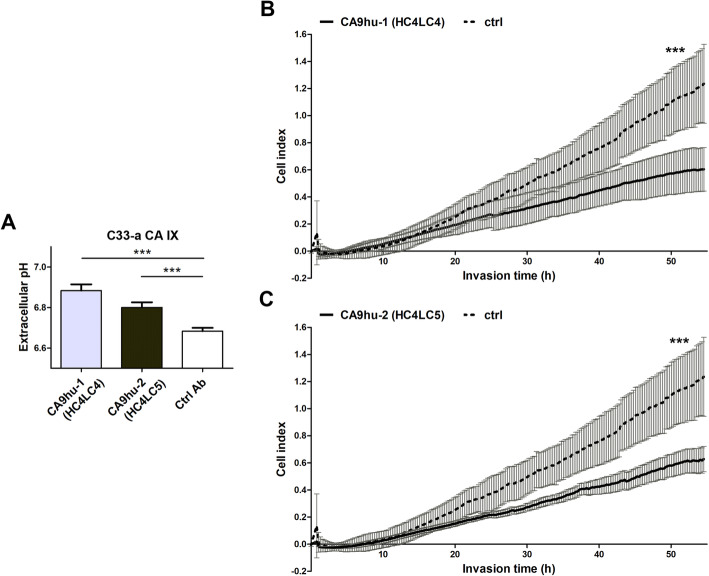
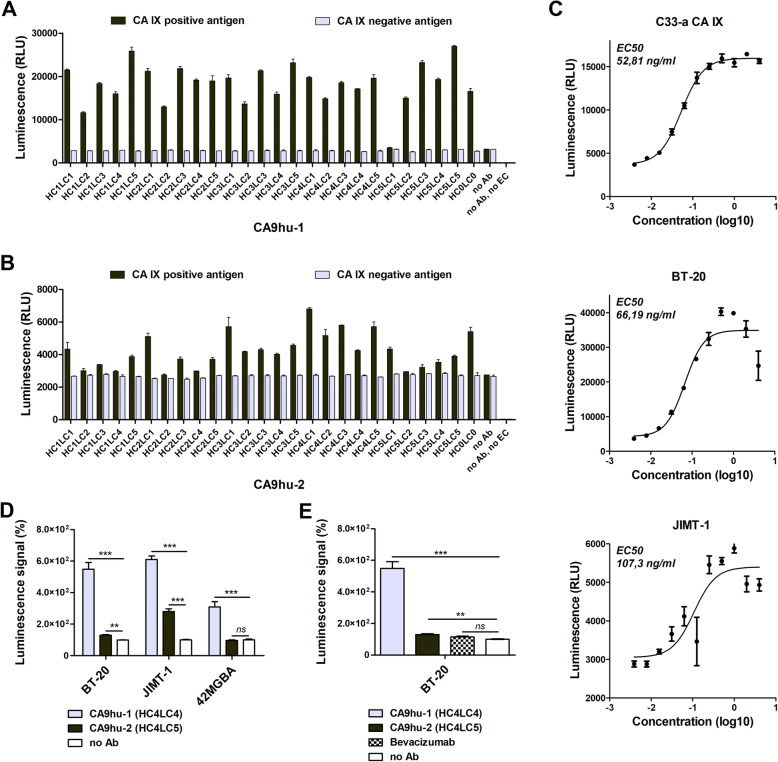
Parental mouse hybridomas (IV/18 and VII/20) were humanized to antibodies which were subsequently named CA9hu-1 and CA9hu-2. From each hybridoma, we obtained 25 clones. Each clone was tested for antibody-dependent cellular cytotoxicity (ADCC) and complement-dependent cytotoxicity (CDC) activity, affinity, extracellular pH measurement, multicellular aggregation analysis, and real-time monitoring of invasion with the xCELLigence system.
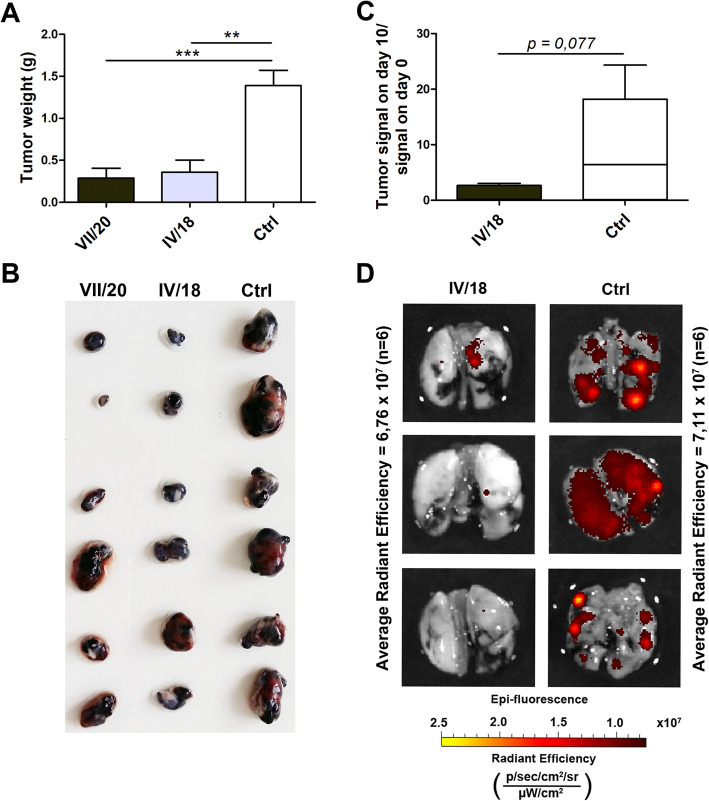
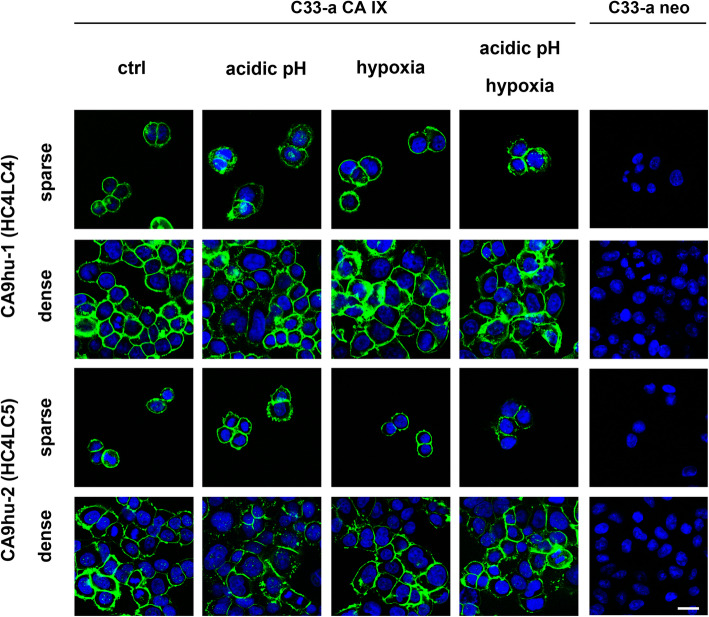
Based on the results from in vivo experiments, we have selected mouse monoclonal antibodies VII/20 and IV/18. The first one is directed at the conformational epitope of the catalytic domain, internalizes after binding to the antigen, and halts tumor growth while blocking extracellular acidification. The second targets the sequential epitope of the proteo-glycan domain, does not internalize, and is able to block the attachment of cancer cells to the matrix preventing metastasis formation. In vitro experiments prove that humanized versions of the parental murine antibodies, CA9hu-1 and CA9hu-2, have preserved these characteristics. They can reverse the failure of standard therapy as a result of an acidic environment by modulating the TME, and both are able to induce an immune response and have high affinity, as well as ADCC and CDC activity.
CA9hu-1 and CA9hu-2 are the very first humanized antibodies against CA IX that are likely to become suitable therapies for hypoxic tumors. These antibodies can be applied in the treatment therapy of primary tumors and suppression of metastases formation.
肿瘤微环境(TME)中的缺氧往往是癌症进展的主要因素。此外,肿瘤组织中低氧水平可能预示一线或二线治疗不会成功。这一认知引发了对能够成功治愈侵袭性肿瘤的不同治疗方法的必然探索。碳酸酐酶IX因其在癌细胞上的特异性表达,属于低氧肿瘤中最精确的靶点之一。CA IX具有多种特殊性质,决定了其在靶向治疗中的关键作用。它在细胞膜上的表达使其成为易于接近的靶点,而在相应健康组织中不存在则使治疗几乎无害。实体瘤中CA IX的存在会导致酸性环境,这可能导致标准治疗失败。
将亲本小鼠杂交瘤(IV/18和VII/20)人源化,得到的抗体随后命名为CA9hu-1和CA9hu-2。从每个杂交瘤中获得25个克隆。对每个克隆进行抗体依赖性细胞毒性(ADCC)和补体依赖性细胞毒性(CDC)活性、亲和力、细胞外pH测量、多细胞聚集分析以及使用xCELLigence系统对侵袭进行实时监测。
基于体内实验结果,我们选择了小鼠单克隆抗体VII/20和IV/18。前者针对催化结构域的构象表位,与抗原结合后内化,在阻断细胞外酸化的同时抑制肿瘤生长。后者靶向蛋白聚糖结构域的序列表位,不内化,能够阻断癌细胞与基质的附着,防止转移形成。体外实验证明,亲本鼠源抗体的人源化版本CA9hu-1和CA9hu-2保留了这些特性。它们可以通过调节TME逆转由于酸性环境导致的标准治疗失败,并且两者都能够诱导免疫反应,具有高亲和力以及ADCC和CDC活性。
CA9hu-1和CA9hu-2是首批针对CA IX的人源化抗体,很可能成为低氧肿瘤的合适治疗方法。这些抗体可用于原发性肿瘤的治疗和转移形成的抑制。