Prerostova Sylva, Jarosova Jana, Dobrev Petre I, Hluskova Lucia, Motyka Vaclav, Filepova Roberta, Knirsch Vojtech, Gaudinova Alena, Kieber Joseph, Vankova Radomira
Laboratory of Hormonal Regulations in Plants, Institute of Experimental Botany, Czech Academy of Sciences, Prague, Czechia.
Department of Biology, University of North Carolina at Chapel Hill, Chapel Hill, NC, United States.
Front Plant Sci. 2022 Jan 17;12:799249. doi: 10.3389/fpls.2021.799249. eCollection 2021.
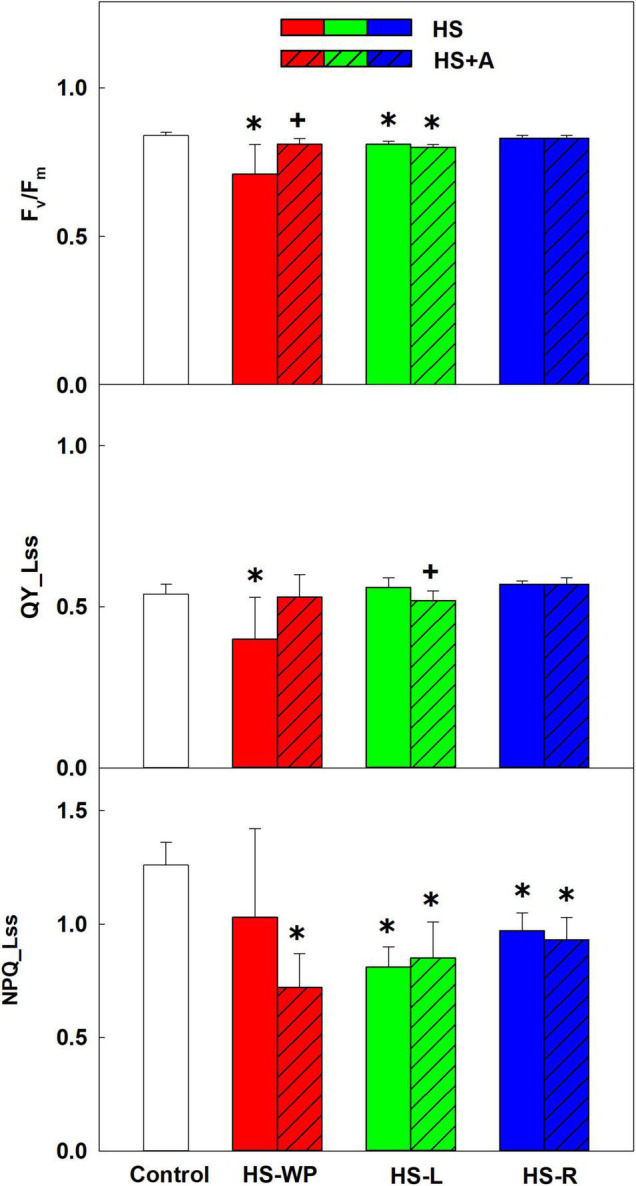
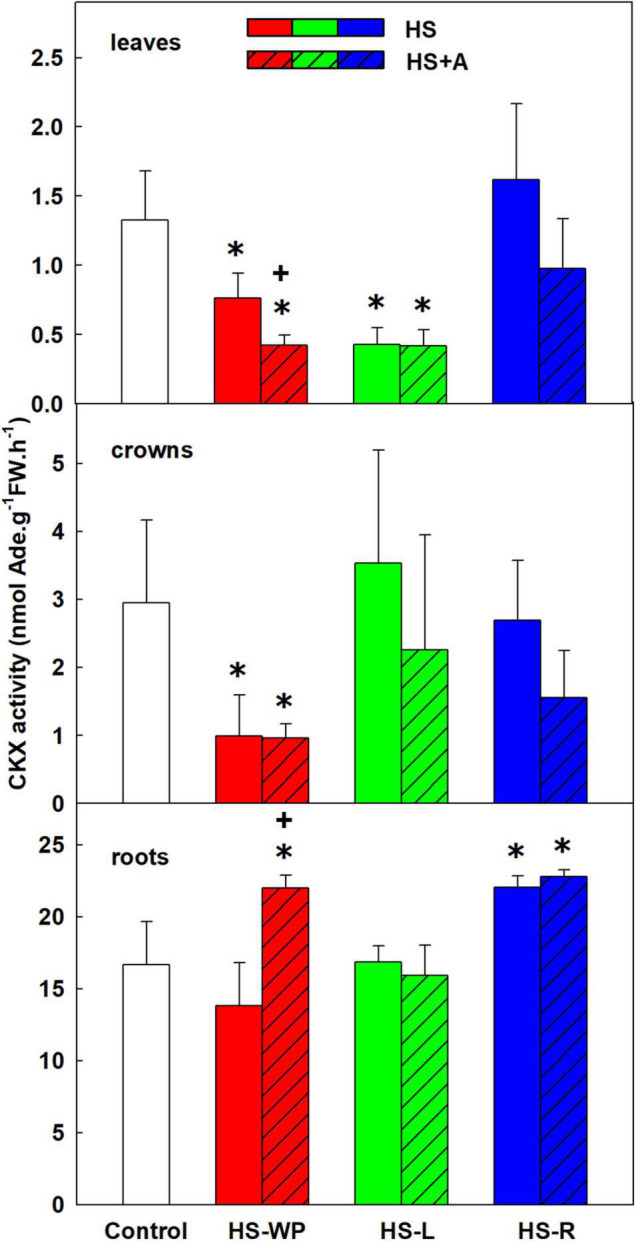
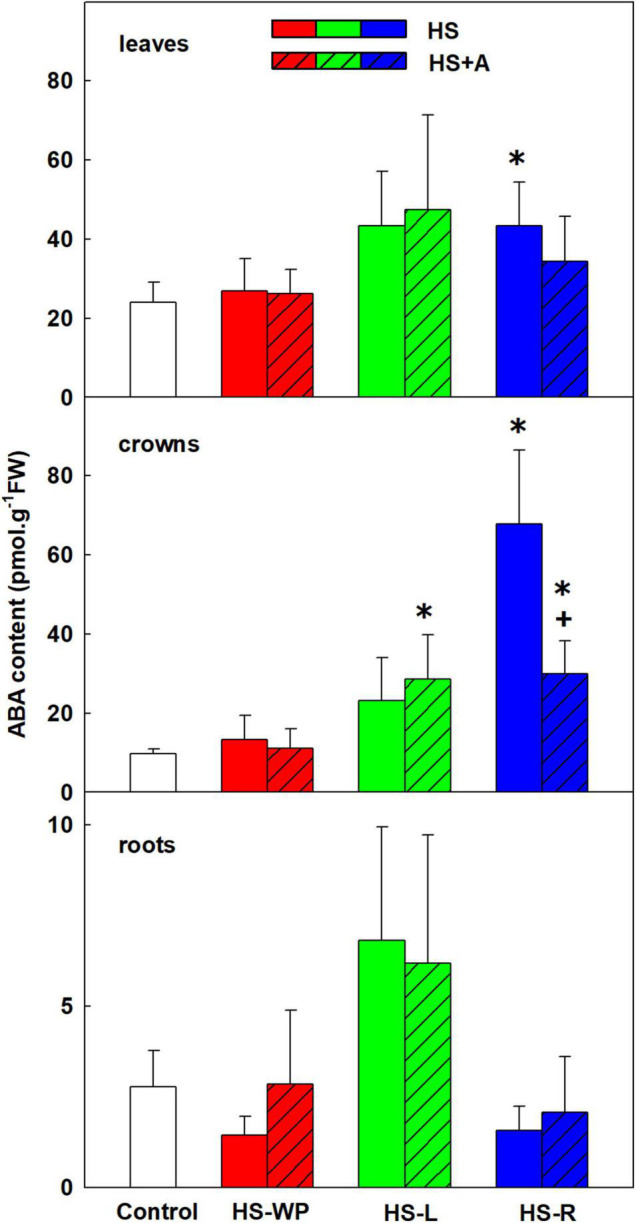
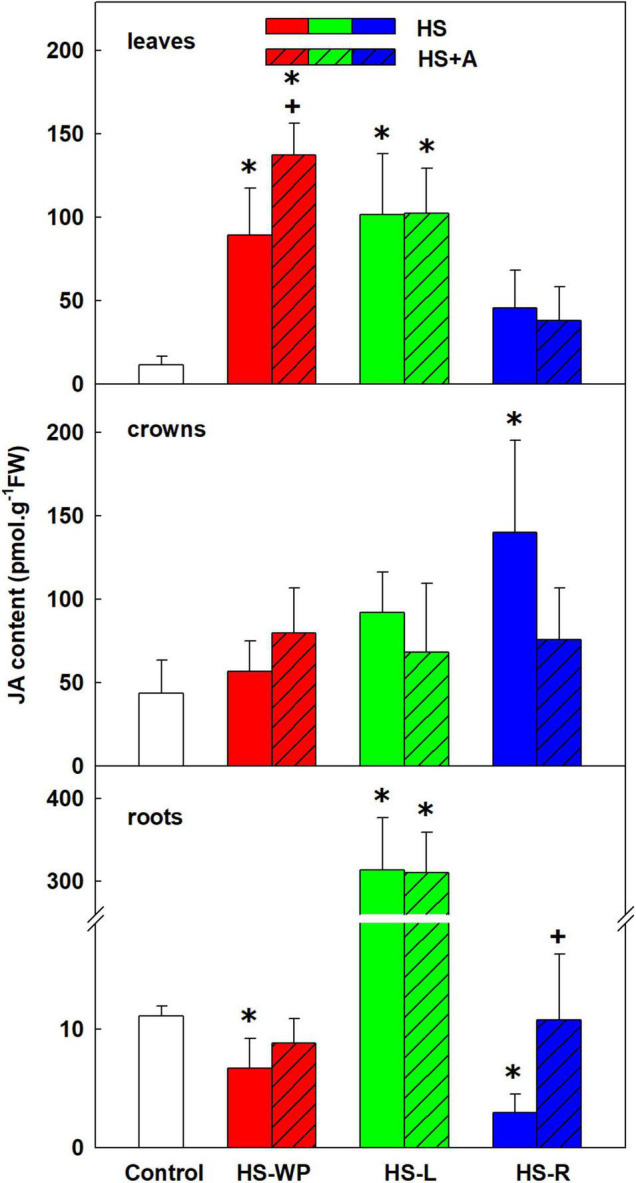
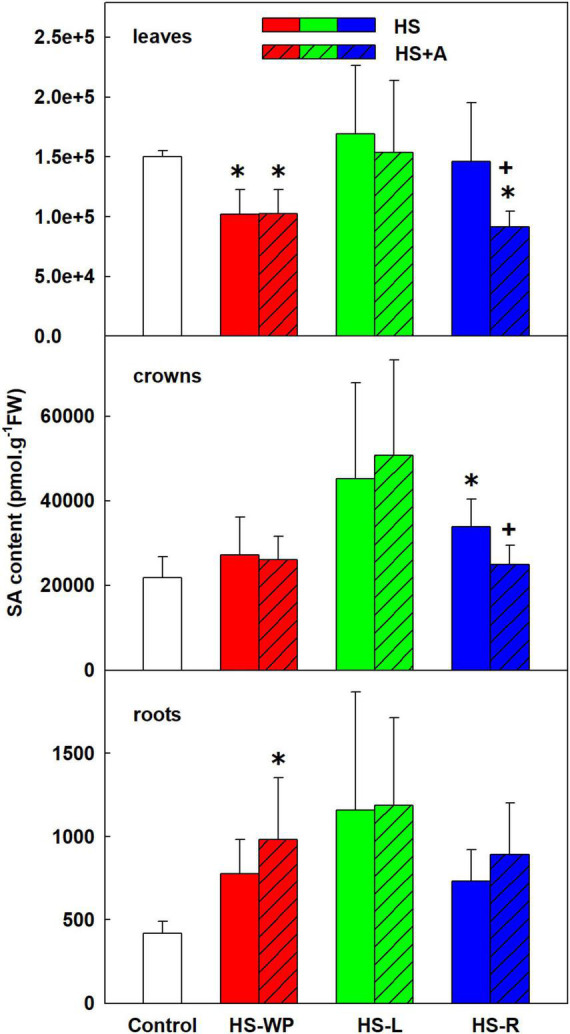
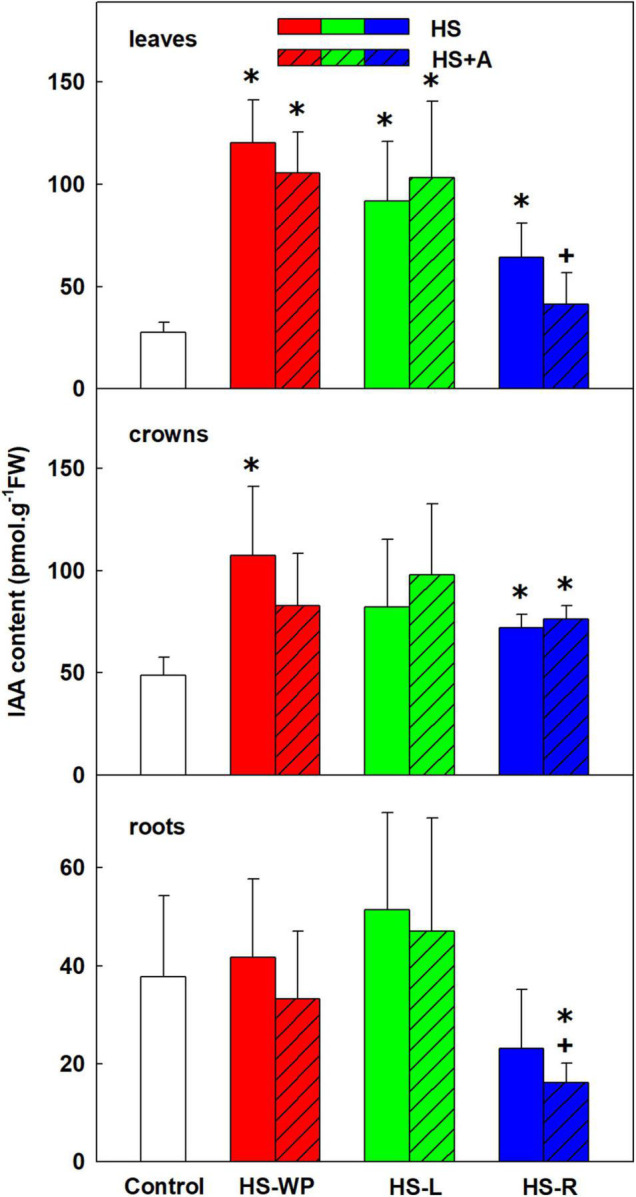
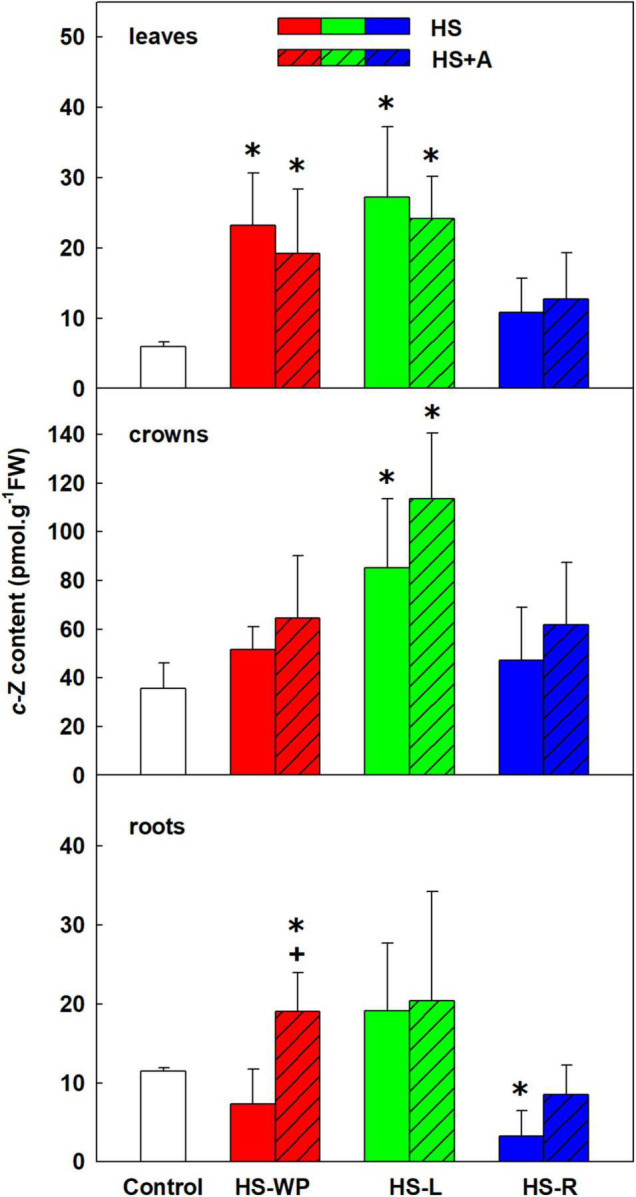
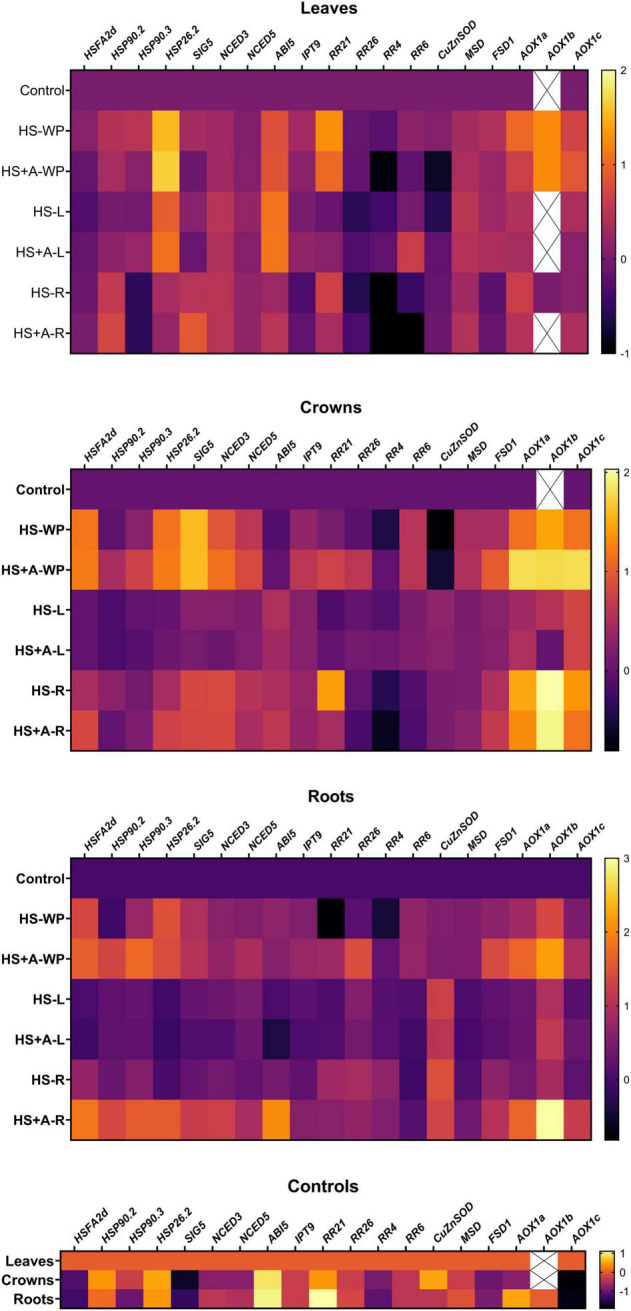
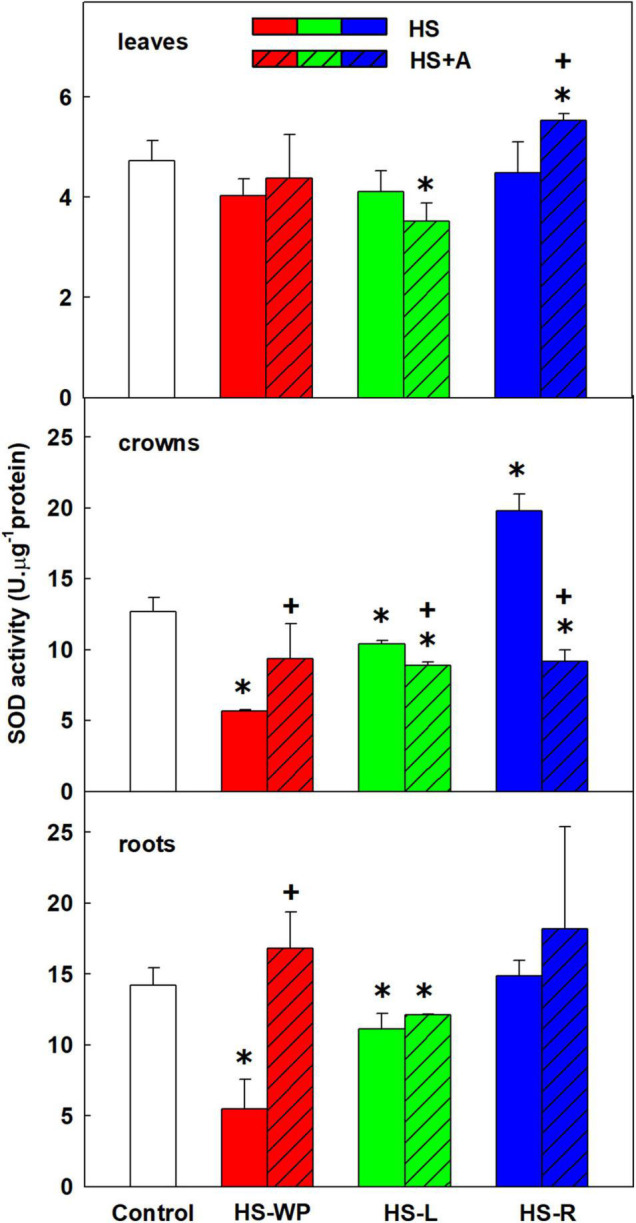
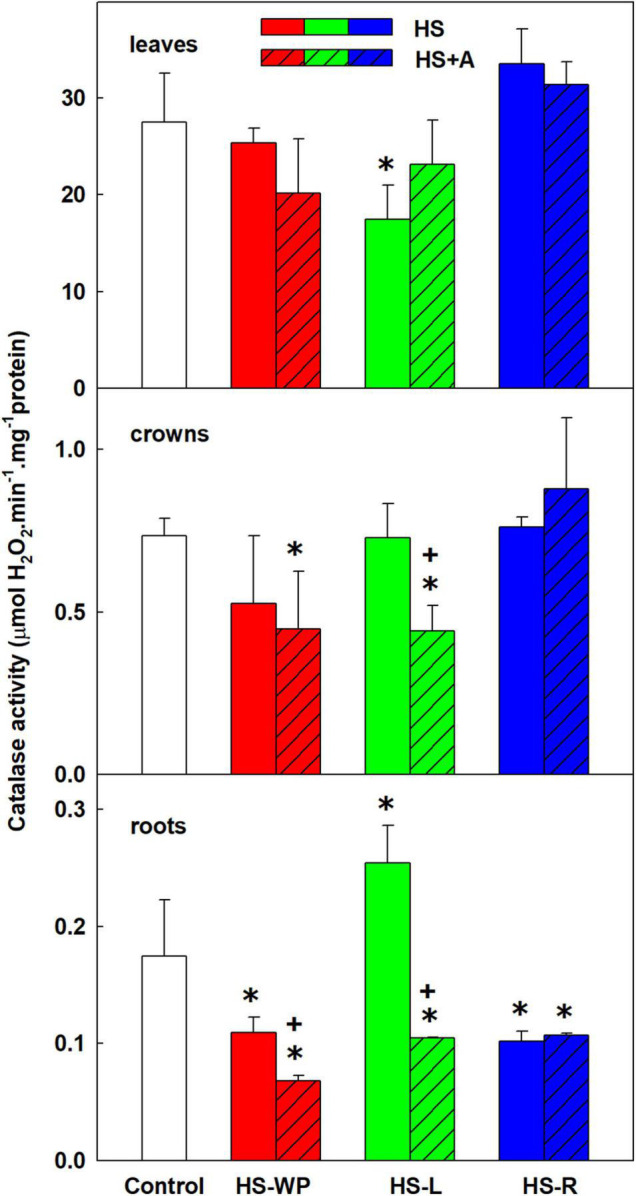
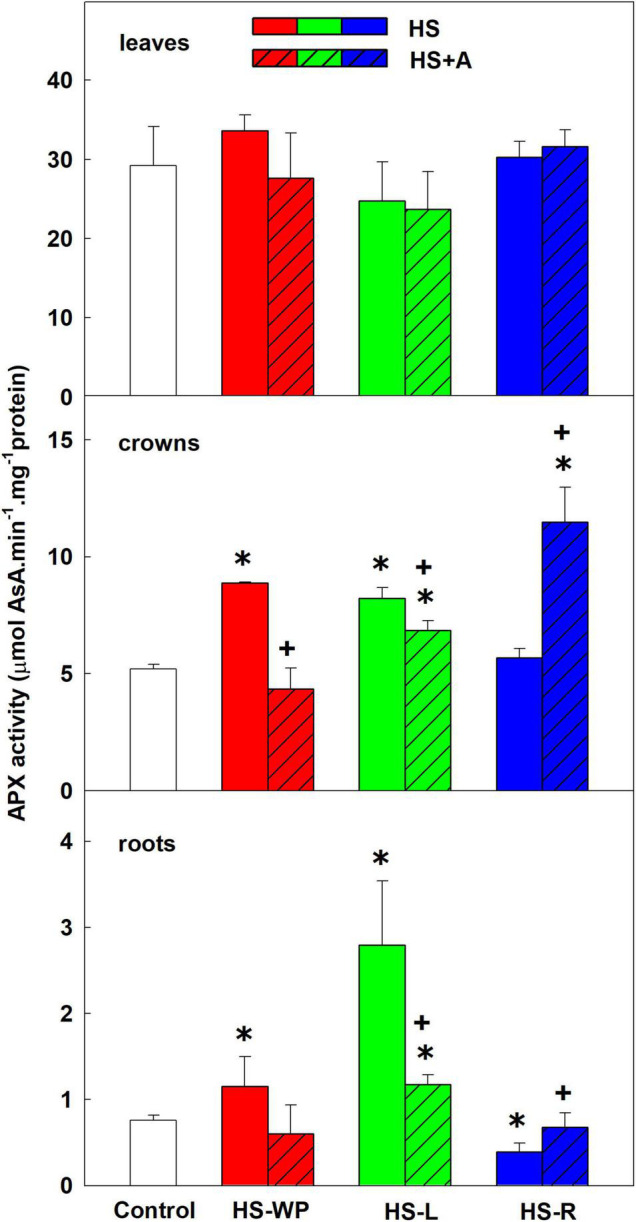
Inter-organ communication and the heat stress (HS; 45°C, 6 h) responses of organs exposed and not directly exposed to HS were evaluated in rice () by comparing the impact of HS applied either to whole plants, or only to shoots or roots. Whole-plant HS reduced photosynthetic activity (F /F and QY ), but this effect was alleviated by prior acclimation (37°C, 2 h). Dynamics of , , , and expression revealed high protection of crowns and roots. Additionally, was strongly expressed in leaves. Whole-plant HS increased levels of jasmonic acid (JA) and cytokinin -zeatin in leaves, while up-regulating auxin indole-3-acetic acid and down-regulating -zeatin in leaves and crowns. Ascorbate peroxidase activity and expression of alternative oxidases () increased in leaves and crowns. HS targeted to leaves elevated levels of JA in roots, -zeatin in crowns, and ascorbate peroxidase activity in crowns and roots. HS targeted to roots increased levels of abscisic acid and auxin in leaves and crowns, -zeatin in leaves, and JA in crowns, while reducing -zeatin levels. The weaker protection of leaves reflects the growth strategy of rice. HS treatment of individual organs induced changes in phytohormone levels and antioxidant enzyme activity in non-exposed organs, in order to enhance plant stress tolerance.
通过比较对整株植物、仅对地上部或根部施加热胁迫(HS;45°C,6小时)的影响,评估了水稻中器官间通讯以及暴露和未直接暴露于HS的器官的热胁迫响应。整株植物热胁迫降低了光合活性(F /F 和QY ),但这种影响通过预先驯化(37°C,2小时)得到缓解。 、 、 和 表达动态显示冠部和根部受到高度保护。此外, 在叶片中强烈表达。整株植物热胁迫增加了叶片中茉莉酸(JA)和细胞分裂素玉米素的水平,同时上调叶片和冠部中的生长素吲哚-3-乙酸并下调玉米素。叶片和冠部中抗坏血酸过氧化物酶活性和交替氧化酶( )的表达增加。针对叶片的热胁迫提高了根部的JA水平、冠部的玉米素水平以及冠部和根部的抗坏血酸过氧化物酶活性。针对根部的热胁迫增加了叶片和冠部中的脱落酸和生长素水平、叶片中的玉米素水平以及冠部中的JA水平,同时降低了玉米素水平。叶片较弱的保护反映了水稻的生长策略。对单个器官进行热胁迫处理会诱导未暴露器官中植物激素水平和抗氧化酶活性的变化,以增强植物的胁迫耐受性。