Hoppe Hanno, Diehm Nicolas
SwissIntervention Microtherapy Center, Kornhausstrasse 8, 3013, Bern, Switzerland.
University of Bern, Bern, Switzerland.
CVIR Endovasc. 2022 Feb 3;5(1):10. doi: 10.1186/s42155-022-00283-5.
The underlying etiologies of erectile dysfunction may be manifold. Among them, vasculogenic etiologies are of increasing relevance and are not strictly limited to the elderly population. According to recent study, venogenic erectile dysfunction appears to be even more relevant than arteriogenic erectile dysfunction. Venogenic erectile dysfunction due to venous leakage causes insufficient penile blood retention. Proper diagnosis of venous leakage should include both color Doppler flow analysis and computed tomography cavernosography for adequate patient selection and treatment planning. Besides surgical ligation of penile draining veins, endovascular treatment methods may demonstrate more promising results. Especially endovascular embolization of venous leakage using an anterograde access via deep dorsal penile veins appears to be more beneficial for patients' clinical outcome and awareness of this technique should be raised among endovascular interventionalists.
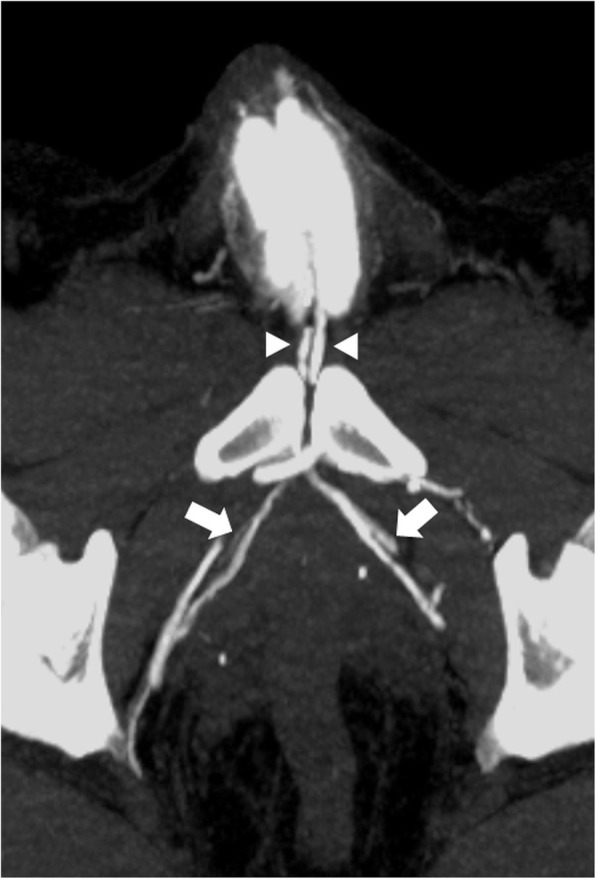
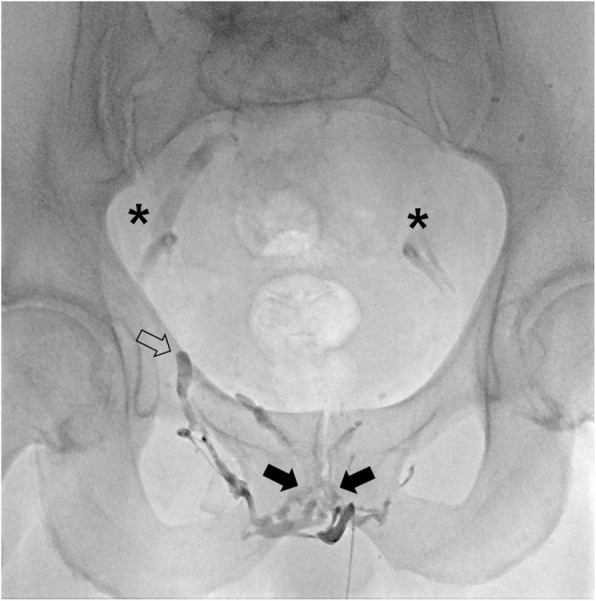
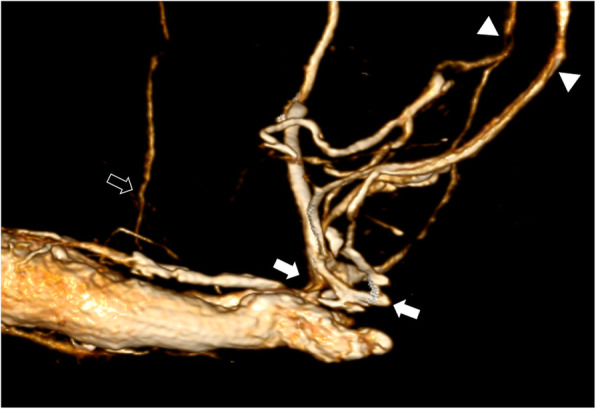
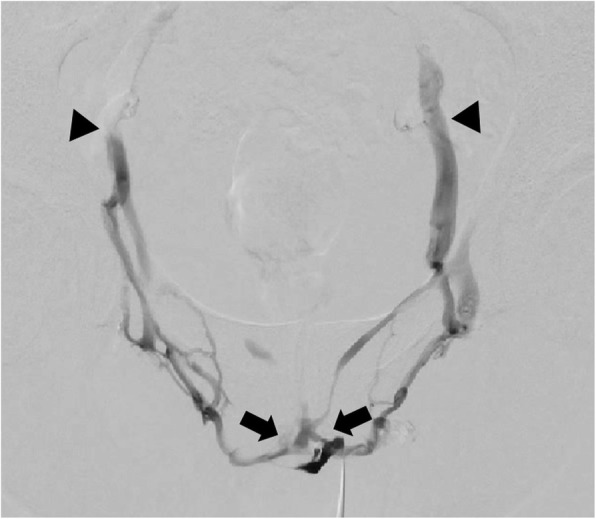
A 47-year-old man was diagnosed with venogenic erectile dysfunction due to venous leakage on color Doppler flow analysis and computed tomography cavernosography. He did not respond to PDE-5-inhibitors. This patient demonstrated major venous leakage of paired deep dorsal penile veins via periprostatic veins and internal pudendal veins draining into both iliohypogastric veins. This patient's venous leak was treated with endovascular embolization using an anterograde access via deep dorsal penile veins.
This patient's erectile dysfunction due to venous leakage, based on findings in color Doppler flow analysis and computed tomography cavernosography, was embolized using an anterograde access via deep dorsal penile veins as a minimally-invasive endovascular treatment option.
勃起功能障碍的潜在病因可能多种多样。其中,血管源性病因的相关性日益增加,且并不严格局限于老年人群。根据最近的研究,静脉性勃起功能障碍似乎比动脉性勃起功能障碍更为常见。静脉漏导致的静脉性勃起功能障碍会使阴茎血液潴留不足。静脉漏的正确诊断应包括彩色多普勒血流分析和计算机断层扫描海绵体造影,以便进行适当的患者选择和治疗规划。除了阴茎引流静脉的手术结扎外,血管内治疗方法可能会显示出更有前景的结果。特别是通过阴茎背深静脉进行顺行通路的静脉漏血管内栓塞术,似乎对患者的临床结局更有益,血管内介入医生应提高对该技术的认识。
一名47岁男性经彩色多普勒血流分析和计算机断层扫描海绵体造影诊断为静脉漏导致的静脉性勃起功能障碍。他对5型磷酸二酯酶抑制剂无反应。该患者显示成对的阴茎背深静脉通过前列腺周围静脉和阴部内静脉发生大量静脉漏,这些静脉引流至双侧髂腹下静脉。该患者的静脉漏采用通过阴茎背深静脉的顺行通路进行血管内栓塞治疗。
基于彩色多普勒血流分析和计算机断层扫描海绵体造影的结果,该患者因静脉漏导致的勃起功能障碍,采用通过阴茎背深静脉的顺行通路进行栓塞,作为一种微创血管内治疗选择。