Laboratory of Atherothrombosis, CIMA Universidad de Navarra, Instituto de Investigación Sanitaria de Navarra, IdisNA, Pamplona, Spain.
Neurology Department, Complejo Hospitalario de Navarra, IdisNA, Pamplona, Spain.
Thromb Haemost. 2022 Aug;122(8):1314-1325. doi: 10.1055/a-1759-9962. Epub 2022 Feb 3.
Intracranial hemorrhage (ICH) is one of the major devastating complications of anticoagulation. Matrix metalloproteinase (MMP) inhibition has been proposed as a novel pharmacological approach for ICH treatment.
We evaluated the effects of CM-352 (MMP-fibrinolysis inhibitor) in an experimental ICH model associated with oral anticoagulants as compared with clinically used prothrombin complex concentrate (PCC).
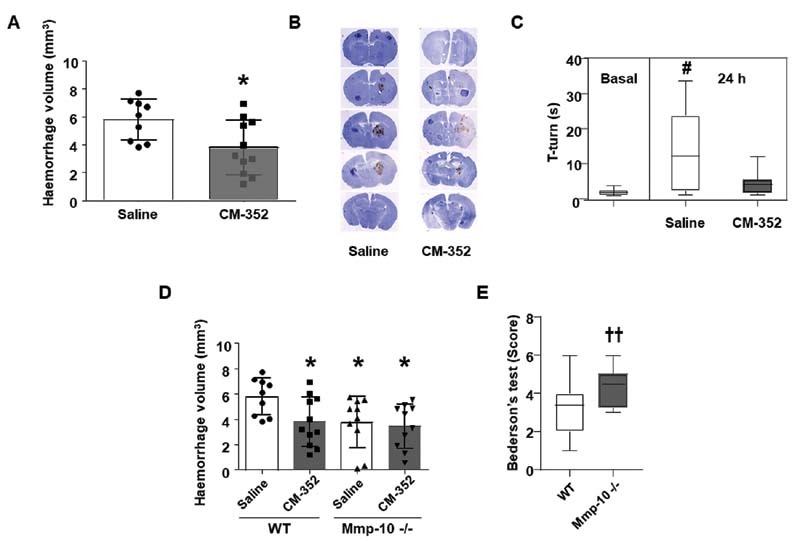
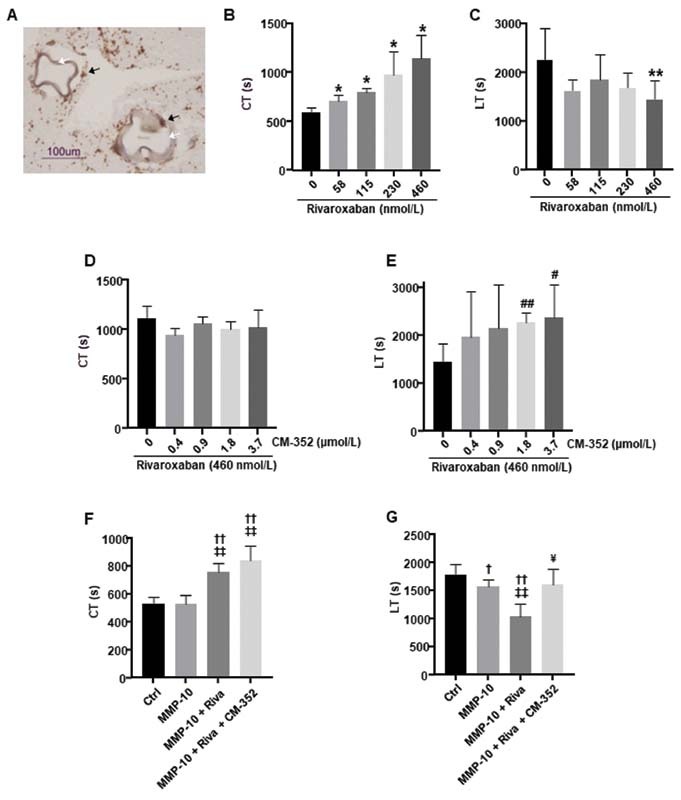
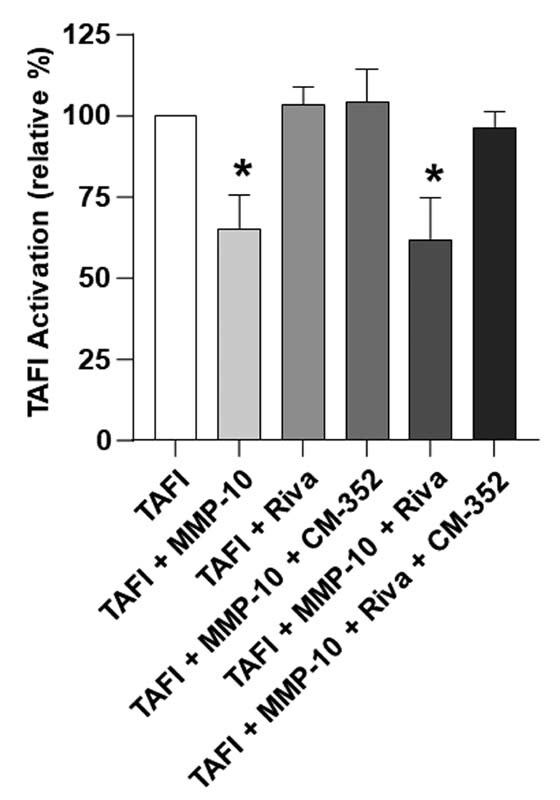
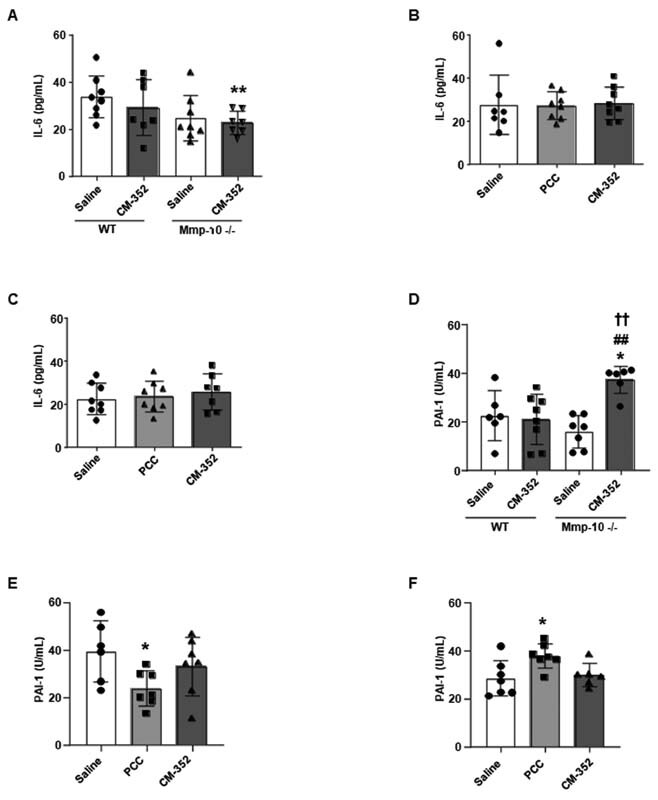
ICH was induced by collagenase injection into the striatum of wild type (C57BL/6J) anticoagulated mice (warfarin or rivaroxaban) and mice. Hematoma volume and neurological deficits were measured 24 hours later by diaminobenzidine staining and different behavioral tests. Circulating plasminogen activator inhibitor-1 (PAI-1) activity and interleukin-6 (IL-6) were measured in plasma samples and local inflammation was assessed by neutrophil infiltration. Finally, fibrinolytic effects of MMP-10 and rivaroxaban were evaluated by thromboelastometry and thrombin-activatable fibrinolysis inhibitor (TAFI) activation assays.
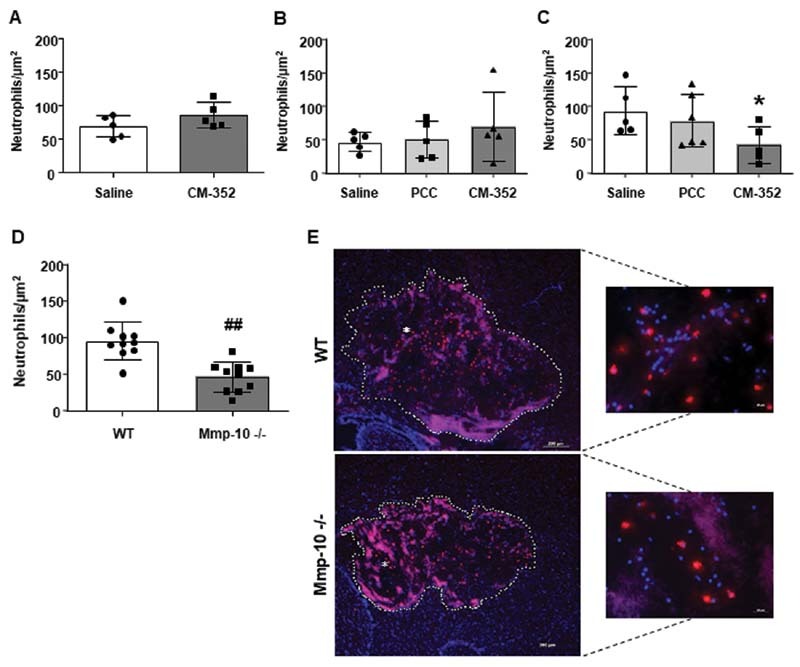
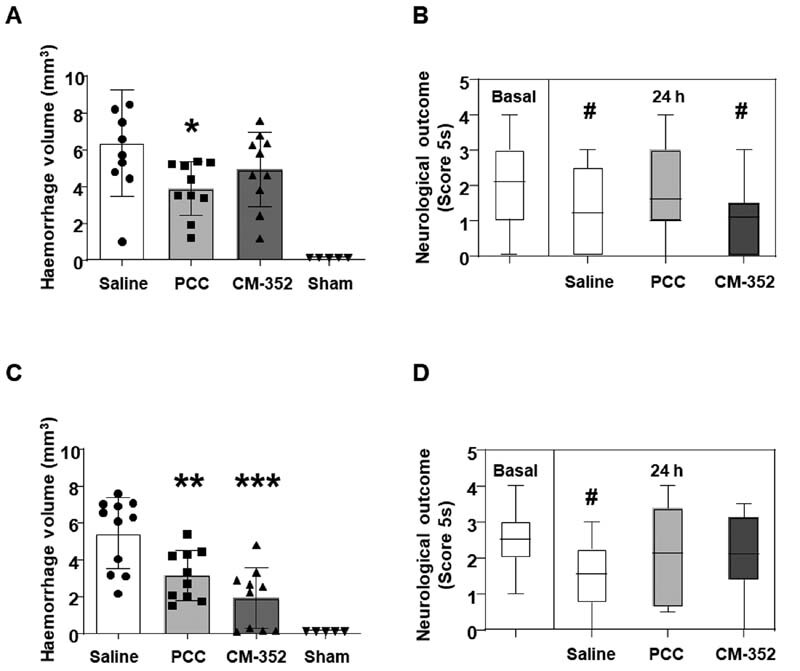
Only PCC reduced hemorrhage volume and improved functional outcome in warfarin-ICH, but both PCC and CM-352 treatments diminished hemorrhage volume (46%, < 0.01 and 64%, < 0.001, respectively) and ameliorated functional outcome in rivaroxaban-ICH. We further demonstrated that CM-352, but not PCC, decreased neutrophil infiltration in the hemorrhage area at 24 hours. The effect of CM-352 could be related to MMP-10 inhibition since mice showed lower hemorrhage volume, better neurological score, reduced IL-6 levels and neutrophil infiltration, and increased PAI-1 after experimental ICH. Finally, we found that CM-352 reduced MMP-10 and rivaroxaban-related fibrinolytic effects in thromboelastometry and TAFI activation.
CM-352 treatment, by diminishing MMPs and rivaroxaban-associated fibrinolytic effects, might be a novel antihemorrhagic strategy for rivaroxaban-associated ICH.
颅内出血 (ICH) 是抗凝治疗的主要破坏性并发症之一。基质金属蛋白酶 (MMP) 抑制被认为是 ICH 治疗的一种新的药理学方法。
我们评估了 CM-352(MMP-纤维蛋白溶解抑制剂)在与口服抗凝剂相关的实验性 ICH 模型中的作用,与临床使用的凝血酶原复合物浓缩物 (PCC) 进行比较。
ICH 通过胶原酶注射到野生型 (C57BL/6J) 抗凝小鼠(华法林或利伐沙班)和 的纹状体中诱导。24 小时后,通过二氨基联苯胺染色和不同的行为测试测量血肿体积和神经功能缺损。在血浆样本中测量循环纤溶酶原激活物抑制剂-1 (PAI-1) 活性和白细胞介素-6 (IL-6),并通过中性粒细胞浸润评估局部炎症。最后,通过血栓弹性描记术和凝血酶激活的纤维蛋白溶解抑制剂 (TAFI) 激活测定评估 MMP-10 和利伐沙班的纤溶作用。
只有 PCC 降低了华法林-ICH 的出血体积并改善了功能结果,但 PCC 和 CM-352 治疗均降低了出血体积(分别为 46%, < 0.01 和 64%, < 0.001)并改善了利伐沙班-ICH 的功能结果。我们进一步证明,CM-352 可降低 24 小时时出血区域的中性粒细胞浸润,而 PCC 则不能。CM-352 的作用可能与 MMP-10 抑制有关,因为 小鼠在实验性 ICH 后显示出较低的出血体积、更好的神经评分、降低的 IL-6 水平和中性粒细胞浸润,以及增加的 PAI-1。最后,我们发现 CM-352 降低了血栓弹性描记术和 TAFI 激活中的 MMP-10 和利伐沙班相关的纤溶作用。
CM-352 治疗通过减少 MMPs 和利伐沙班相关的纤溶作用,可能成为利伐沙班相关 ICH 的一种新的抗出血策略。