Zhang Chenlu, Sha Yuou, Liu Haiyan, Guo Dan, Jiang Yijing, Hong Lemin, Shi Lili, Huang Hongming
Department of Hematology, The Affiliated Hospital of Nantong University, Nantong 226001, China.
Department of Tongji Medical College, Huazhong University of Science and Technology, Wuhan 430074, China.
Transl Cancer Res. 2020 Apr;9(4):2884-2894. doi: 10.21037/tcr.2020.03.36.
Epidemiological studies have shown that patients with type 2 diabetes mellitus (T2DM) are at a higher risk of secondary tumors. However, no consensus has been made about whether T2DM can increase the risk of multiple myeloma (MM).
We searched the databases of PubMed, Cochrane Library and EMBASE and cross-checked the bibliography. Data quality was assessed using the Newcastle-Ottawa scale (NOS). Heterogeneity was calculated as the odds ratio (OR) using a random-effects model. Data were analyzed using Stata version 12.0 software.
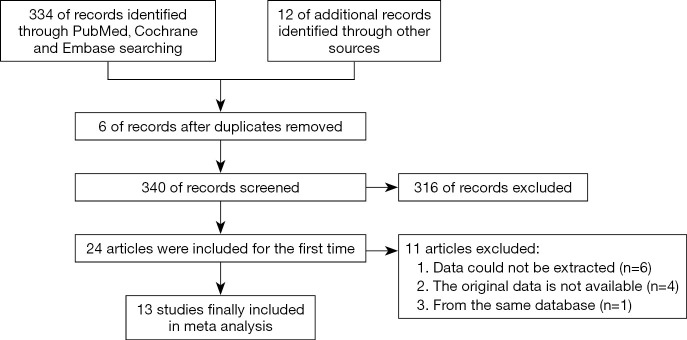
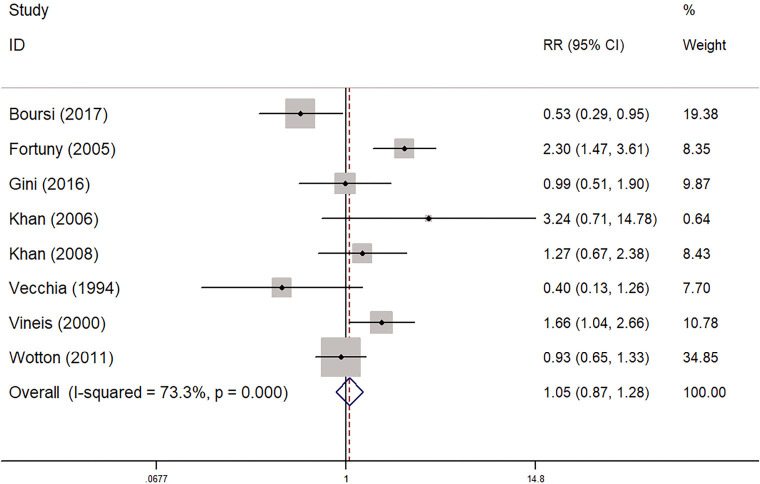
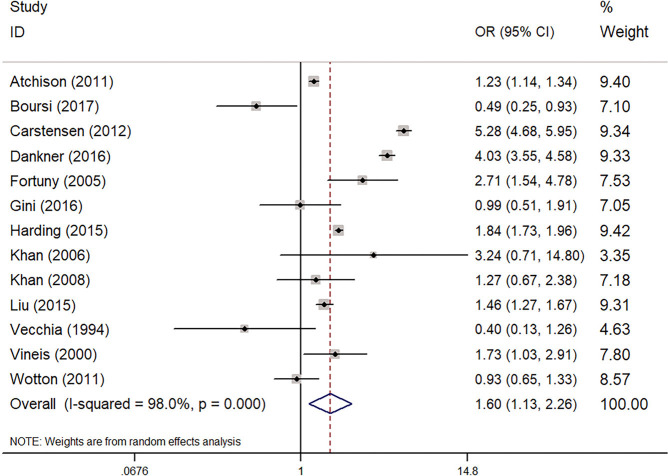
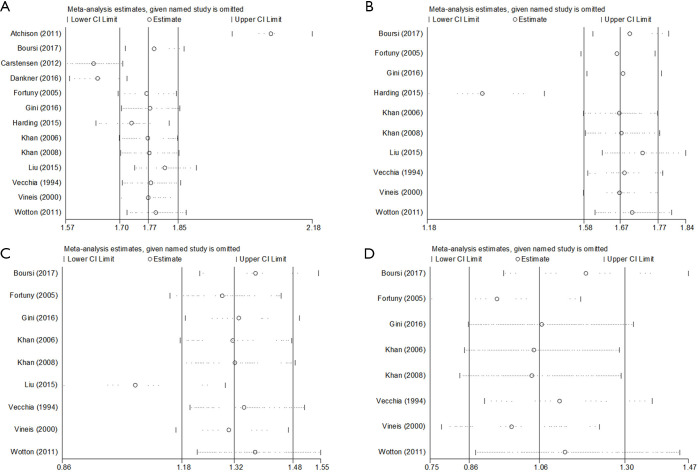
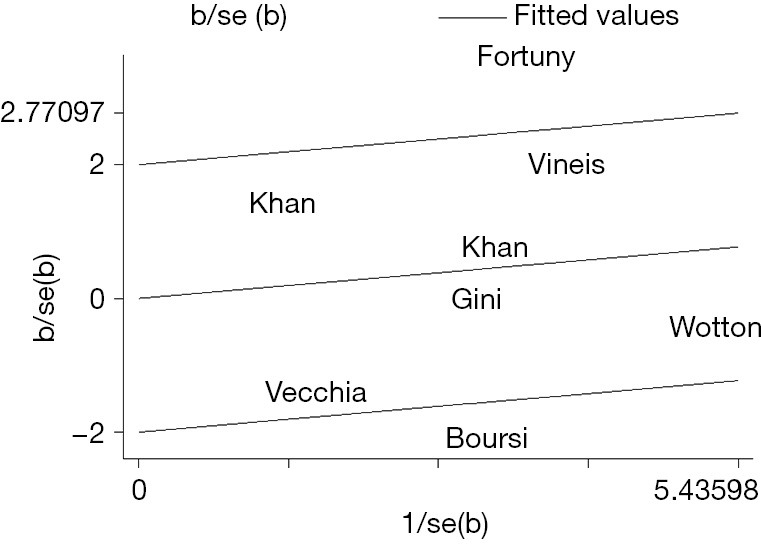
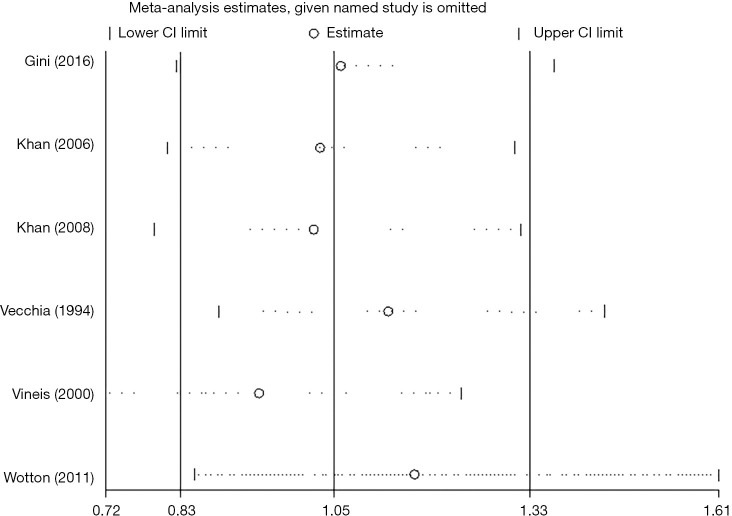
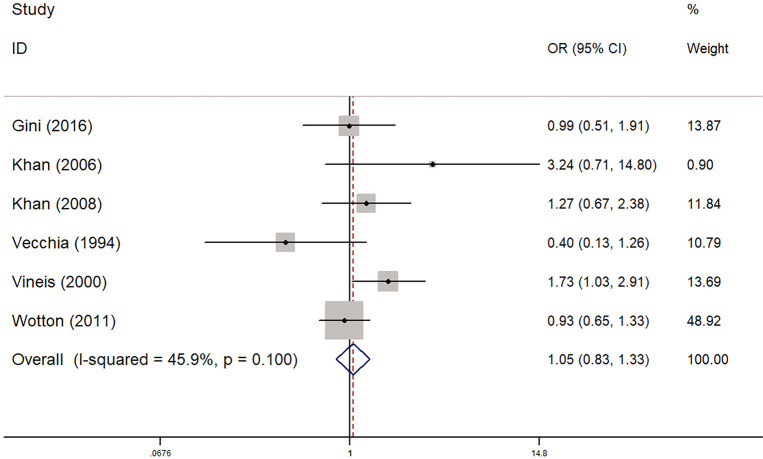
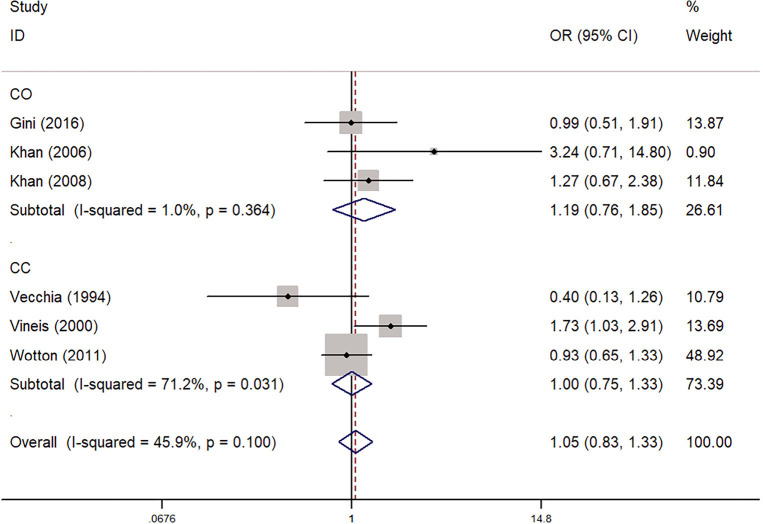
A total of 13 articles were selected into this meta-analysis. Initially, we found that diabetic patients had a higher risk of myeloma than non-diabetic patients (OR =1.60, 95% CI: 1.13-2.26, I=98%, P=0.000). But the data in these articles were highly heterogeneous (I>75%). Therefore, eight of the included articles showed a moderate heterogeneity (I=71.6%). We used Galbraith heterogeneity map to analyze the causes of heterogeneity. Two articles with high heterogeneity were excluded. Then, we found the heterogeneity of the left six articles was reduced from moderate to mild (I=45.9%, P=0.100). The final results of this meta-analysis showed that T2DM was not a risk factor for increased incidence of MM (OR =1.05, 95% CI: 0.83-1.33, I=45.9%, P=0.100). Also, the subgroup analysis (case-control studies cohort studies) showed no statistical difference (OR =1.19, 95% CI: 0.76-1.85, I=1%, P=0.364; OR =1.00, 95% CI: 0.75-1.33, I=71.2%, P=0.031; respectively).
T2DM is not a risk factor for the increased incidence of MM, a finding that should be validated with more strictly designed randomized controlled trials (RCTs).
流行病学研究表明,2型糖尿病(T2DM)患者发生继发性肿瘤的风险更高。然而,对于T2DM是否会增加多发性骨髓瘤(MM)的风险,尚未达成共识。
我们检索了PubMed、Cochrane图书馆和EMBASE数据库,并交叉核对了参考文献。使用纽卡斯尔-渥太华量表(NOS)评估数据质量。采用随机效应模型计算异质性的比值比(OR)。使用Stata 12.0软件进行数据分析。
本荟萃分析共纳入13篇文章。最初,我们发现糖尿病患者患骨髓瘤的风险高于非糖尿病患者(OR = 1.60,95%CI:1.13 - 2.26,I = 98%,P = 0.000)。但这些文章中的数据异质性很高(I > 75%)。因此,纳入的8篇文章显示出中度异质性(I = 71.6%)。我们使用Galbraith异质性图分析异质性的原因。排除两篇异质性高的文章。然后,我们发现剩下6篇文章的异质性从中度降至轻度(I = 45.9%,P = 0.100)。本荟萃分析的最终结果表明,T2DM不是MM发病率增加的危险因素(OR = 1.05,95%CI:0.83 - 1.33,I = 45.9%,P = 0.100)。此外,亚组分析(病例对照研究 队列研究)显示无统计学差异(OR = 1.19,95%CI:0.76 - 1.85,I = 1%,P = 0.364;OR = 1.00,95%CI:0.75 - 1.33,I = 71.2%,P = 0.031;分别)。
T2DM不是MM发病率增加的危险因素,这一发现应通过更严格设计的随机对照试验(RCT)进行验证。