Cancer Center, Union Hospital, Tongji Medical College, Huazhong University of Science and Technology, Wuhan, China.
Cancer Center, Union Hospital, Tongji Medical College, Huazhong University of Science and Technology, Wuhan, China
J Immunother Cancer. 2022 Feb;10(2). doi: 10.1136/jitc-2021-003716.
Although immune checkpoint blockade (ICB) has been proven to achieve a persistent therapeutic response in various tumor types, only 20%-40% of patients benefit from this treatment. Radiotherapy (RT) can enhance tumor immunogenicity and improve the ICB response, but the outcome achieved by combining these two modalities remains clinically unsatisfactory. We previously uncovered that lysine-specific demethylase 4C (KDM4C) is a regulator of radiosensitivity in lung cancer. However, the role of KDM4C in antitumor immunity has not yet been investigated.
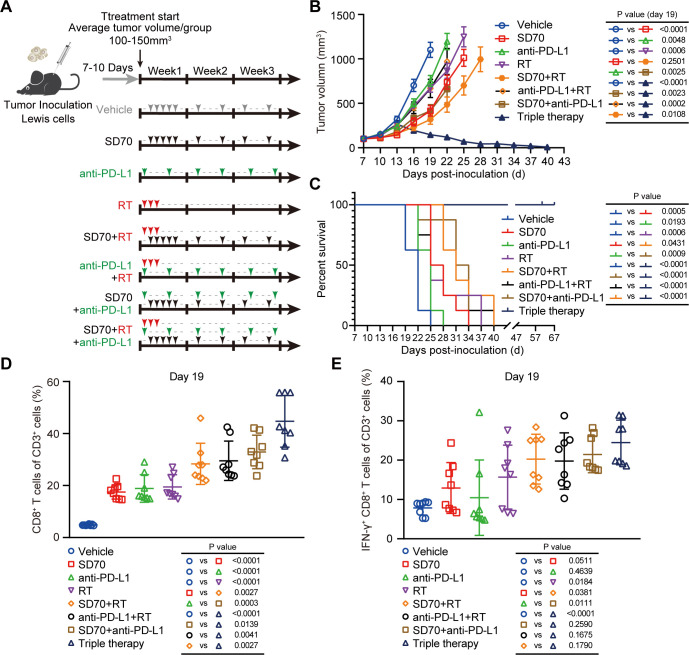
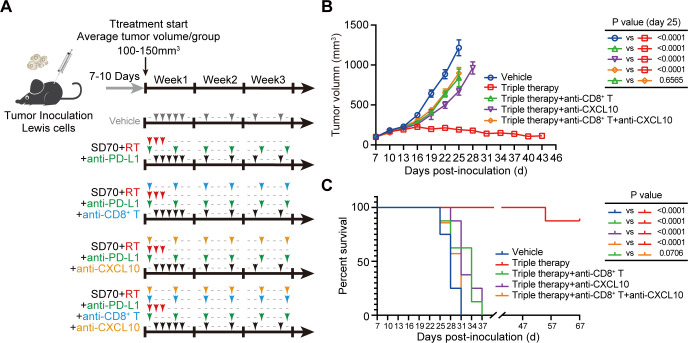
Infiltrating immune cells in our mouse tumor model were screened by flow cytometry. An in vivo subcutaneous transplanted tumor model and in vitro conditioned culture model were constructed to detect the quantitative and functional changes in CD8 T cells. RNA sequencing and chromatin immunoprecipitation-PCR assays were used to explore the downstream regulatory mechanism of KDM4C in antitumor immunity. A C57BL/6 mouse tumor model was developed to evaluate the efficacy and safety of a triple therapy (the KDM4C-specific inhibitor SD70 plus RT and an anti-PD-L1 antibody) in lung cancer in vivo.
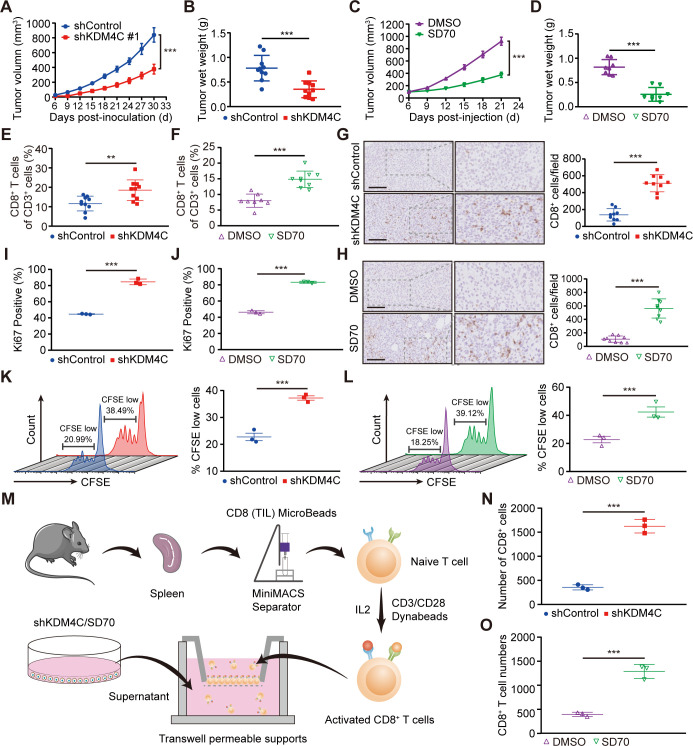
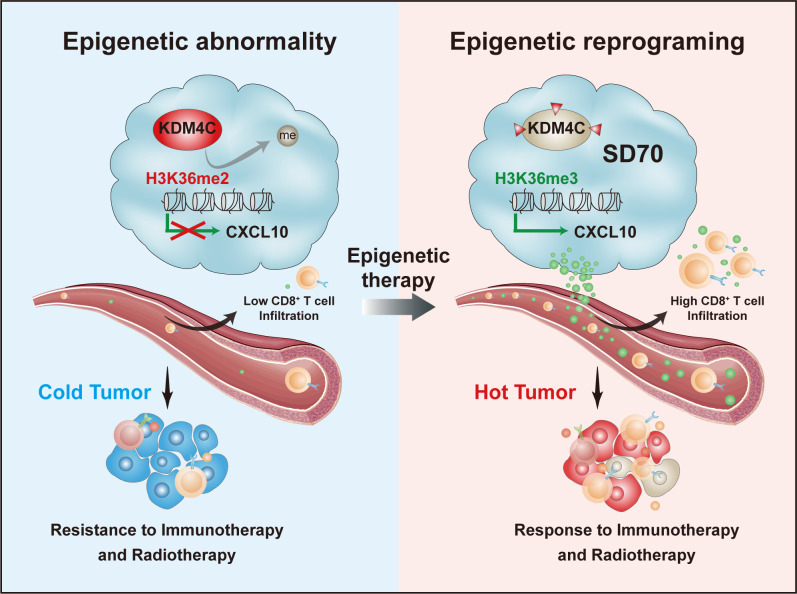
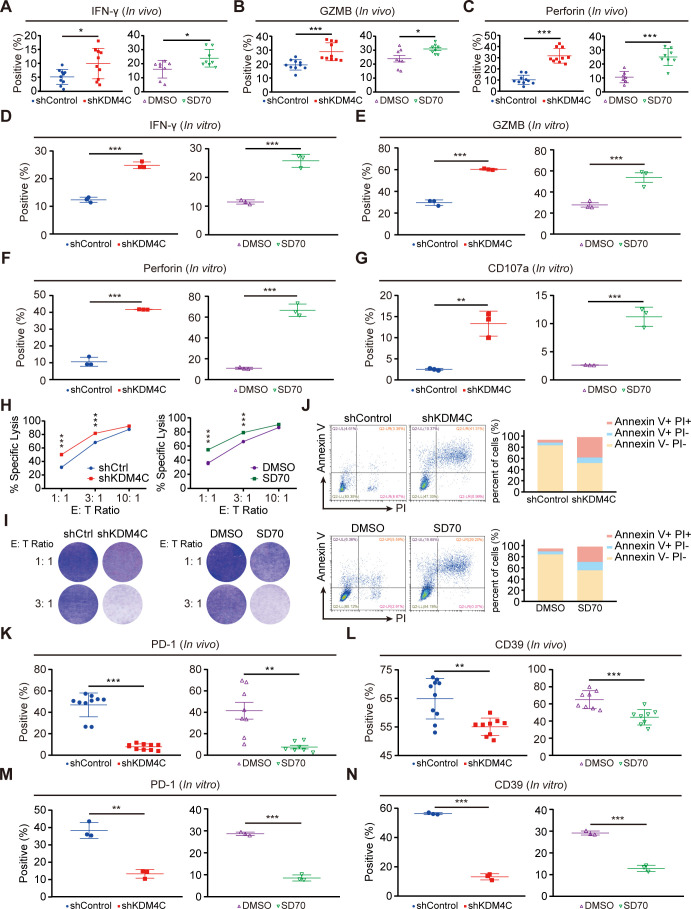
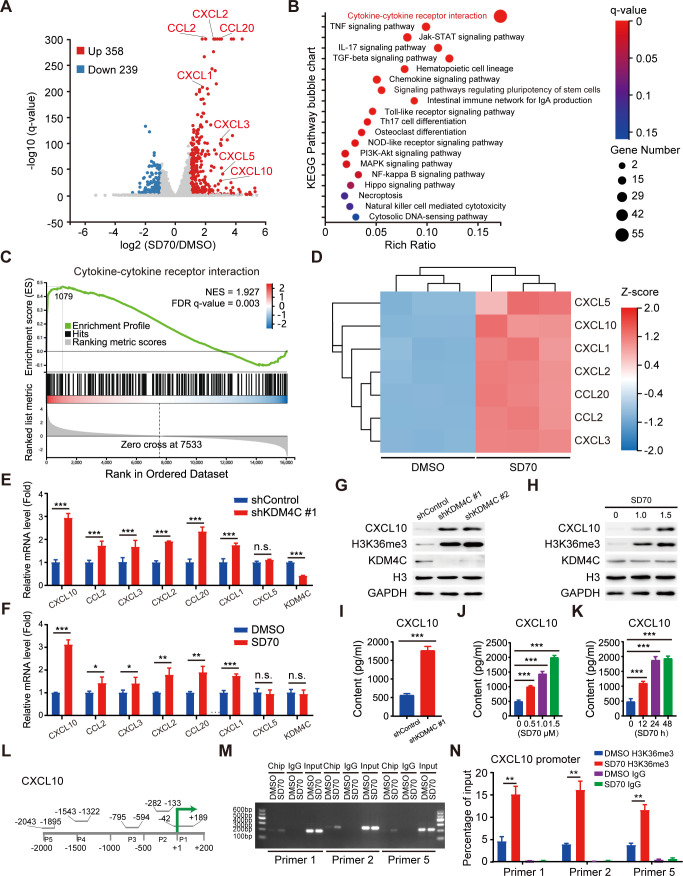
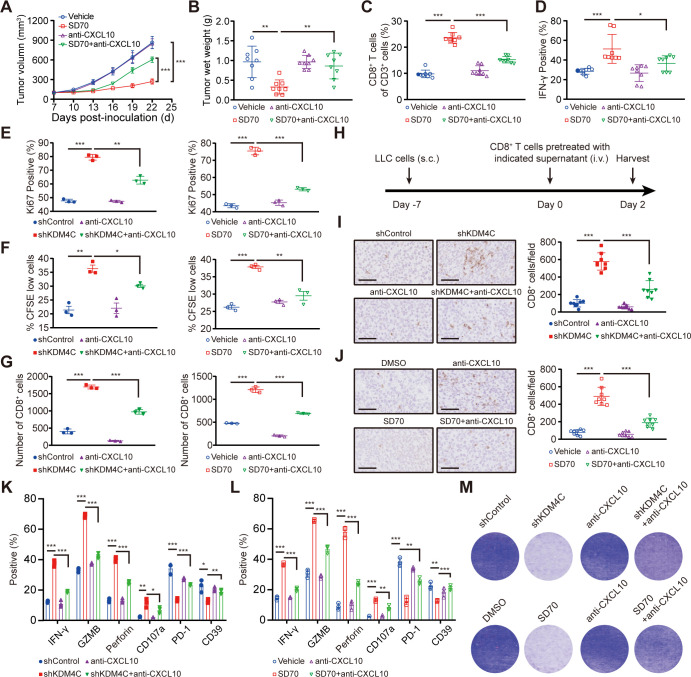
Genetical or pharmacological inhibition of KDM4C specifically increased CD8 T cell infiltration; promoted the proliferation, migration and activation of CD8 T cells; and alleviated CD8 T cell exhaustion in mouse tumor tissues. Mechanistically, KDM4C inhibition increased the binding of H3K36me3 to the CXCL10 promoter region, thus inducing CXCL10 transcription and enhancing the CD8 T cell mediated antitumor immune response. More importantly, among the tested regimens, the triple therapy achieved the best therapeutic efficacy with tolerable toxicity in lung cancer.
Our data reveal a crucial role for KDM4C in antitumor immunity in lung cancer and indicate that targeting KDM4C in combination with radioimmunotherapy might be a promising synergistic strategy in lung cancer.
尽管免疫检查点阻断(ICB)已被证明可在多种肿瘤类型中实现持久的治疗反应,但只有 20%-40%的患者从中受益。放射治疗(RT)可以增强肿瘤的免疫原性,提高 ICB 反应,但这两种方法联合应用的效果在临床上仍不尽如人意。我们之前发现赖氨酸特异性去甲基酶 4C(KDM4C)是肺癌放射敏感性的调节剂。然而,KDM4C 在抗肿瘤免疫中的作用尚未得到研究。
通过流式细胞术筛选我们的小鼠肿瘤模型中的浸润免疫细胞。构建体内皮下移植肿瘤模型和体外条件培养模型,检测 CD8 T 细胞的数量和功能变化。采用 RNA 测序和染色质免疫沉淀-PCR 检测方法,探讨 KDM4C 在抗肿瘤免疫中的下游调控机制。构建 C57BL/6 小鼠肿瘤模型,评估 KDM4C 特异性抑制剂 SD70 联合 RT 和抗 PD-L1 抗体的三联疗法在体内治疗肺癌的疗效和安全性。
遗传或药理学抑制 KDM4C 特异性增加 CD8 T 细胞浸润;促进 CD8 T 细胞的增殖、迁移和激活;并减轻小鼠肿瘤组织中 CD8 T 细胞的衰竭。机制上,KDM4C 抑制增加了 H3K36me3 与 CXCL10 启动子区域的结合,从而诱导 CXCL10 转录,增强 CD8 T 细胞介导的抗肿瘤免疫反应。更重要的是,在测试的方案中,三联疗法在肺癌中取得了最佳的治疗效果,且毒性可耐受。
我们的数据揭示了 KDM4C 在肺癌抗肿瘤免疫中的关键作用,并表明针对 KDM4C 联合放免治疗可能是肺癌的一种有前途的协同治疗策略。