College of Life Science, Hebei Agricultural University, Baoding, China.
Hebei Key Laboratory of Plant Physiology and Molecular Pathology, Hebei Agricultural University, Baoding, China.
BMC Plant Biol. 2022 Feb 5;22(1):65. doi: 10.1186/s12870-022-03450-x.
Codon usage bias (CUB) analysis is an effective method for studying specificity, evolutionary relationships, and mRNA translation and discovering new genes among various species. In general, CUB analysis is mainly performed within one species or between closely related species and no such study has been applied among species with distant genetic relationships. Here, seven Rosales species with high economic value were selected to conduct CUB analysis.
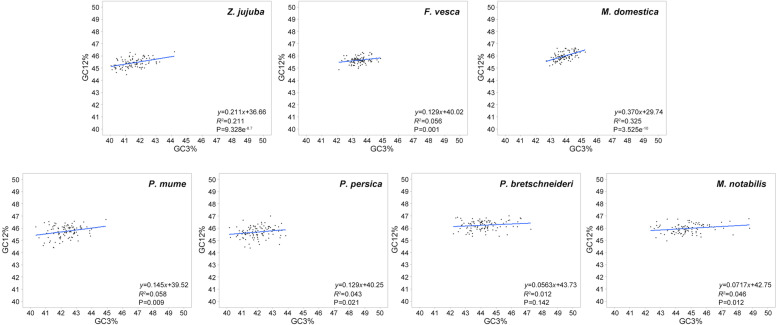
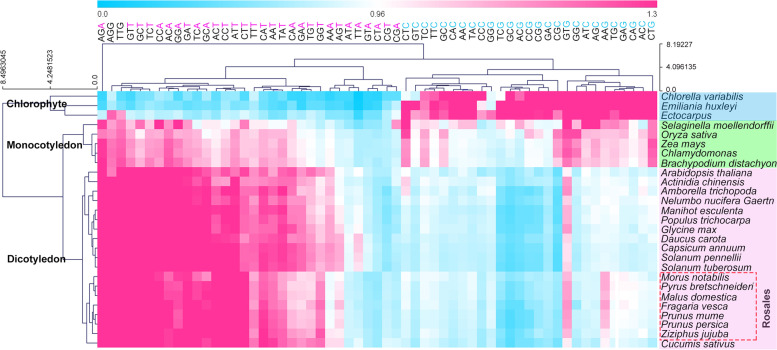
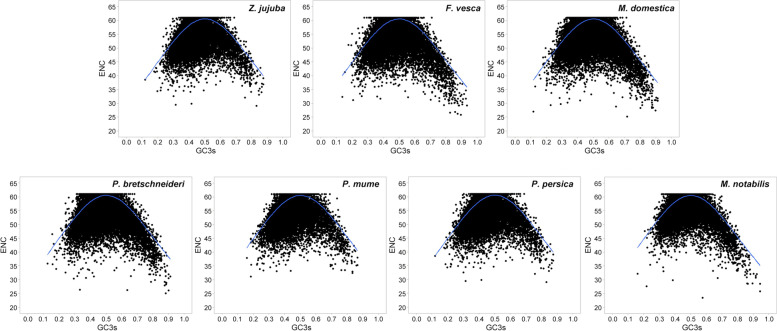
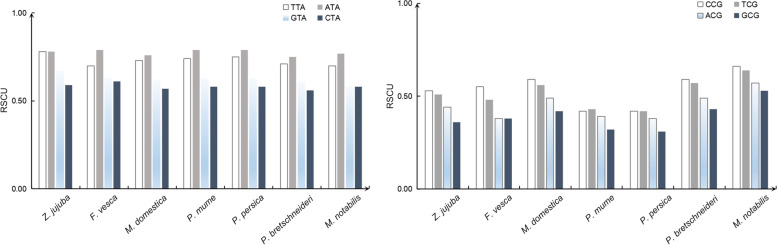
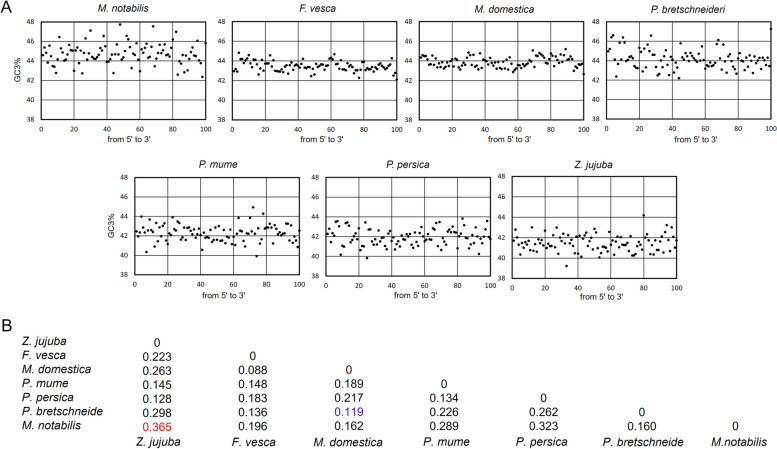
The results showed that the average GC1, GC2 and GC3 contents were 51.08, 40.52 and 43.12%, respectively, indicating that the A/T content is more abundant and the Rosales species prefer A/T as the last codon. Neutrality plot and ENc plot analysis revealed that natural selection was the main factor leading to CUB during the evolution of Rosales species. All 7 Rosales species contained three high-frequency codons, AGA, GTT and TTG, encoding Arg, Val and Leu, respectively. The 7 Rosales species differed in high-frequency codon pairs and the distribution of GC3, though the usage patterns of closely related species were more consistent. The results of the biclustering heat map among 7 Rosales species and 20 other species were basically consistent with the results of genome data, suggesting that CUB analysis is an effective method for revealing evolutionary relationships among species at the family or order level. In addition, chlorophytes prefer using G/C as ending codon, while monocotyledonous and dicotyledonous plants prefer using A/T as ending codon.
The CUB pattern among Rosales species was mainly affected by natural selection. This work is the first to highlight the CUB patterns and characteristics of Rosales species and provides a new perspective for studying genetic relationships across a wide range of species.
密码子使用偏性(CUB)分析是研究特定性、进化关系以及 mRNA 翻译和发现不同物种中新基因的有效方法。一般来说,CUB 分析主要在一个物种内或亲缘关系密切的物种之间进行,而在遗传关系较远的物种之间尚未进行此类研究。本研究选择了 7 个具有高经济价值的蔷薇目物种进行 CUB 分析。
结果表明,平均 GC1、GC2 和 GC3 含量分别为 51.08%、40.52%和 43.12%,表明 A/T 含量更为丰富,蔷薇目物种偏爱 A/T 作为最后一个密码子。中性图谱和 ENc 图谱分析表明,自然选择是导致蔷薇目物种进化过程中 CUB 的主要因素。7 个蔷薇目物种均包含三个高频密码子 AGA、GTT 和 TTG,分别编码 Arg、Val 和 Leu。7 个蔷薇目物种在高频密码子对和 GC3 的分布上存在差异,尽管亲缘关系密切的物种的使用模式更为一致。7 个蔷薇目物种和 20 个其他物种之间的双聚类热图结果与基因组数据的结果基本一致,表明 CUB 分析是揭示科或目水平物种进化关系的有效方法。此外,绿藻更喜欢使用 G/C 作为终止密码子,而单子叶植物和双子叶植物更喜欢使用 A/T 作为终止密码子。
蔷薇目物种的 CUB 模式主要受自然选择的影响。本研究首次强调了蔷薇目物种的 CUB 模式和特征,为研究广泛物种的遗传关系提供了新的视角。