• 文献检索
  • 文档翻译
  • 深度研究
  • 学术资讯
  • Suppr Zotero 插件Zotero 插件
  • 邀请有礼
  • 套餐&价格
  • 历史记录
应用&插件
Suppr Zotero 插件Zotero 插件浏览器插件Mac 客户端Windows 客户端微信小程序
定价
高级版会员购买积分包购买API积分包
服务
文献检索文档翻译深度研究API 文档MCP 服务
关于我们
关于 Suppr公司介绍联系我们用户协议隐私条款
关注我们

Suppr 超能文献

核心技术专利:CN118964589B侵权必究
粤ICP备2023148730 号-1Suppr @ 2026

文献检索

告别复杂PubMed语法,用中文像聊天一样搜索,搜遍4000万医学文献。AI智能推荐,让科研检索更轻松。

立即免费搜索

文件翻译

保留排版,准确专业,支持PDF/Word/PPT等文件格式,支持 12+语言互译。

免费翻译文档

深度研究

AI帮你快速写综述,25分钟生成高质量综述,智能提取关键信息,辅助科研写作。

立即免费体验

产房内的触觉刺激:过去、现在和未来。系统评价。

Tactile stimulation in the delivery room: past, present, future. A systematic review.

机构信息

Division of Neonatology and Paediatric Intensive Care Medicine, Department of Paediatrics, Medical Faculty, TU Dresden, Dresden, Germany.

Saxony Center for Feto-Neonatal Health, Medical Faculty, TU Dresden, Dresden, Germany.

出版信息

Pediatr Res. 2024 Aug;96(3):616-624. doi: 10.1038/s41390-022-01945-9. Epub 2022 Feb 5.

DOI:10.1038/s41390-022-01945-9
PMID:35124690
原文链接:https://pmc.ncbi.nlm.nih.gov/articles/PMC11499275/
Abstract

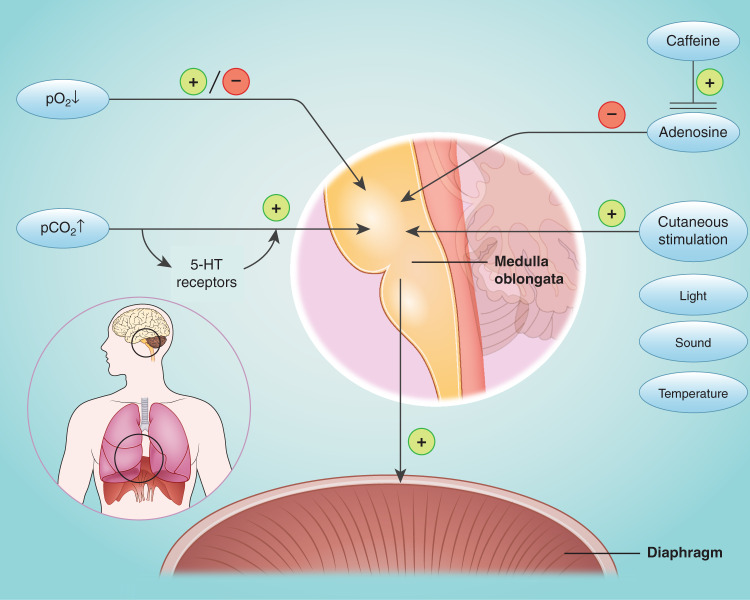
In current resuscitation guidelines, tactile stimulation is recommended for infants with insufficient respiratory efforts after birth. No recommendations are made regarding duration, onset, and method of stimulation. Neither is mentioned how tactile stimulation should be applied in relation to the gestational age. The aim was to review the physiological mechanisms of respiratory drive after birth and to identify and structure the current evidence on tactile stimulation during neonatal resuscitation. A systematic review of available data was performed using PubMed, covering the literature up to April 2021. Two independent investigators screened the extracted references and assessed their methodological quality. Six studies were included. Tactile stimulation management, including the onset of stimulation, overall duration, and methods as well as the effect on vital parameters was analyzed and systematically presented. Tactile stimulation varies widely between, as well as within different centers and no consensus exists which stimulation method is most effective. Some evidence shows that repetitive stimulation within the first minutes of resuscitation improves oxygenation. Further studies are warranted to optimize strategies to support spontaneous breathing after birth, assessing the effect of stimulating various body parts respectively within different gestational age groups.

摘要

在当前的复苏指南中,建议对出生后呼吸努力不足的婴儿进行触觉刺激。对于刺激的持续时间、开始时间和方法,没有任何建议。也没有提到触觉刺激应该如何根据胎龄应用。目的是回顾出生后呼吸驱动的生理机制,并确定和构建新生儿复苏期间触觉刺激的现有证据。使用 PubMed 对现有数据进行了系统回顾,涵盖了截至 2021 年 4 月的文献。两名独立调查员筛选了提取的参考文献,并评估了它们的方法学质量。共纳入 6 项研究。分析并系统呈现了触觉刺激管理,包括刺激的开始、总持续时间和方法以及对生命参数的影响。触觉刺激在不同中心之间以及在同一中心内差异很大,没有共识认为哪种刺激方法最有效。一些证据表明,在复苏的最初几分钟内进行重复刺激可以改善氧合。需要进一步的研究来优化支持出生后自主呼吸的策略,分别评估在不同胎龄组刺激不同身体部位的效果。
https://cdn.ncbi.nlm.nih.gov/pmc/blobs/7852/11499275/d68c5eaa6cc7/41390_2022_1945_Fig1_HTML.jpg

相似文献

1
Tactile stimulation in the delivery room: past, present, future. A systematic review.产房内的触觉刺激:过去、现在和未来。系统评价。
Pediatr Res. 2024 Aug;96(3):616-624. doi: 10.1038/s41390-022-01945-9. Epub 2022 Feb 5.
2
Tactile stimulation in very preterm infants and their needs of non-invasive respiratory support.极早产儿的触觉刺激及其无创呼吸支持需求
Front Pediatr. 2022 Nov 18;10:1041898. doi: 10.3389/fped.2022.1041898. eCollection 2022.
3
Physical stimulation of newborn infants in the delivery room.产房内对新生儿的物理刺激。
Arch Dis Child Fetal Neonatal Ed. 2018 Mar;103(2):F132-F136. doi: 10.1136/archdischild-2016-312311. Epub 2017 Jun 9.
4
Tactile stimulation during neonatal transition and its effect on vital parameters in neonates during neonatal transition.新生儿过渡期的触觉刺激及其对新生儿过渡期间生命参数的影响。
Acta Paediatr. 2018 Jun;107(6):952-957. doi: 10.1111/apa.14239. Epub 2018 Feb 15.
5
Tactile Stimulation in Newborn Infants With Inadequate Respiration at Birth: A Systematic Review.出生时呼吸不足的新生儿的触觉刺激:系统评价。
Pediatrics. 2022 Apr 1;149(4). doi: 10.1542/peds.2021-055067.
6
Neonatal tactile stimulation at birth in a low-resource setting.出生时在资源匮乏环境下对新生儿进行触觉刺激。
BMC Pediatr. 2018 Sep 20;18(1):306. doi: 10.1186/s12887-018-1279-4.
7
Sustained versus standard inflations during neonatal resuscitation to prevent mortality and improve respiratory outcomes.新生儿复苏期间持续通气与标准通气预防死亡及改善呼吸结局的比较
Cochrane Database Syst Rev. 2017 Jul 14;7(7):CD004953. doi: 10.1002/14651858.CD004953.pub3.
8
Repetitive versus standard tactile stimulation of preterm infants at birth - A randomized controlled trial.对早产儿出生时进行重复与标准触觉刺激的比较:一项随机对照试验。
Resuscitation. 2018 Jun;127:37-43. doi: 10.1016/j.resuscitation.2018.03.030. Epub 2018 Mar 23.
9
Effects of Breathing and Apnoea during Sustained Inflations in Resuscitation of Preterm Infants.持续充气复苏早产儿过程中呼吸和呼吸暂停的影响
Neonatology. 2017;111(4):360-366. doi: 10.1159/000454799. Epub 2017 Jan 25.
10
Sustained versus standard inflations during neonatal resuscitation to prevent mortality and improve respiratory outcomes.新生儿复苏期间持续充气与标准充气对预防死亡和改善呼吸结局的作用
Cochrane Database Syst Rev. 2020 Mar 18;3(3):CD004953. doi: 10.1002/14651858.CD004953.pub4.

引用本文的文献

1
RECOVER Guidelines: Newborn Resuscitation in Dogs and Cats. Clinical Guidelines.《RECOVER指南:犬猫新生儿复苏。临床指南》
J Vet Emerg Crit Care (San Antonio). 2025 Aug;35 Suppl 1(Suppl 1):S60-S85. doi: 10.1111/vec.70013.
2
The Respiratory Management of the Extreme Preterm in the Delivery Room.产房极早产儿的呼吸管理
Children (Basel). 2023 Feb 10;10(2):351. doi: 10.3390/children10020351.
3
Survey on currently applied interventions in neonatal resuscitation (SCIN): A study protocol.新生儿复苏当前应用干预措施调查(SCIN):一项研究方案。

本文引用的文献

1
Effects of tactile stimulation on spontaneous breathing during face mask ventilation.触觉刺激对面罩通气时自主呼吸的影响。
Arch Dis Child Fetal Neonatal Ed. 2022 Sep;107(5):508-512. doi: 10.1136/archdischild-2021-322989. Epub 2021 Dec 3.
2
European Resuscitation Council Guidelines 2021: Newborn resuscitation and support of transition of infants at birth.欧洲复苏委员会指南 2021:新生儿复苏和支持婴儿出生时的过渡。
Resuscitation. 2021 Apr;161:291-326. doi: 10.1016/j.resuscitation.2021.02.014. Epub 2021 Mar 24.
3
Part 5: Neonatal Resuscitation 2020 American Heart Association Guidelines for Cardiopulmonary Resuscitation and Emergency Cardiovascular Care.
Front Pediatr. 2023 Jan 9;10:1056256. doi: 10.3389/fped.2022.1056256. eCollection 2022.
4
Tactile stimulation in very preterm infants and their needs of non-invasive respiratory support.极早产儿的触觉刺激及其无创呼吸支持需求
Front Pediatr. 2022 Nov 18;10:1041898. doi: 10.3389/fped.2022.1041898. eCollection 2022.
第5部分:新生儿复苏 2020 美国心脏协会心肺复苏及心血管急救指南
Pediatrics. 2021 Jan;147(Suppl 1). doi: 10.1542/peds.2020-038505E. Epub 2020 Oct 21.
4
Executive Summary: 2020 International Consensus on Cardiopulmonary Resuscitation and Emergency Cardiovascular Care Science With Treatment Recommendations.执行摘要:《2020年心肺复苏和心血管急救科学与治疗建议国际共识》
Circulation. 2020 Oct 20;142(16_suppl_1):S2-S27. doi: 10.1161/CIR.0000000000000890. Epub 2020 Oct 21.
5
Mechanical Ventilation Duration, Brainstem Development, and Neurodevelopment in Children Born Preterm: A Prospective Cohort Study.早产儿机械通气持续时间、脑干发育与神经发育:一项前瞻性队列研究
J Pediatr. 2020 Nov;226:87-95.e3. doi: 10.1016/j.jpeds.2020.05.039. Epub 2020 May 23.
6
Delivery Room Management of Infants with Very Low Birth Weight in 3 European Countries-The Video Apgar Study.3 个欧洲国家极低出生体重儿产房管理:视频阿普加评分研究。
J Pediatr. 2020 Jul;222:106-111.e2. doi: 10.1016/j.jpeds.2020.03.035. Epub 2020 May 14.
7
It's Time to Reevaluate the Apgar Score.是时候重新评估阿氏评分了。
JAMA Pediatr. 2020 Apr 1;174(4):321-322. doi: 10.1001/jamapediatrics.2019.6016.
8
The Effect of Initial High vs. Low FiO on Breathing Effort in Preterm Infants at Birth: A Randomized Controlled Trial.出生时初始高与低吸氧浓度对早产儿呼吸努力的影响:一项随机对照试验。
Front Pediatr. 2019 Dec 12;7:504. doi: 10.3389/fped.2019.00504. eCollection 2019.
9
Increasing Respiratory Effort With 100% Oxygen During Resuscitation of Preterm Rabbits at Birth.出生时对早产兔进行复苏期间使用100%氧气增加呼吸努力。
Front Pediatr. 2019 Oct 22;7:427. doi: 10.3389/fped.2019.00427. eCollection 2019.
10
Non-Invasive Ventilation in Neonatology.新生儿学中的无创通气。
Dtsch Arztebl Int. 2019 Mar 8;116(11):177-183. doi: 10.3238/arztebl.2019.0177.