Kan Rebecca L D, Xu Grace X J, Shu Kate T, Lai Frank H Y, Kranz Gottfried, Kranz Georg S
Department of Rehabilitation Sciences, The Hong Kong Polytechnic University, Hung Hom, Hong Kong, SAR, China.
Faculty of Health and Life Sciences, The Northumbria University Newcastle, Newcastle upon Tyne, UK.
Ther Adv Chronic Dis. 2022 Feb 2;13:20406223211069198. doi: 10.1177/20406223211069198. eCollection 2022.
The objective of this meta-analysis was to summarize evidence on the therapeutic effects of non-invasive brain stimulation (NIBS) on core symptoms of multiple sclerosis (MS). Specifically, findings from studies deploying transcranial direct current stimulation (tDCS) and repetitive transcranial magnetic stimulation (rTMS) protocols were summarized in this review.
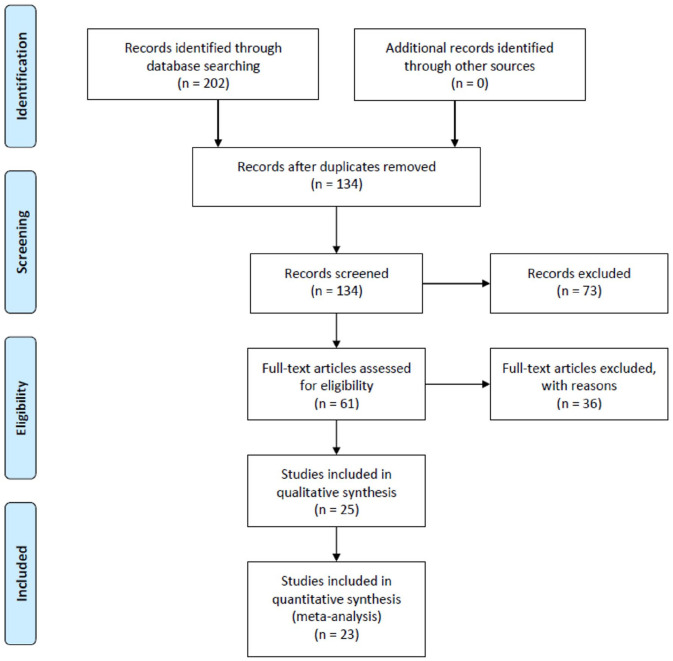
We systematically searched articles published in four databases, until 31 May 2021, which compared the effects of active tDCS or rTMS with sham intervention in MS patients. We used a random-effects model for this meta-analysis. Meta-regression and subgroup meta-analysis were used to examine the effects of stimulation dose and different stimulation protocols, respectively.
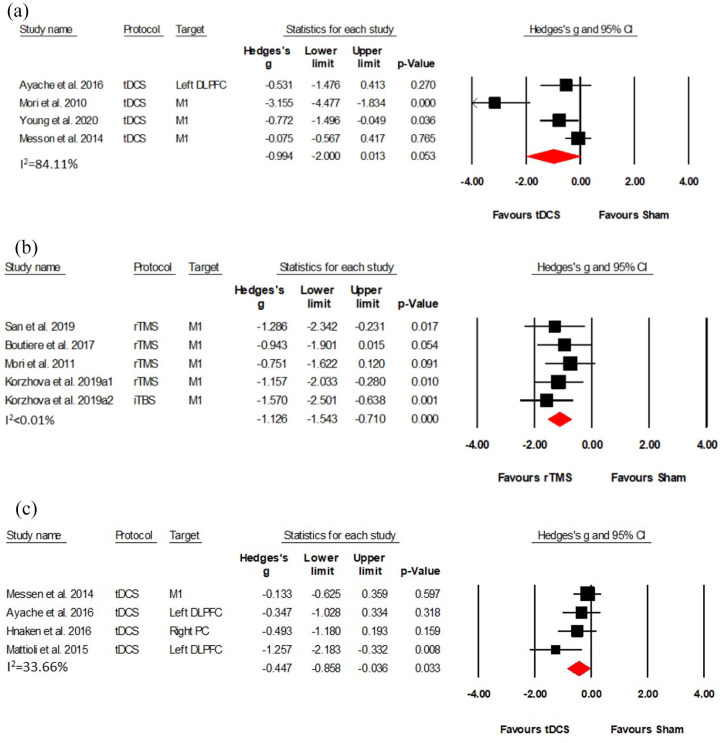
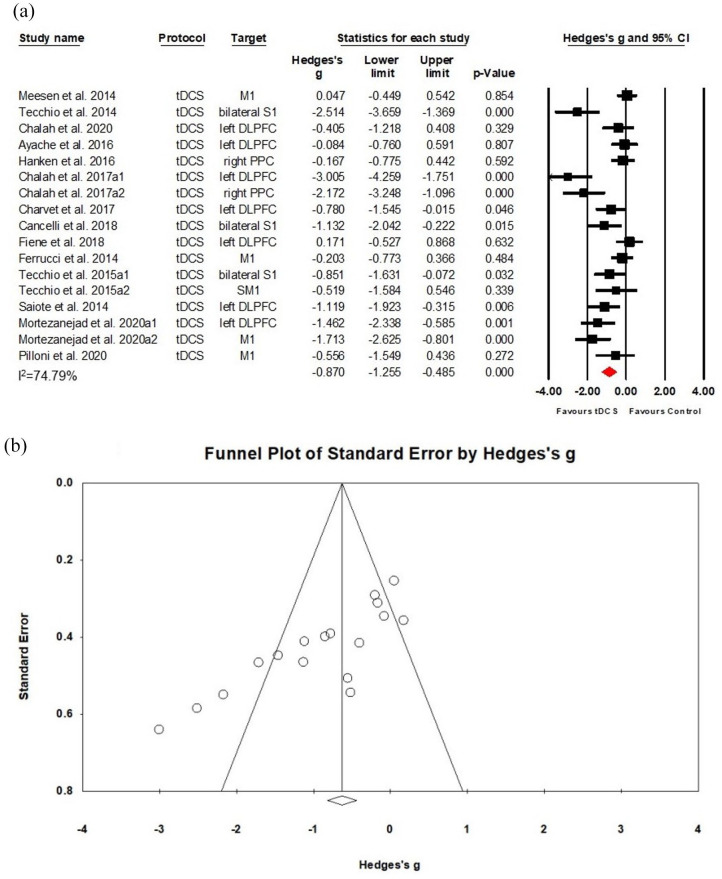
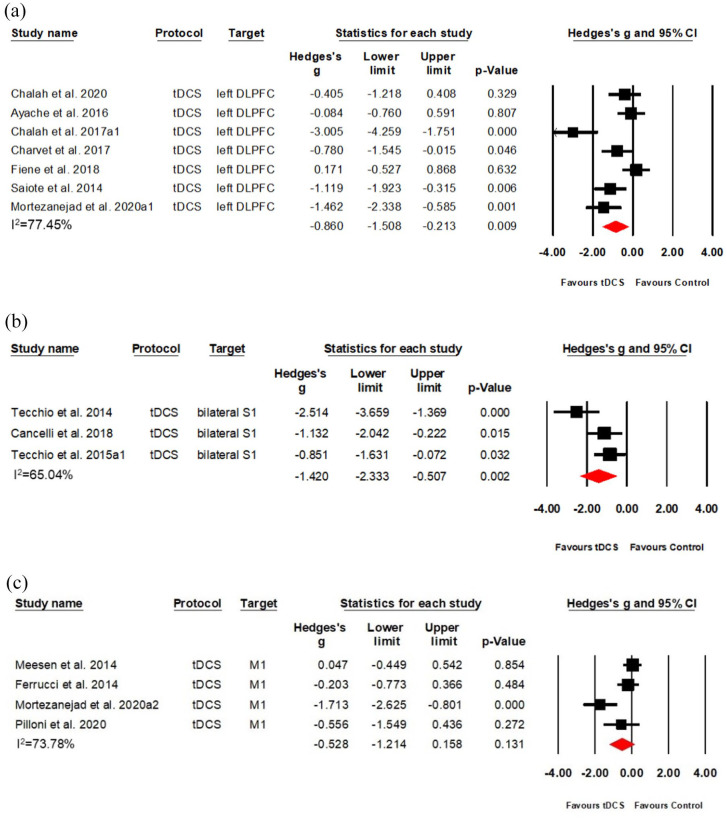
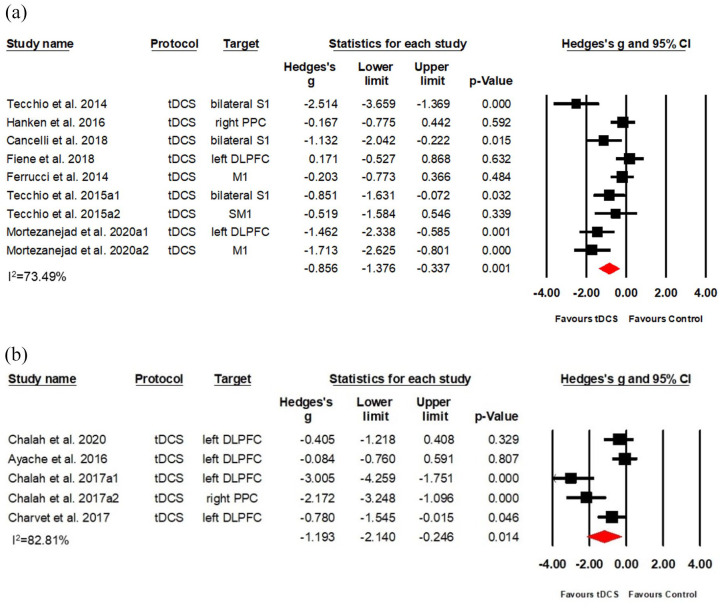
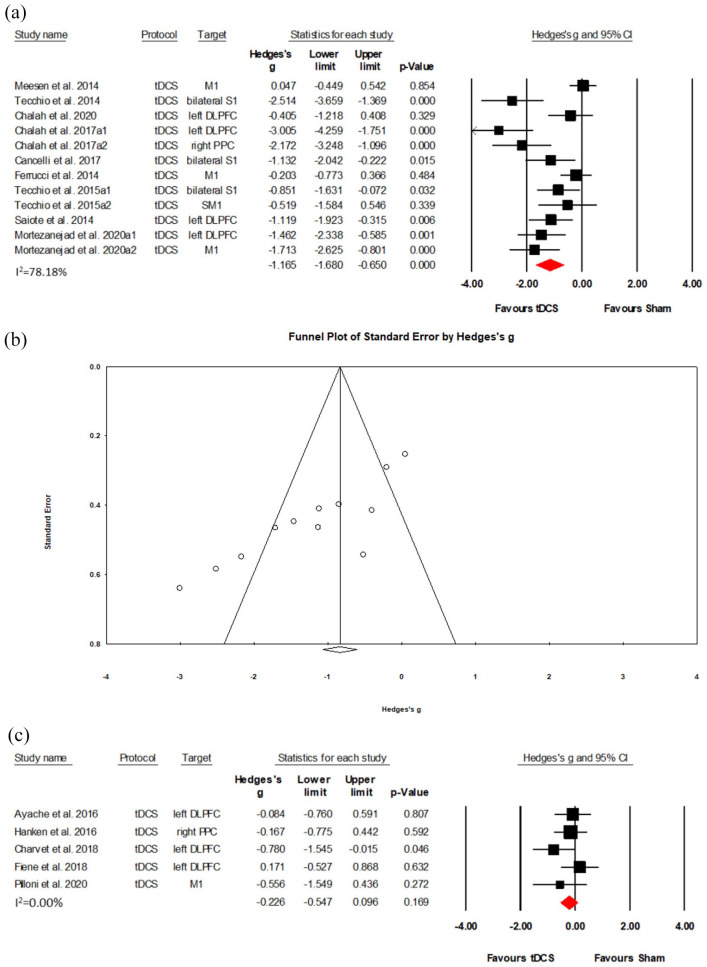
Twenty-five randomized controlled trials (RCTs) were included in this review, consisting of 19 tDCS and 6 rTMS studies. tDCS led to a significant and immediate reduction of fatigue with a large effect size (Hedges's = -0.870, 95% confidence intervals (CI) = [-1.225 to -0.458], number needed to treat (NNT) = 2). Particularly, a subgroup analysis showed that applying tDCS over the left DLPFC and bilateral S1 led to fatigue reductions compared to sham stimulation. Furthermore, tDCS had favorable effects on fatigue in MS patients with low physical disability but not those with high physical disability, and additionally improved cognitive function. Finally, whereas rTMS was observed to reduce muscle spasticity, these NIBS protocols showed no further effect on MS-associated pain and mood symptoms.
tDCS in MS alleviates fatigue and improves cognitive function whereas rTMS reduces muscle spasticity. More high-quality studies are needed to substantiate the therapeutic effects of different NIBS protocols in MS.
本荟萃分析的目的是总结无创脑刺激(NIBS)对多发性硬化症(MS)核心症状治疗效果的证据。具体而言,本综述总结了采用经颅直流电刺激(tDCS)和重复经颅磁刺激(rTMS)方案的研究结果。
我们系统检索了截至2021年5月31日在四个数据库中发表的文章,这些文章比较了主动tDCS或rTMS与假干预对MS患者的影响。本荟萃分析采用随机效应模型。Meta回归和亚组荟萃分析分别用于检验刺激剂量和不同刺激方案的效果。
本综述纳入了25项随机对照试验(RCT),包括19项tDCS研究和6项rTMS研究。tDCS导致疲劳显著且立即减轻,效应量较大(Hedges's = -0.870,95%置信区间(CI)= [-1.225至-0.458],治疗所需人数(NNT)= 2)。特别是,亚组分析表明,与假刺激相比,在左侧背外侧前额叶皮质(DLPFC)和双侧初级体感区(S1)施加tDCS可减轻疲劳。此外,tDCS对身体残疾程度低的MS患者的疲劳有良好效果,但对身体残疾程度高的患者无效,并且还改善了认知功能。最后,虽然观察到rTMS可减轻肌肉痉挛,但这些NIBS方案对MS相关疼痛和情绪症状没有进一步影响。
MS中的tDCS可减轻疲劳并改善认知功能,而rTMS可减轻肌肉痉挛。需要更多高质量的研究来证实不同NIBS方案对MS的治疗效果。