Li Chenlu, Pan Jingjing, Xu Chang, Jin Zhenlin, Chen Xupeng
Department of Gastroenterology, Affiliated Yueqing Hospital, Wenzhou Medical University, Wenzhou, China.
Department of Laboratory Medicine, The First Affiliated Hospital of Wenzhou Medical University, Wenzhou, China.
Front Cell Dev Biol. 2022 Jan 19;9:740266. doi: 10.3389/fcell.2021.740266. eCollection 2021.
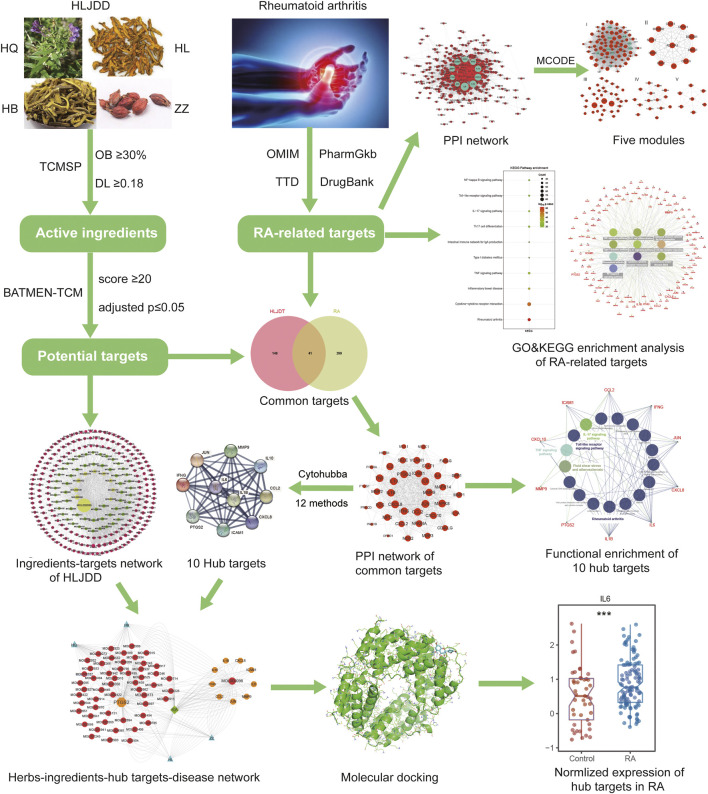
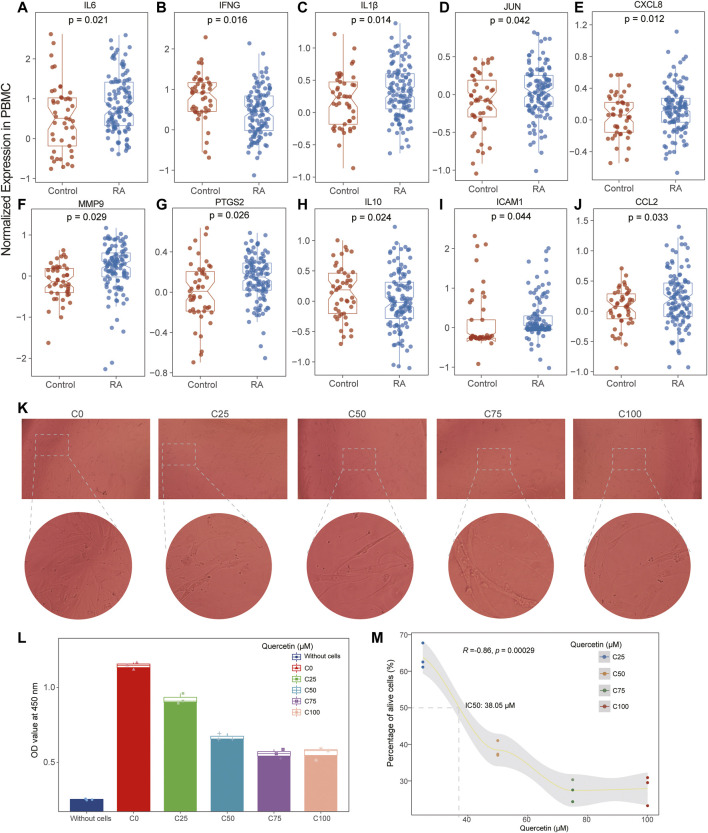
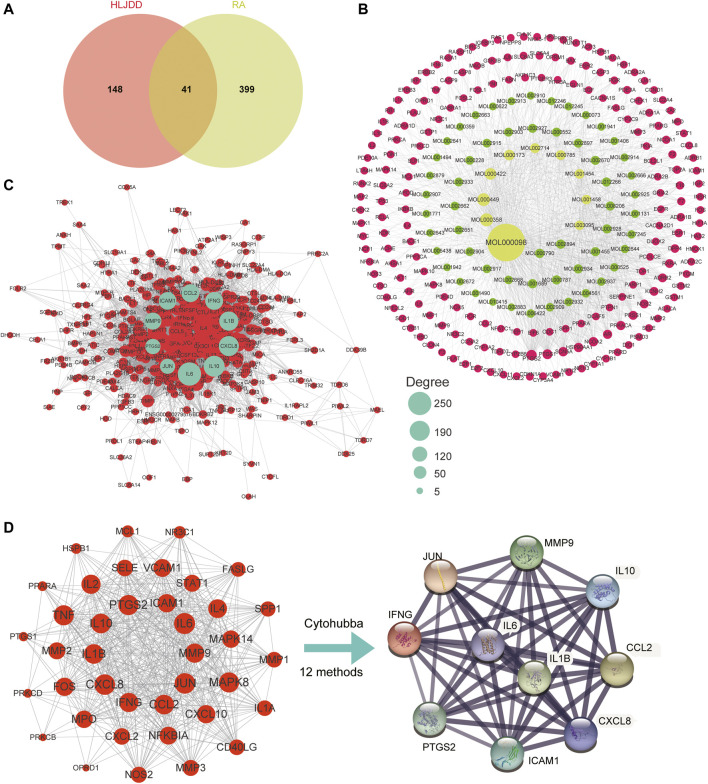
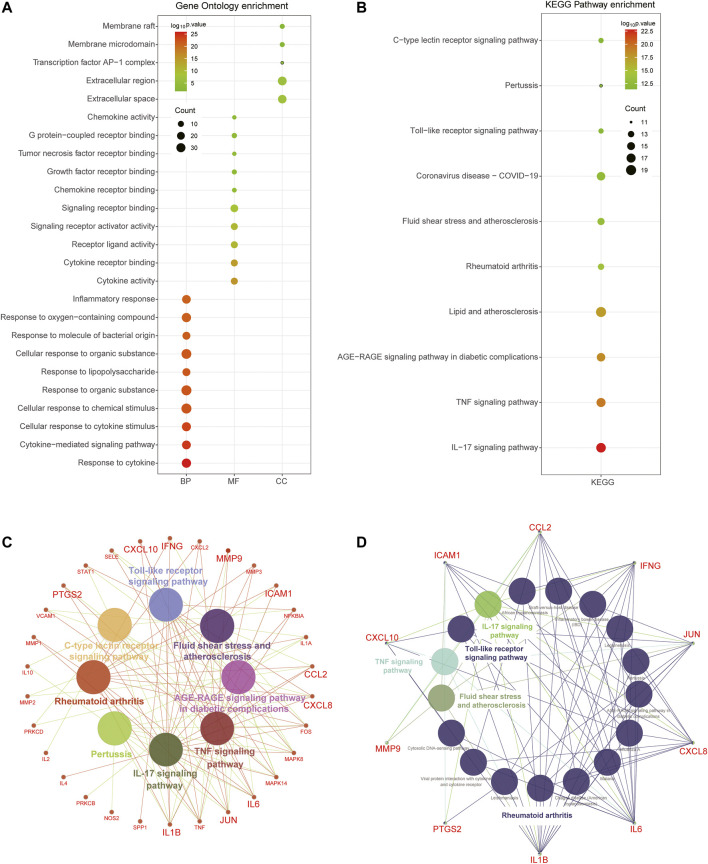
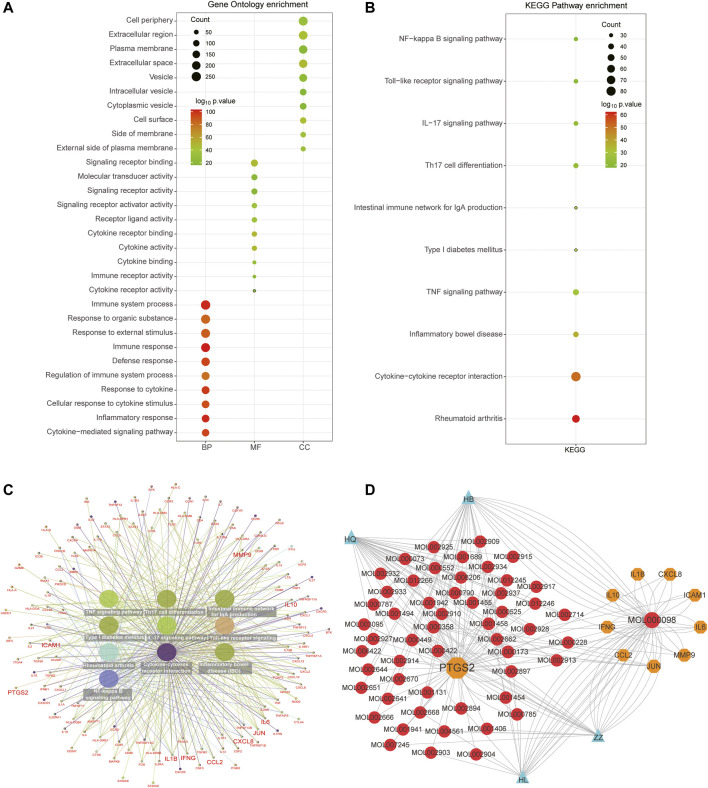
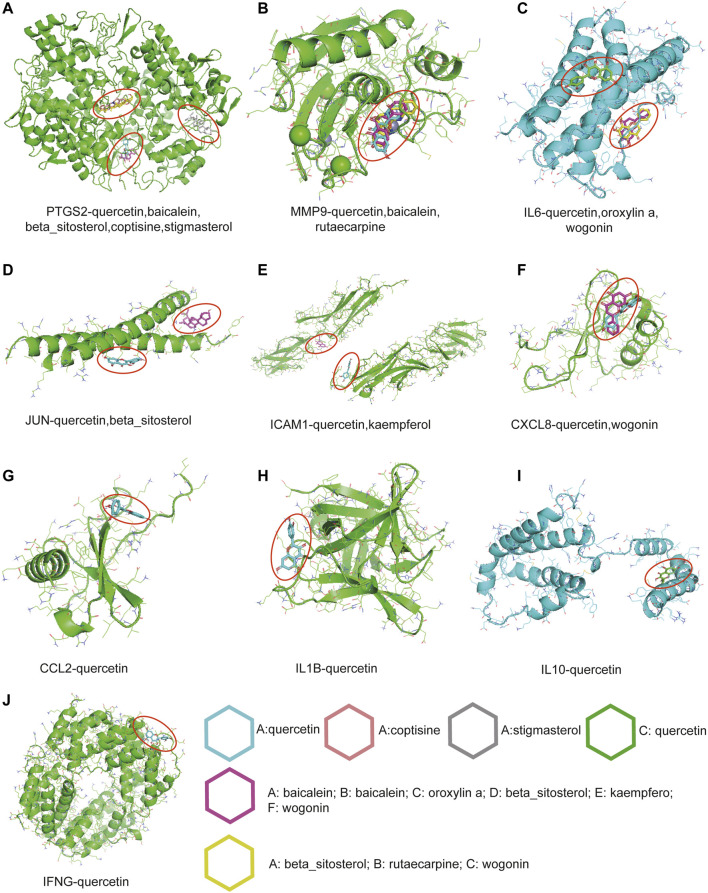
Huang-Lian-Jie-Du decoction (HLJDD) has been widely applied to treat inflammation-associated diseases for thousands of years in China. However, the concrete molecular mechanism of HLJDD in the treatment of rheumatoid arthritis (RA) remains unclear. In this work, network pharmacology and molecular docking were applied to preliminarily analyze the potential active ingredients, drug targets, and related pathways of HLJDD on treating RA. A total of 102 active compounds with corresponding 189 targets were identified from HLJDD, and 41 common targets were further identified by intersecting with RA-related targets. Functional enrichment analysis was performed to screen the biological pathways associated with RA. Ten hub targets were further identified through constructing the protein-protein interaction (PPI) network of common targets, which were mainly enriched in the interleukin-17 (IL-17) signaling pathway, tumor necrosis factor (TNF) signaling pathway, and Toll-like receptor signaling pathway. Furthermore, a complex botanical drugs-ingredients-hub-targets-disease network was successfully constructed. The molecular docking results exhibited that these vital ingredients of HLJDD had a stable binding to the hub targets. Among these ingredients, quercetin (MOL000098) was the most common molecule with stable binding to all the targets, and PTGS2 was considered the most important target with multiple regulations by the most active ingredients. , we successfully validated the inhibitory role of quercetin in the cellular proliferation of human RA fibroblast-like synoviocyte cell line (MH7A cells). These findings indicated that the potential mechanisms of HLJDD for RA treatment might be attributed to inhibiting the immune-inflammatory response, reducing the release of chemokines, and alleviating the destruction of extracellular matrix (ECM) in the synovial compartment.
黄连解毒汤(HLJDD)在中国已被广泛应用于治疗炎症相关疾病数千年。然而,HLJDD治疗类风湿关节炎(RA)的具体分子机制仍不清楚。在这项工作中,应用网络药理学和分子对接初步分析HLJDD治疗RA的潜在活性成分、药物靶点和相关途径。从HLJDD中鉴定出102种活性化合物及相应的189个靶点,并通过与RA相关靶点交叉进一步鉴定出41个共同靶点。进行功能富集分析以筛选与RA相关的生物学途径。通过构建共同靶点的蛋白质-蛋白质相互作用(PPI)网络进一步鉴定出10个枢纽靶点,这些靶点主要富集在白细胞介素-17(IL-17)信号通路、肿瘤坏死因子(TNF)信号通路和Toll样受体信号通路中。此外,成功构建了一个复杂的植物药-成分-枢纽靶点-疾病网络。分子对接结果表明,HLJDD的这些关键成分与枢纽靶点具有稳定的结合。在这些成分中,槲皮素(MOL000098)是与所有靶点稳定结合最常见的分子,PTGS2被认为是受最活跃成分多重调控的最重要靶点。我们成功验证了槲皮素对人RA成纤维样滑膜细胞系(MH7A细胞)细胞增殖的抑制作用。这些发现表明,HLJDD治疗RA的潜在机制可能归因于抑制免疫炎症反应、减少趋化因子的释放以及减轻滑膜腔中细胞外基质(ECM)的破坏。