GlaxoSmithKline, Collegeville, Pennsylvania, USA.
ViiV Healthcare, Research Triangle Park, North Carolina, USA.
Antimicrob Agents Chemother. 2022 Mar 15;66(3):e0205721. doi: 10.1128/AAC.02057-21. Epub 2022 Feb 7.
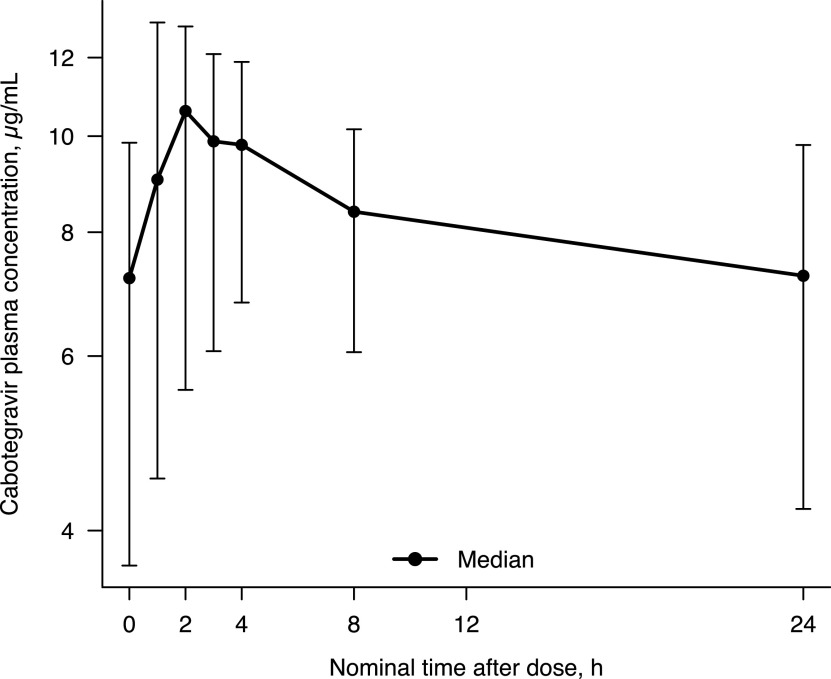
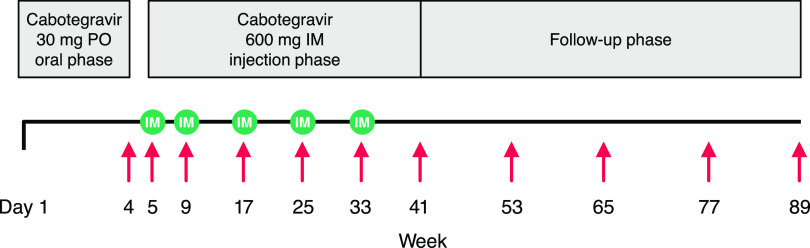
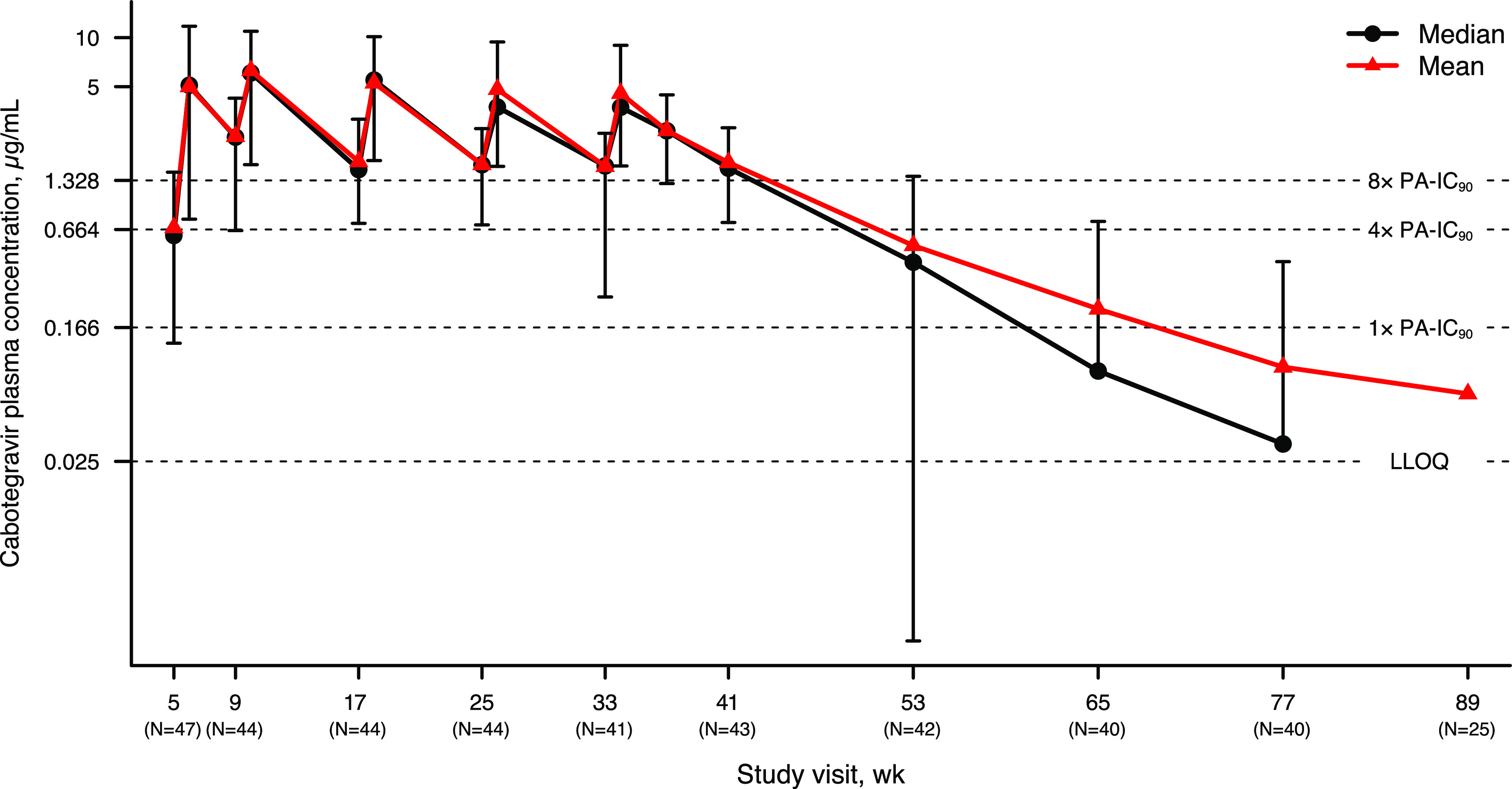
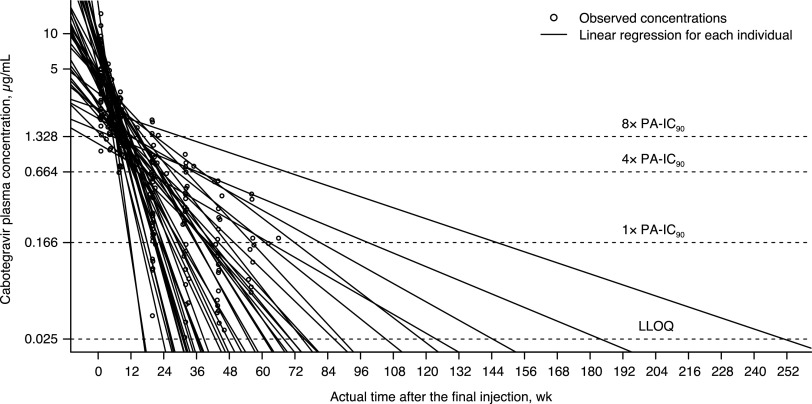
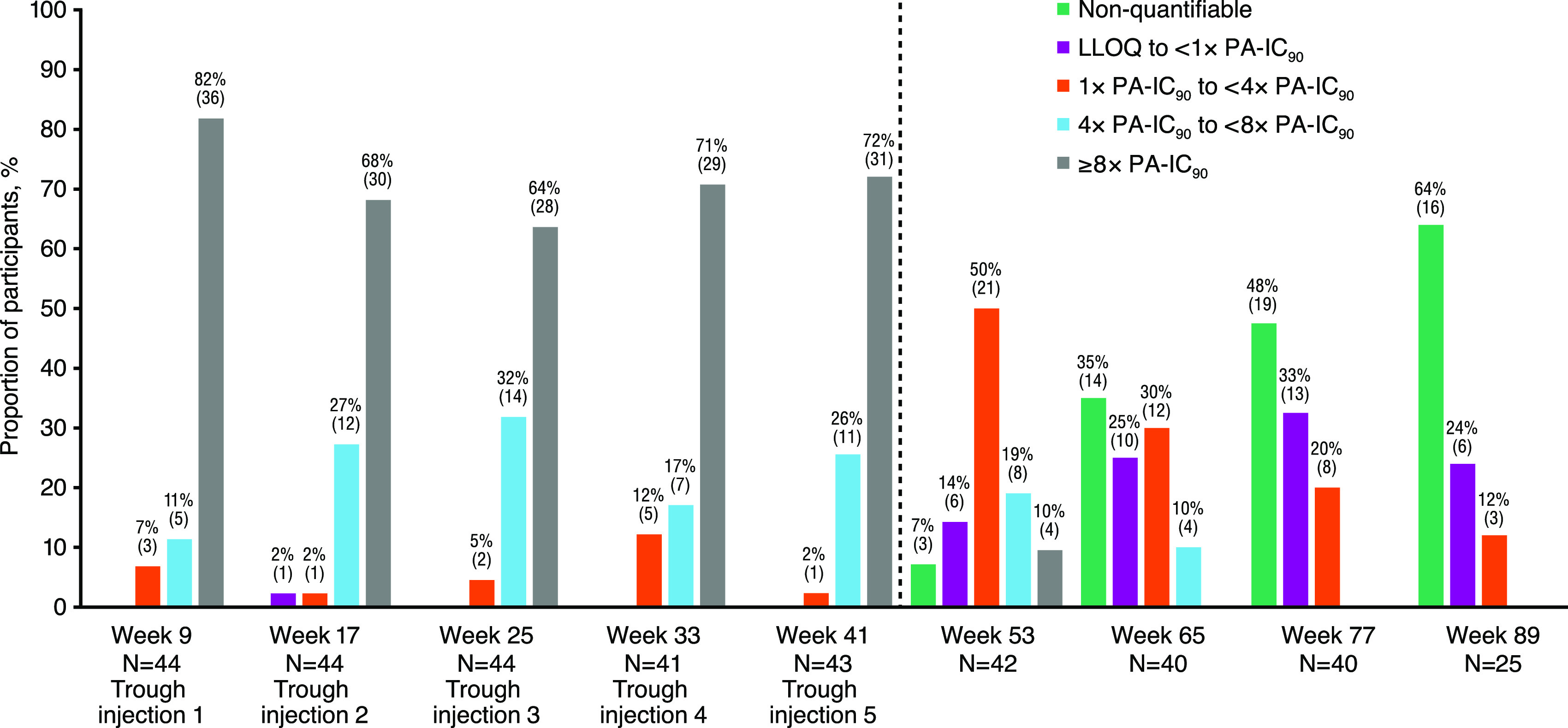
Long-acting (LA) cabotegravir demonstrated superior efficacy versus daily oral standard-of-care for HIV-1 preexposure prophylaxis. This phase 1 study assessed safety, tolerability, pharmacokinetics, and acceptability of cabotegravir in 47 HIV-negative adult Chinese men at low risk of acquiring HIV-1. Participants received once-daily oral cabotegravir 30 mg for 4 weeks and, after a 1-week washout, five 600-mg (3-mL) intramuscular cabotegravir LA injections at weeks 5, 9, 17, 25, and 33. Pharmacokinetic plasma samples were intensively collected on day 27 ( = 17) and sparsely collected before each injection until 56 weeks after final injection ( = 47). Cabotegravir LA injections were acceptable and well tolerated. Common adverse events included injection site pain, injection site swelling, and upper respiratory tract infection. No drug-related serious adverse events or deaths occurred. Mean cabotegravir concentration remained above 1.33 μg/mL (8× protein-adjusted concentration for 90% of the maximum inhibition of viral growth [PA-IC]) before each injection and above 0.166 μg/mL (PA-IC) for >32 weeks after final injection. Trough concentrations remained above PA-IC in nearly all participants and showed minimal accumulation. Noncompartmental pharmacokinetic analysis was performed. Geometric mean of terminal half-life was 1.89 and 47 days after oral and LA dosing, respectively. Cabotegravir concentrations were estimated to remain quantifiable for 48.7 weeks after final injection. Steady-state area under the concentration-time curve (AUC), peak concentration, trough concentration, terminal half-life, time to peak concentration, and apparent clearance after cabotegravir oral and LA dosing were similar to those estimated in non-Asian men in historical studies. These results support further clinical development of cabotegravir LA in China. (This study has been registered at ClinicalTrials.gov under registration no. NCT03422172.).
长效(LA)卡替拉韦在预防 HIV-1 方面优于每日口服标准护理。这项 1 期研究评估了 47 名感染 HIV 风险较低的中国成年男性中卡替拉韦的安全性、耐受性、药代动力学和可接受性。参与者接受每日口服卡替拉韦 30mg,连续 4 周,1 周洗脱期后,在第 5、9、17、25 和 33 周分别接受 5 次 600mg(3mL)肌内注射卡替拉韦 LA。在第 27 天( = 17)和每次注射前采集密集的药代动力学血浆样本,直到最后一次注射后 56 周( = 47)采集稀疏样本。卡替拉韦 LA 注射是可接受的,且耐受性良好。常见的不良反应包括注射部位疼痛、注射部位肿胀和上呼吸道感染。无药物相关严重不良事件或死亡发生。在每次注射前,卡替拉韦 LA 平均浓度保持在 1.33μg/mL 以上(90%最大抑制病毒生长的蛋白校正浓度[PA-IC]),最后一次注射后 0.166μg/mL 以上(PA-IC)超过 32 周。在几乎所有参与者中,谷浓度均保持在 PA-IC 以上,且积累最小。进行了非房室药代动力学分析。口服和 LA 给药后,终端半衰期的几何平均值分别为 1.89 和 47 天。最后一次注射后,卡替拉韦浓度估计可定量 48.7 周。LA 给药后,稳态浓度-时间曲线下面积(AUC)、峰浓度、谷浓度、终端半衰期、达峰时间和表观清除率与历史研究中估计的非亚洲男性相似。这些结果支持在中国进一步开发卡替拉韦 LA。(本研究已在 ClinicalTrials.gov 注册,注册号为 NCT03422172)。