Acta Biochim Biophys Sin (Shanghai). 2022 Jan 25;54(2):232-242. doi: 10.3724/abbs.2021026.
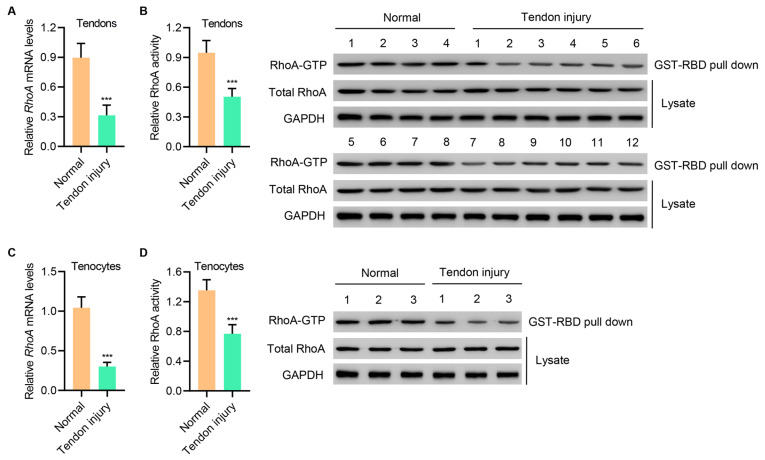
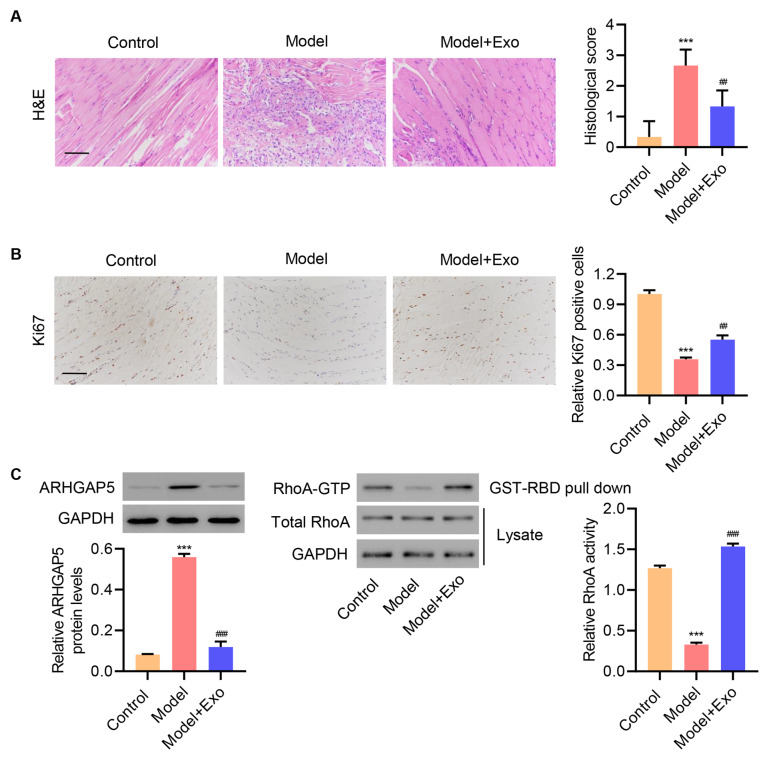
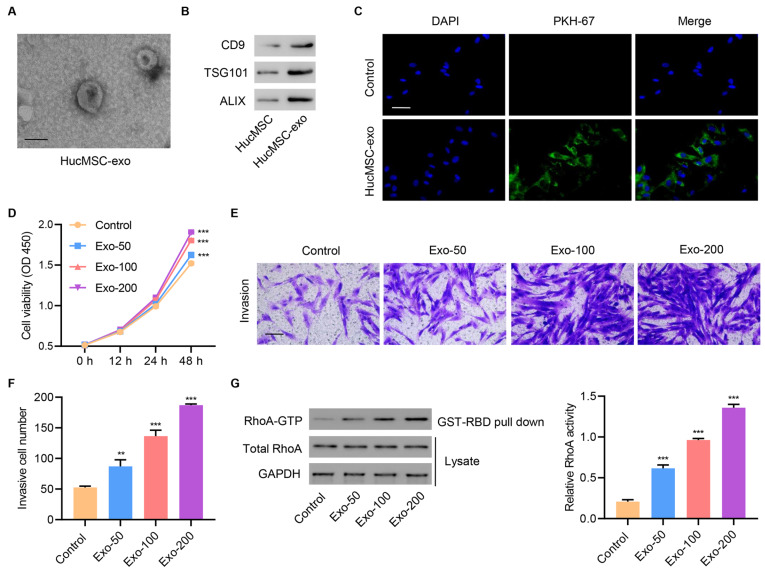
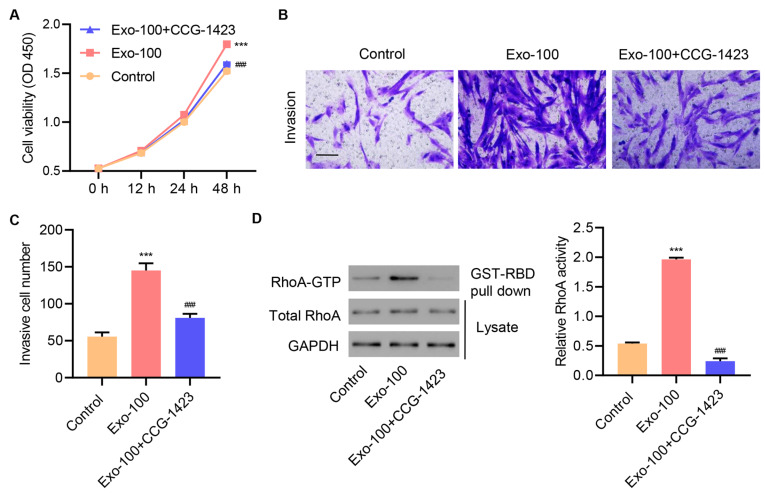
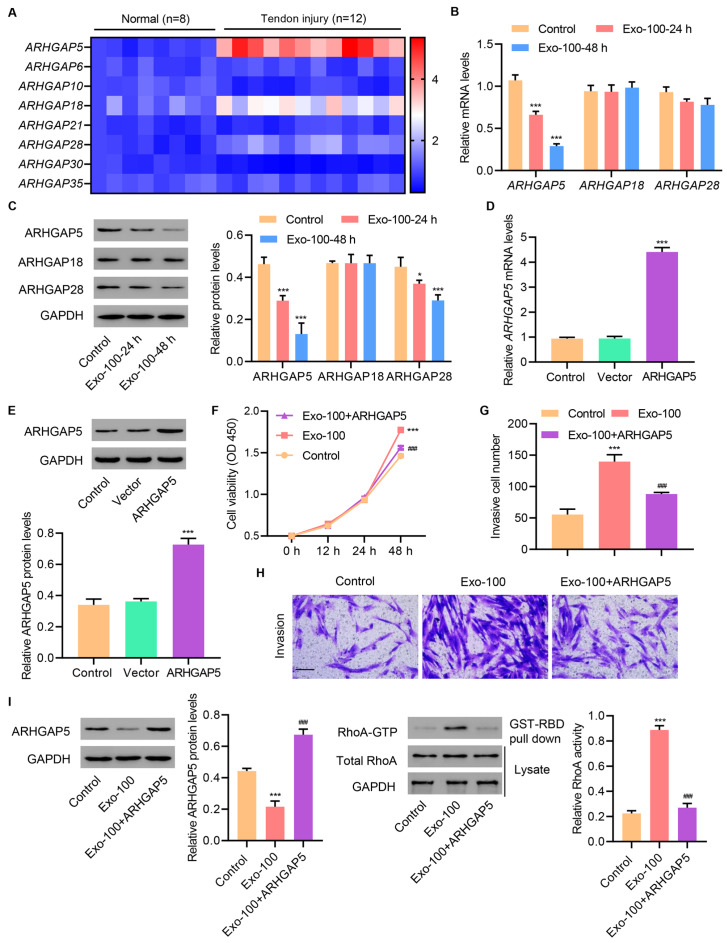
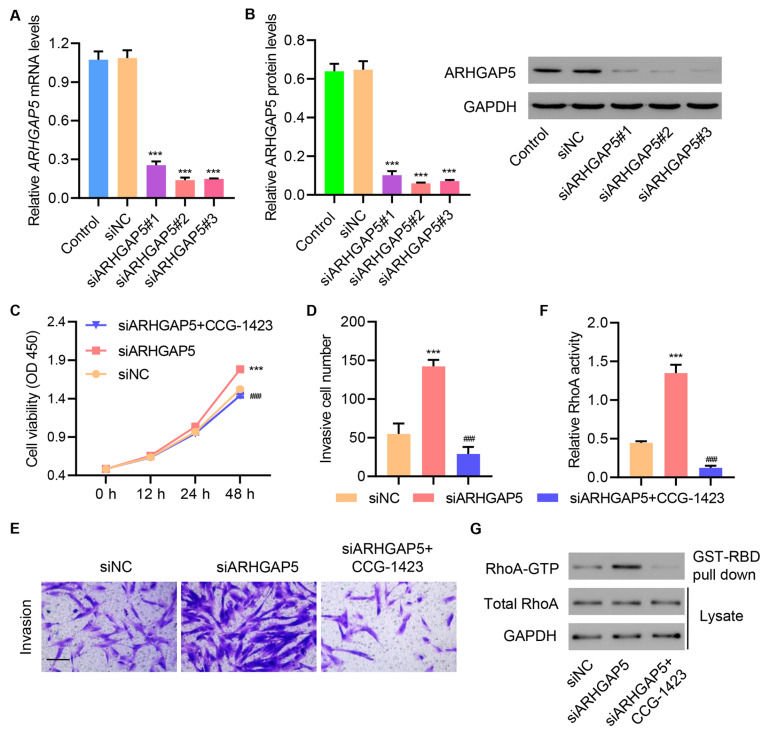
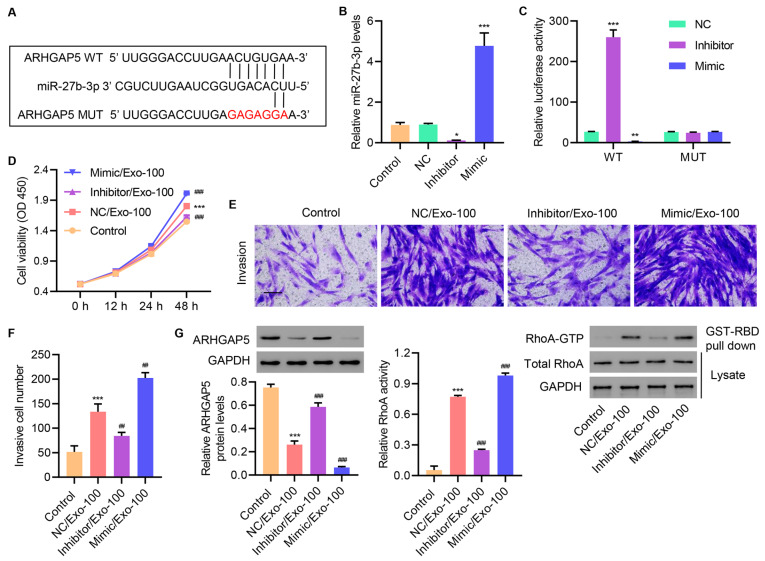
Tendon injuries are common clinical issues resulted from tissue overuse and age-related degeneration. Previous sutdies have suggested that exosomes secreted by mesenchymal stem cells (MSCs) contribute to tissue injury repair. Here, we provide evidence for a critical role of human umbilical cord mesenchymal stem cell (hucMSC)-derived exosomes in reducing tendon injury by activating the RhoA signaling. Treatment of primary injured tenocytes with hucMSC exosomes increases cell proliferation and invasion, which correlates with increased RhoA activity. RhoA mediates the effects of hucMSC exosomes, as treatment of primary injured tenocytes with the RhoA inhibitor, CCG-1423, abolishes the effects of hucMSC exosomes on cell proliferation and invasion. Mechanistically, we observe that hucMSC exosomes induce the expression of a microRNA, miR-27b-3p, which targets and suppresses ARHGAP5, a negative regulator of RhoA. Consistent with this observation, ARHGAP5 overexpression suppresses the effects of hucMSC exosomes on cell proliferation and invasion, while knockdown of ARHGAP5 rescues these effects. Finally, we demonstrate the functional significance of our findings using an Achilles tendon injury model and show that treatment with exosomes reduces tendon injury in rats, which correlates with increased RhoA activity and reduced ARHGAP5 expression. Taken together, our findings highlight a critical role of hucMSC exosomes in reducing tendon injury via miR-27b-3p-mediated suppression of ARHGAP5, resulting in RhoA activation, and leading to increased cell proliferation and invasion of primary injured tenocytes.
肌腱损伤是由组织过度使用和与年龄相关的退化引起的常见临床问题。以前的研究表明,间充质干细胞(MSCs)分泌的外泌体有助于组织损伤修复。在这里,我们提供了证据表明,人脐带间充质干细胞(hucMSC)衍生的外泌体通过激活RhoA 信号在减少肌腱损伤方面起着关键作用。用 hucMSC 外泌体处理原代损伤的肌腱细胞可增加细胞增殖和侵袭,这与 RhoA 活性的增加相关。RhoA 介导了 hucMSC 外泌体的作用,因为用 RhoA 抑制剂 CCG-1423 处理原代损伤的肌腱细胞会消除 hucMSC 外泌体对细胞增殖和侵袭的作用。从机制上讲,我们观察到 hucMSC 外泌体诱导 microRNA miR-27b-3p 的表达,该 microRNA 靶向并抑制 RhoA 的负调节剂 ARHGAP5。与这一观察结果一致,ARHGAP5 的过表达抑制了 hucMSC 外泌体对细胞增殖和侵袭的作用,而 ARHGAP5 的敲低则挽救了这些作用。最后,我们使用跟腱损伤模型证明了我们发现的功能意义,并表明用外泌体治疗可减少大鼠的肌腱损伤,这与 RhoA 活性的增加和 ARHGAP5 表达的减少有关。总之,我们的研究结果强调了 hucMSC 外泌体通过 miR-27b-3p 介导的 ARHGAP5 抑制在减少肌腱损伤中的关键作用,导致 RhoA 激活,从而增加原代损伤的肌腱细胞的增殖和侵袭。