Department of Medical Oncology, Dana-Farber Cancer Institute, Boston, Massachusetts, USA
Department of Medicine, Beth Israel Deaconess Medical Center, Boston, Massachusetts, USA.
J Immunother Cancer. 2022 Feb;10(2). doi: 10.1136/jitc-2021-003527.
Soluble PD-L1 (sPD-L1) has been associated with worse prognosis in numerous solid tumors. We determined sPD-L1 levels before and during nivolumab treatment in two prospective clinical trials of metastatic clear cell renal cell carcinoma (RCC) and melanoma patients, and investigated its relationship to clinical factors, biomarkers, and outcome.
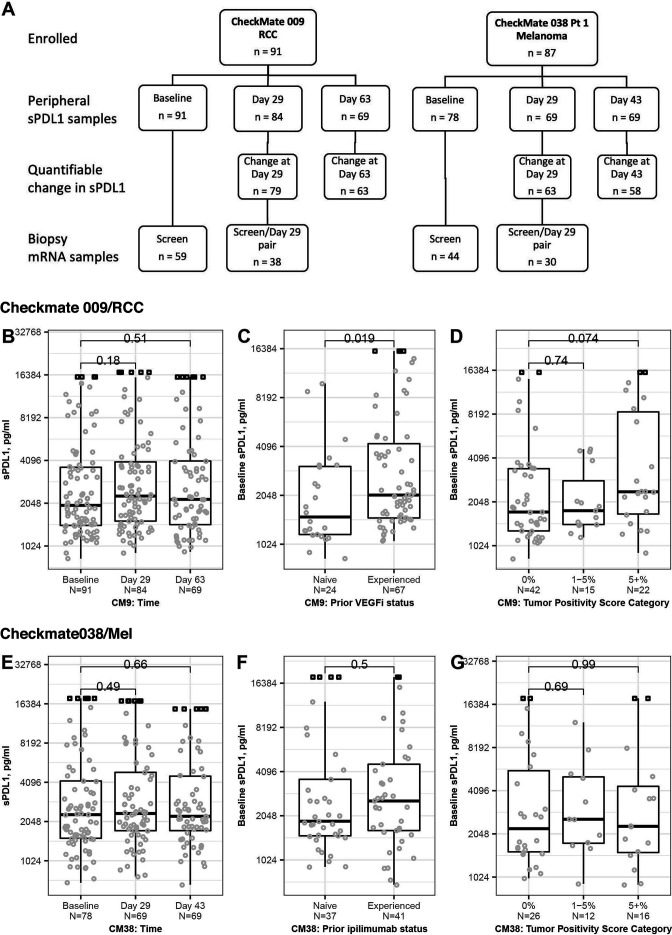
Using a new Single Molecule Array assay, serum sPD-L1 level were determined in RCC (CheckMate 009, n=91) and melanoma (CheckMate 038-Part 1, n=78) prior to, and at two time points on treatment. Gene expression data was obtained from biopsies taken prior to, and at day 28 on treatment. Results were integrated with clinical variables, tumor PD-L1 status from immuno-histochemistry, and genomic mutation status.
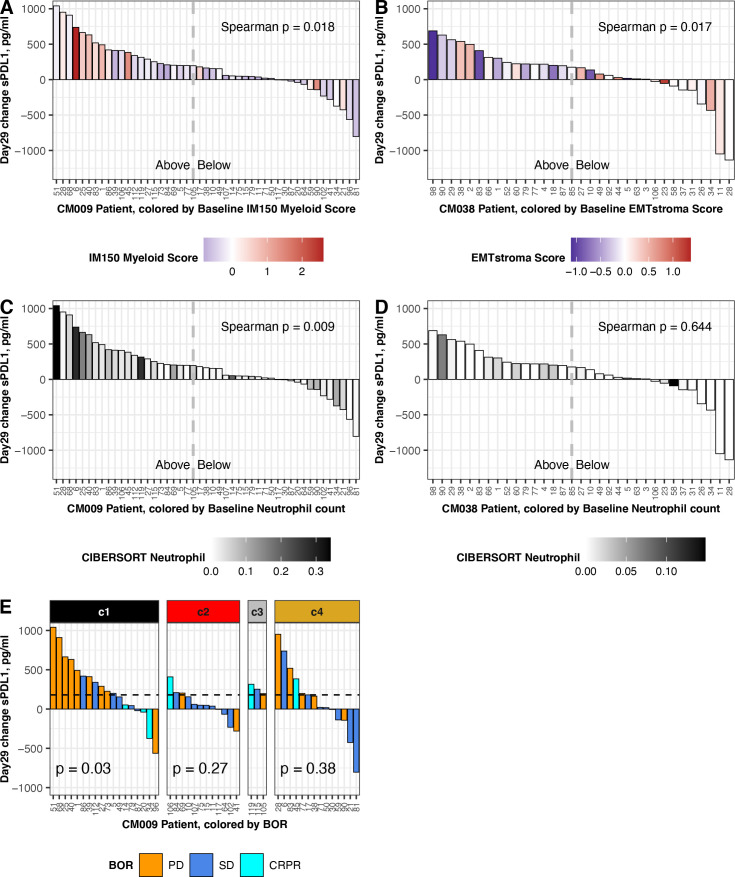
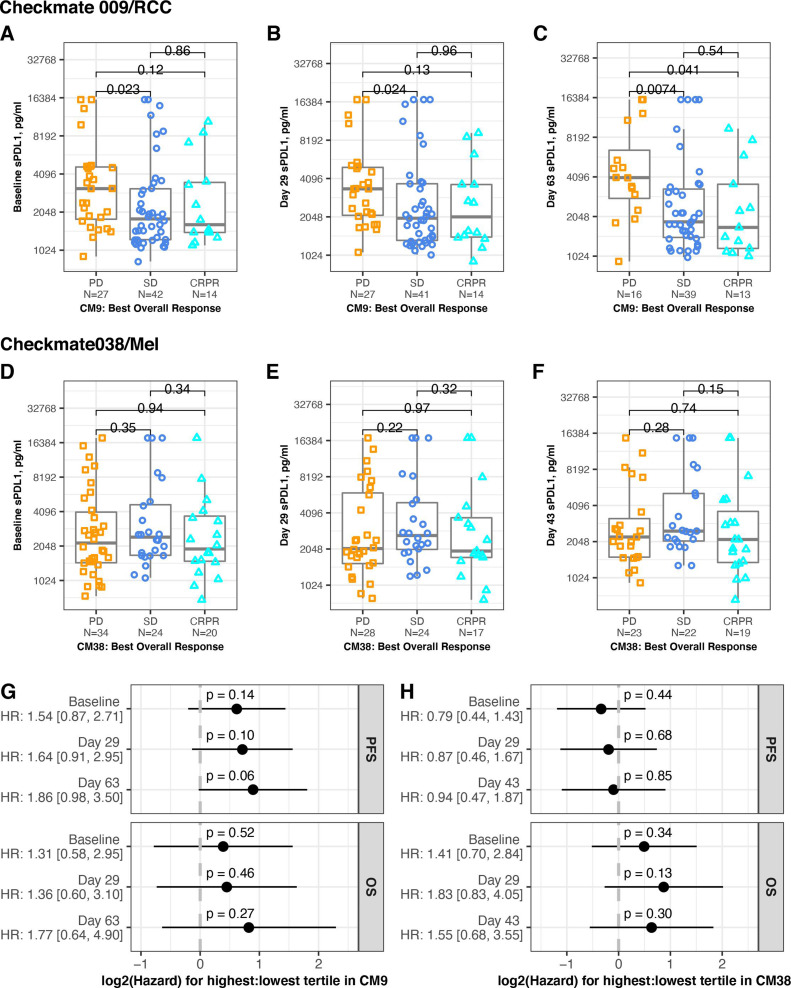
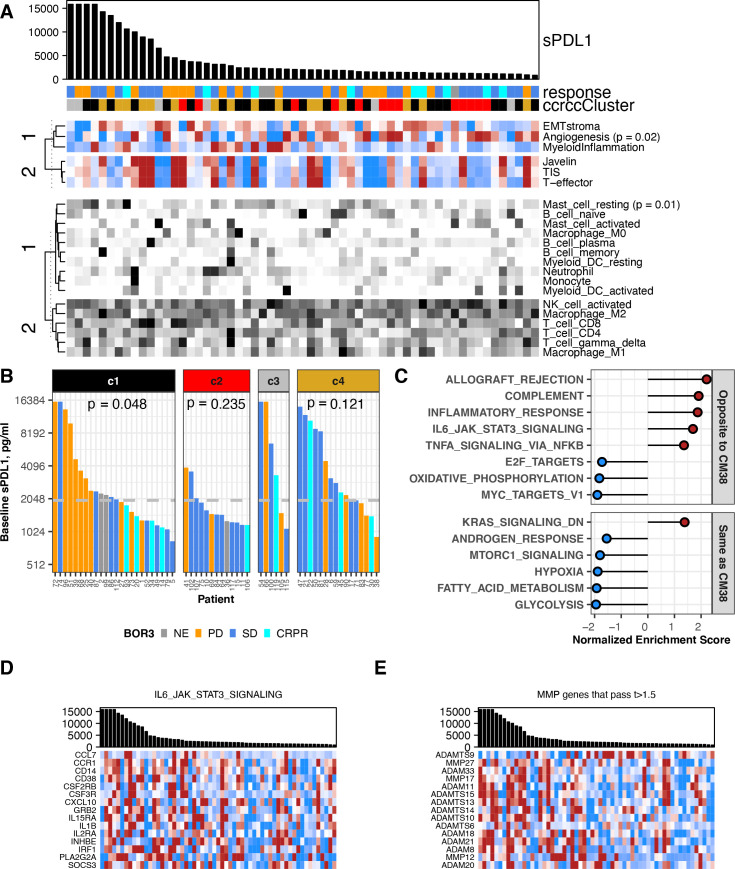
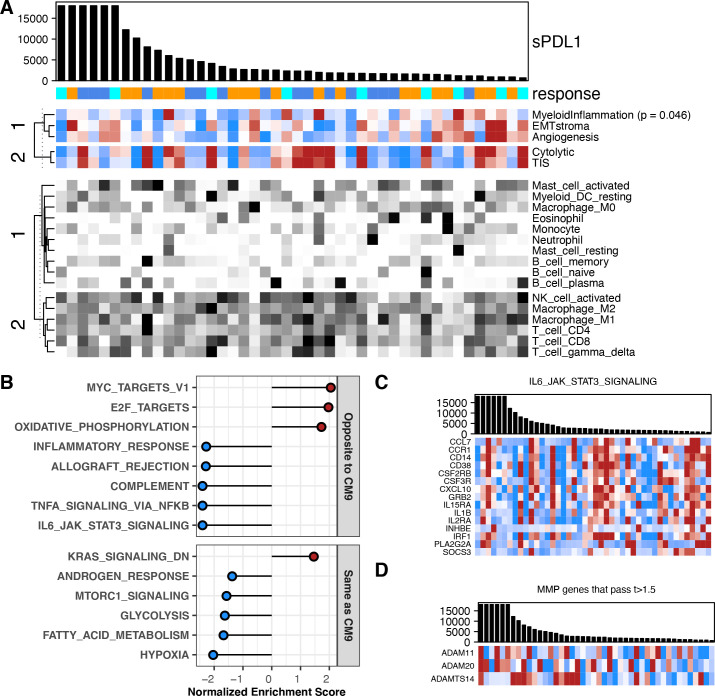
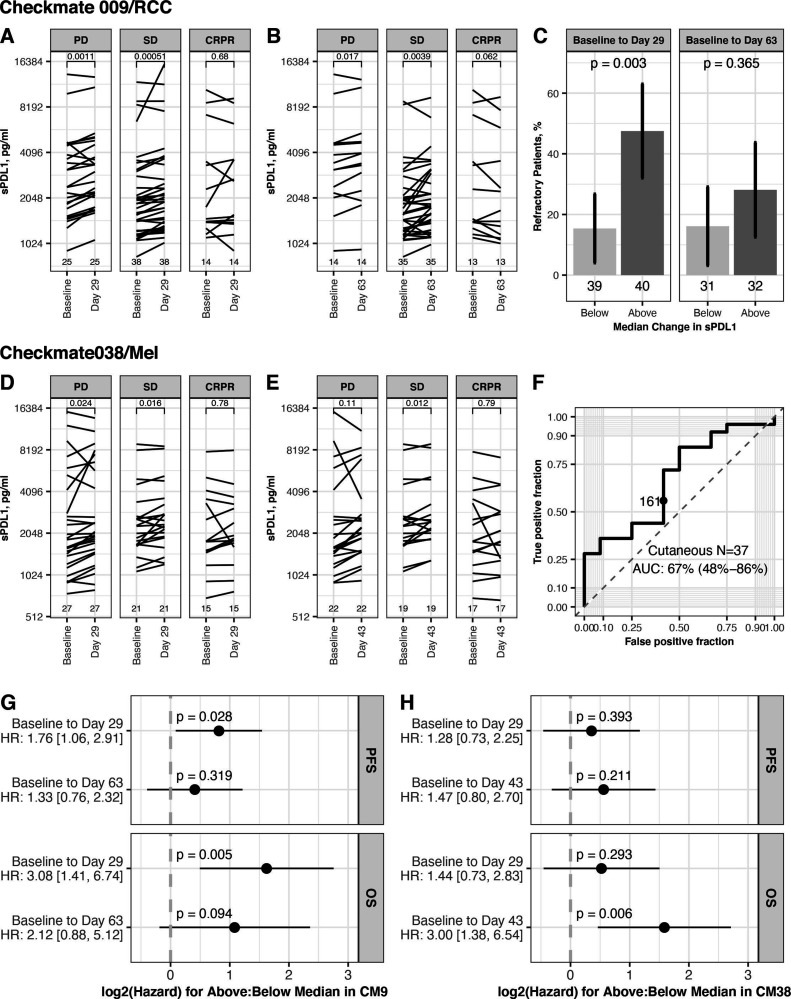
In RCC patients, sPD-L1 levels were higher in patients with progressive disease as their best response. For both RCC and melanoma patients, progressive or stable disease was associated with an increase in sPD-L1 on nivolumab therapy, whereas mean sPD-L1 levels did not change or declined in patients with objective responses. By categorizing RCC patients into transcriptomic molecular subtypes, we identified a subgroup where the associations between sPD-L1 and progressive disease were particularly evident. In baseline biopsies, we identified six biological processes that were associated with sPD-L1 level in both RCC and melanoma: higher sPD-L1 is associated with lower tumor expression of the Hallmark gene sets 'hypoxia', 'fatty acid metabolism', 'glycolysis', 'MTORC1 signaling' and 'androgen response', and with higher expression of 'KRAS signaling_Down'.
Baseline and on-therapy sPD-L1 levels in RCC have the potential to predict progressive disease on PD-1 inhibitor nivolumab. In a hypothesis-generating analysis of tumor gene expression, high baseline sPD-L1 is associated with a tumor metabolic state reflecting potentially targetable processes in both melanoma and RCC. In both trials, we observed associations between change in sPD-L1 on treatment and outcome metrics. sPD-L1 levels may further refine a nivolumab-refractory subtype of RCC within transcriptionally based subtypes of RCC.
在许多实体瘤中,可溶性 PD-L1(sPD-L1)与预后不良相关。我们在两项转移性透明细胞肾细胞癌(RCC)和黑色素瘤患者的前瞻性临床试验中,在纳武利尤单抗治疗前和治疗期间确定了 sPD-L1 水平,并研究了其与临床因素、生物标志物和结局的关系。
使用新的单分子阵列测定法,在 RCC(CheckMate 009,n=91)和黑色素瘤(CheckMate 038-Part 1,n=78)患者治疗前和治疗两个时间点测定血清 sPD-L1 水平。在治疗前和第 28 天治疗时获取活检的基因表达数据。结果与临床变量、免疫组化肿瘤 PD-L1 状态和基因组突变状态相结合。
在 RCC 患者中,sPD-L1 水平在疾病进展作为最佳反应的患者中较高。对于 RCC 和黑色素瘤患者,进展或稳定的疾病与纳武利尤单抗治疗时 sPD-L1 的增加相关,而客观反应患者的 sPD-L1 水平没有变化或下降。通过将 RCC 患者分为转录组分子亚型,我们发现一个亚组,其中 sPD-L1 与进展性疾病的关联尤为明显。在基线活检中,我们确定了六个与 RCC 和黑色素瘤中 sPD-L1 水平相关的生物学过程:较高的 sPD-L1 与肿瘤中“缺氧”、“脂肪酸代谢”、“糖酵解”、“MTORC1 信号”和“雄激素反应”的标志性基因集的表达降低以及“KRAS 信号下调”相关。
RCC 患者的基线和治疗期间的 sPD-L1 水平有可能预测 PD-1 抑制剂纳武利尤单抗的进展性疾病。在对肿瘤基因表达进行假设生成分析时,高基线 sPD-L1 与黑色素瘤和 RCC 中潜在可靶向的过程相关的肿瘤代谢状态相关。在两项试验中,我们观察到治疗期间 sPD-L1 变化与结局指标之间的关联。sPD-L1 水平可能会进一步细化 RCC 转录组亚型中对纳武利尤单抗耐药的亚型。