Department of Clinical Pharmacology, Royal Adelaide Hospital, Adelaide, South Australia, 5000, Australia.
Discipline of Pharmacology, The University of Adelaide, Adelaide, South Australia, 5000, Australia.
F1000Res. 2021 Mar 30;10:259. doi: 10.12688/f1000research.26828.1. eCollection 2021.
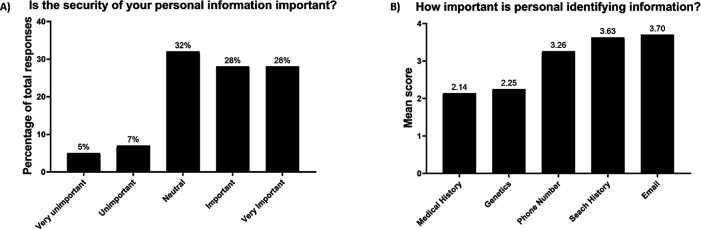
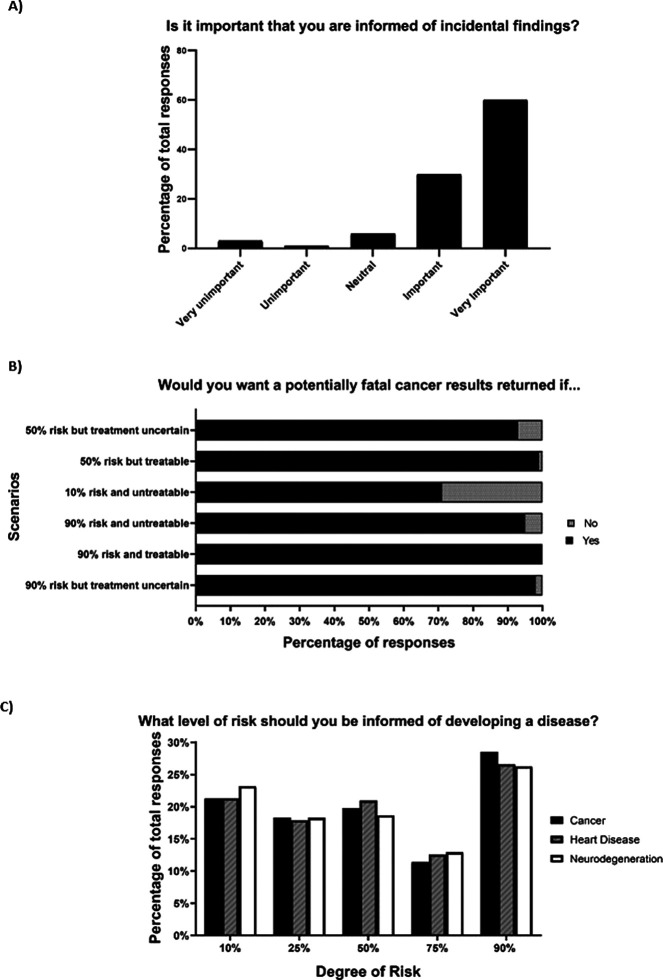
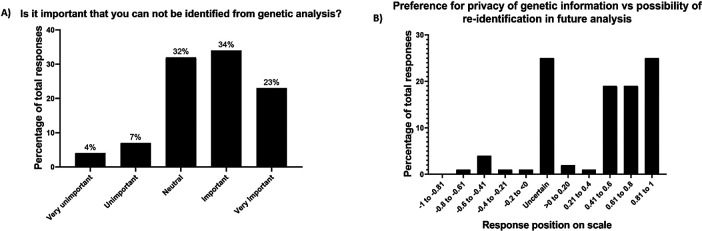
Genetic testing in clinical trials introduces several ethical and logistical issues to discuss with potential participants when taking informed consent. The aim of this study was to explore the attitudes of healthy volunteers in phase 1 studies to the topics of genetic security, genetic privacy and incidental genetic findings. Healthy volunteers presenting for screening appointments at a phase 1 clinical trial unit (CMAX Clinical Research, Adelaide, Australia) took an anonymous paper survey about genetic testing. There were 275 respondents to the survey. The mean age was 27 years (range 18-73); 54% were male and 53% were of North/Western European ethnicity. Just over half the healthy volunteers thought genetic security (56%) and genetic privacy (57%) were "important" or "very important". However, the security of their genetic information was ranked less important than other personal information, including mobile phone number, internet browser search history and email address. Two-thirds of respondents would trade genetic privacy for re-identifiability if information relevant to their health were discovered by genetic testing. Healthy volunteers favoured the return of incidental genetic findings (90% indicated this was "important" or "very important"). A level of risk (10 to 90%) for developing a serious medical condition that would "trigger" the return of incidental genetic findings to participants was not identified. Healthy volunteers screening for phase 1 clinical trials have mixed views about the importance of genetic security and genetic privacy, but they strongly favour the return of incidental genetic findings that could affect their health. These issues should be discussed with potential participants during informed consent for phase 1 clinical trials with genetic testing.
临床试验中的基因检测在获得知情同意时向潜在参与者提出了一些伦理和后勤问题需要讨论。本研究旨在探讨 1 期研究中健康志愿者对基因安全、基因隐私和偶然遗传发现这三个主题的态度。在 1 期临床试验单位(澳大利亚阿德莱德的 CMAX 临床研究)进行筛选预约的健康志愿者接受了关于基因检测的匿名纸质调查。共有 275 名调查对象做出回应。平均年龄为 27 岁(范围 18-73 岁);54%为男性,53%为北欧/西欧族裔。略超过一半的健康志愿者认为基因安全(56%)和基因隐私(57%)“重要”或“非常重要”。然而,他们的基因信息安全的重要性排名低于其他个人信息,包括手机号码、互联网浏览器搜索历史和电子邮件地址。三分之二的受访者愿意用基因隐私换取可识别性,如果通过基因检测发现与他们健康相关的信息。健康志愿者赞成返回偶然遗传发现(90%表示这是“重要”或“非常重要”)。对于发展严重医疗状况的风险(10%到 90%),这些状况“会触发”向参与者返还偶然遗传发现,没有被确定。筛选参加 1 期临床试验的健康志愿者对基因安全和基因隐私的重要性存在混合看法,但他们强烈赞成返回可能影响他们健康的偶然遗传发现。在进行基因检测的 1 期临床试验中,应该在获得知情同意时与潜在参与者讨论这些问题。