Department of Life Sciences, Pohang University of Science and Technology, Pohang, Korea.
ImmunoBiome Inc., Pohang, Korea.
Nucleic Acids Res. 2022 Feb 28;50(4):1849-1863. doi: 10.1093/nar/gkac050.
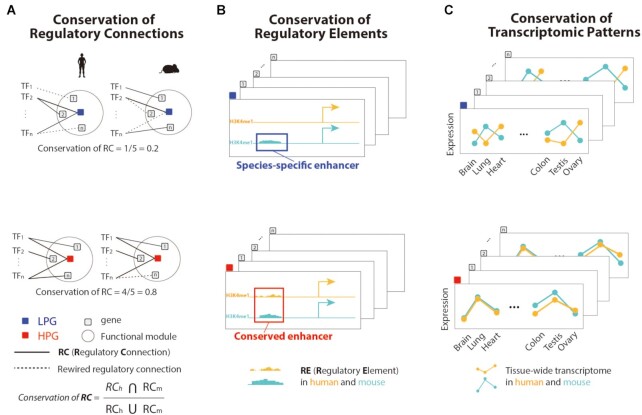
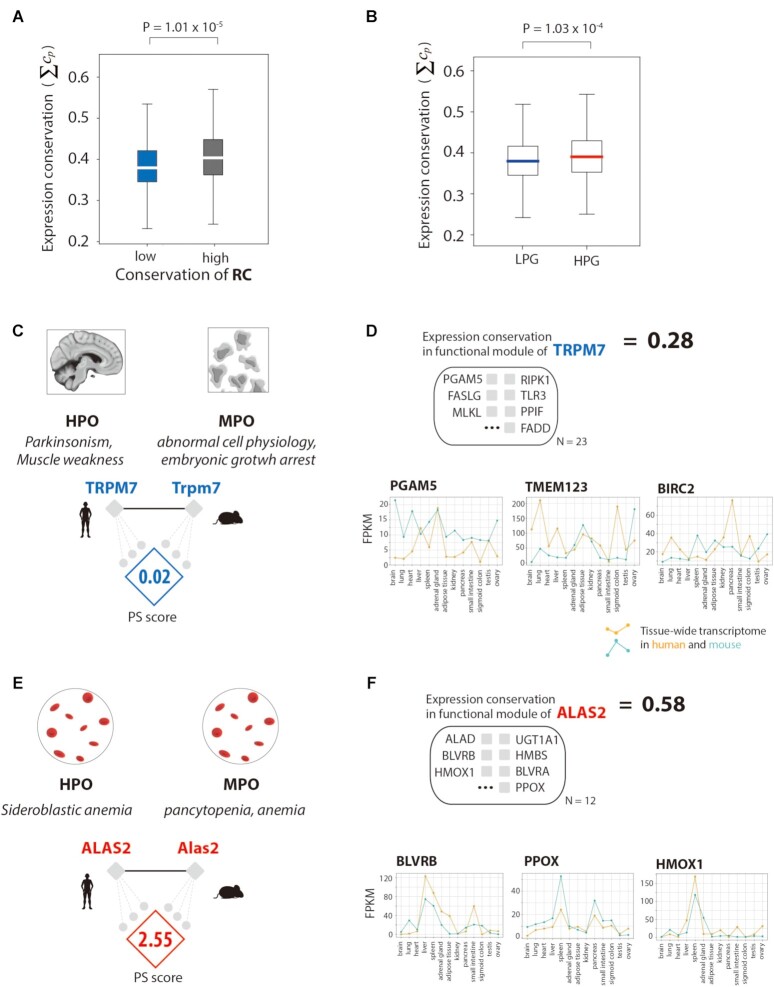
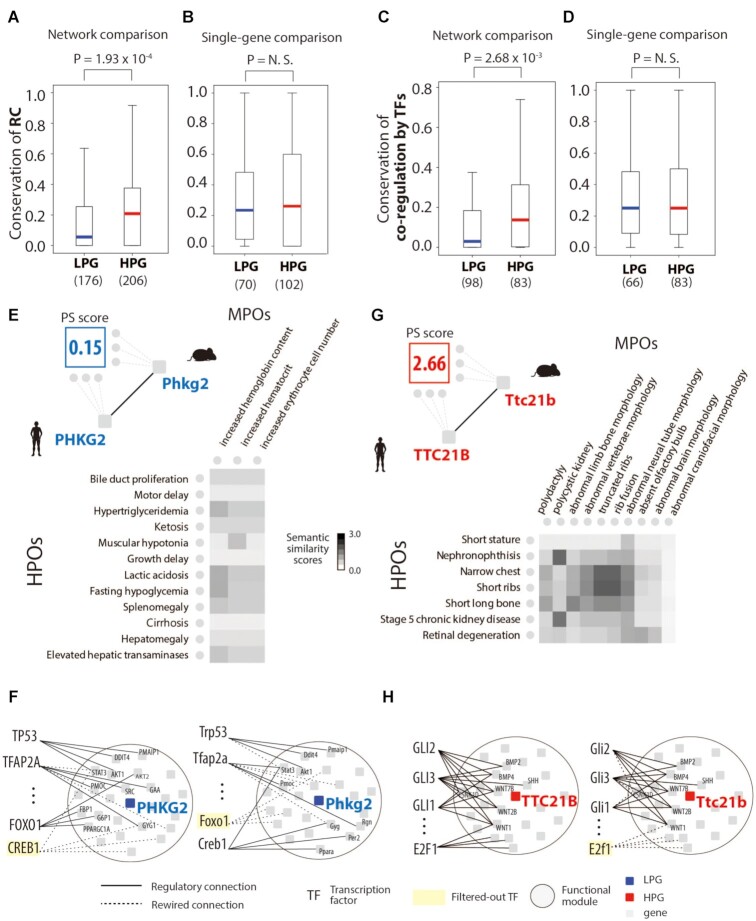
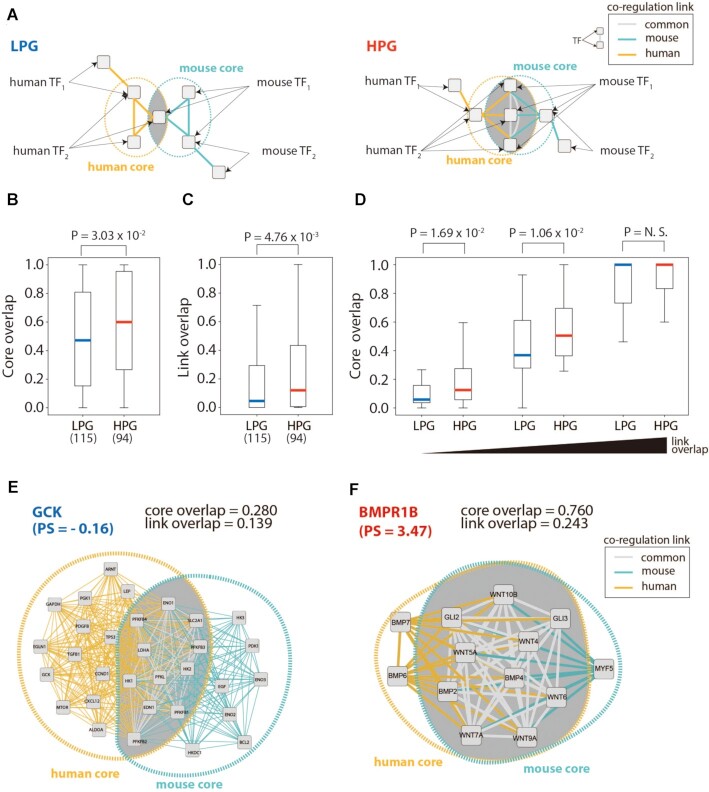
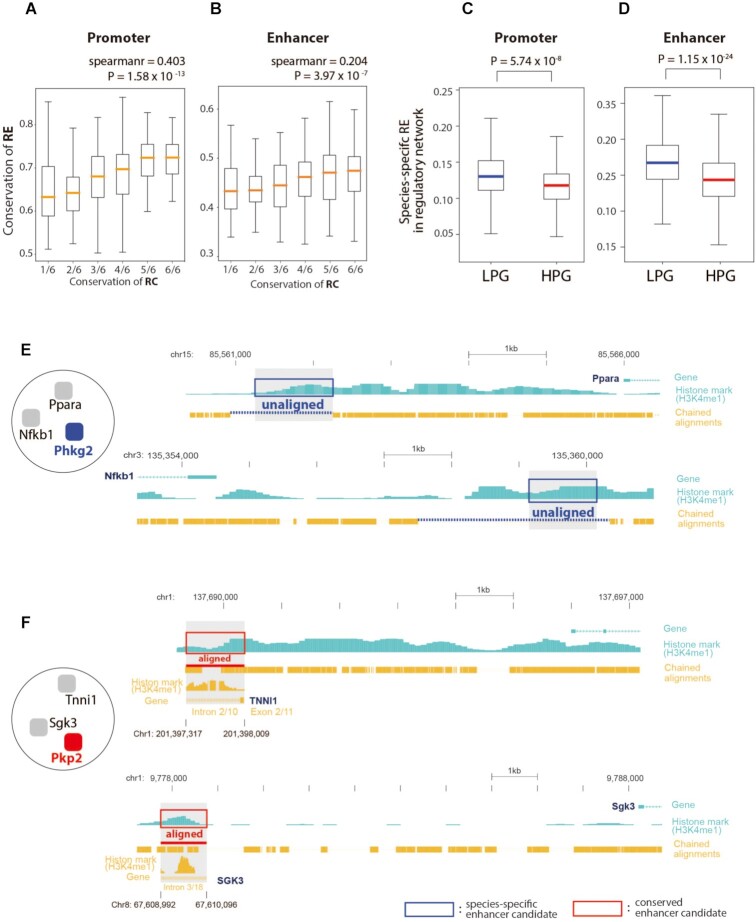
Mouse models have been engineered to reveal the biological mechanisms of human diseases based on an assumption. The assumption is that orthologous genes underlie conserved phenotypes across species. However, genetically modified mouse orthologs of human genes do not often recapitulate human disease phenotypes which might be due to the molecular evolution of phenotypic differences across species from the time of the last common ancestor. Here, we systematically investigated the evolutionary divergence of regulatory relationships between transcription factors (TFs) and target genes in functional modules, and found that the rewiring of gene regulatory networks (GRNs) contributes to the phenotypic discrepancies that occur between humans and mice. We confirmed that the rewired regulatory networks of orthologous genes contain a higher proportion of species-specific regulatory elements. Additionally, we verified that the divergence of target gene expression levels, which was triggered by network rewiring, could lead to phenotypic differences. Taken together, a careful consideration of evolutionary divergence in regulatory networks could be a novel strategy to understand the failure or success of mouse models to mimic human diseases. To help interpret mouse phenotypes in human disease studies, we provide quantitative comparisons of gene expression profiles on our website (http://sbi.postech.ac.kr/w/RN).
基于一个假设,科学家们已经成功构建了用于揭示人类疾病生物学机制的小鼠模型。该假设是,在物种间保守表型的背后存在着同源基因。然而,人类基因的遗传修饰小鼠同源物通常无法再现人类疾病表型,这可能是由于从最后一个共同祖先时期开始,物种间表型差异的分子进化所致。在这里,我们系统地研究了功能模块中转录因子 (TF) 和靶基因之间调控关系的进化分歧,发现基因调控网络 (GRN) 的重布线导致了人类和小鼠之间出现的表型差异。我们证实,同源基因的重布线调控网络包含更高比例的物种特异性调控元件。此外,我们验证了网络重布线引发的靶基因表达水平的差异可能导致表型差异。综上所述,仔细考虑调控网络的进化分歧可能是理解小鼠模型模拟人类疾病失败或成功的一种新策略。为了帮助解释人类疾病研究中的小鼠表型,我们在网站 (http://sbi.postech.ac.kr/w/RN) 上提供了基因表达谱的定量比较。