Bos Saskia, Filby Andrew J, Vos Robin, Fisher Andrew J
Newcastle University Translational and Clinical Research Institute, Newcastle upon Tyne, UK.
Institute of Transplantation, The Newcastle Upon Tyne Hospital NHS Foundation Trust, Newcastle upon Tyne, UK.
Immunology. 2022 May;166(1):17-37. doi: 10.1111/imm.13458. Epub 2022 Mar 1.
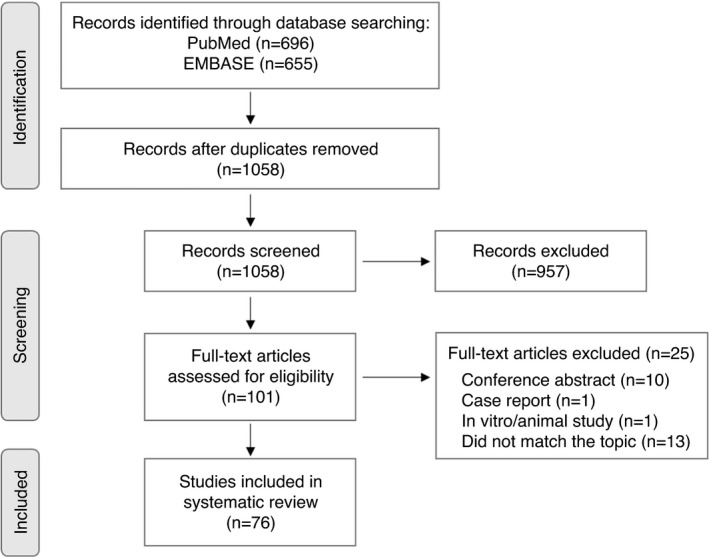
Chronic lung allograft dysfunction (CLAD) remains the major barrier to long-term survival after lung transplantation and improved insight into its underlying immunological mechanisms is critical to better understand the disease and to identify treatment targets. We systematically searched the electronic databases of PubMed and EMBASE for original research publications, published between January 2000 and April 2021, to comprehensively assess current evidence on effector immune cells in lung tissue and bronchoalveolar lavage fluid from lung transplant recipients with CLAD. Literature search revealed 1351 articles, 76 of which met the criteria for inclusion in our analysis. Our results illustrate significant complexity in both innate and adaptive immune cell responses in CLAD, along with presence of numerous immune cell products, including cytokines, chemokines and proteases associated with tissue remodelling. A clear link between neutrophils and eosinophils and CLAD incidence has been seen, in which eosinophils more specifically predisposed to restrictive allograft syndrome. The presence of cytotoxic and T-helper cells in CLAD pathogenesis is well-documented, although it is challenging to draw conclusions about their role in tissue processes from predominantly bronchoalveolar lavage data. In restrictive allograft syndrome, a more prominent humoral immune involvement with increased B cells, immunoglobulins and complement deposition is seen. Our evaluation of published studies over the last 20 years summarizes the complex multifactorial immunopathology of CLAD onset and progression. It highlights the phenotype of several key effector immune cells involved in CLAD pathogenesis, as well as the paucity of single cell resolution spatial studies in lung tissue from patients with CLAD.
慢性肺移植功能障碍(CLAD)仍然是肺移植后长期生存的主要障碍,深入了解其潜在的免疫机制对于更好地理解该疾病和确定治疗靶点至关重要。我们系统检索了PubMed和EMBASE的电子数据库,查找2000年1月至2021年4月发表的原始研究文献,以全面评估关于CLAD肺移植受者肺组织和支气管肺泡灌洗液中效应免疫细胞的现有证据。文献检索共找到1351篇文章,其中76篇符合纳入我们分析的标准。我们的结果表明,CLAD的固有免疫和适应性免疫细胞反应都存在显著复杂性,同时还存在大量免疫细胞产物,包括与组织重塑相关的细胞因子、趋化因子和蛋白酶。已发现中性粒细胞和嗜酸性粒细胞与CLAD发病率之间存在明确联系,其中嗜酸性粒细胞更易引发限制性移植综合征。细胞毒性和辅助性T细胞在CLAD发病机制中的存在已有充分记录,尽管从主要的支气管肺泡灌洗数据中很难得出它们在组织过程中作用的结论。在限制性移植综合征中,可见体液免疫参与更为突出,B细胞、免疫球蛋白和补体沉积增加。我们对过去20年发表研究的评估总结了CLAD发生和发展的复杂多因素免疫病理学。它突出了参与CLAD发病机制的几种关键效应免疫细胞的表型,以及CLAD患者肺组织单细胞分辨率空间研究的匮乏。