Department of Surgery, College of Medicine, University of Saskatchewan, Saskatoon, SK, Canada.
Department of Chemistry and Biochemistry, Faculty of Science, University of Regina, Regina, SK, Canada.
Transl Neurodegener. 2022 Feb 10;11(1):9. doi: 10.1186/s40035-022-00284-3.
Accumulating α-synuclein (α-syn) aggregates in neurons and glial cells are the staples of many synucleinopathy disorders, such as Parkinson's disease (PD). Since brain adenosine becomes greatly elevated in ageing brains and chronic adenosine A1 receptor (A1R) stimulation leads to neurodegeneration, we determined whether adenosine or A1R receptor ligands mimic the action of known compounds that promote α-syn aggregation (e.g., the amphetamine analogue 2-aminoindan) or inhibit α-syn aggregation (e.g., Rasagiline metabolite 1-aminoindan). In the present study, we determined whether adenosine, A1R receptor agonist N-Cyclopentyladenosine (CPA) and antagonist 8-cyclopentyl-1,3-dipropylxanthine (DPCPX) could directly interact with α-syn to modulate α-syn aggregation and neurodegeneration of dopaminergic neurons in the substantia nigra (SN).
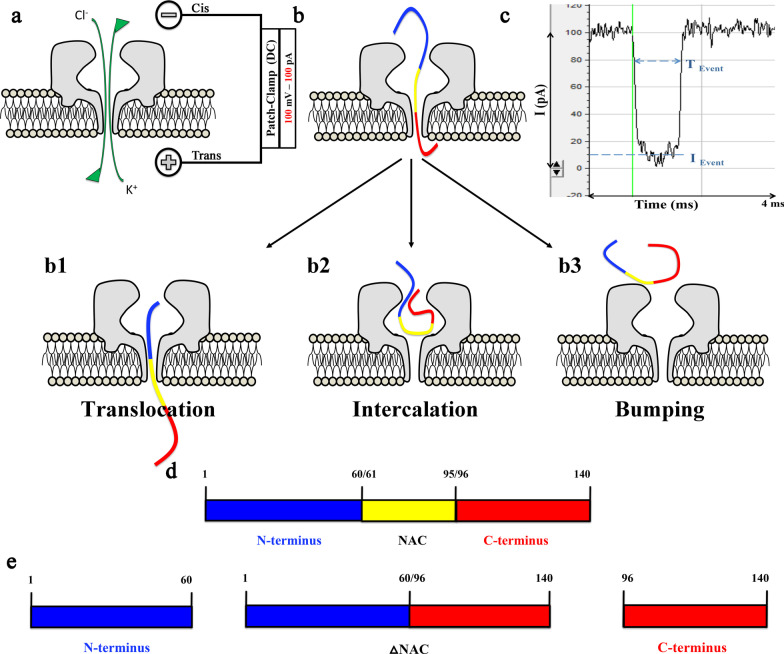
Nanopore analysis and molecular docking were used to test the binding properties of CPA and DPCPX with α-syn in vitro. Sprague-Dawley rats were administered with 7-day intraperitoneal injections of the A1R ligands and 1- and 2-aminoindan, and levels of α-syn aggregation and neurodegeneration were examined in the SN pars compacta and hippocampal regions using confocal imaging and Western blotting.
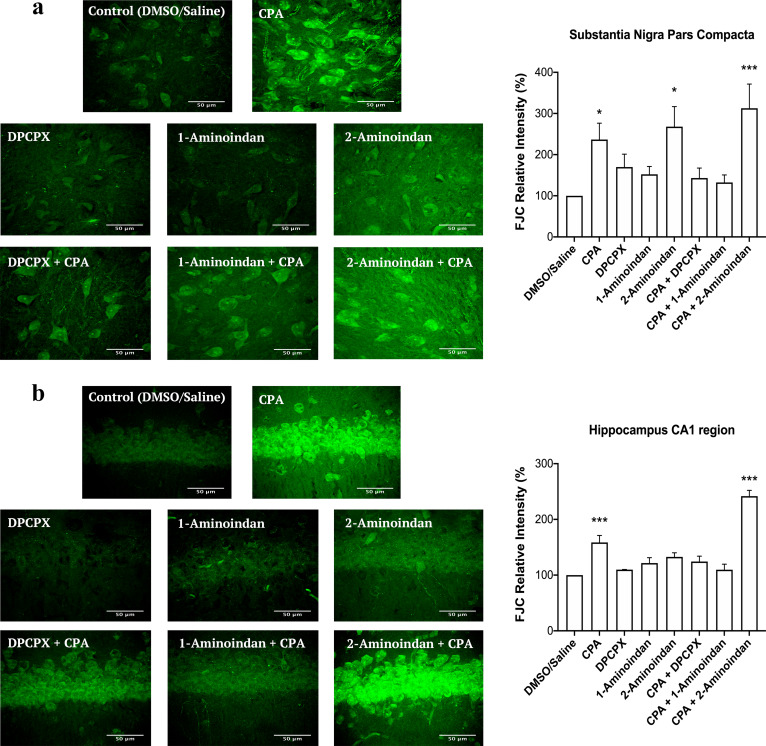
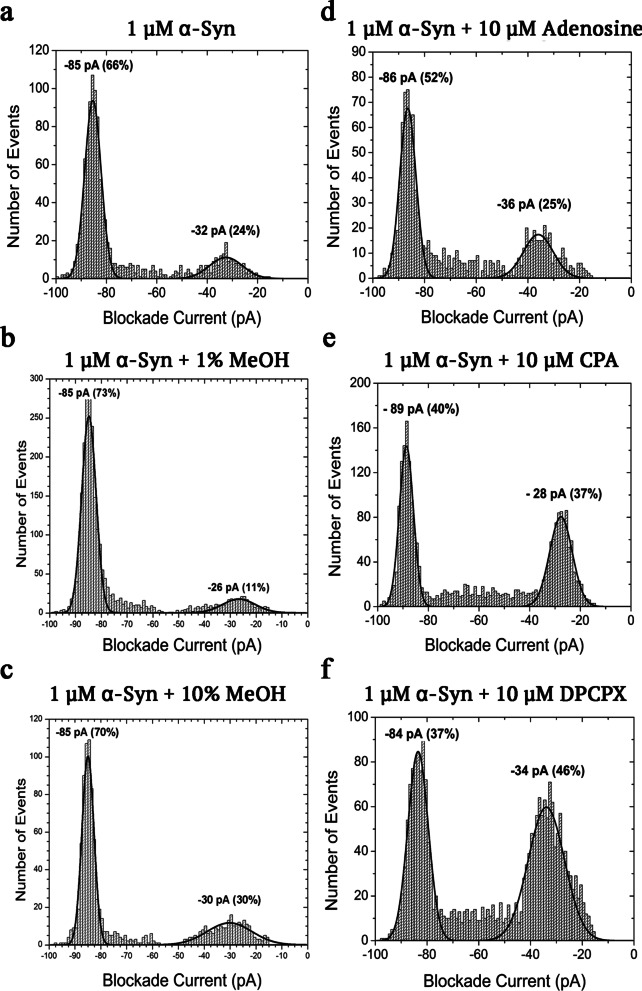
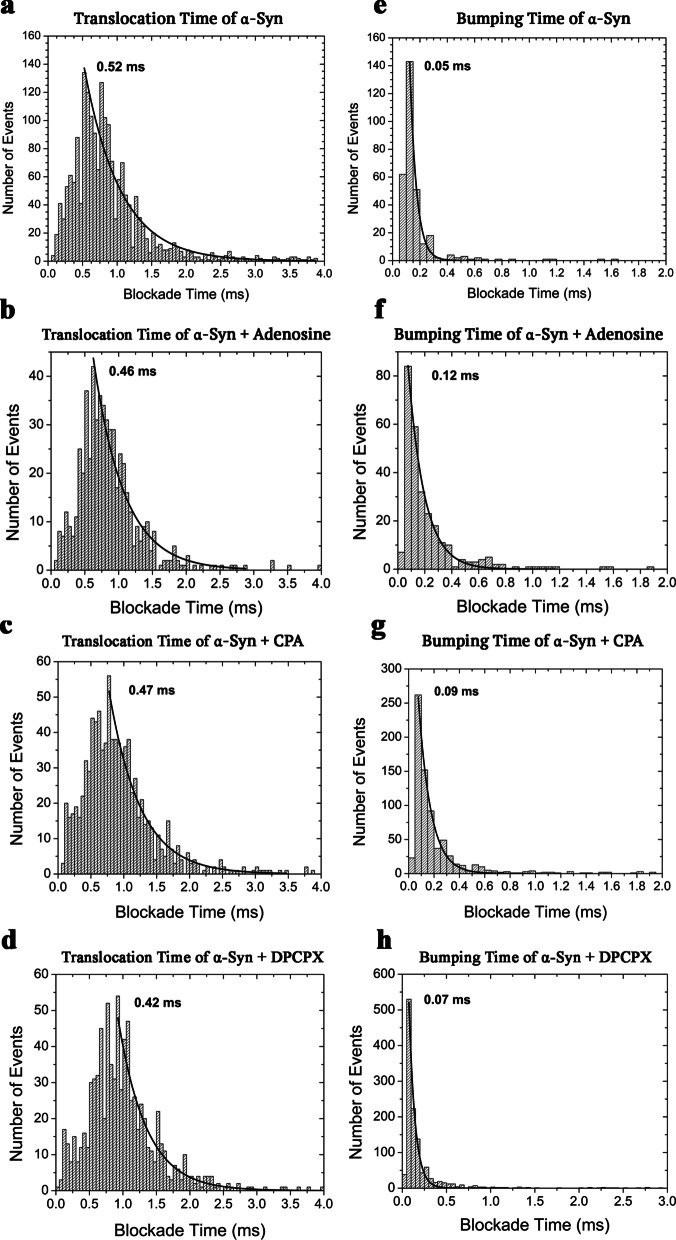
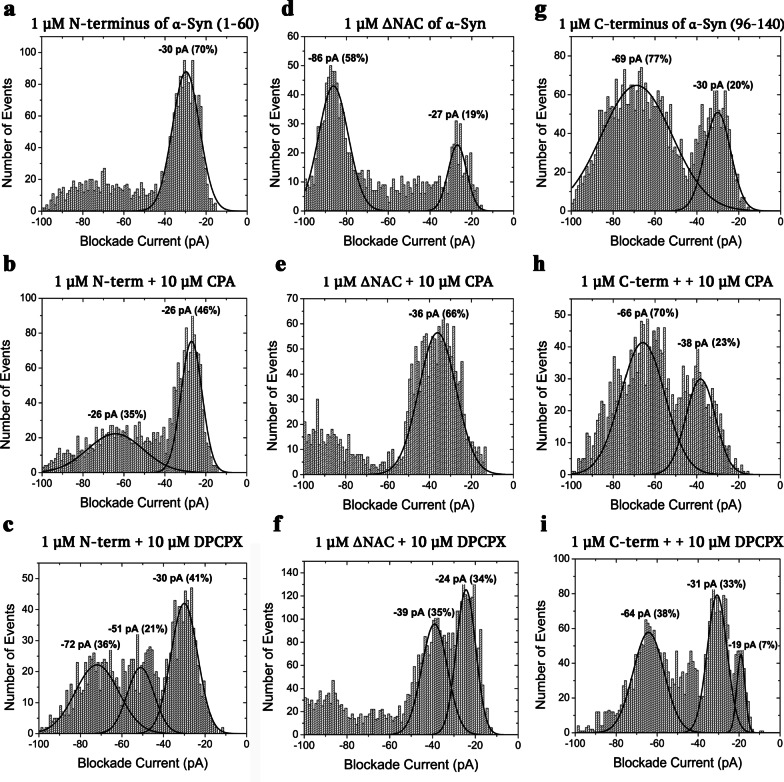
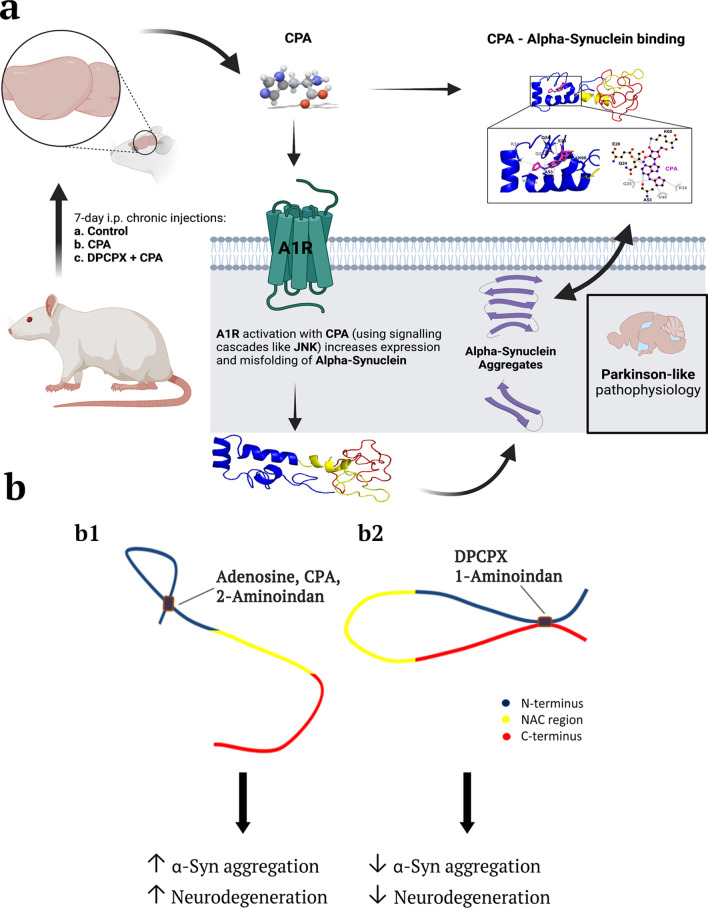
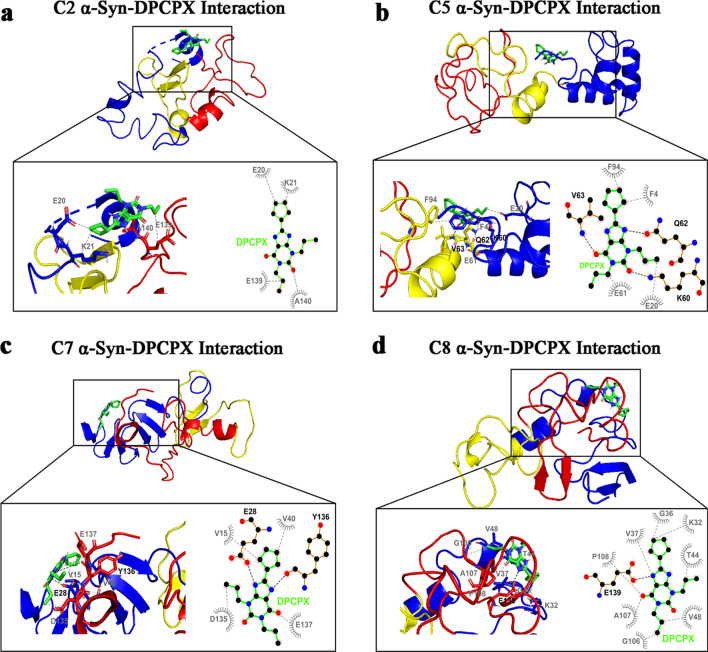
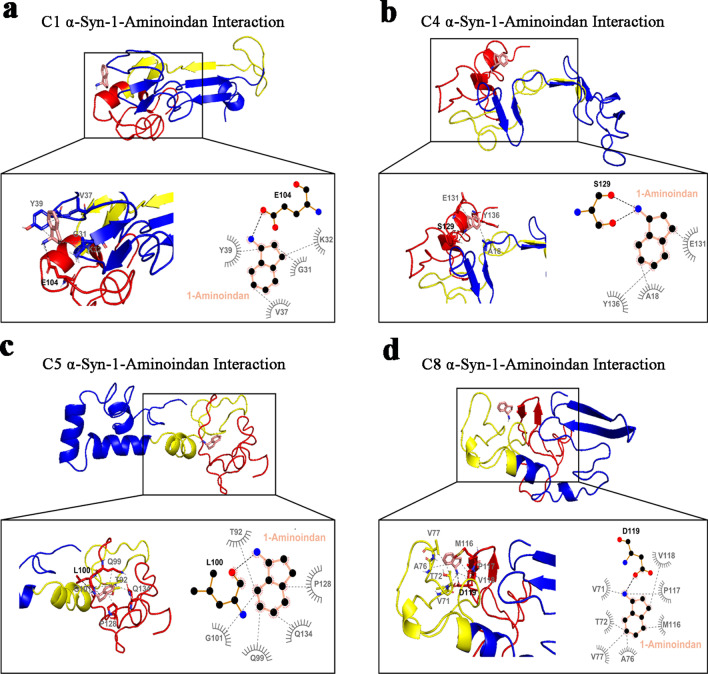
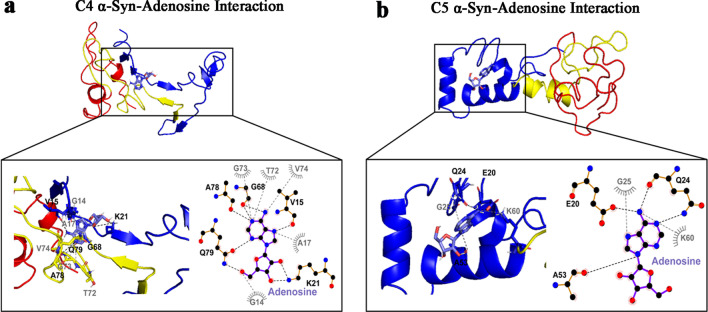
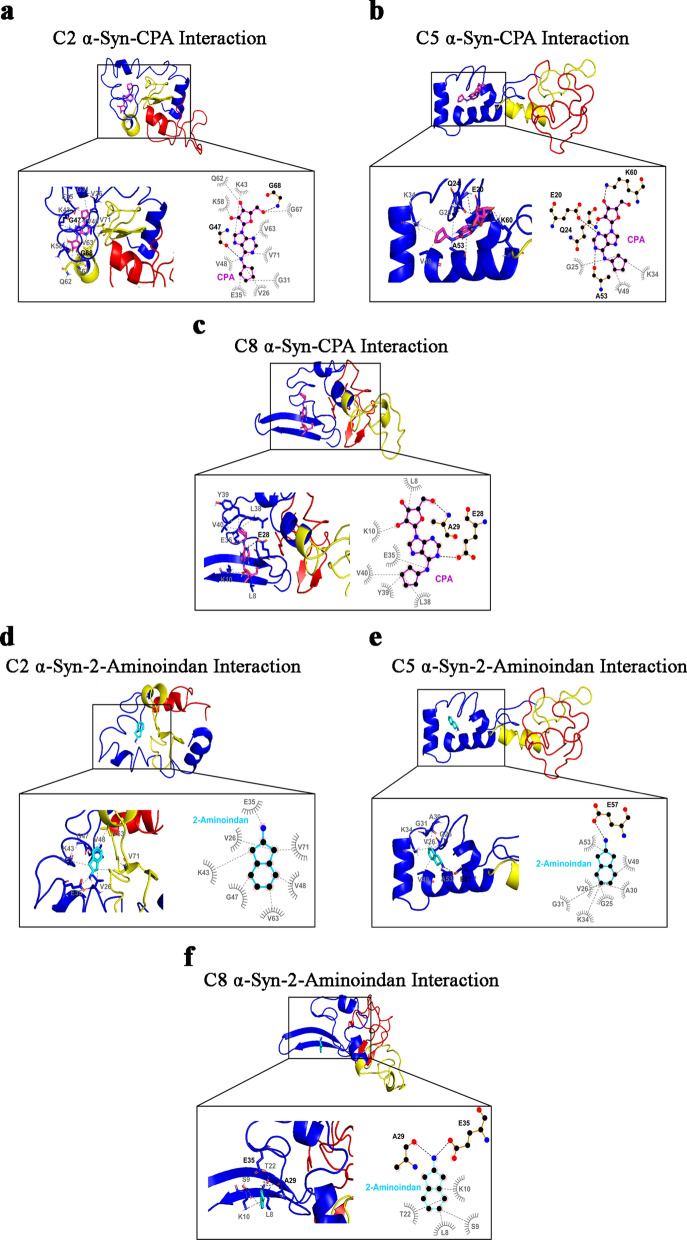
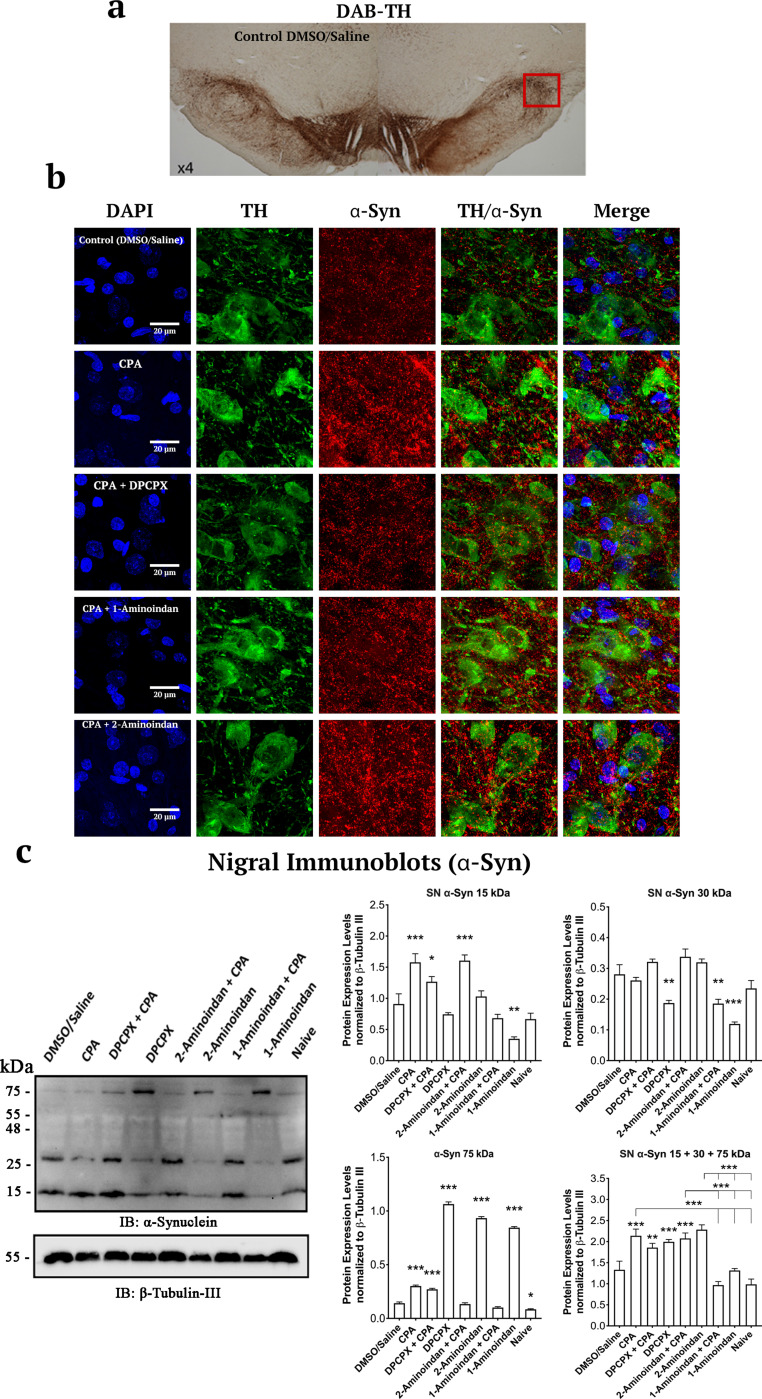
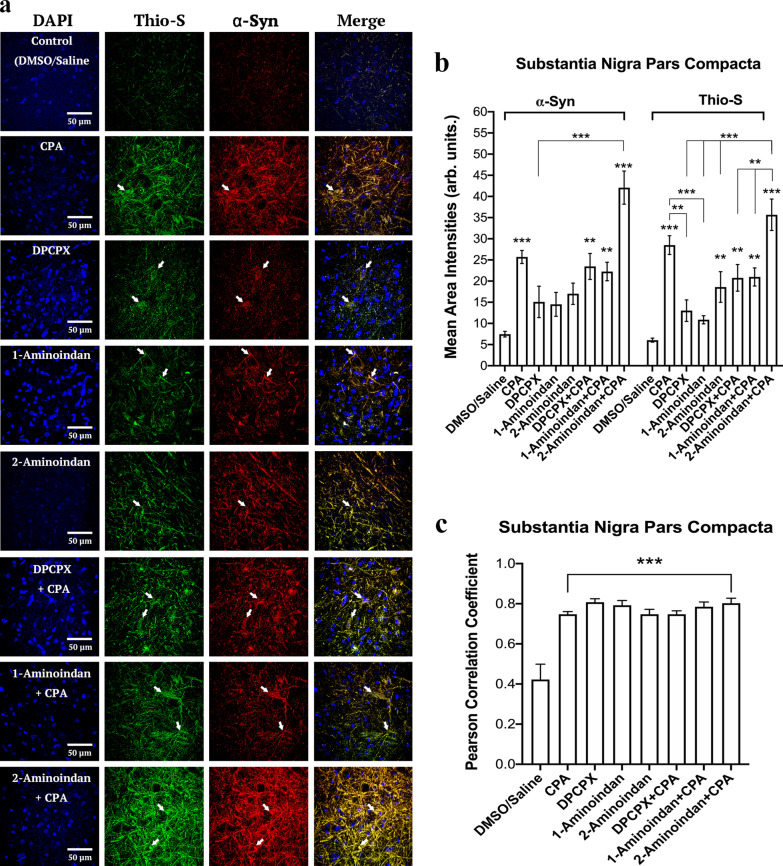
Using nanopore analysis, we showed that the A1R agonists (CPA and adenosine) interacted with the N-terminus of α-syn, similar to 2-aminoindan, which is expected to promote a "knot" conformation and α-syn misfolding. In contrast, the A1R antagonist DPCPX interacted with the N- and C-termini of α-syn, similar to 1-aminoindan, which is expected to promote a "loop" conformation that prevents α-syn misfolding. Molecular docking studies revealed that adenosine, CPA and 2-aminoindan interacted with the hydrophobic core of α-syn N-terminus, whereas DPCPX and 1-aminoindan showed direct binding to the N- and C-terminal hydrophobic pockets. Confocal imaging and Western blot analyses revealed that chronic treatments with CPA alone or in combination with 2-aminoindan increased α-syn expression/aggregation and neurodegeneration in both SN pars compacta and hippocampus. In contrast, DPCPX and 1-aminoindan attenuated the CPA-induced α-syn expression/aggregation and neurodegeneration in SN and hippocampus.
The results indicate that A1R agonists and drugs promoting a "knot" conformation of α-syn can cause α-synucleinopathy and increase neuronal degeneration, whereas A1R antagonists and drugs promoting a "loop" conformation of α-syn can be harnessed for possible neuroprotective therapies to decrease α-synucleinopathy in PD.
神经元和神经胶质细胞中积累的α-突触核蛋白(α-syn)聚集体是许多突触核蛋白病的特征,如帕金森病(PD)。由于脑腺苷在衰老大脑中大大升高,慢性腺苷 A1 受体(A1R)刺激导致神经退行性变,我们确定腺苷或 A1R 受体配体是否模拟已知化合物的作用,这些化合物促进α-syn 聚集(例如,安非他命类似物 2-氨基茚满)或抑制α-syn 聚集(例如,雷沙吉兰代谢物 1-氨基茚满)。在本研究中,我们确定腺苷、A1R 受体激动剂 N-环戊基腺苷(CPA)和拮抗剂 8-环戊基-1,3-二丙基黄嘌呤(DPCPX)是否可以直接与α-syn 相互作用,从而调节α-syn 的聚集和黑质(SN)中多巴胺能神经元的神经退行性变。
使用纳米孔分析和分子对接来测试 CPA 和 DPCPX 在体外与α-syn 的结合特性。用 7 天的腹腔注射 A1R 配体和 1-和 2-氨基茚满处理 Sprague-Dawley 大鼠,并使用共聚焦成像和 Western blot 检测 SN 致密部和海马区的α-syn 聚集和神经退行性变水平。
使用纳米孔分析,我们表明 A1R 激动剂(CPA 和腺苷)与α-syn 的 N 端相互作用,类似于 2-氨基茚满,这预计会促进“结”构象和α-syn 错误折叠。相比之下,A1R 拮抗剂 DPCPX 与α-syn 的 N 和 C 端相互作用,类似于 1-氨基茚满,这预计会促进阻止α-syn 错误折叠的“环”构象。分子对接研究表明,腺苷、CPA 和 2-氨基茚满与α-syn N 端的疏水区相互作用,而 DPCPX 和 1-氨基茚满直接与 N 和 C 端的疏水性口袋结合。共聚焦成像和 Western blot 分析显示,CPA 单独或与 2-氨基茚满联合治疗会增加 SN 致密部和海马体中α-syn 的表达/聚集和神经退行性变。相比之下,DPCPX 和 1-氨基茚满可减轻 SN 和海马体中 CPA 诱导的α-syn 表达/聚集和神经退行性变。
结果表明,A1R 激动剂和促进α-syn“结”构构象的药物可引起α-synucleinopathy 并增加神经元变性,而促进α-syn“环”构象的 A1R 拮抗剂和药物可用于可能的神经保护治疗,以减少 PD 中的α-synucleinopathy。