Department of Respiratory and Critical Care Medicine, The First Affiliated Hospital of Anhui Medical University, Hefei, 230022 Anhui, China.
Department of Emergency Medicine, The First Affiliated Hospital of USTC, Division of Life Sciences and Medicine, University of Science and Technology of China, Hefei, 230001 Anhui, China.
Mediators Inflamm. 2022 Jan 30;2022:6666022. doi: 10.1155/2022/6666022. eCollection 2022.
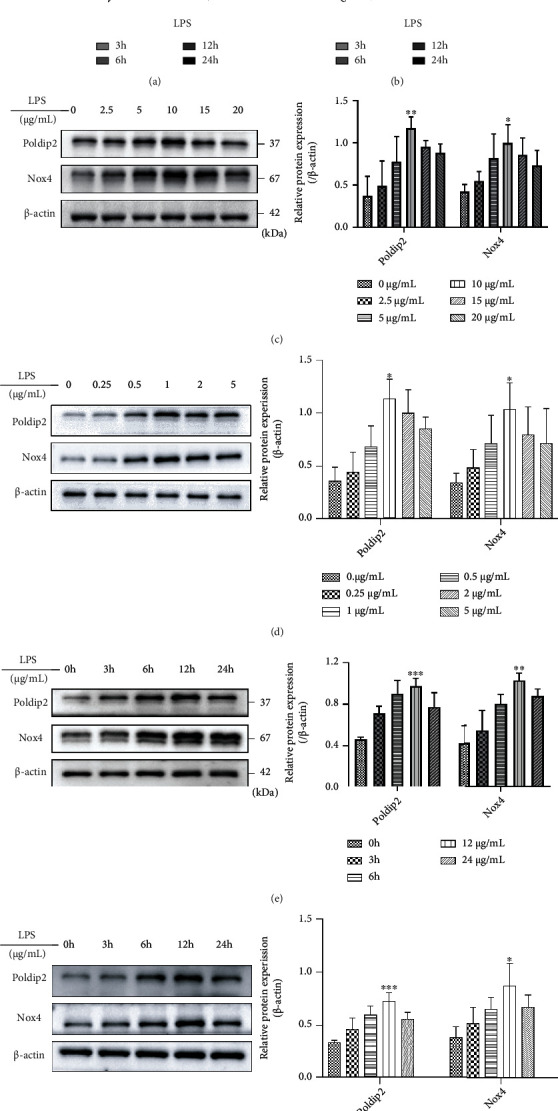
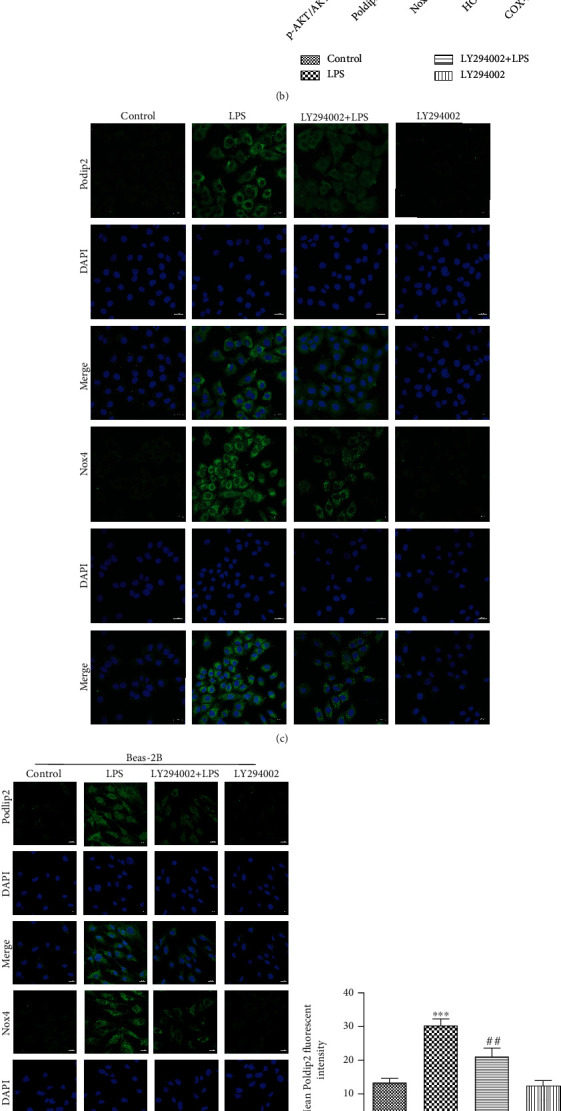
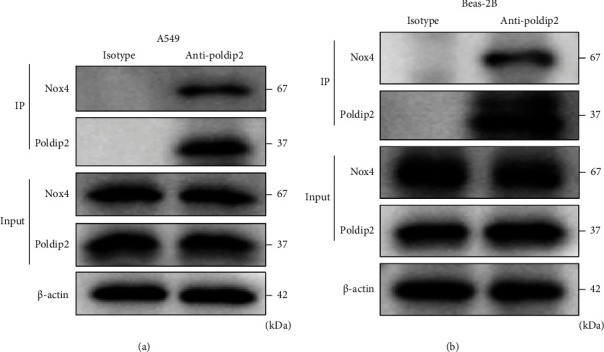
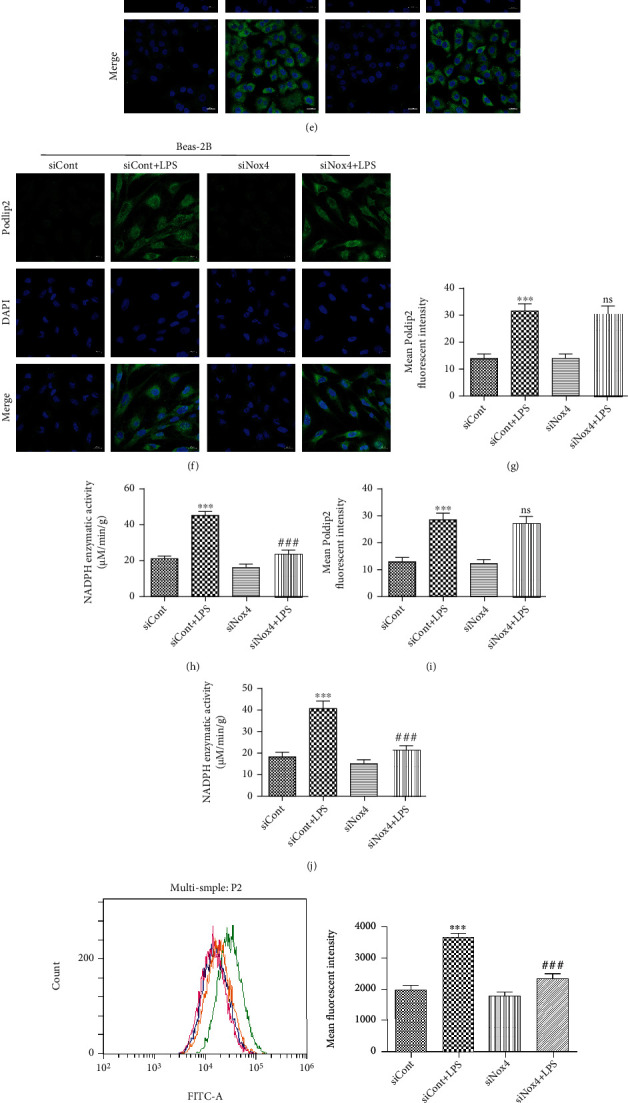
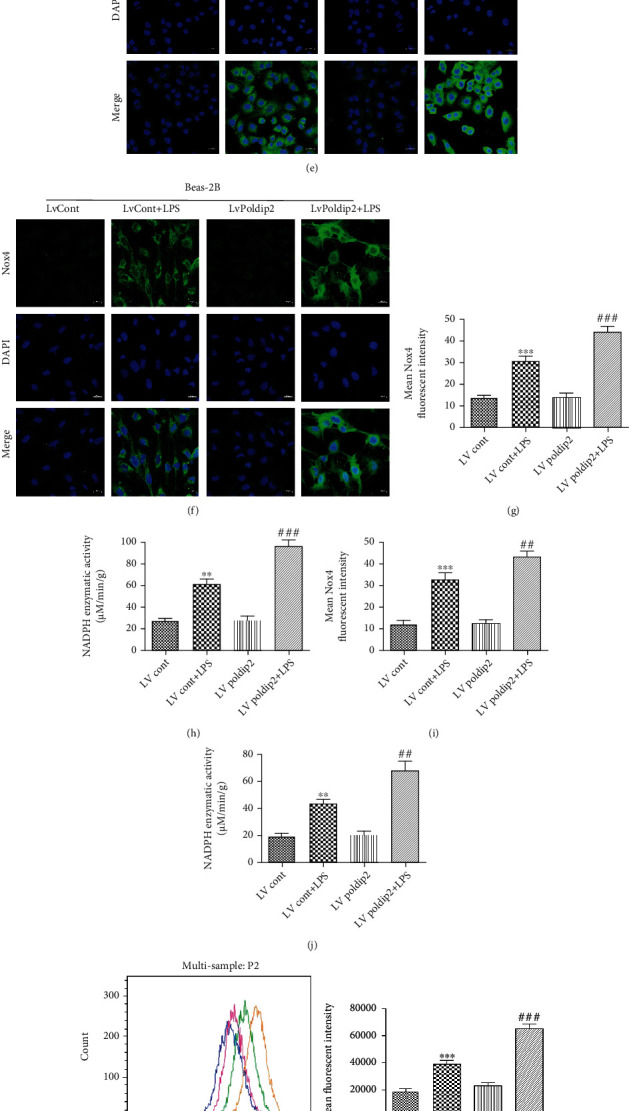
NADPH oxidase 4 (Nox4) is an important source of reactive oxygen species (ROS) production, and its expression is increased in lipopolysaccharide- (LPS-) stimulated lung epithelial cells. Polymerase -interacting protein 2 (Poldip2) has been proved to bind Nox4 and participates in oxidative stress and inflammation. However, the role of Poldip2/Nox4 in LPS-induced oxidative stress and inflammation in lung epithelial cells remains unclear. Cell viability was measured via MTT assays. The expression of Poldip2, Nox4, heme oxygenase-1 (HO-1), cyclooxygenase-2 (COX-2), AKT, and p-AKT was detected by Western blotting and/or immunofluorescence. Poldip2 and Nox4 interaction was analyzed via coimmunoprecipitation (Co-IP) assay. NADPH enzymatic activity and production of ROS, prostaglandin E2 (PGE2), tumor necrosis factor- (TNF-), and interleukin-1 (IL-1) were assessed simultaneously. The small interfering RNA (siRNA) or plasmid targeting Nox4 was used to downregulate or upregulate Nox4, and the lentiviral vector encoding Poldip2 was used to downregulate or upregulate Poldip2. The present study demonstrated that LPS stimulation significantly increased the protein levels of Poldip2 and Nox4 and proved that Poldip2 interacted with Nox4 proved by Co-IP. Importantly, Poldip2 acted as an upstream regulator of Nox4. The increased expression of Nox4 and COX-2; NADPH enzymatic activity; production of ROS, PGE2, TNF-, and IL-1; and decreased HO-1 expression were significantly suppressed by lentiviral Poldip2 shRNA downregulation but were increased by lentiviral upregulation of Poldip2. Furthermore, inhibiting of PI3K-AKT signaling notably attenuated LPS-induced Poldip2/Nox4 activation. Our study demonstrated that Poldip2 mediates LPS-induced oxidative stress and inflammation via interaction with Nox4 and was regulated by the PI3K-AKT signaling. Targeting Poldip2 could be a beneficial therapeutic strategy for the treatment of ALI.
NADPH 氧化酶 4(Nox4)是活性氧(ROS)产生的重要来源,其表达在脂多糖(LPS)刺激的肺上皮细胞中增加。已经证明聚合酶相互作用蛋白 2(Poldip2)与 Nox4 结合并参与氧化应激和炎症。然而,Poldip2/Nox4 在 LPS 诱导的肺上皮细胞氧化应激和炎症中的作用尚不清楚。通过 MTT 测定法测量细胞活力。通过 Western blot 和/或免疫荧光检测 Poldip2、Nox4、血红素加氧酶-1(HO-1)、环氧化酶-2(COX-2)、AKT 和 p-AKT 的表达。通过共免疫沉淀(Co-IP)测定分析 Poldip2 和 Nox4 的相互作用。同时评估 NADPH 酶活性以及 ROS、前列腺素 E2(PGE2)、肿瘤坏死因子-(TNF-)和白细胞介素-1(IL-1)的产生。使用针对 Nox4 的小干扰 RNA(siRNA)或质粒下调或上调 Nox4,并使用编码 Poldip2 的慢病毒载体下调或上调 Poldip2。本研究表明,LPS 刺激显着增加了 Poldip2 和 Nox4 的蛋白水平,并通过 Co-IP 证明 Poldip2 与 Nox4 相互作用。重要的是,Poldip2 作为 Nox4 的上游调节剂。Nox4 和 COX-2 的表达增加;NADPH 酶活性;ROS、PGE2、TNF-和 IL-1 的产生;HO-1 表达的降低,通过慢病毒 Poldip2 shRNA 下调显着抑制,但通过慢病毒上调 Poldip2 增加。此外,抑制 PI3K-AKT 信号显着减弱了 LPS 诱导的 Poldip2/Nox4 激活。我们的研究表明,Poldip2 通过与 Nox4 相互作用介导 LPS 诱导的氧化应激和炎症,并受 PI3K-AKT 信号调节。靶向 Poldip2 可能是治疗 ALI 的有益治疗策略。