Abdel-Latif Raghda T, Wadie Walaa, Abdel-Mottaleb Yousra, Abdallah Dalaal M, El-Maraghy Nabila N, El-Abhar Hanan S
Department of Pharmacology, Toxicology & Biochemistry, Faculty of Pharmacy, Future University in Egypt, Cairo, Egypt.
Department of Pharmacology & Toxicology, Faculty of Pharmacy, Cairo University, Cairo, Egypt.
Saudi Pharm J. 2022 Jan;30(1):72-90. doi: 10.1016/j.jsps.2021.12.009. Epub 2021 Dec 31.
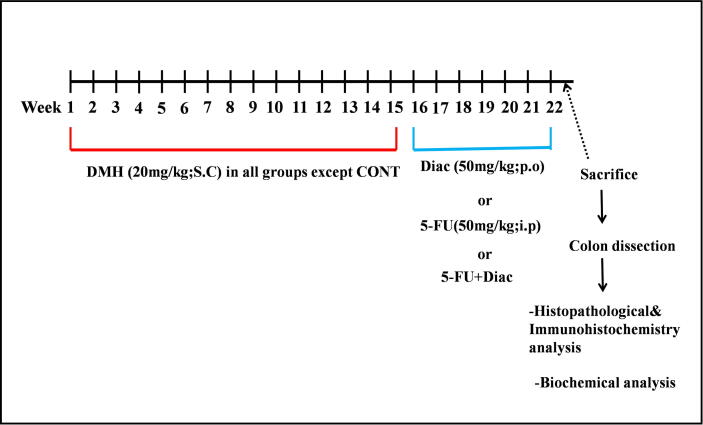
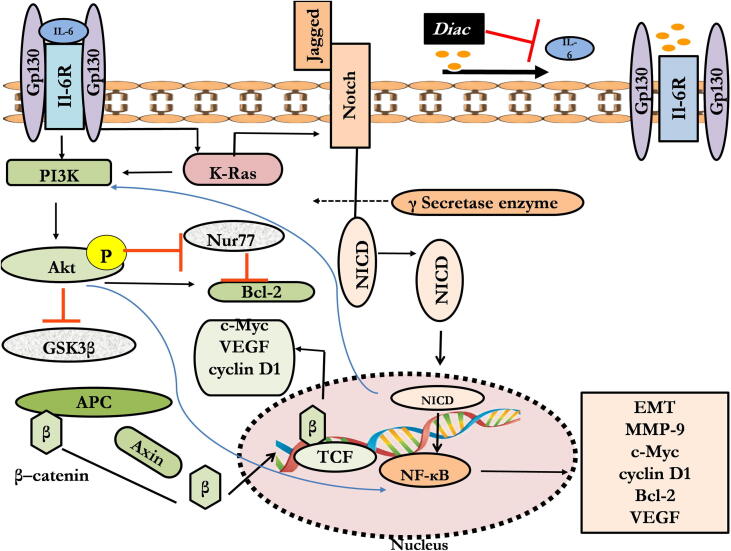
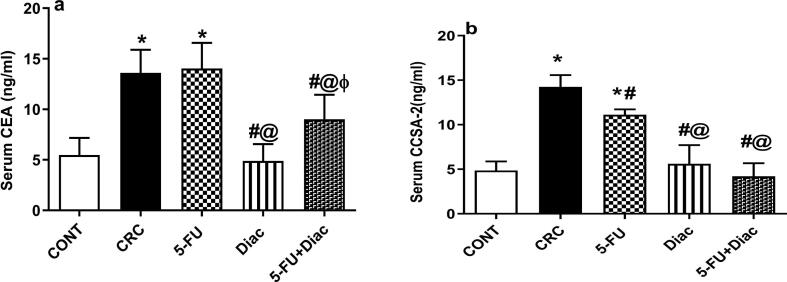
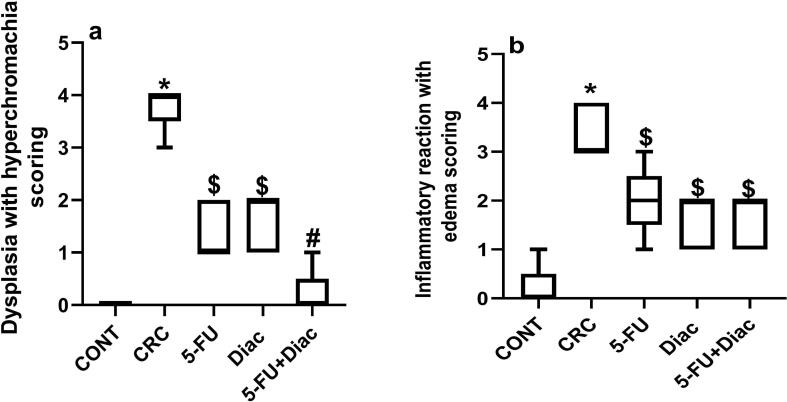
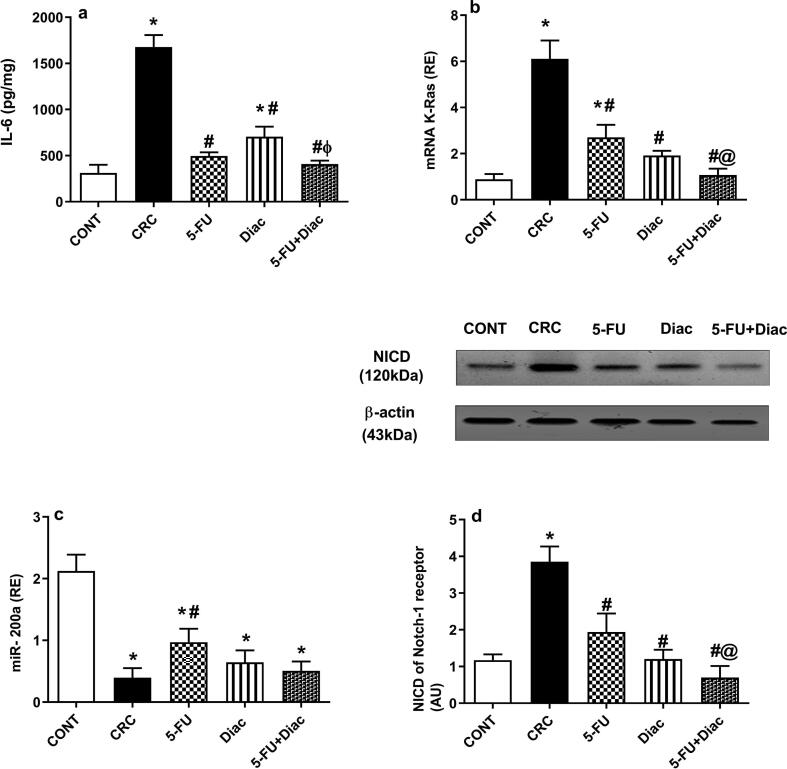
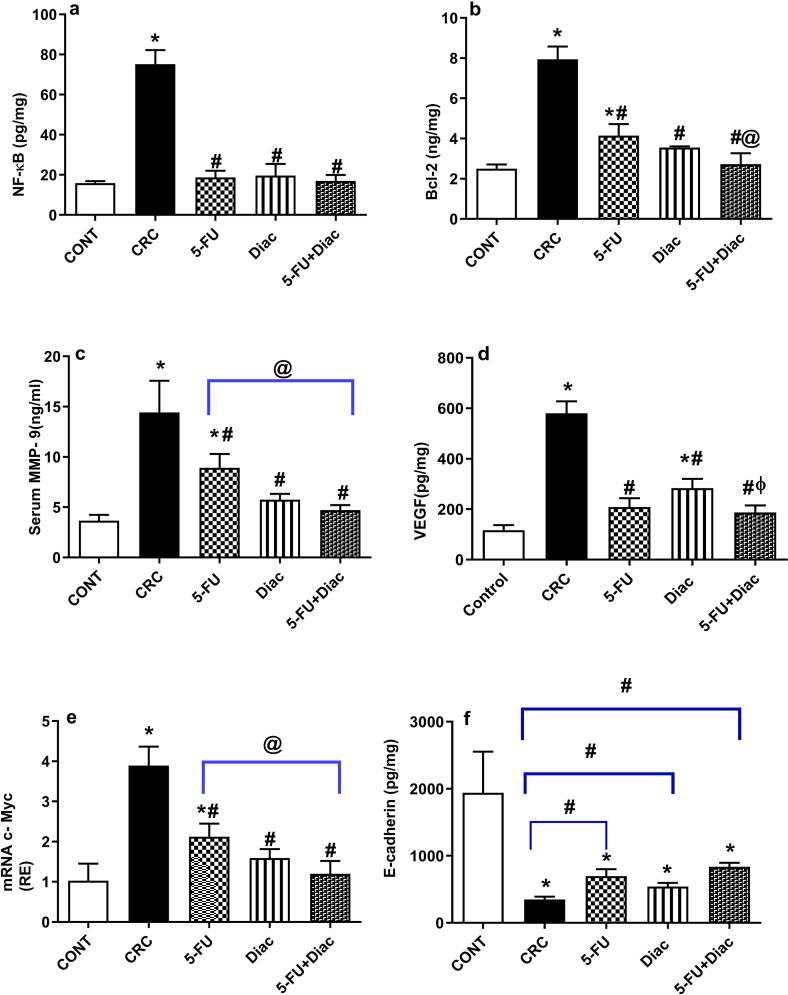
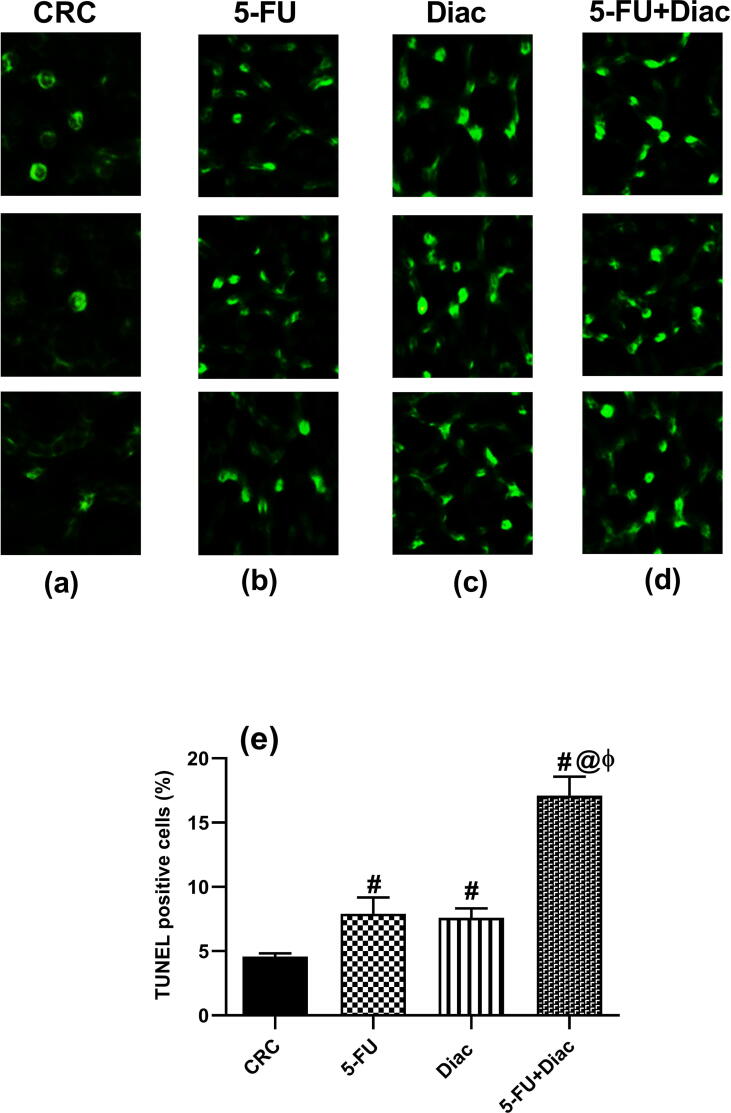
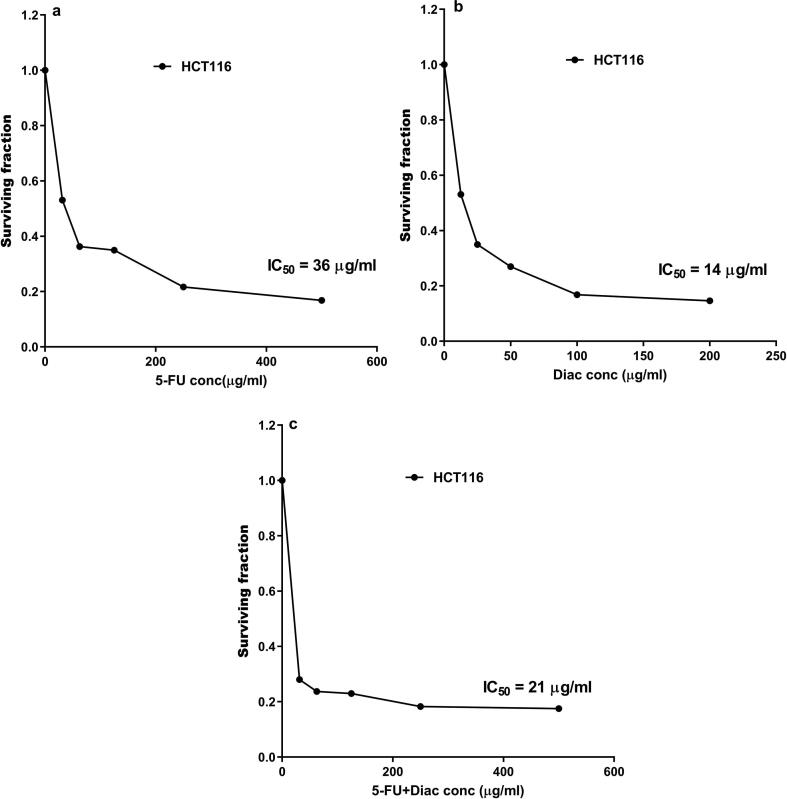
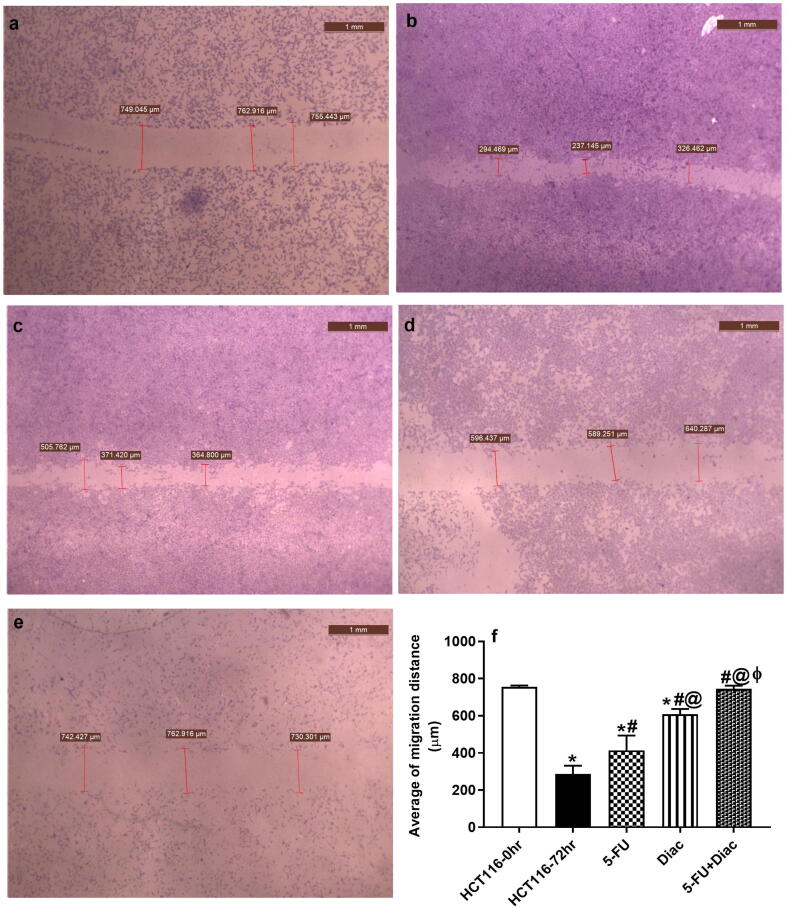
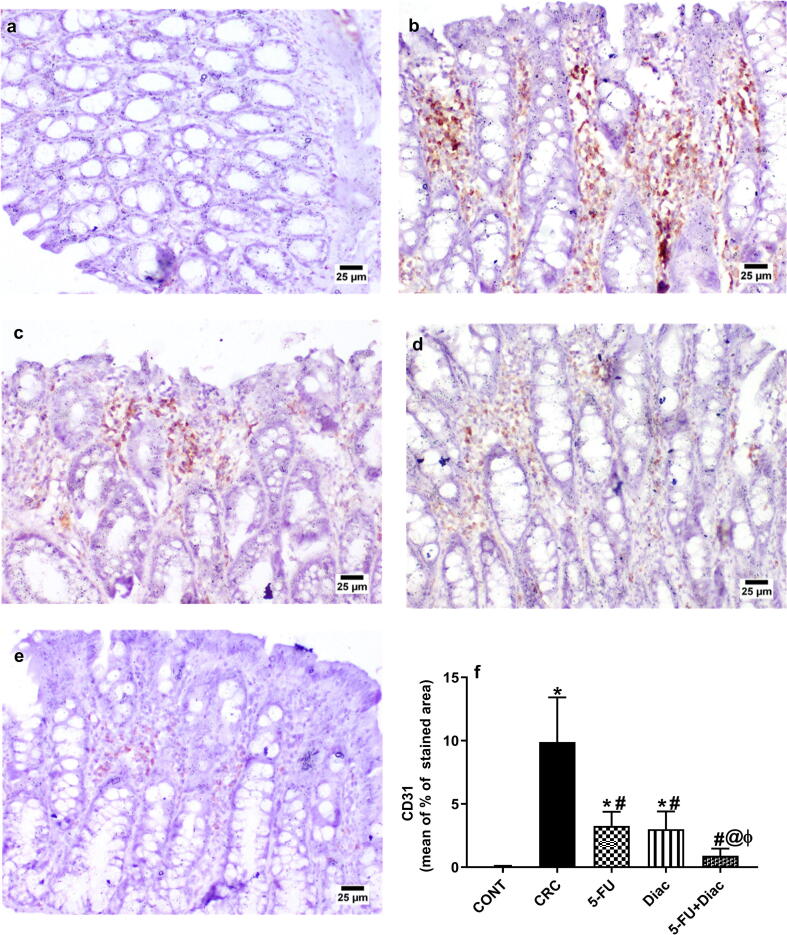
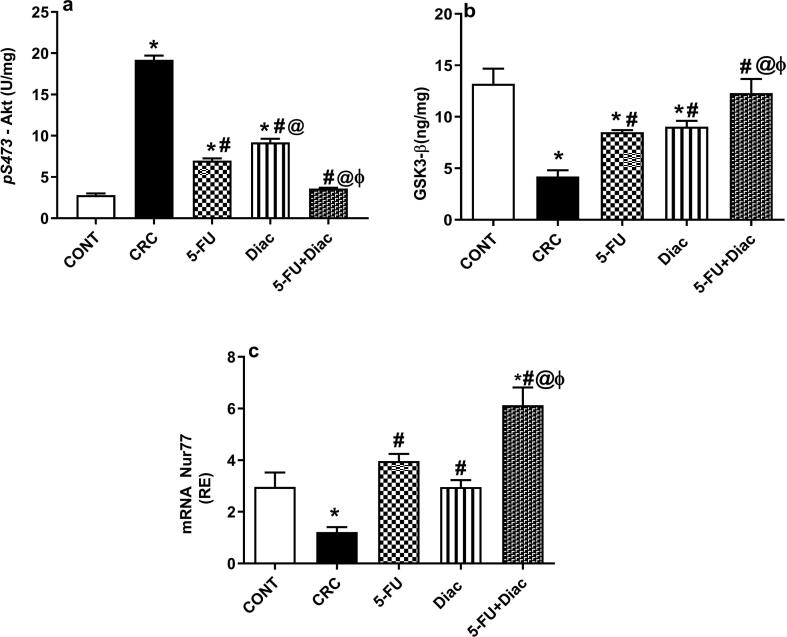
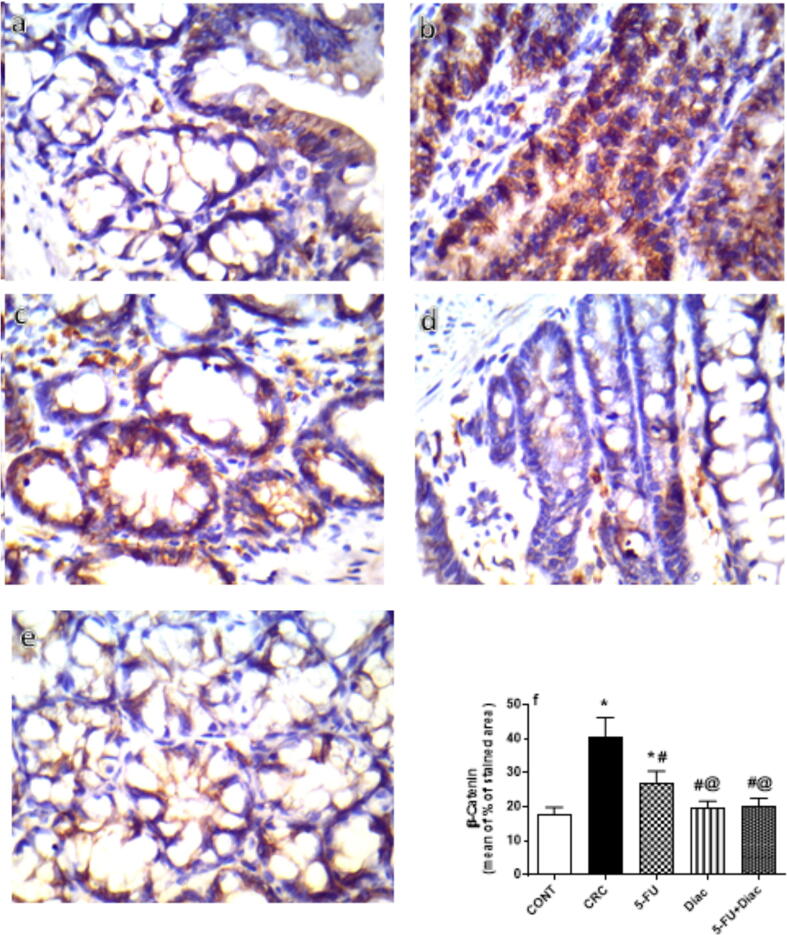
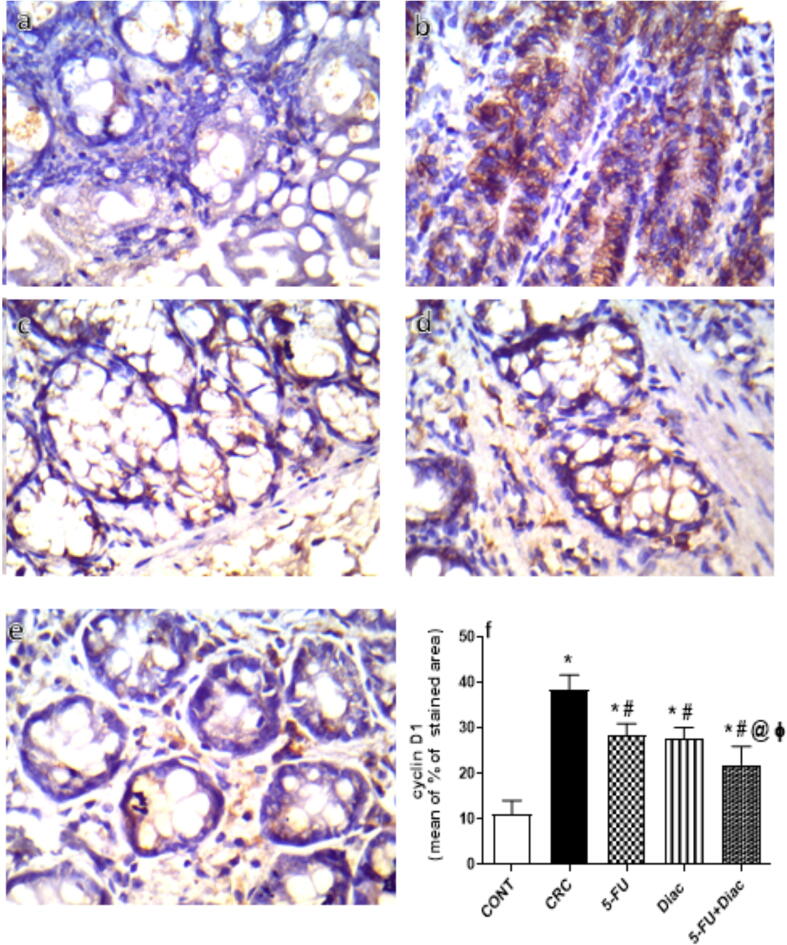
Excessive interleukin (IL)-6 production is a driver for malignancy and drug resistance in colorectal cancer (CRC). Our study investigated a seven-week post-treatment with the anti-inflammatory drug, Diacerein (Diac), alone or in combination with 5-fluorouracil (5-FU), using a 1,2-dimethylhydrazine (DMH) rat model of CRC. Diac alone and 5-FU+Diac reduced serum levels of carcino-embryonic antigen (CEA), while all regimens decreased serum levels of colon cancer-specific antigen (CCSA), a more specific CRC biomarker. Additionally, Diac, 5-FU and their combination suppressed colonic content/gene expression of IL-6, its downstream oncogene, Kirsten rat sarcoma viral oncogene homolog (K-Ras), and consequently Notch intracellular domain and nuclear factor-kappa B (NF-κB) p65. In turn, NF-κB downstream factors, , matrix metalloproteinase-9 (MMP-9), vascular endothelial growth factor (VEGF), c-Myc, and B-cell lymphoma-2 (Bcl-2) were also downregulated, while E-cadherin was elevated. Additionally, the drugs reduced the immunoreactivity of CD31 to prove their anti-angiogenic effect, while the TUNEL assay confirmed the apoptotic effect. The apoptotic effect was confirmed by transferase dUTP nick-end labeling assay. Moreover, these drugs inhibited colon content of -Akt, β-catenin, and cyclin D1 immunoreactivity. The drugs also activated the tumor suppressor glycogen synthase kinase 3- β (GSK3-β) and upregulated the expression of the Nur77 gene, which represents the second arm of IL-6 signaling. However, only 5-FU upregulated miR-200a, another K-Ras downstream factor. The cytotoxic and migration/invasion assays verified the molecular trajectories. Accordingly, we evaluated the antineoplastic effect of Diac alone and its possible chemosensitization effect when added to 5-FU. This combination may target critical oncogenic pathways, including the IL-6/K-Ras/Notch/NF-κB p65 axis, -Akt/GSK3-β/β-catenin/cyclin D-1 hub, and Nur77.
白细胞介素(IL)-6的过度产生是结直肠癌(CRC)发生恶性肿瘤和耐药的驱动因素。我们的研究使用1,2-二甲基肼(DMH)诱导的大鼠CRC模型,研究了抗炎药物双醋瑞因(Diac)单独或与5-氟尿嘧啶(5-FU)联合使用七周后的治疗效果。单独使用Diac以及5-FU+Diac均可降低血清癌胚抗原(CEA)水平,而所有治疗方案均降低了血清结肠癌特异性抗原(CCSA)水平,CCSA是一种更具特异性的CRC生物标志物。此外,Diac、5-FU及其组合可抑制结肠内容物中IL-6及其下游癌基因 Kirsten大鼠肉瘤病毒癌基因同源物(K-Ras)的表达,并进而抑制Notch细胞内结构域和核因子-κB(NF-κB)p65的表达。相应地,NF-κB下游因子基质金属蛋白酶-9(MMP-9)、血管内皮生长因子(VEGF)、c-Myc和B细胞淋巴瘤-2(Bcl-2)的表达也下调,而E-钙黏蛋白表达升高。此外,这些药物降低了CD31的免疫反应性,以证明其抗血管生成作用,而TUNEL检测证实了其凋亡作用。通过末端脱氧核苷酸转移酶介导的dUTP缺口末端标记检测证实了凋亡作用。此外,这些药物抑制了结肠中-Akt、β-连环蛋白和细胞周期蛋白D1的免疫反应性。这些药物还激活了肿瘤抑制因子糖原合酶激酶3-β(GSK3-β)并上调了Nur77基因的表达,Nur77基因代表IL-6信号通路的另一分支。然而,只有5-FU上调了另一个K-Ras下游因子miR-200a的表达。细胞毒性以及迁移/侵袭检测验证了上述分子变化轨迹。因此,我们评估了单独使用Diac的抗肿瘤作用及其与5-FU联合使用时可能的化学增敏作用。这种联合治疗可能靶向关键致癌途径,包括IL-6/K-Ras/Notch/NF-κB p65轴、-Akt/GSK3-β/β-连环蛋白/细胞周期蛋白D-1中心以及Nur77。