Ni Ruiqing
Institute for Biomedical Engineering, ETH Zurich and University of Zurich, Zurich, Switzerland.
Institute for Regenerative Medicine, University of Zurich, Zurich, Switzerland.
Front Aging Neurosci. 2022 Jan 25;13:791679. doi: 10.3389/fnagi.2021.791679. eCollection 2021.
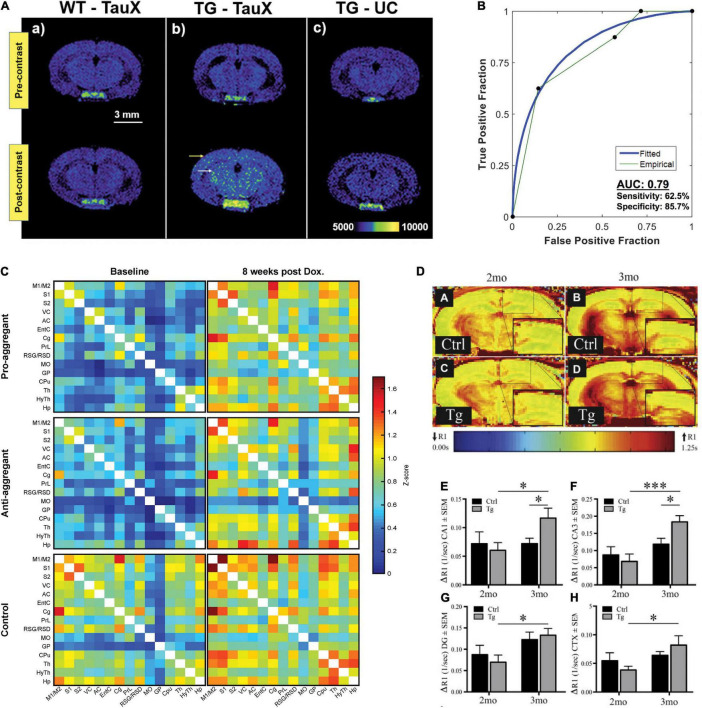
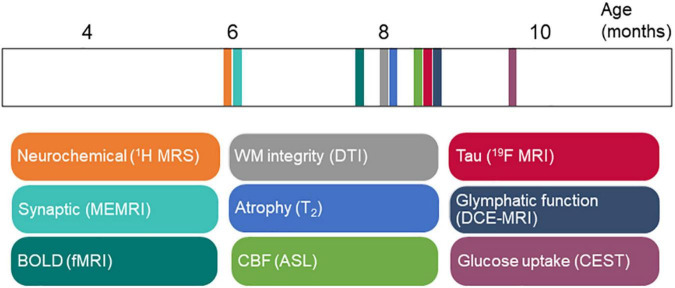
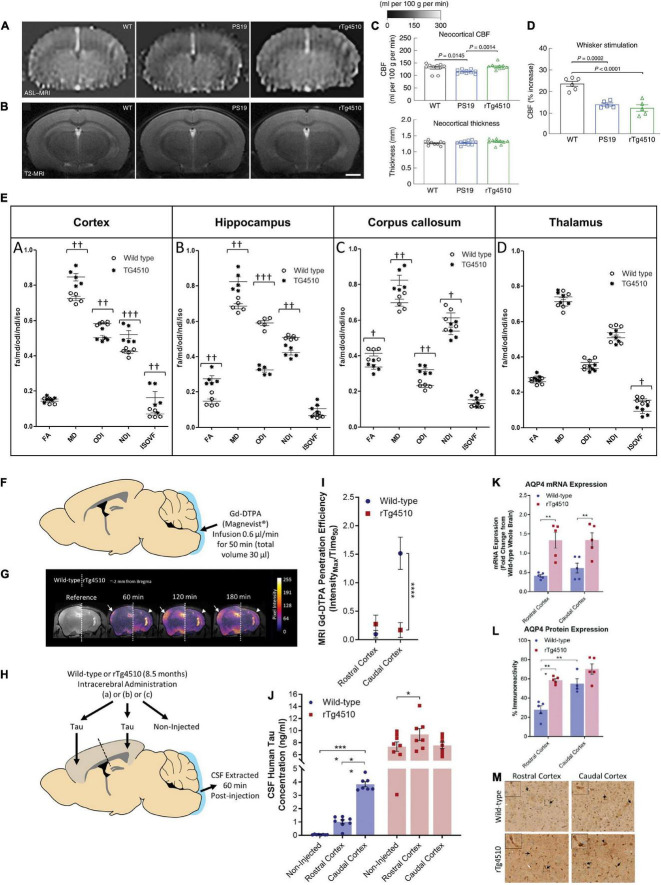
The microtubule-associated protein tau plays an important role in tauopathic diseases such as Alzheimer's disease and primary tauopathies such as progressive supranuclear palsy and corticobasal degeneration. Tauopathy animal models, such as transgenic, knock-in mouse and rat models, recapitulating tauopathy have facilitated the understanding of disease mechanisms. Aberrant accumulation of hyperphosphorylated tau contributes to synaptic deficits, neuroinflammation, and neurodegeneration, leading to cognitive impairment in animal models. Recent advances in molecular imaging using positron emission tomography (PET) and magnetic resonance imaging (MRI) have provided valuable insights into the time course of disease pathophysiology in tauopathy animal models. High-field MRI has been applied for imaging in animal models of tauopathy, including diffusion tensor imaging for white matter integrity, arterial spin labeling for cerebral blood flow, resting-state functional MRI for functional connectivity, volumetric MRI for neurodegeneration, and MR spectroscopy. In addition, MR contrast agents for non-invasive imaging of tau have been developed recently. Many preclinical MRI indicators offer excellent translational value and provide a blueprint for clinical MRI in the brains of patients with tauopathies. In this review, we summarized the recent advances in using MRI to visualize the pathophysiology of tauopathy in small animals. We discussed the outstanding challenges in brain imaging using MRI in small animals and propose a future outlook for visualizing tau-related alterations in the brains of animal models.
微管相关蛋白tau在诸如阿尔茨海默病等tau蛋白病以及诸如进行性核上性麻痹和皮质基底节变性等原发性tau蛋白病中发挥着重要作用。tau蛋白病动物模型,如转基因、基因敲入小鼠和大鼠模型,重现了tau蛋白病,有助于理解疾病机制。异常磷酸化tau蛋白的积累导致突触缺陷、神经炎症和神经退行性变,进而在动物模型中导致认知障碍。使用正电子发射断层扫描(PET)和磁共振成像(MRI)的分子成像的最新进展为tau蛋白病动物模型中疾病病理生理学的时间进程提供了有价值的见解。高场MRI已应用于tau蛋白病动物模型的成像,包括用于白质完整性的扩散张量成像、用于脑血流量的动脉自旋标记、用于功能连接的静息态功能MRI、用于神经退行性变的容积MRI以及磁共振波谱。此外,最近还开发了用于tau蛋白非侵入性成像的磁共振造影剂。许多临床前MRI指标具有出色的转化价值,并为tau蛋白病患者大脑的临床MRI提供了蓝图。在本综述中,我们总结了使用MRI可视化小动物tau蛋白病病理生理学的最新进展。我们讨论了在小动物中使用MRI进行脑成像的突出挑战,并提出了在动物模型大脑中可视化tau蛋白相关改变的未来展望。