Department of Biochemistry and Molecular Biology, Cumming School of Medicine, University of Calgary, 2500 University Dr. NW, Calgary, AB T2N 1N4, Canada.
Rosell Institute for Microbiome and Probiotics, Lallemand Health Solutions, Montreal, QC H4P 2R2, Canada.
EBioMedicine. 2022 Feb;76:103838. doi: 10.1016/j.ebiom.2022.103838. Epub 2022 Feb 9.
Infantile spasms syndrome (IS) is a type of epilepsy affecting 1.6 to 4.5 per 10,000 children in the first year of life, often with severe lifelong neurodevelopmental consequences. Only two first-line pharmacological treatments currently exist for IS and many children are refractory to these therapies. In such cases, children are treated with the ketogenic diet (KD). While effective in reducing seizures, the diet can result in dyslipidemia over time.
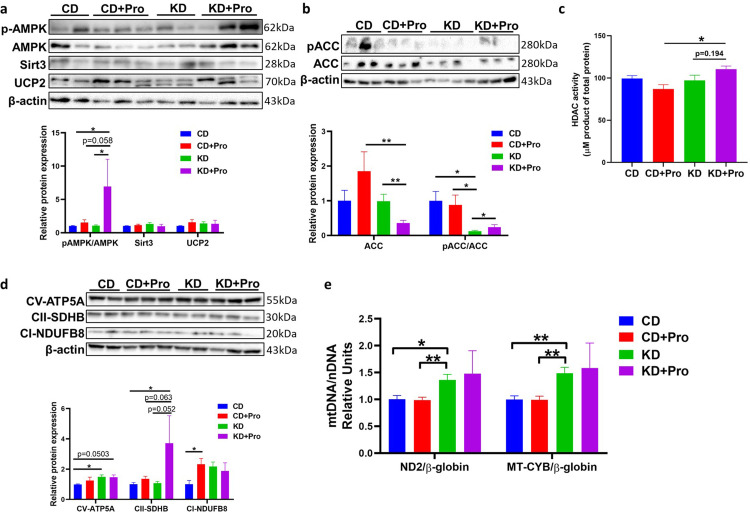
Employing a neonatal Sprague-Dawley rat model of IS, we investigated how the KD affects hepatic steatosis and its modulation by a defined probiotic blend. A combination of multiple readouts, including malondialdehyde, fatty acid profiles, lipid metabolism-related enzyme mRNA expression, mitochondrial function, histone deacetylase activity, cytokines and chemokines were evaluated using liver homogenates.
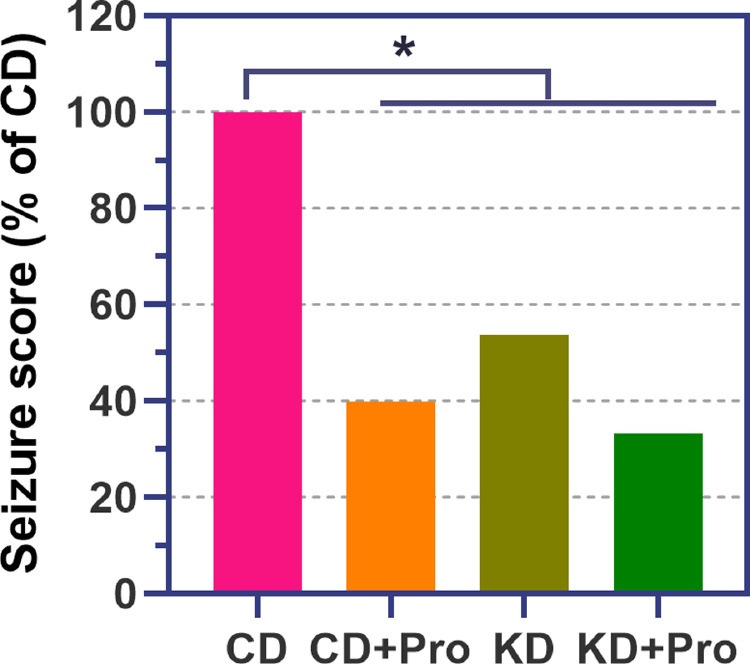
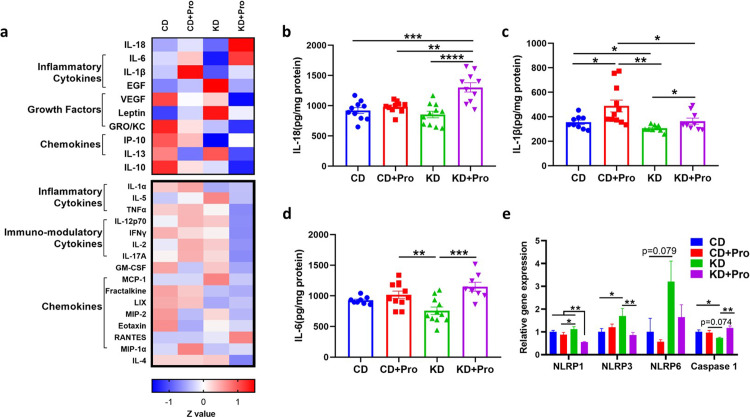
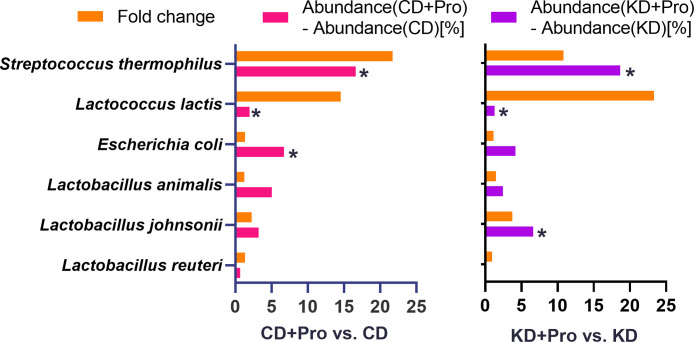
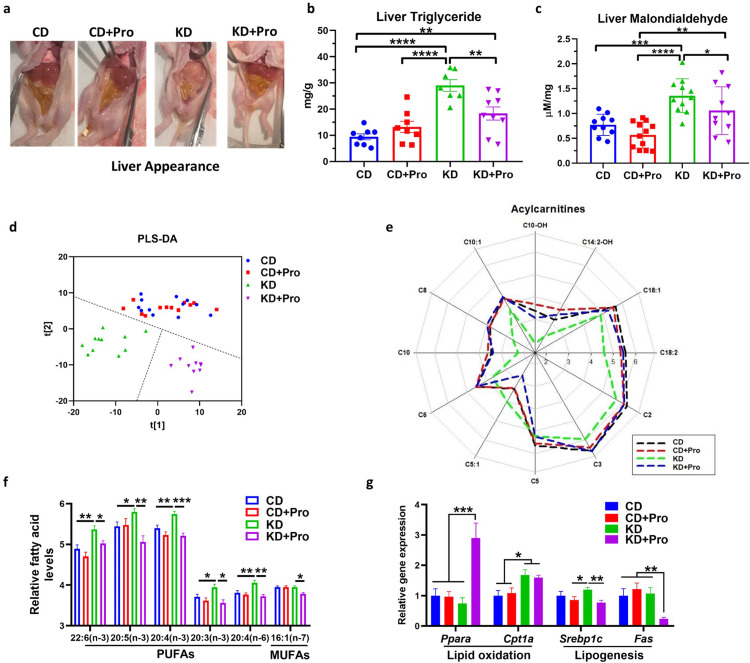
The KD reduced seizures, but resulted in severe hepatic steatosis, characterized by a white liver, triglyceride accumulation, elevated malondialdehyde, polyunsaturated fatty acids and lower acyl-carnitines compared to animals fed a control diet. The KD-induced metabolic phenotype was prevented by the co-administration of a blend of Streptococcus thermophilus HA-110 and Lactococcus lactis subsp. lactis HA-136. This probiotic blend protected the liver by elevating pAMPK-mediated signaling and promoting lipid oxidation. The strains further upregulated the expression of caspase 1 and interleukin 18, which may contribute to their hepatoprotective effect in this model.
Our results suggest that early intervention with probiotics could be considered as an approach to reduce the risk of hepatic side effects of the KD in children who are on the diet for medically indicated reasons.
This study was funded by the Alberta Children's Hospital Research Institute and Mitacs Accelerate Program (IT16942).
婴儿痉挛症(IS)是一种影响 1 岁以下儿童的癫痫类型,发病率为每 10000 名儿童中有 1.6 至 4.5 名,常伴有严重的终身神经发育后果。目前仅存在两种 IS 的一线药物治疗方法,许多儿童对这些疗法无反应。在这种情况下,儿童会接受生酮饮食(KD)治疗。虽然 KD 可有效减少癫痫发作,但随着时间的推移,它会导致血脂异常。
我们采用新生 Sprague-Dawley 大鼠 IS 模型,研究 KD 如何影响肝脂肪变性,以及特定益生菌混合物对此的调节作用。使用肝匀浆评估了多种指标,包括丙二醛、脂肪酸谱、脂质代谢相关酶 mRNA 表达、线粒体功能、组蛋白去乙酰化酶活性、细胞因子和趋化因子。
KD 降低了癫痫发作,但导致严重的肝脂肪变性,表现为肝脏呈白色、甘油三酯堆积、丙二醛升高、多不饱和脂肪酸降低和酰基辅酶 A 降低,与喂食对照饮食的动物相比。益生菌混合物 Streptococcus thermophilus HA-110 和 Lactococcus lactis subsp. lactis HA-136 的联合使用可预防 KD 引起的代谢表型。这种益生菌混合物通过提高 pAMPK 介导的信号和促进脂质氧化来保护肝脏。这些菌株进一步上调了半胱天冬酶 1 和白细胞介素 18 的表达,这可能有助于它们在该模型中的肝保护作用。
我们的研究结果表明,对于因医学原因接受 KD 治疗的儿童,早期干预益生菌可能被视为降低 KD 肝脏副作用风险的一种方法。
本研究由艾伯塔省儿童医院研究所和 Mitacs Accelerate 计划(IT16942)资助。