Pramanik Subhasish, Saha Chinmay, Chowdhury Subhankar, Bose Chiranjit, Bhattacharyya Nitai P, Mondal Lakshmi Kanta
Department of Endocrinology & Metabolism, Institute of Post Graduate Medical Education & Research and SSKM Hospital, Kolkata, 700020, West Bengal, India.
Genome Science, School of Interdisciplinary Studies, University of Kalyani, Nadia, 741235, West Bengal, India.
Diabetes Metab Syndr Obes. 2022 Feb 4;15:345-358. doi: 10.2147/DMSO.S346097. eCollection 2022.
Diabetic retinopathy (DR), the leading cause of blindness among working adults, is an urgent public health problem as diabetes mellitus (DM) is increasing at an alarming rate. Hyperglycemia-induced endothelial dysfunction is the principal contributing factor leading to the development of microangiopathy. Altered levels of microRNA (miR), the negative regulator of protein-coding genes, have been observed and considered to be markers for DR. Present study aimed to find out whether miR levels in plasma could be effective biomarkers to differentiate between type 2 diabetes mellitus (T2DM) with non-proliferative retinopathy (NPDR) from T2DM with no-DR (DNR).
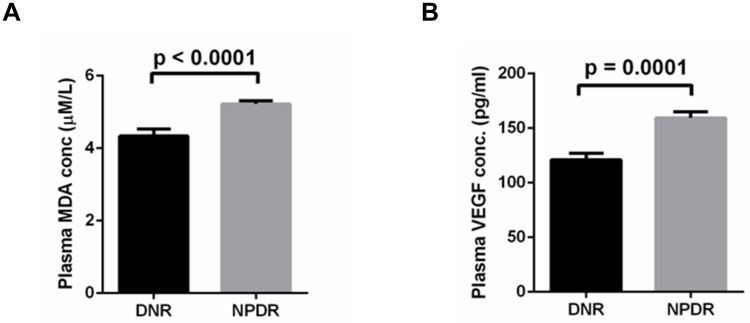
We recruited 50 T2DM subjects comprising 31 NPDR and 19 DNR individuals. Surrogate markers of systemic oxidative stress and vascular endothelial growth factor (VEGF) were measured in plasma. Levels of miR-126 and miR-132 were determined in plasma and vitreous fluid using real-time PCR.
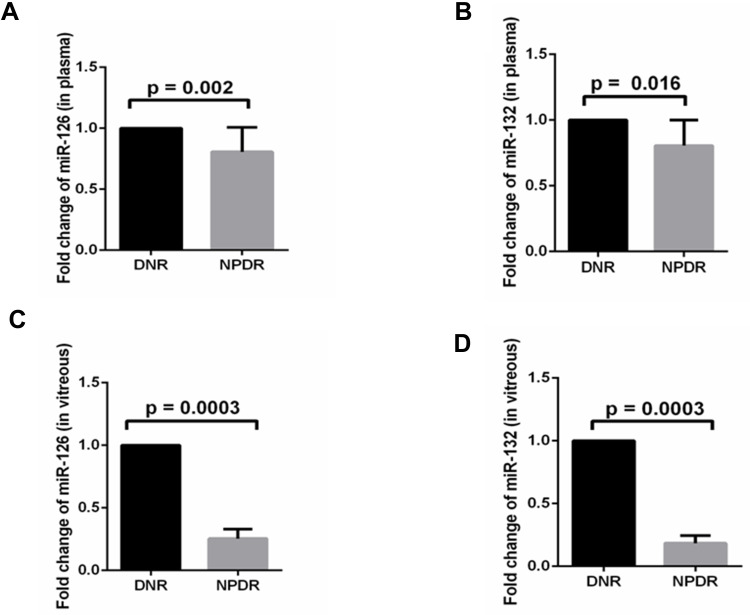
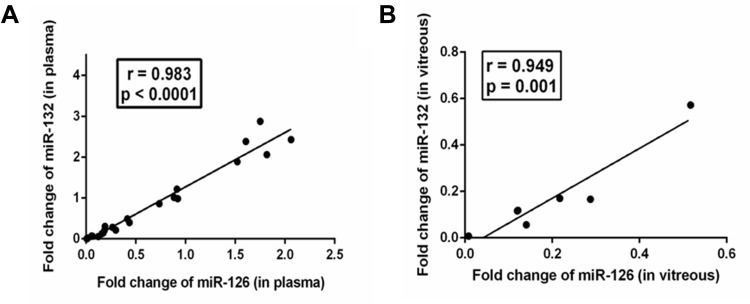
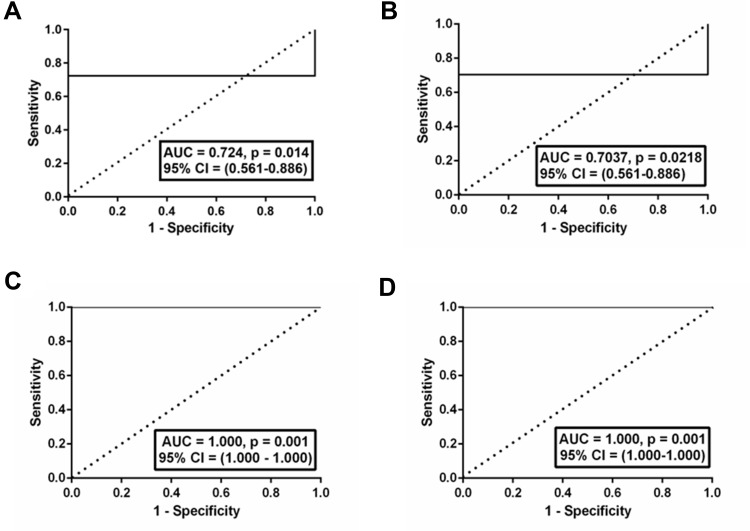
We observed that levels of miR-126 and miR-132 were decreased in NPDR subjects in comparison to DNR. Plasma levels of miRs were inversely correlated with secreted levels of VEGF and oxidative stress marker. The levels of these miRs showed discriminating ability between NPDR and DNR.
Circulating miRs 126 and 132 in plasma or vitreous may serve as biomarkers for early diabetic retinopathy risk prediction, provided validated in a larger cohort and other forms of retinal vasculopathy or retinopathy in the future.
糖尿病视网膜病变(DR)是在职成年人失明的主要原因,随着糖尿病(DM)以惊人的速度增加,它已成为一个紧迫的公共卫生问题。高血糖诱导的内皮功能障碍是导致微血管病变发展的主要因素。已观察到微小RNA(miR)(蛋白质编码基因的负调节因子)水平的改变,并认为其是DR的标志物。本研究旨在确定血浆中的miR水平是否可作为有效的生物标志物,以区分患有非增殖性视网膜病变(NPDR)的2型糖尿病(T2DM)患者和无糖尿病视网膜病变(DNR)的T2DM患者。
我们招募了50名T2DM受试者,其中包括31名NPDR患者和19名DNR患者。测量血浆中全身氧化应激和血管内皮生长因子(VEGF)的替代标志物。使用实时PCR测定血浆和玻璃体液中miR-126和miR-132的水平。
我们观察到,与DNR患者相比,NPDR患者中miR-126和miR-132的水平降低。血浆中miR的水平与VEGF的分泌水平和氧化应激标志物呈负相关。这些miR的水平显示出在NPDR和DNR之间的鉴别能力。
血浆或玻璃体液中循环的miR 126和132可能作为早期糖尿病视网膜病变风险预测的生物标志物,前提是在未来更大的队列以及其他形式的视网膜血管病变或视网膜病变中得到验证。