Institute of Cellular Biology and Pathology 'Nicolae Simionescu' of the Romanian Academy, Bucharest, Romania.
National Institute of Diabetes, Nutrition and Metabolic Disease 'Prof. Dr. Nicolae Constantin Paulescu', Bucharest, Romania.
Cardiovasc Diabetol. 2023 Sep 25;22(1):260. doi: 10.1186/s12933-023-01988-0.
Circulating MicroRNAs (miRNAs) carried by microvesicles (MVs) have various physiological and pathological functions by post-transcriptional regulation of gene expression being considered markers for many diseases including diabetes and dyslipidemia. We aimed to identify new common miRNAs both in MVs and plasma that could be predictive biomarkers for diabetic dyslipidemia evolution.
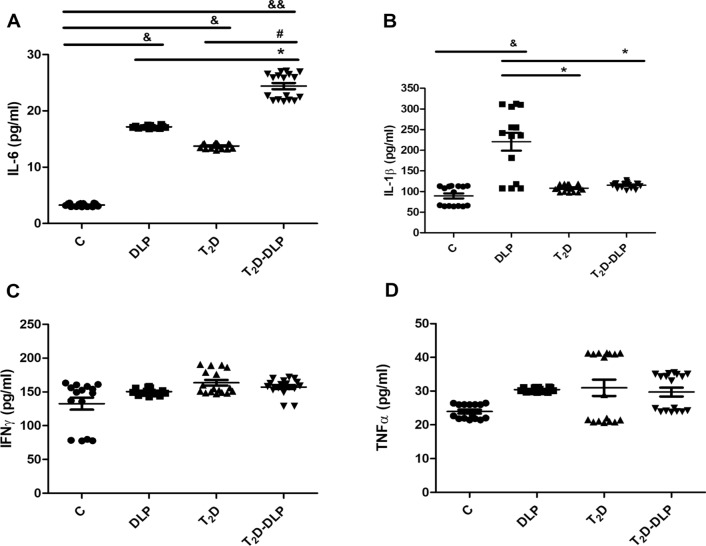
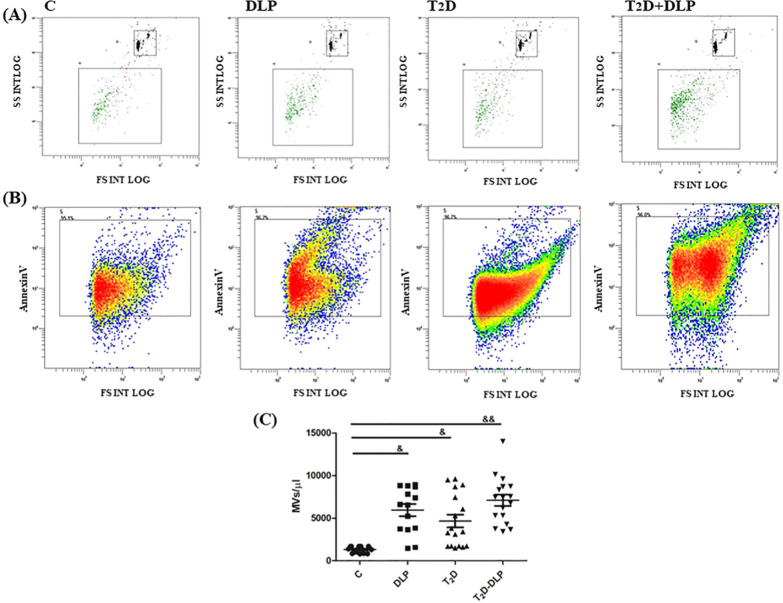
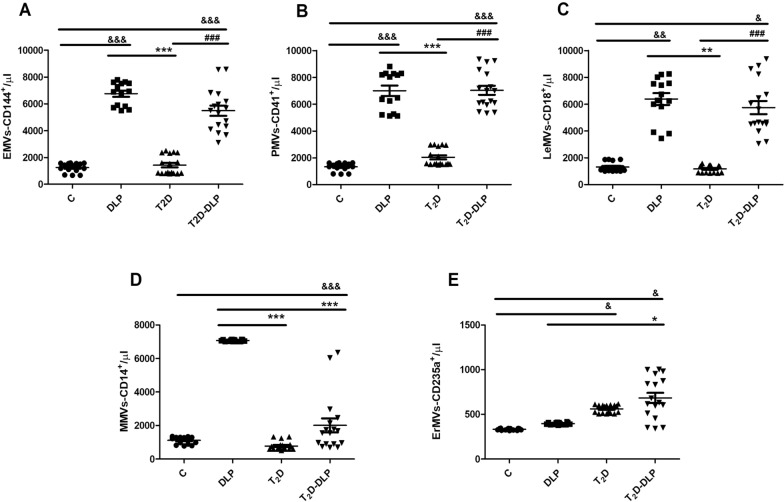
For this purpose, plasma from 63 participants in the study (17 type 2 diabetic patients, 17 patients with type 2 diabetes and dyslipidemia, 14 patients with dyslipidemia alone and 15 clinically healthy persons without diabetes or dyslipidemia) was used for the analysis of circulating cytokines, MVs, miRNAs and MV-associated miRNAs.
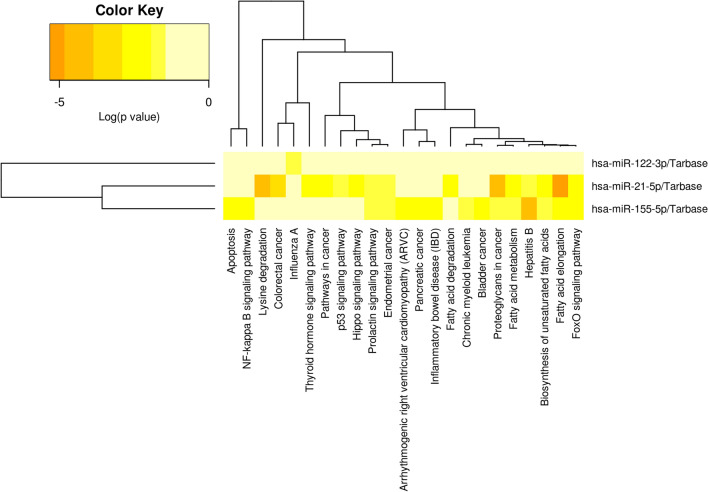
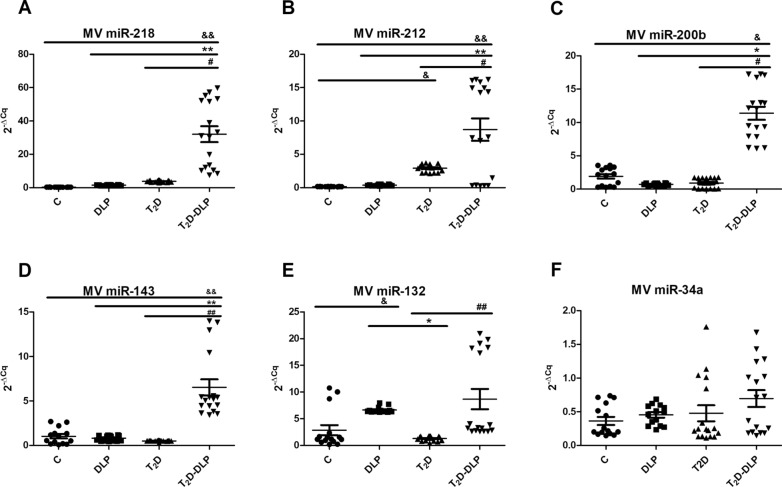
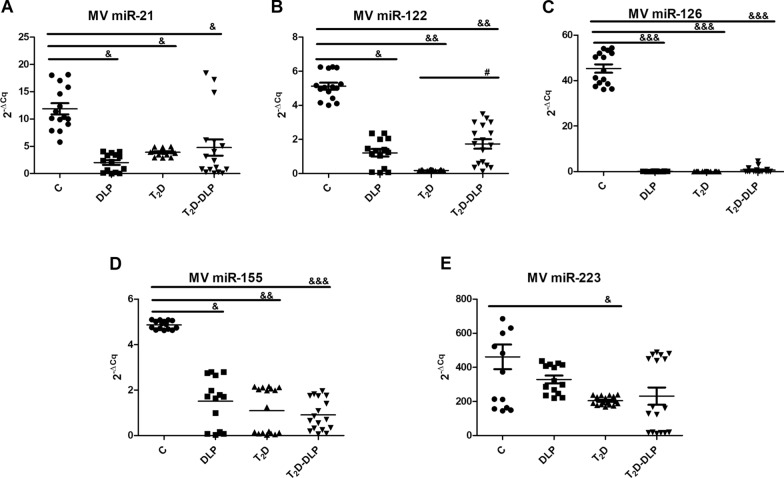
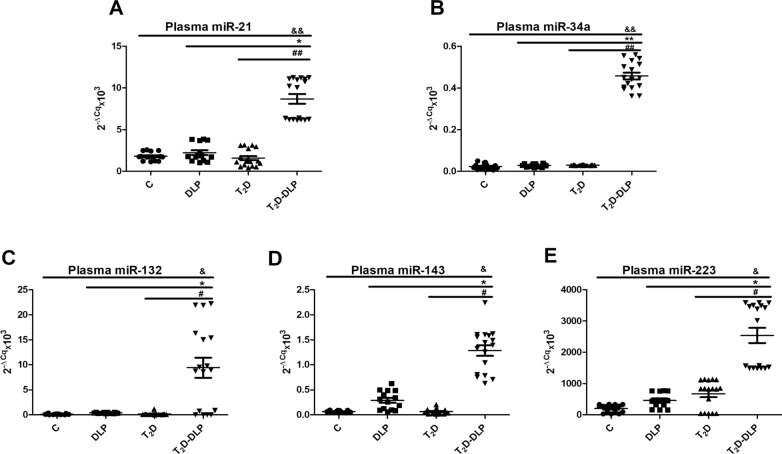
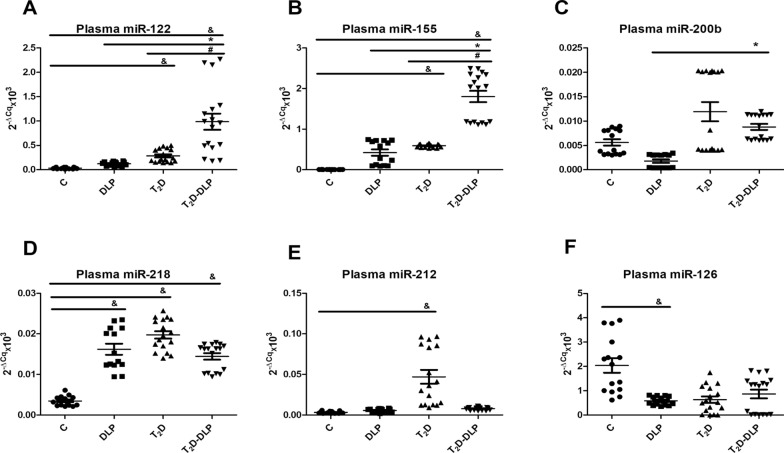
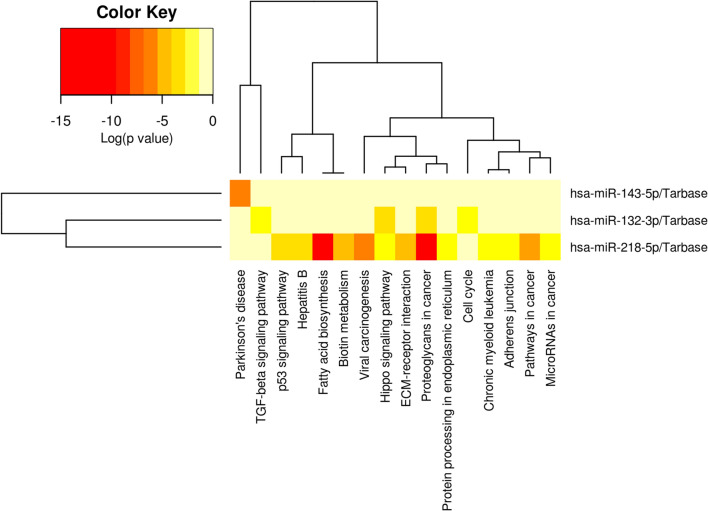
The results uncovered three miRNAs, miR-218, miR-132 and miR-143, whose expression was found to be significantly up-regulated in both circulating MVs and plasma from diabetic patients with dyslipidemia. These miRNAs showed significant correlations with important plasma markers, representative of this pathology. Thus, MV/plasma miR-218 was negatively correlated with the levels of erythrocyte MVs, plasma miR-132 was positively connected with MV miR-132 and negatively with uric acid and erythrocyte plasma levels, and plasma miR-143 was negatively related with creatinine levels and diastolic blood pressure. Also, three miRNAs common to MV and plasma, namely miR-21, miR-122, and miR-155, were identified to be down-regulated and up-regulated, respectively, in diabetic dyslipidemia. In addition, MV miR-21 was positively linked with cholesterol plasma levels and plasma miR-21 with TNFα plasma levels, MV miR-122 was negatively correlated with LDL-c levels and plasma miR-122 with creatinine and diastolic blood pressure and positively with MV miR-126 levels, MV miR-155 was positively associated with cholesterol and total MV levels and negatively with HDL-c levels, whereas plasma miR-155 was positively correlated with Il-1β plasma levels and total MV levels and negatively with MV miR-223 levels.
In conclusion, miR-218, miR-132, miR-143, and miR-21, miR-122, miR-155 show potential as biomarkers for diabetic dyslipidemia, but there is a need for more in-depth studies. These findings bring new information regarding the molecular biomarkers specific to diabetic dyslipidemia and could have important implications for the treatment of patients affected by this pathology.
微泡(MVs)携带的循环 microRNAs(miRNAs)通过基因表达的转录后调控发挥各种生理和病理功能,被认为是许多疾病的标志物,包括糖尿病和血脂异常。我们旨在鉴定 MVs 和血浆中共同存在的新 miRNA,它们可能是糖尿病血脂异常演变的预测生物标志物。
为此,对来自研究的 63 名参与者的血浆进行了分析(17 名 2 型糖尿病患者,17 名 2 型糖尿病合并血脂异常患者,14 名单纯血脂异常患者和 15 名无糖尿病或血脂异常的临床健康人),以分析循环细胞因子、MVs、miRNAs 和 MV 相关 miRNAs。
结果揭示了三种 miRNA,miR-218、miR-132 和 miR-143,它们在患有血脂异常的糖尿病患者的循环 MV 和血浆中均发现表达明显上调。这些 miRNA 与重要的血浆标志物显著相关,代表了这种病理。因此,MV/血浆 miR-218 与红细胞 MV 水平呈负相关,血浆 miR-132 与 MV miR-132 呈正相关,与尿酸和红细胞血浆水平呈负相关,而血浆 miR-143 与肌酐水平和舒张压呈负相关。此外,在 MV 和血浆中发现三种共同的 miRNA,即 miR-21、miR-122 和 miR-155,在糖尿病血脂异常中分别下调和上调。此外,MV miR-21 与胆固醇血浆水平呈正相关,血浆 miR-21 与 TNFα 血浆水平呈正相关,MV miR-122 与 LDL-c 水平呈负相关,血浆 miR-122 与肌酐和舒张压呈正相关,与 MV miR-126 水平呈正相关,MV miR-155 与胆固醇和总 MV 水平呈正相关,与 HDL-c 水平呈负相关,而血浆 miR-155 与 Il-1β 血浆水平和总 MV 水平呈正相关,与 MV miR-223 水平呈负相关。
总之,miR-218、miR-132、miR-143 和 miR-21、miR-122、miR-155 可能成为糖尿病血脂异常的生物标志物,但需要进一步深入研究。这些发现为糖尿病血脂异常的分子生物标志物提供了新信息,可能对受该病理影响的患者的治疗具有重要意义。