Instituto de Biofisica Carlos Chagas Filho, Universidade Federal do Rio de Janeiro, Rio de Janeiro, Brazil.
York Biomedical Research Institute, Department of Biology, University of York, York, United Kingdom.
Front Immunol. 2022 Jan 28;13:801182. doi: 10.3389/fimmu.2022.801182. eCollection 2022.
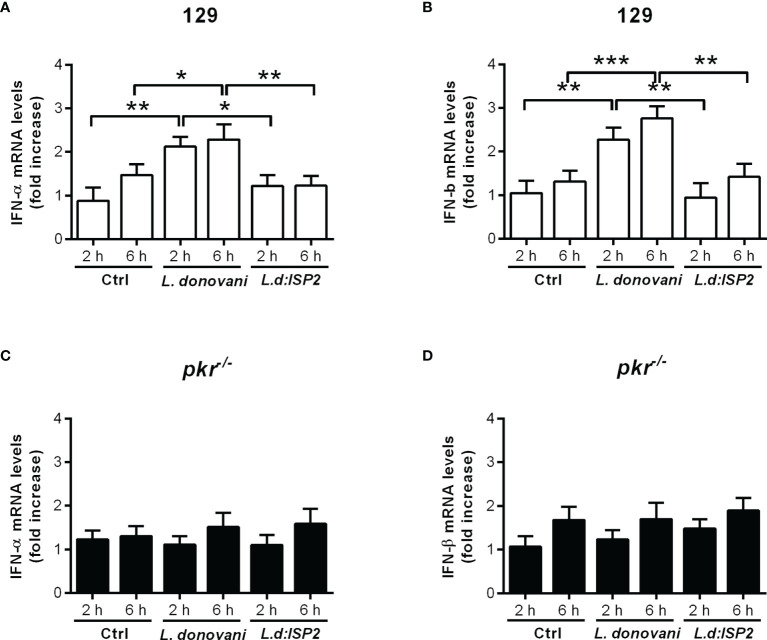
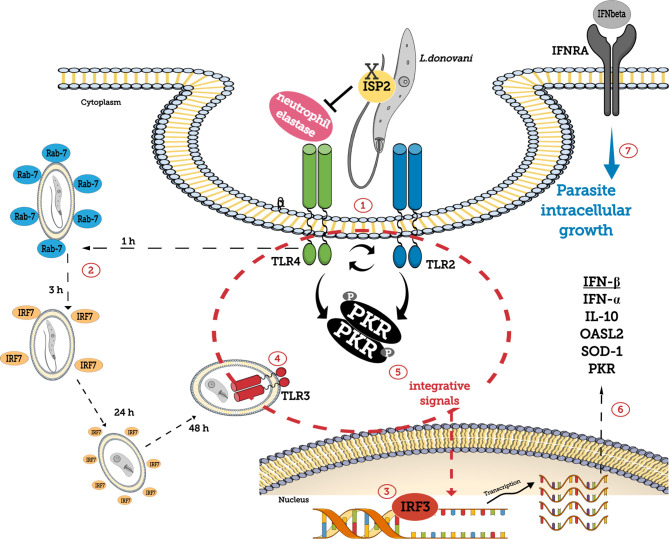
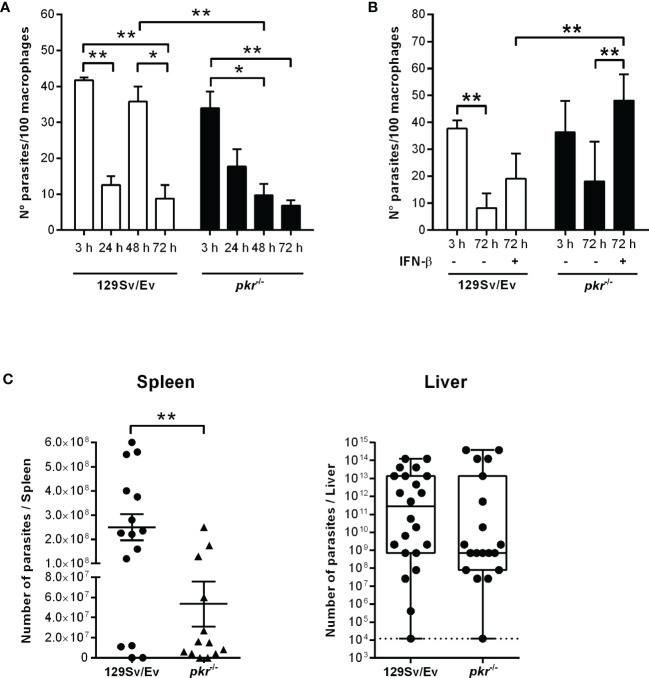
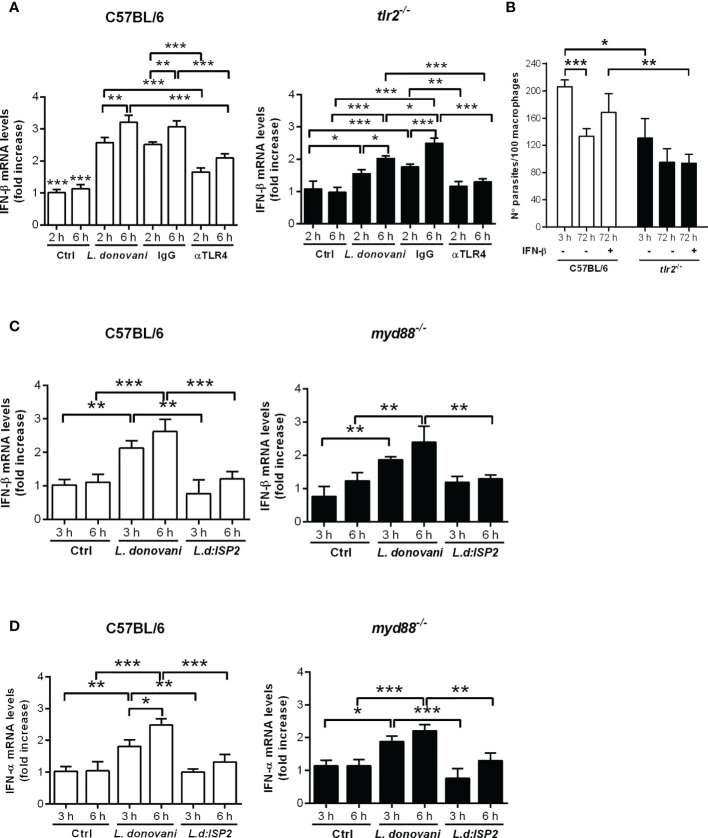
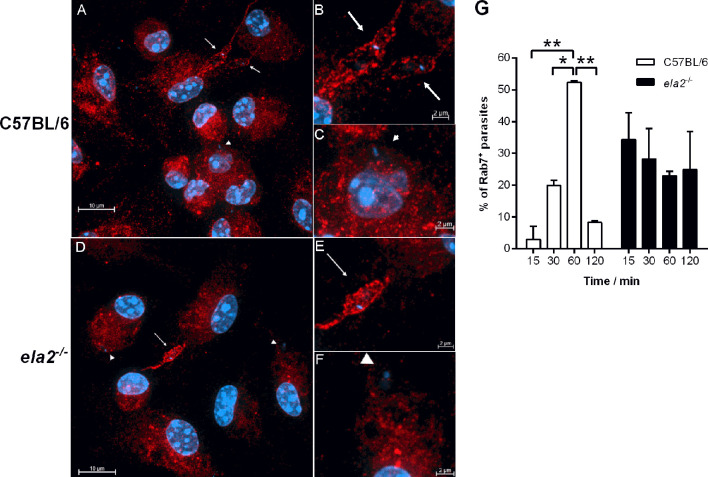
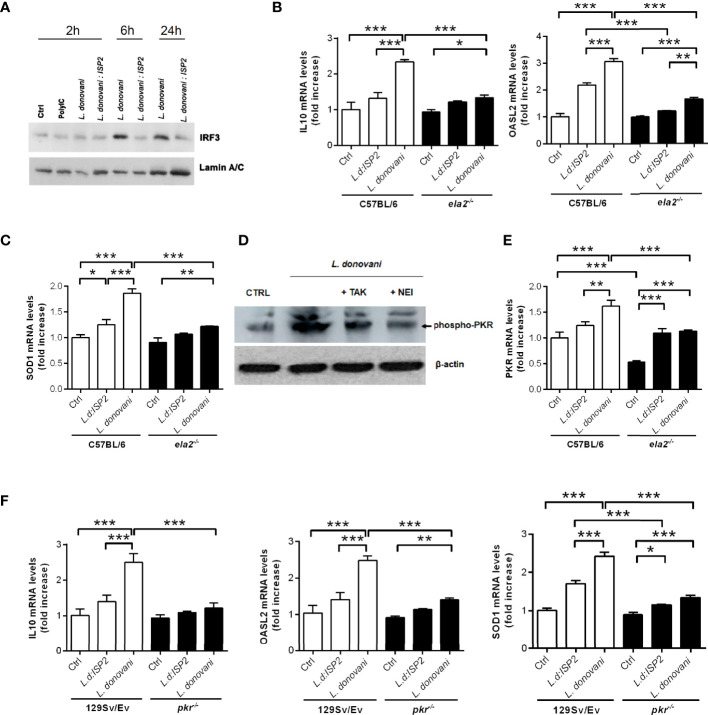
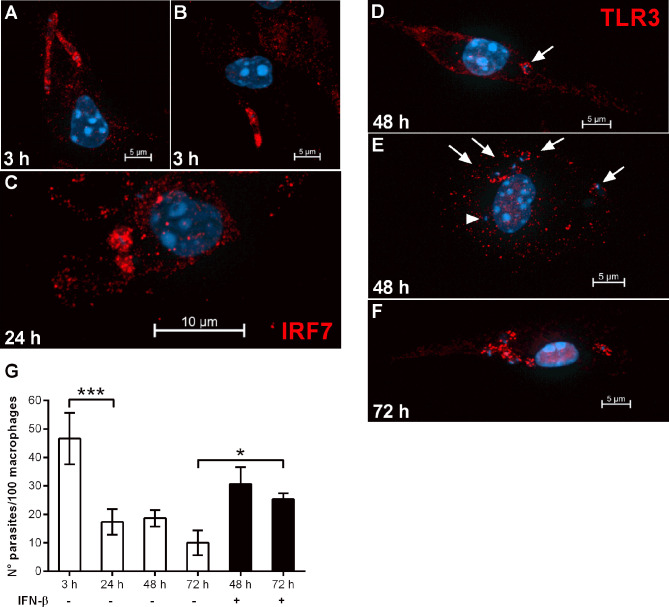
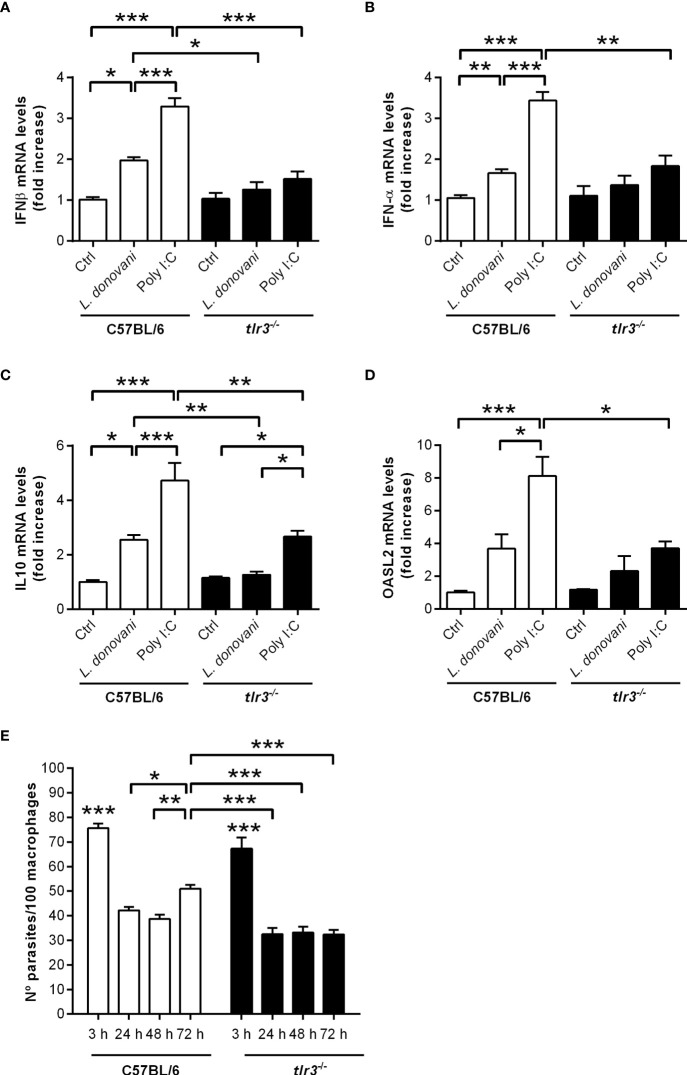
is a protozoan parasite that causes visceral leishmaniasis, provoking liver and spleen tissue destruction that is lethal unless treated. The parasite replicates in macrophages and modulates host microbicidal responses. We have previously reported that neutrophil elastase (NE) is required to sustain intracellular growth in macrophages through the induction of interferon beta (IFN-β). Here, we show that the gene expression of IFN-β by infected macrophages was reduced by half when TLR4 was blocked by pre-treatment with neutralizing antibodies or in macrophages from mice, while the levels in macrophages from 88 mice were comparable to those from wild-type C57BL/6 mice. The neutralization of TLR4 in macrophages completely abolished induction of IFN-β gene expression upon parasite infection, indicating an additive role for both TLRs. Induction of type I interferon (IFN-I), OASL2, SOD1, and IL10 gene expression by was completely abolished in macrophages from NE knock-out mice () or from protein kinase R (PKR) knock-out mice (), and in C57BL/6 macrophages infected with transgenic expressing the inhibitor of serine peptidase 2 (ISP2). Parasite intracellular growth was impaired in macrophages but was fully restored by the addition of exogenous IFN-β, and parasite burdens were reduced in the spleen of mice at 7 days, as compared to the 129Sv/Ev background mice. Furthermore, parasites were unable to grow in macrophages lacking TLR3, which correlated with lack of IFN-I gene expression. Thus, engages innate responses in infected macrophages TLR2, TLR4, and TLR3, downstream PKR, to induce the expression of pro-survival genes in the host cell, and guarantee parasite intracellular development.
是一种原生动物寄生虫,可引起内脏利什曼病,引起肝脾组织破坏,如不治疗可致命。寄生虫在巨噬细胞中复制,并调节宿主的杀菌反应。我们之前曾报道过,中性粒细胞弹性蛋白酶 (NE) 通过诱导干扰素β (IFN-β) 来维持巨噬细胞内的生长。在这里,我们表明,当用中和抗体预处理或在来自 小鼠的巨噬细胞中阻断 TLR4 时,感染的巨噬细胞中 IFN-β 的基因表达减少一半,而来自 88 小鼠的巨噬细胞中的水平与来自野生型 C57BL/6 小鼠的水平相当。在 巨噬细胞中阻断 TLR4 可完全消除寄生虫感染后 IFN-β 基因表达的诱导,表明 TLR 两者均起附加作用。由 诱导的 I 型干扰素 (IFN-I)、OASL2、SOD1 和 IL10 基因表达在 NE 敲除小鼠 () 或蛋白激酶 R (PKR) 敲除小鼠 () 的巨噬细胞中完全被消除,并且在感染了表达丝氨酸肽酶 2 抑制剂 (ISP2) 的转基因 的 C57BL/6 巨噬细胞中被消除。在缺乏 NE 的巨噬细胞中,寄生虫的细胞内生长受到损害,但通过添加外源性 IFN-β 完全恢复,与 129Sv/Ev 背景小鼠相比,在感染后 7 天,在 小鼠的脾脏中寄生虫负荷减少。此外,缺乏 TLR3 的巨噬细胞中寄生虫无法生长,这与 IFN-I 基因表达的缺乏相关。因此, 通过 TLR2、TLR4 和 TLR3 与宿主细胞中的 TLR2、TLR4 和 TLR3 相互作用,以及下游的 PKR,参与感染巨噬细胞中的先天反应,诱导宿主细胞中存活相关基因的表达,并保证寄生虫的细胞内发育。