Convergence Research Center for Diagnosis, Treatment and Care System of Dementia, Korea Institute of Science and Technology (KIST), Seoul 02792, Korea.
Department of Pharmacology and Biomedical Sciences, Seoul National University College of Medicine, Seoul 03080, Korea.
Theranostics. 2022 Jan 1;12(3):1404-1418. doi: 10.7150/thno.68439. eCollection 2022.
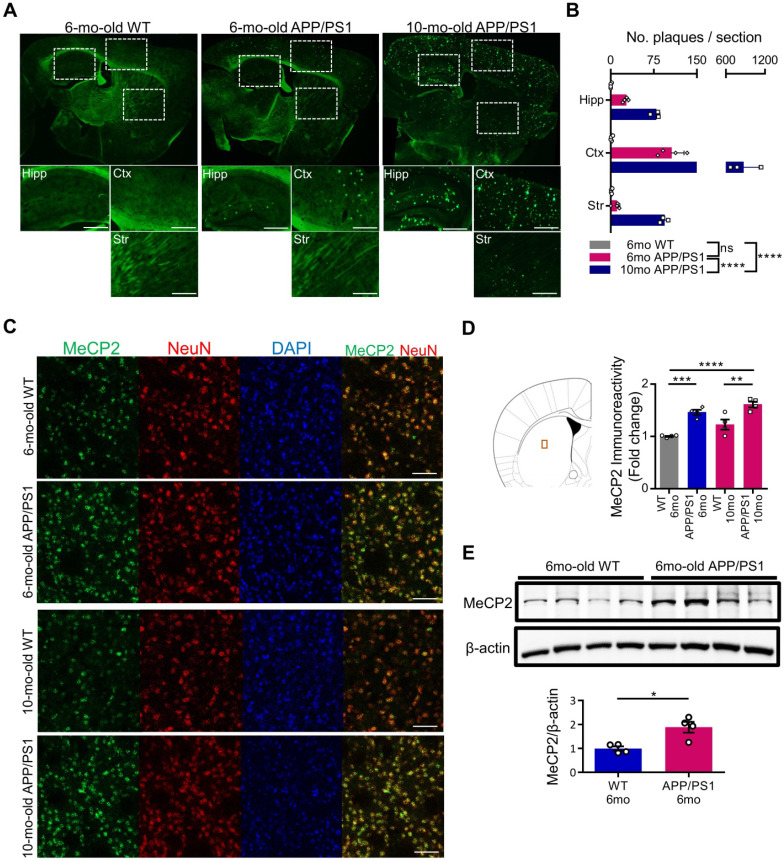
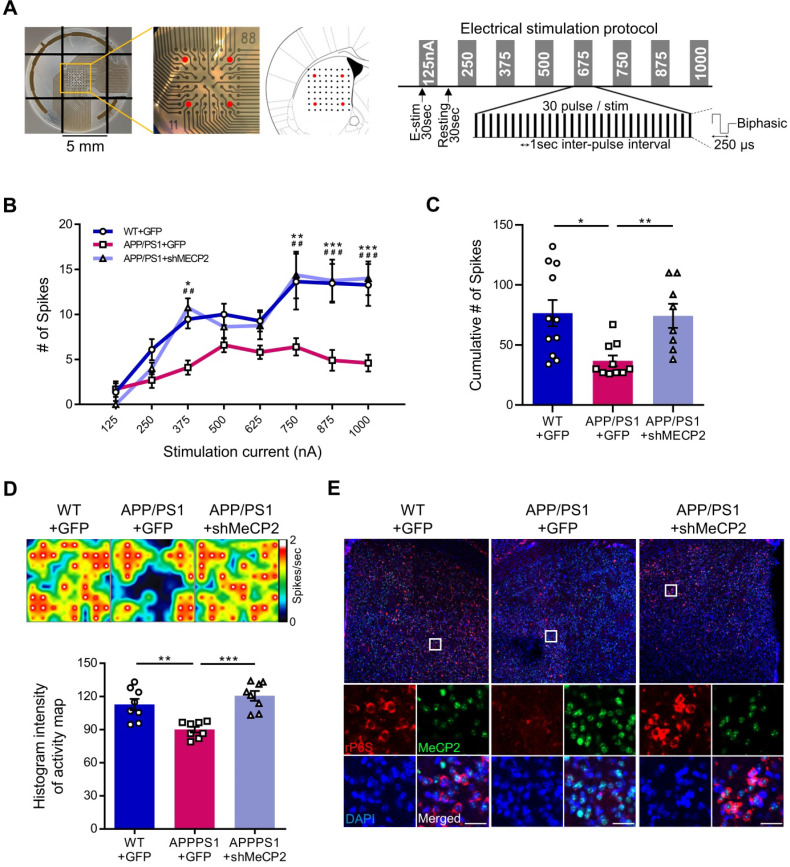
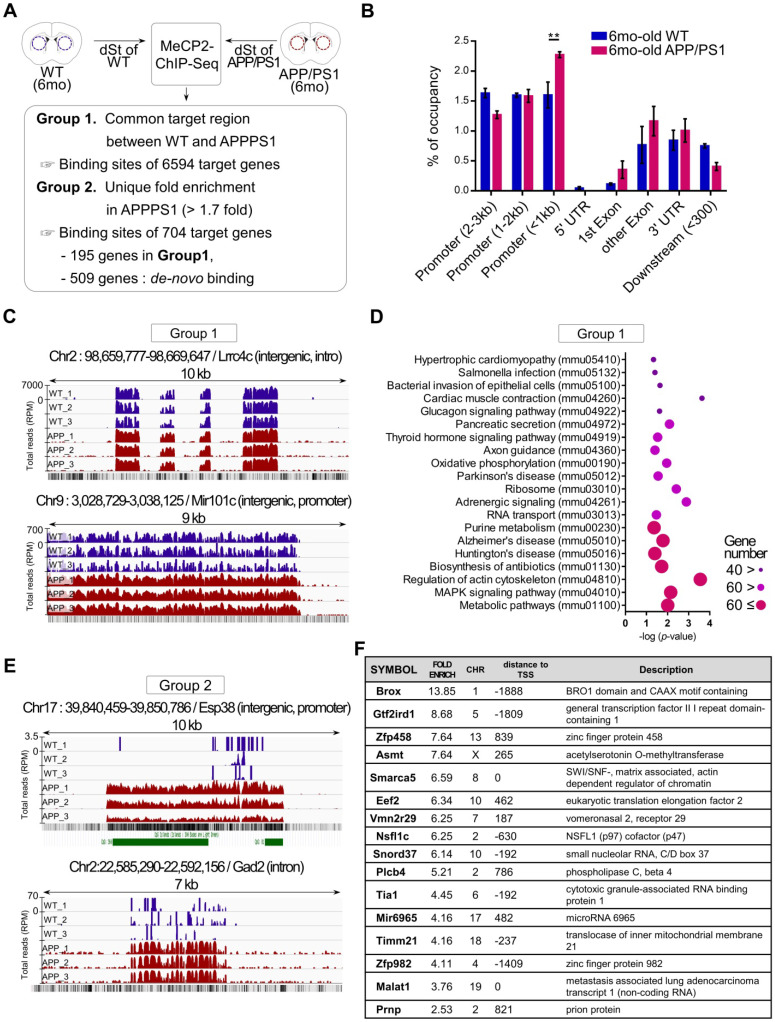
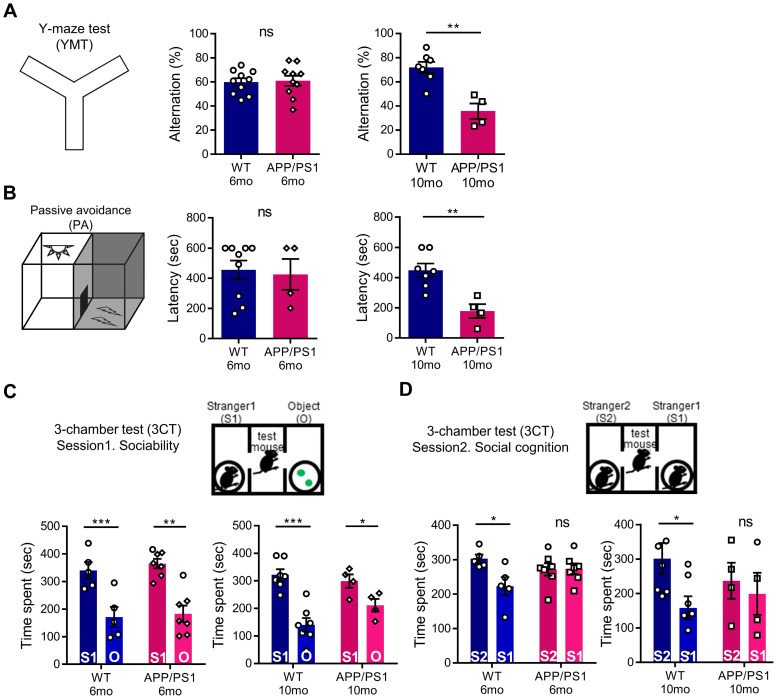
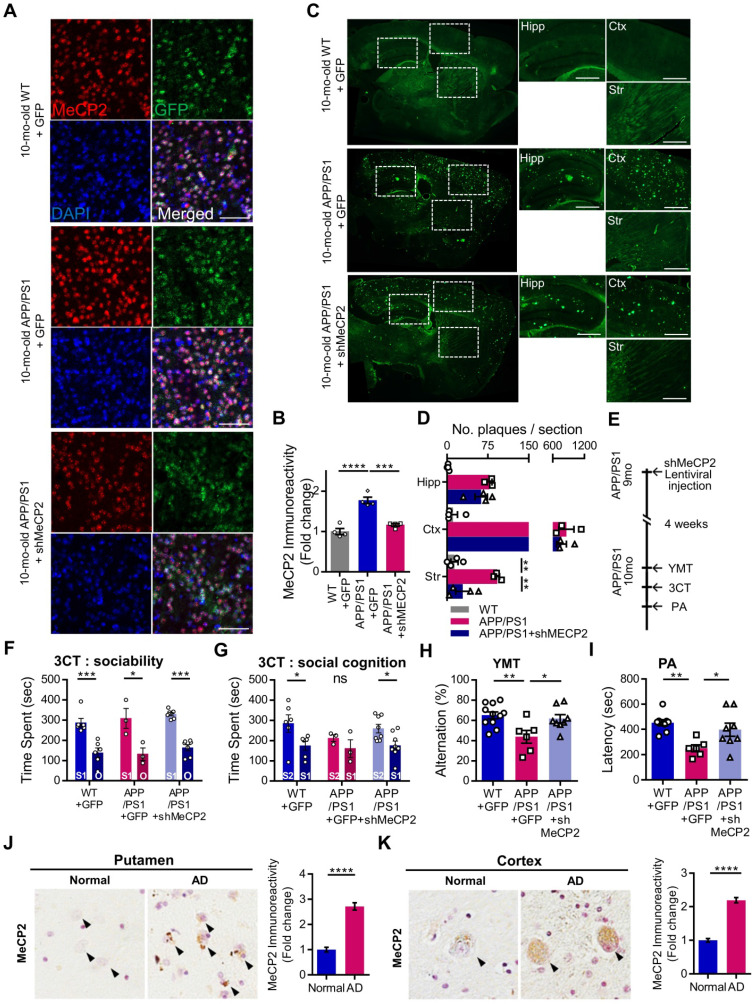
Cerebral Methyl-CpG binding Protein 2 (MeCP2) is involved in several psychiatric disorders that are concomitant with cognitive dysfunction. However, the regulatory function of striatal MeCP2 and its association with Alzheimer's disease (AD) has been largely neglected due to the absence of amyloid plaque accumulation in the striatal region until the later stages of AD progression. Considerable evidence indicates that neuropsychiatric symptoms related to cognitive decline are involved with striatal dysfunction. To this respect, we investigated the epigenetic function of striatal MeCP2 paralleling the pathogenesis of AD. We investigated the brain from amyloid precursor protein (APP)/presenilin1 (PS1) transgenic mice and postmortem brain samples from normal subjects and AD patients. The molecular changes in the brain, particularly in the striatal regions, were analyzed with thioflavin S staining, immunohistochemistry, immunoblotting, and MeCP2 chromatin immunoprecipitation sequencing (ChIP-seq). The cognitive function of APP/PS1 mice was assessed via three behavioral tests: 3-chamber test (3CT), Y-maze test (YMT), and passive avoidance test (PA). A multi-electrode array (MEA) was performed to analyze the neuronal activity of the striatum in APP/PS1 mice. Striatal MeCP2 expression was increased in the younger (6 months) and older (10 months) ages of APP/PS1 mice, and the genome-wide occupancy of MeCP2 in the younger APP/PS1 showed dysregulated binding patterns in the striatum. Additionally, we confirmed that APP/PS1 mice showed behavioral deficits in multiple cognitive behaviors. Notably, defective cognitive phenotypes and abnormal neuronal activity in old APP/PS1 mice were rescued through the knock-down of striatal MeCP2. We found that the MeCP2-mediated dysregulation of the epigenome in the striatum is linked to the defects in cognitive behavior and neuronal activity in the AD animal model, and that this alteration is initiated even in the very early stages of AD pathogenesis. Together, our data indicates that MeCP2 may be a potential target for the diagnosis and treatment of AD at asymptomatic and symptomatic stages.
脑甲基化CpG 结合蛋白 2(MeCP2)参与了几种伴有认知功能障碍的精神疾病。然而,由于纹状体区域缺乏淀粉样斑块积累,直到 AD 进展的后期阶段,纹状体 MeCP2 的调节功能及其与 AD 的关联在很大程度上被忽视了。大量证据表明,与认知能力下降相关的神经精神症状与纹状体功能障碍有关。在这方面,我们研究了纹状体 MeCP2 的表观遗传功能,同时研究了 AD 的发病机制。我们研究了淀粉样前体蛋白(APP)/早老素 1(PS1)转基因小鼠的大脑和正常受试者及 AD 患者的死后大脑样本。通过硫黄素 S 染色、免疫组织化学、免疫印迹和 MeCP2 染色质免疫沉淀测序(ChIP-seq)分析大脑中的分子变化,特别是纹状体区域。通过三种行为测试评估 APP/PS1 小鼠的认知功能:3 室测试(3CT)、Y 迷宫测试(YMT)和被动回避测试(PA)。进行多电极阵列(MEA)分析 APP/PS1 小鼠纹状体的神经元活动。纹状体 MeCP2 表达在 APP/PS1 小鼠的较年轻(6 个月)和较老(10 个月)年龄阶段增加,并且在较年轻的 APP/PS1 中 MeCP2 的全基因组占据显示出纹状体中失调的结合模式。此外,我们证实 APP/PS1 小鼠在多种认知行为中表现出认知缺陷。值得注意的是,通过敲低纹状体 MeCP2,挽救了老年 APP/PS1 小鼠的认知表型缺陷和异常神经元活动。我们发现,纹状体中 MeCP2 介导的表观基因组失调与 AD 动物模型中的认知行为和神经元活动缺陷有关,并且这种改变甚至在 AD 发病机制的早期阶段就开始发生。总之,我们的数据表明 MeCP2 可能是无症状和有症状阶段 AD 诊断和治疗的潜在靶点。