Euring Markus, Ostendorf Kolja, Rühl Martin, Kües Ursula
Department of Molecular Wood Biotechnology and Technical Mycology, Büsgen-Institute, Georg-August-University of Göttingen, Göttingen, Germany.
Department of Wood Technology and Wood-based Composites, Burckhardt-Institute, Georg-August-University of Göttingen, Göttingen, Germany.
Front Bioeng Biotechnol. 2022 Jan 28;9:788622. doi: 10.3389/fbioe.2021.788622. eCollection 2021.
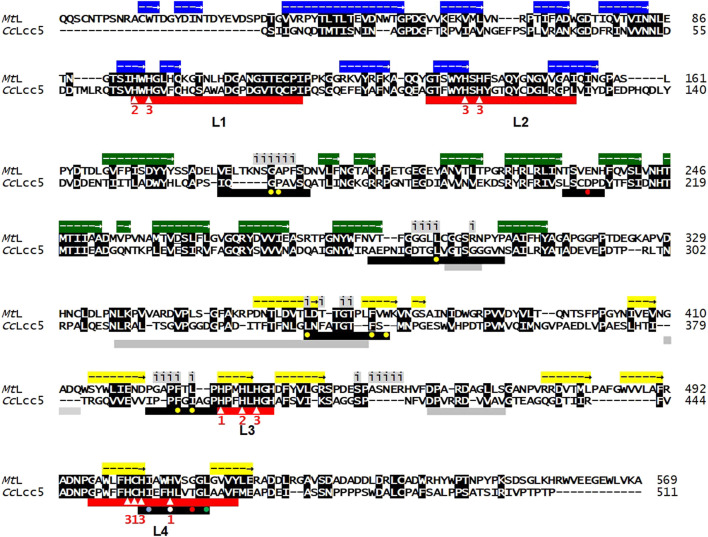
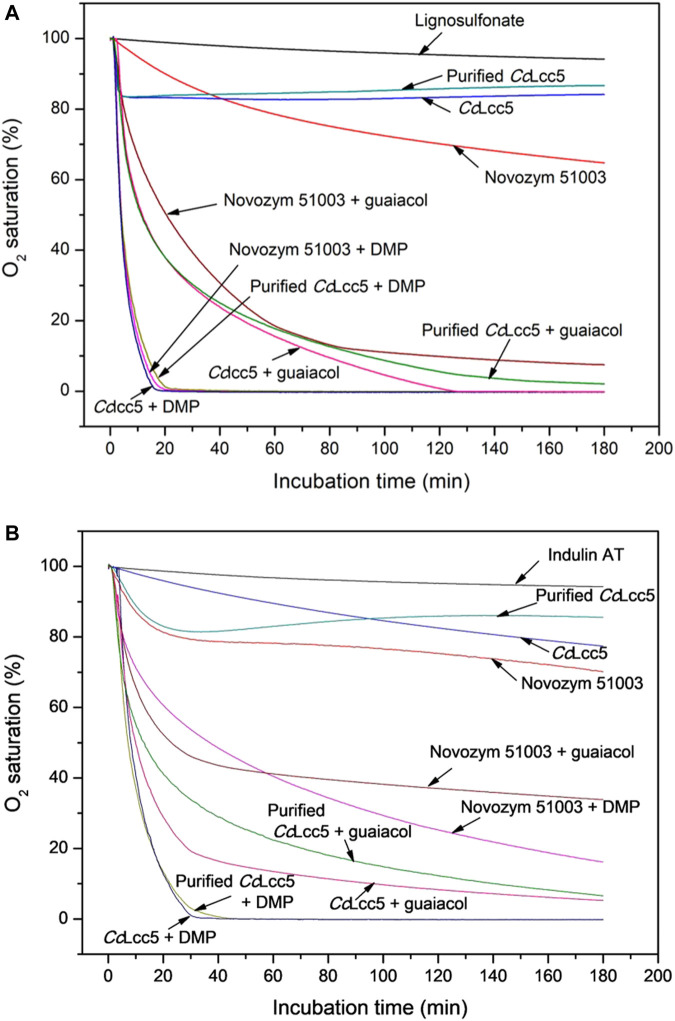
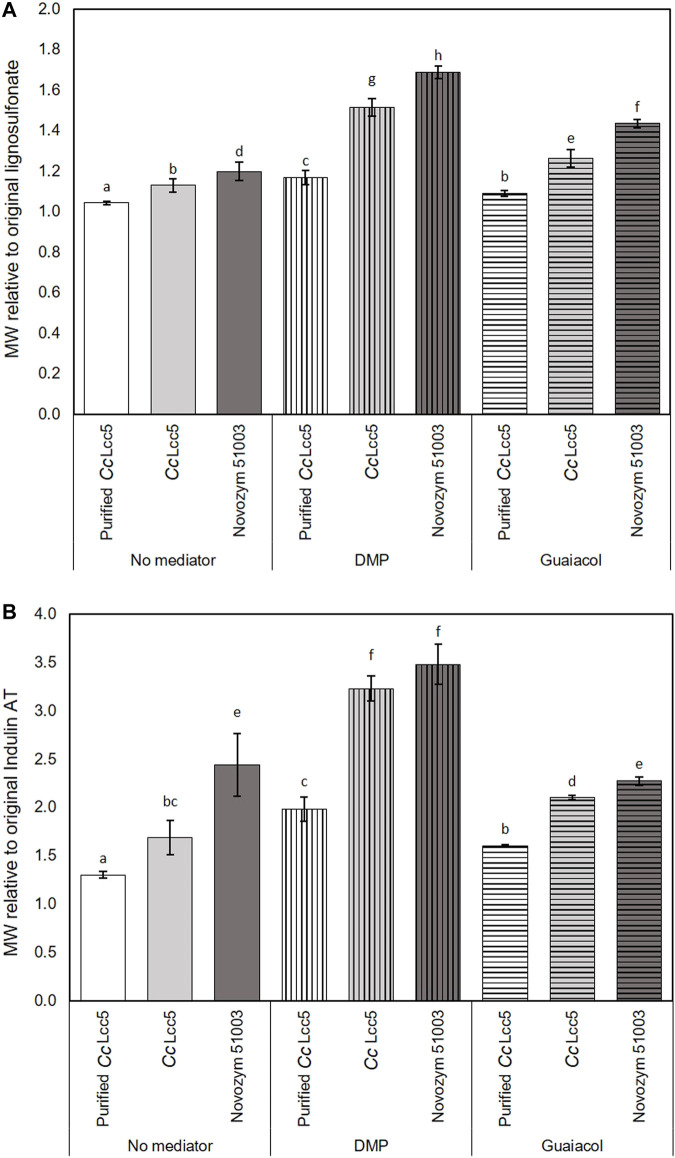
Laccase-mediator-oxidized lignin offers replacement for conventional chemical binders to produce fiberboards. Compared to the previously reported laccase-mediator system (LMS), a lignin-laccase-mediator-system (LLMS) has an advantage in that it requires much shorter fiber-enzyme incubation time due to significantly increased redox reactions. However, the cost of regularly applying laccase on an industrial scale is currently too high. We have employed Lcc5 from cultures of the basidiomycete as a novel basi-laccase (a CAZy subfamily AA1_1 laccase) in medium-density fiberboard (MDF) production, in comparison to the commercial formulation Novozym 51003 with recombinantly produced asco-laccase L (a CAZy subfamily AA1_3 laccase-like multicopper oxidase from the ascomycete ). With the best-performing natural mediator 2,6-dimethoxyphenol (DMP), unpurified Lcc5 was almost as good as formulated Novozym 51003 in increasing the molecular weight (MW) of the technical lignins tested, the hydrophilic high-MW Ca-lignosulfonate and the hydrophobic low-MW kraft lignin (Indulin AT). Oxygen consumption rates of the two distantly related, poorly conserved enzymes (31% sequence identity) with different mediators and lignosulfonate were also comparable, but Indulin AT significantly reduced the oxidative activity of Novozym 51003 unlike Lcc5, regardless of the mediator used, either DMP or guaiacol. Oxygen uptake by both laccases was much faster with both technical lignins with DMP than with guaiacol. In case of lignosulfonate and DMP, 20-30 min of incubation was sufficient for full oxygen consumption, which fits in well in time with the usual binder application steps in industrial MDF production processes. LLMS-bonded MDF was thus produced on a pilot-plant scale with either crude Lcc5 or Novozym 51003 at reduced enzyme levels of 5 kU/kg absolutely dry wood fiber with lignosulfonate and mediator DMP. Boards produced with Lcc5 were comparably good as those made with Novozym 51003. Boards reached nearly standard specifications in internal bond strength (IB) and modulus of rupture (MOR), while thickness swelling (TS) was less good based on the hydrophilic character of lignosulfonate. LLMS-bonded MDF with Indulin AT and DMP performed better in TS but showed reduced IB and MOR values.
漆酶-介质-氧化木质素可替代传统化学粘合剂来生产纤维板。与先前报道的漆酶-介质系统(LMS)相比,木质素-漆酶-介质系统(LLMS)具有优势,即由于氧化还原反应显著增加,其纤维-酶孵育时间要短得多。然而,目前在工业规模上定期应用漆酶的成本过高。我们已将担子菌培养物中的Lcc5用作中密度纤维板(MDF)生产中的新型碱性漆酶(一种CAZy亚家族AA1_1漆酶),并与重组生产的子囊菌漆酶L(一种来自子囊菌的CAZy亚家族AA1_3漆酶样多铜氧化酶)的商业制剂Novozym 51003进行比较。使用性能最佳的天然介质2,6-二甲氧基苯酚(DMP)时,未纯化的Lcc5在增加所测试的工业木质素、亲水性高分子量钙木质素磺酸盐和疏水性低分子量硫酸盐木质素(Indulin AT)的分子量(MW)方面几乎与配制的Novozym 51003一样好。两种亲缘关系较远、保守性较差的酶(序列同一性为31%)与不同介质和木质素磺酸盐的耗氧率也相当,但与Lcc5不同,无论使用DMP还是愈创木酚作为介质,Indulin AT都会显著降低Novozym 51003的氧化活性。两种漆酶与DMP作用时对两种工业木质素的氧吸收都比对愈创木酚快得多。在木质素磺酸盐和DMP的情况下,孵育20 - 30分钟就足以完全消耗氧气,这与工业MDF生产过程中通常的粘合剂应用步骤时间非常吻合。因此,使用粗制Lcc5或Novozym 51003在中试规模上生产了LLMS粘结的MDF,木质素磺酸盐和介质DMP的酶水平降低至5 kU/kg绝对干木纤维。用Lcc5生产的板材与用Novozym 51003生产的板材相当。板材的内结合强度(IB)和断裂模量(MOR)接近标准规格,而基于木质素磺酸盐的亲水性,厚度膨胀率(TS)则不太理想。用Indulin AT和DMP粘结的LLMS-MDF在TS方面表现较好,但IB和MOR值有所降低。