Ozel Irem, Duerig Inga, Domnich Maksim, Lang Stephan, Pylaeva Ekaterina, Jablonska Jadwiga
Department of Otorhinolaryngology, University Hospital Essen, University Duisburg-Essen, 45147 Essen, Germany.
Cancers (Basel). 2022 Jan 21;14(3):536. doi: 10.3390/cancers14030536.
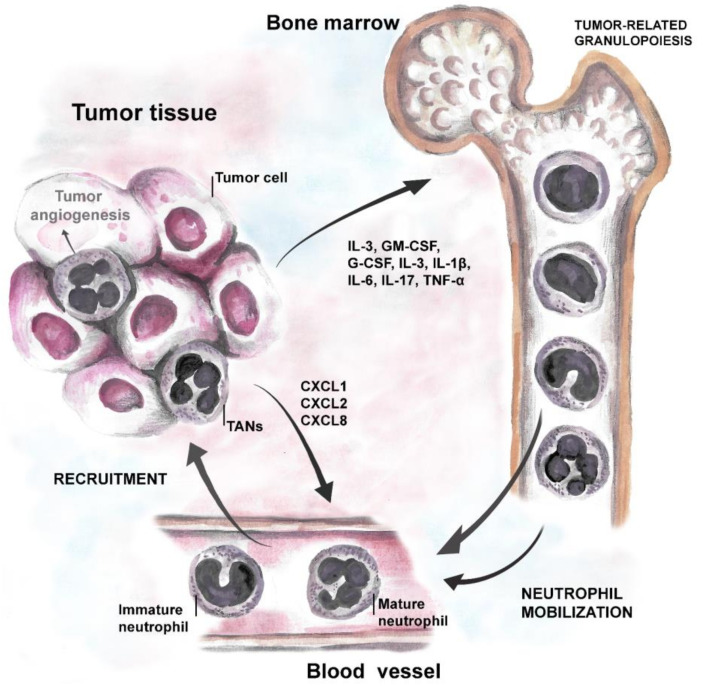
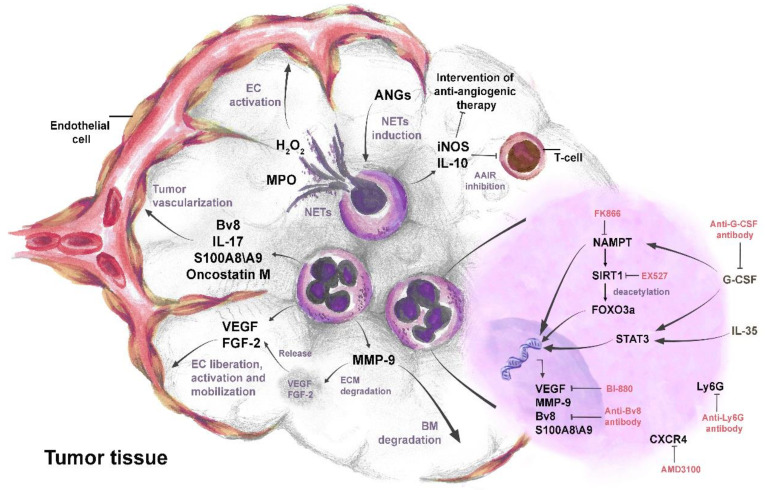
Angiogenesis, the formation of new blood vessels from already existing vasculature, is tightly regulated by pro- and anti-angiogenic stimuli and occurs under both physiological and pathological conditions. Tumor angiogenesis is central for tumor development, and an "angiogenic switch" could be initiated by multiple immune cells, such as neutrophils. Tumor-associated neutrophils promote tumor angiogenesis by the release of both conventional and non-conventional pro-angiogenic factors. Therefore, neutrophil-mediated tumor angiogenesis should be taken into consideration in the design of novel anti-cancer therapy. This review recapitulates the complex role of neutrophils in tumor angiogenesis and summarizes neutrophil-derived pro-angiogenic factors and mechanisms regulating angiogenic activity of tumor-associated neutrophils. Moreover, it provides up-to-date information about neutrophil-targeting therapy, complementary to anti-angiogenic treatment.
血管生成是指从已有的脉管系统形成新的血管,它受到促血管生成和抗血管生成刺激的严格调控,在生理和病理条件下均会发生。肿瘤血管生成是肿瘤发展的核心,并且一个“血管生成开关”可能由多种免疫细胞(如中性粒细胞)启动。肿瘤相关中性粒细胞通过释放传统和非传统的促血管生成因子来促进肿瘤血管生成。因此,在设计新型抗癌疗法时应考虑中性粒细胞介导的肿瘤血管生成。本综述概括了中性粒细胞在肿瘤血管生成中的复杂作用,总结了中性粒细胞衍生的促血管生成因子以及调节肿瘤相关中性粒细胞血管生成活性的机制。此外,它还提供了有关中性粒细胞靶向治疗的最新信息,作为抗血管生成治疗的补充。