Robinson Nathaniel J, Schiemann William P
Case Comprehensive Cancer Center, Case Western Reserve University, Cleveland, OH 44106, USA.
Cancers (Basel). 2022 Feb 5;14(3):808. doi: 10.3390/cancers14030808.
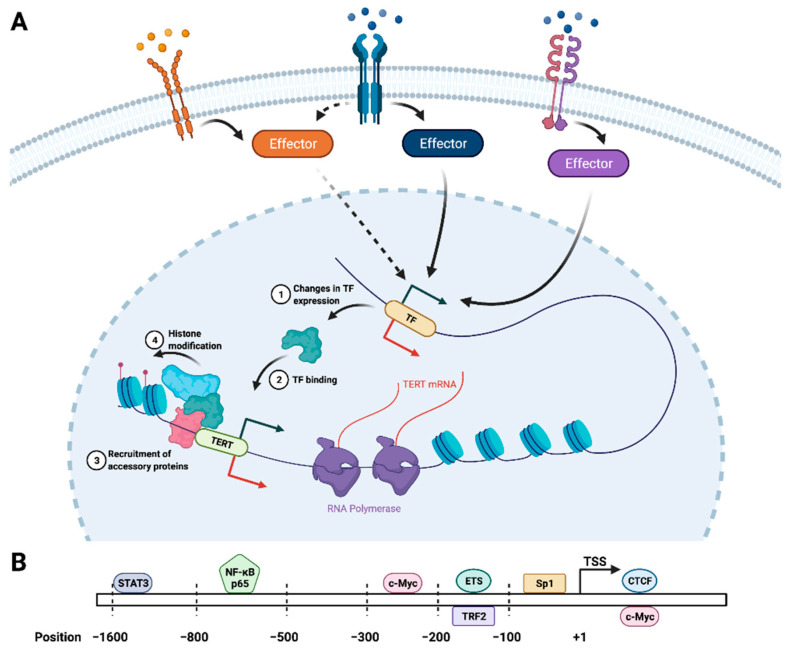
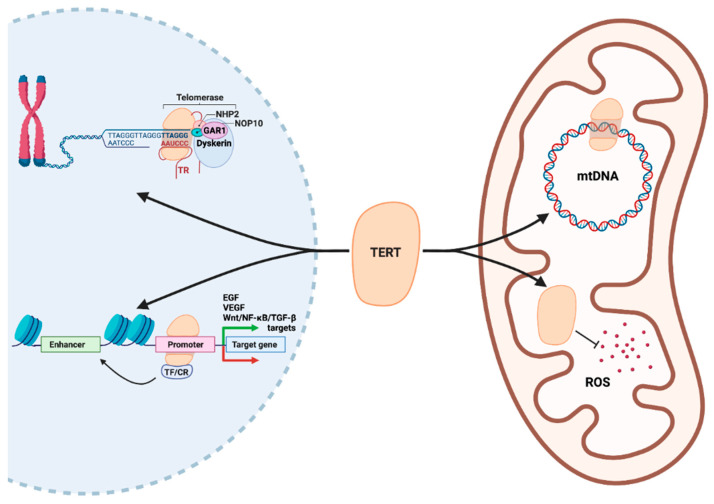
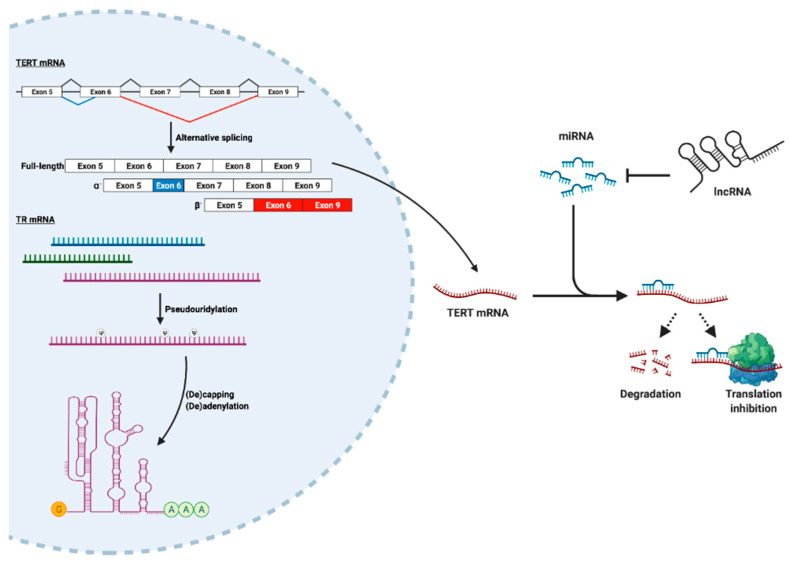
During the process of malignant transformation, cells undergo a series of genetic, epigenetic, and phenotypic alterations, including the acquisition and propagation of genomic aberrations that impart survival and proliferative advantages. These changes are mediated in part by the induction of replicative immortality that is accompanied by active telomere elongation. Indeed, telomeres undergo dynamic changes to their lengths and higher-order structures throughout tumor formation and progression, processes overseen in most cancers by telomerase. Telomerase is a multimeric enzyme whose function is exquisitely regulated through diverse transcriptional, post-transcriptional, and post-translational mechanisms to facilitate telomere extension. In turn, telomerase function depends not only on its core components, but also on a suite of binding partners, transcription factors, and intra- and extracellular signaling effectors. Additionally, telomerase exhibits telomere-independent regulation of cancer cell growth by participating directly in cellular metabolism, signal transduction, and the regulation of gene expression in ways that are critical for tumorigenesis. In this review, we summarize the complex mechanisms underlying telomere maintenance, with a particular focus on both the telomeric and extratelomeric functions of telomerase. We also explore the clinical utility of telomeres and telomerase in the diagnosis, prognosis, and development of targeted therapies for primary, metastatic, and recurrent cancers.
在恶性转化过程中,细胞会经历一系列基因、表观遗传和表型改变,包括获得和传播赋予生存和增殖优势的基因组畸变。这些变化部分是由复制性永生的诱导介导的,复制性永生伴随着端粒的主动延长。事实上,在整个肿瘤形成和进展过程中,端粒的长度和高级结构会发生动态变化,在大多数癌症中,这些过程由端粒酶负责。端粒酶是一种多聚体酶,其功能通过多种转录、转录后和翻译后机制受到精确调控,以促进端粒延长。反过来,端粒酶的功能不仅取决于其核心成分,还取决于一系列结合伴侣、转录因子以及细胞内和细胞外信号效应器。此外,端粒酶通过直接参与细胞代谢、信号转导以及对肿瘤发生至关重要的基因表达调控,表现出对癌细胞生长的端粒非依赖性调节。在这篇综述中,我们总结了端粒维持的复杂机制,特别关注端粒酶的端粒和端粒外功能。我们还探讨了端粒和端粒酶在原发性、转移性和复发性癌症的诊断、预后以及靶向治疗开发中的临床应用。