Department of Biochemistry, University of Oxford, South Parks Road, Oxford OX1 3QU, UK.
Univ. Lille, Inserm, CHU Lille, Institut Pasteur de Lille, U1167-RID-AGE-Facteurs de Risque et Déterminants Moléculaires des Maladies Liées au Vieillissement, F-59000 Lille, France.
Cells. 2022 Jan 21;11(3):359. doi: 10.3390/cells11030359.
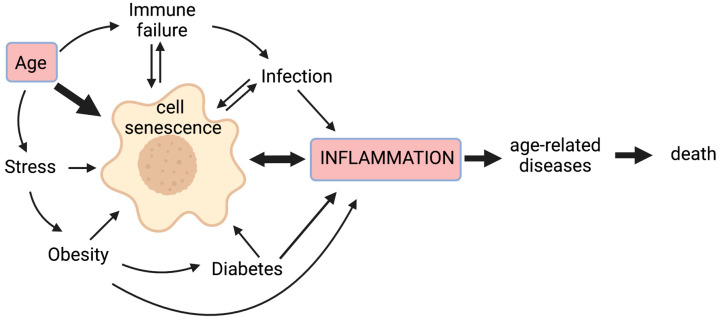
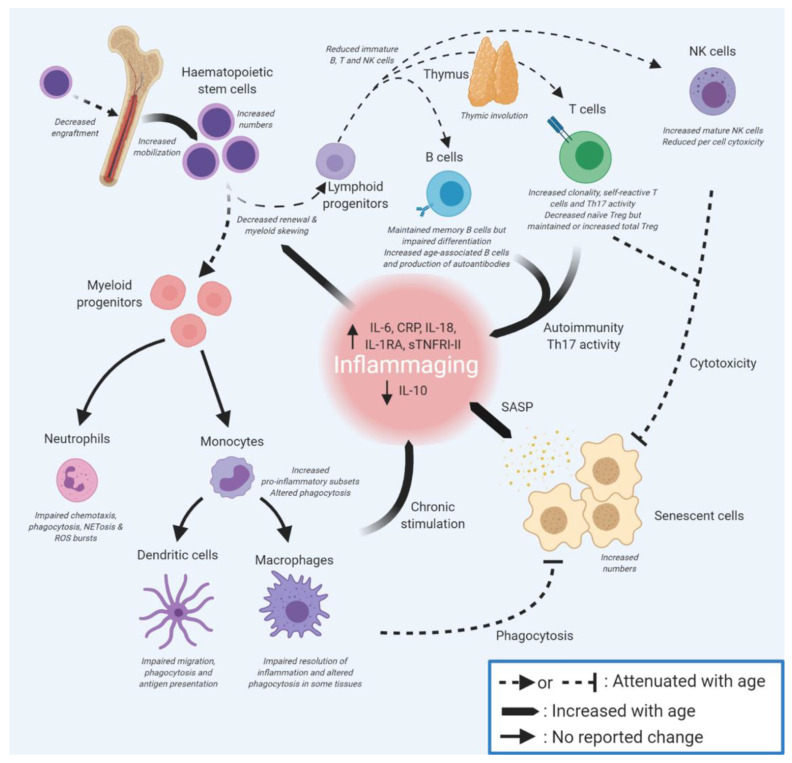
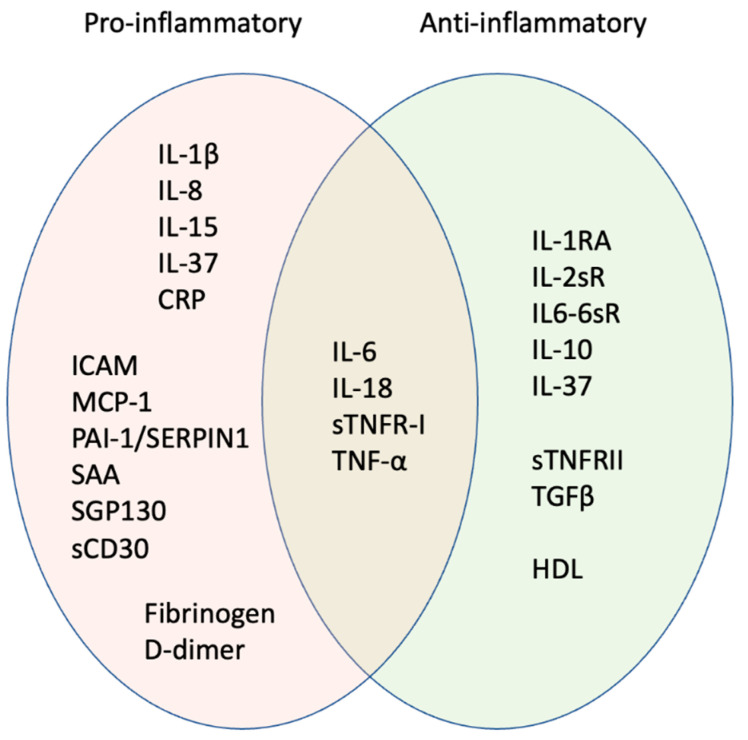
Acute inflammation is a physiological response to injury or infection, with a cascade of steps that ultimately lead to the recruitment of immune cells to clear invading pathogens and heal wounds. However, chronic inflammation arising from the continued presence of the initial trigger, or the dysfunction of signalling and/or effector pathways, is harmful to health. While successful ageing in older adults, including centenarians, is associated with low levels of inflammation, elevated inflammation increases the risk of poor health and death. Hence inflammation has been described as one of seven pillars of ageing. Age-associated sterile, chronic, and low-grade inflammation is commonly termed inflammageing-it is not simply a consequence of increasing chronological age, but is also a marker of biological ageing, multimorbidity, and mortality risk. While inflammageing was initially thought to be caused by "continuous antigenic load and stress", reports from the last two decades describe a much more complex phenomenon also involving cellular senescence and the ageing of the immune system. In this review, we explore some of the main sources and consequences of inflammageing in the context of immunosenescence and highlight potential interventions. In particular, we assess the contribution of cellular senescence to age-associated inflammation, identify patterns of pro- and anti-inflammatory markers characteristic of inflammageing, describe alterations in the ageing immune system that lead to elevated inflammation, and finally assess the ways that diet, exercise, and pharmacological interventions can reduce inflammageing and thus, improve later life health.
急性炎症是对损伤或感染的生理反应,其级联反应最终导致免疫细胞募集以清除入侵的病原体并修复伤口。然而,由最初的触发因素持续存在或信号和/或效应途径的功能障碍引起的慢性炎症对健康是有害的。虽然老年人(包括百岁老人)的成功衰老与低水平的炎症有关,但炎症水平升高会增加健康状况不佳和死亡的风险。因此,炎症被描述为衰老的七个支柱之一。与年龄相关的无菌性、慢性和低度炎症通常被称为炎症衰老——它不仅仅是年龄增长的结果,也是生物学衰老、多种疾病和死亡风险的标志物。虽然炎症衰老最初被认为是由“持续的抗原负荷和压力”引起的,但过去二十年的报告描述了一个更加复杂的现象,也涉及细胞衰老和免疫系统的衰老。在这篇综述中,我们探讨了免疫衰老背景下炎症衰老的一些主要来源和后果,并强调了潜在的干预措施。特别是,我们评估了细胞衰老对与年龄相关的炎症的贡献,确定了炎症衰老特征性的促炎和抗炎标志物的模式,描述了导致炎症升高的衰老免疫系统的改变,并最终评估了饮食、运动和药物干预可以减少炎症衰老从而改善晚年健康的方式。