Department of Orthopedic Surgery, Hokkaido University Hospital, Sapporo 060-8648, Japan.
Department of Orthopedic Surgery, Faculty of Medicine and Graduate School of Medicine, Hokkaido University, Sapporo 060-8638, Japan.
Cells. 2022 Jan 24;11(3):394. doi: 10.3390/cells11030394.
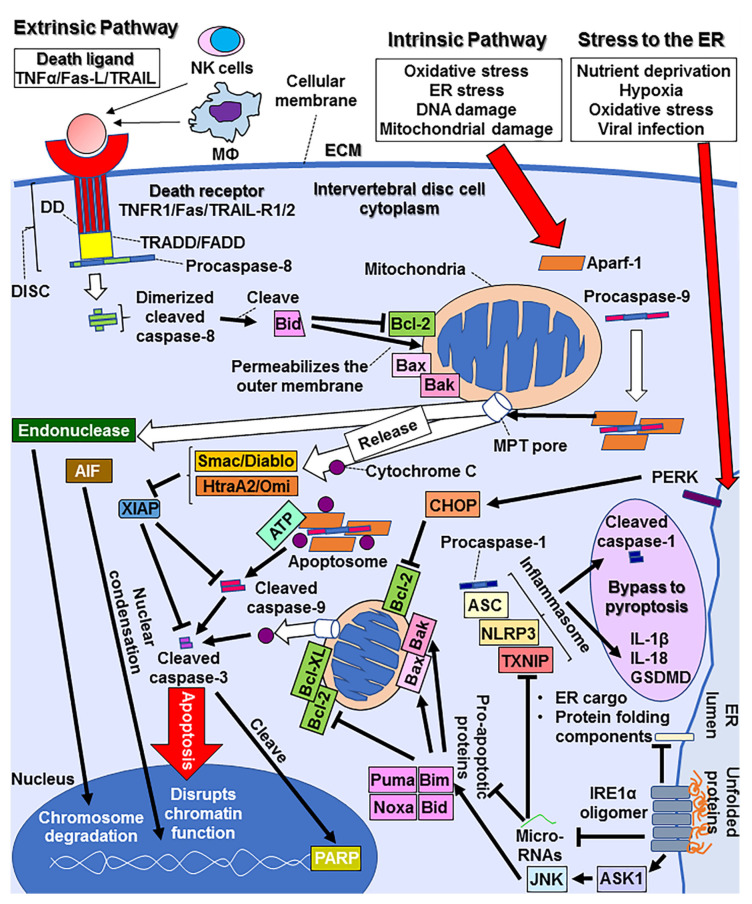
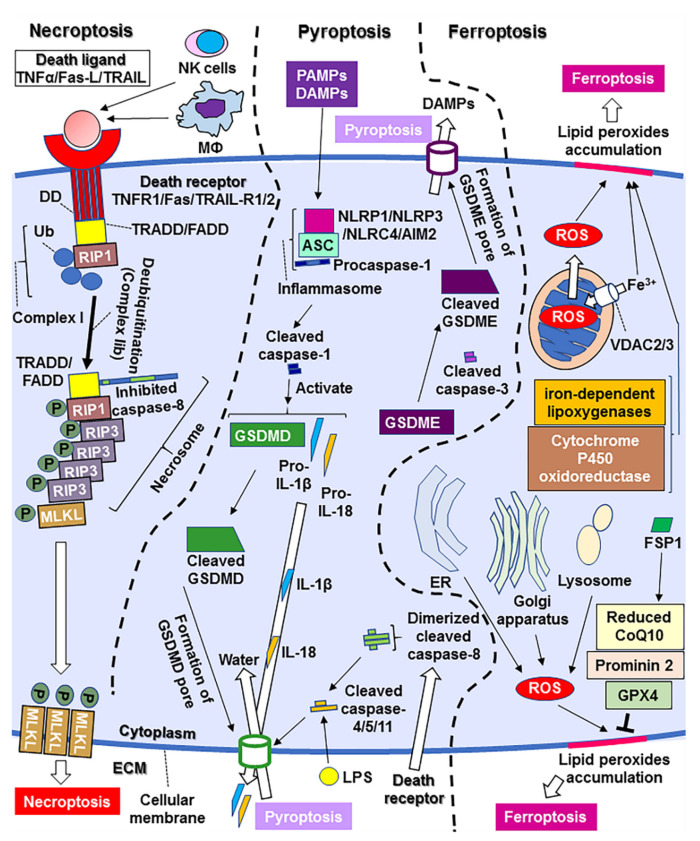
Intervertebral disc degeneration (IVDD) is a pathological condition that can lead to intractable back pain or secondary neurological deficits. There is no fundamental cure for this condition, and current treatments focus on alleviating symptoms indirectly. Numerous studies have been performed to date, and the major strategy for all treatments of IVDD is to prevent cell loss due to programmed or regulated cell death. Accumulating evidence suggests that several types of cell death other than apoptosis, including necroptosis, pyroptosis, and ferroptosis, are also involved in IVDD. In this study, we discuss the molecular pathway of each type of cell death and review the literature that has identified their role in IVDD. We also summarize the recent advances in targeted therapy at the RNA level, including RNA modulations through RNA interference and regulation of non-coding RNAs, for preventing cell death and subsequent IVDD. Therefore, we review the causes and possible therapeutic targets for RNA intervention and discuss the future direction of this research field.
椎间盘退行性病变(IVDD)是一种病理性疾病,可导致难治性背痛或继发性神经功能缺损。目前还没有针对这种疾病的根本治愈方法,目前的治疗方法主要是间接缓解症状。迄今为止已经进行了大量研究,IVDD 所有治疗方法的主要策略是防止由于程序性或调节性细胞死亡而导致的细胞丢失。越来越多的证据表明,除了细胞凋亡外,还涉及几种类型的细胞死亡,包括坏死性凋亡、细胞焦亡和铁死亡。在本研究中,我们讨论了每种细胞死亡类型的分子途径,并回顾了确定其在 IVDD 中作用的文献。我们还总结了 RNA 水平靶向治疗的最新进展,包括通过 RNA 干扰进行 RNA 调节和非编码 RNA 的调控,以防止细胞死亡和随后的 IVDD。因此,我们回顾了 RNA 干预的原因和可能的治疗靶点,并讨论了该研究领域的未来方向。