Department of Rheumatology and Clinical Immunology, Medical Center-University of Freiburg, Faculty of Medicine, University of Freiburg, Freiburg, Germany.
Center for Chronic Immunodeficiency (CCI), Medical Center-University of Freiburg, Faculty of Medicine, University of Freiburg, Freiburg, Germany.
Cells. 2022 Jan 28;11(3):464. doi: 10.3390/cells11030464.
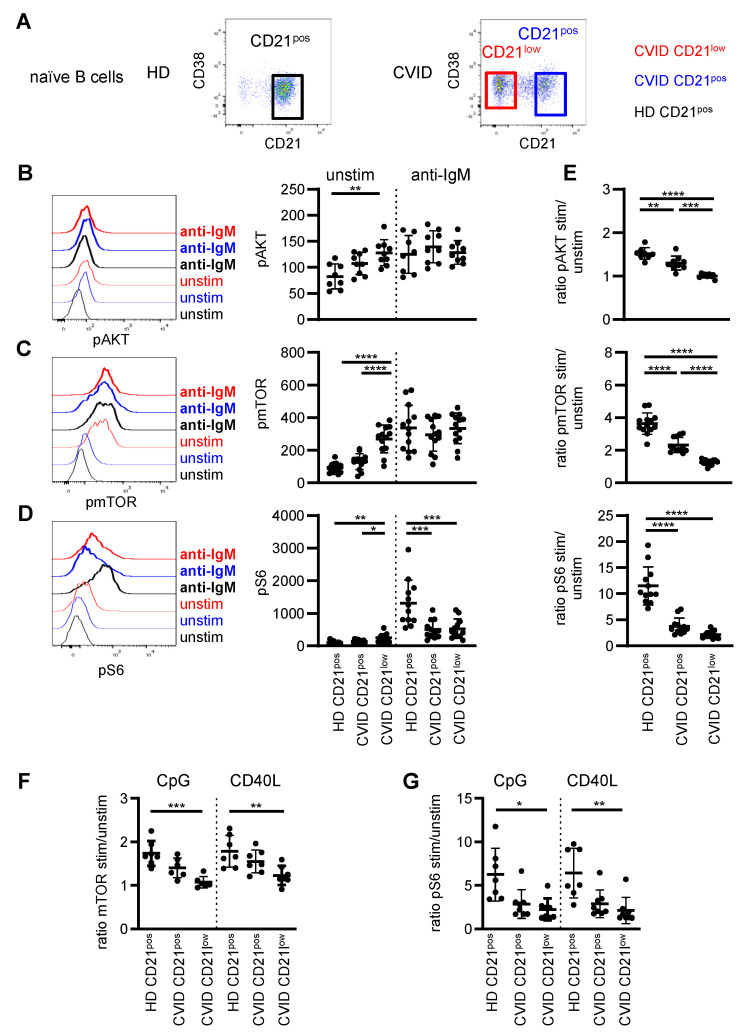
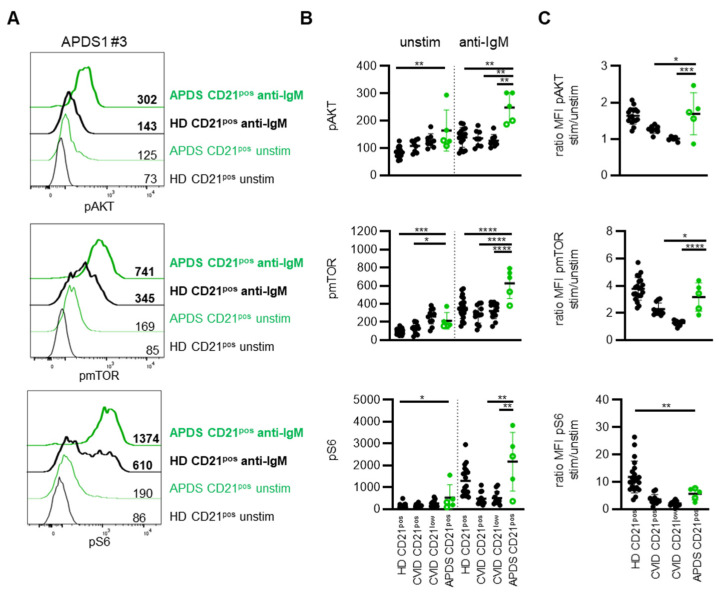
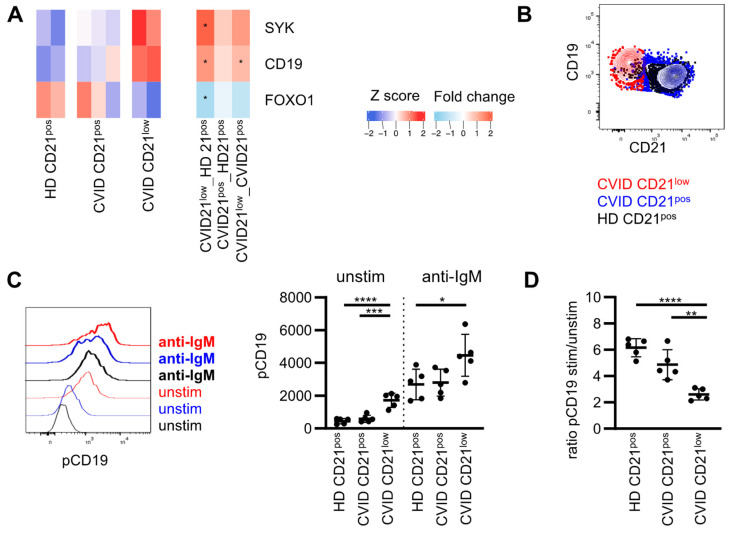
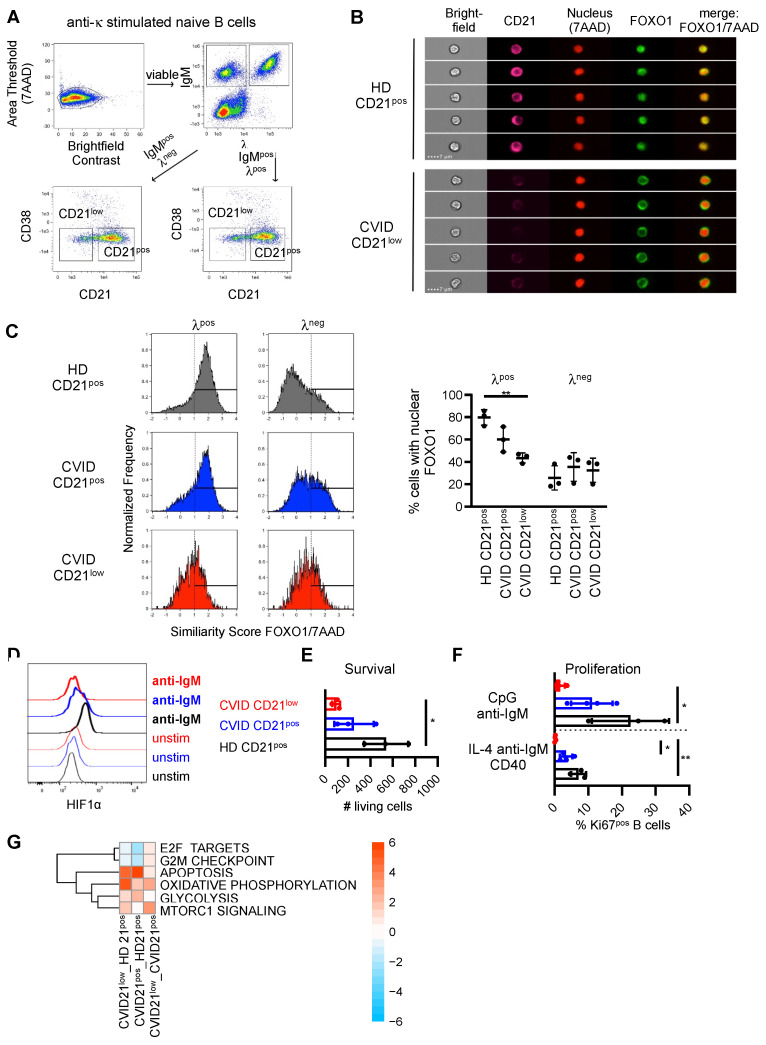
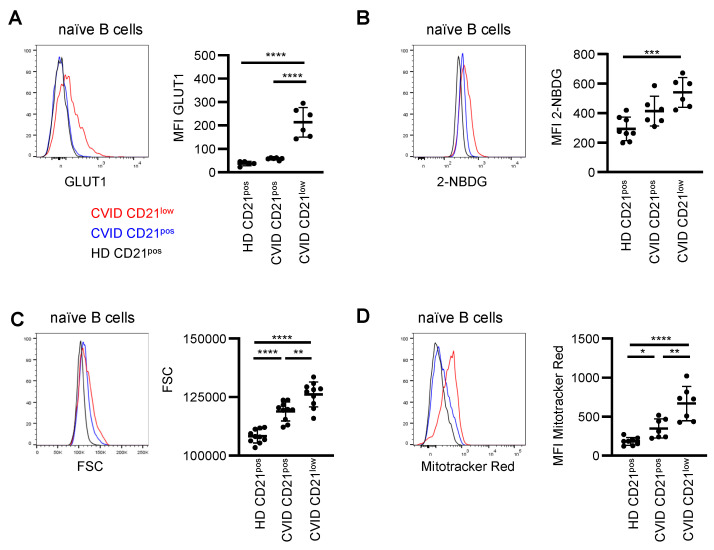
The altered wiring of signaling pathways downstream of antigen receptors of T and B cells contributes to the dysregulation of the adaptive immune system, potentially causing immunodeficiency and autoimmunity. In humans, the investigation of such complex systems benefits from nature's experiments in patients with genetically defined primary immunodeficiencies. Disturbed B-cell receptor (BCR) signaling in a subgroup of common variable immunodeficiency (CVID) patients with immune dysregulation and expanded T-betCD21 B cells in peripheral blood has been previously reported. Here, we investigate PI3K signaling and its targets as crucial regulators of survival, proliferation and metabolism by intracellular flow cytometry, imaging flow cytometry and RNAseq. We observed increased basal but disturbed BCR-induced PI3K signaling, especially in T-betCD21 B cells from CVID patients, translating into impaired activation of crucial downstream molecules and affecting proliferation, survival and the metabolic profile. In contrast to CVID, increased basal activity of PI3K in patients with a gain-of-function mutation in and activated PI3K delta syndrome (APDS) did not result in impaired BCR-induced AKT-mTOR-S6 phosphorylation, highlighting that signaling defects in B cells in CVID and APDS patients are fundamentally different and that assessing responses to BCR stimulation is an appropriate confirmative diagnostic test for APDS. The active PI3K signaling in vivo may render autoreactive T-betCD21 B cells in CVID at the same time to be more sensitive to mTOR or PI3K inhibition.
抗原受体下游信号通路的改变会导致 T 细胞和 B 细胞适应性免疫系统失调,可能导致免疫缺陷和自身免疫。在人类中,对这种复杂系统的研究受益于具有遗传定义的原发性免疫缺陷患者的自然实验。先前有报道称,在具有免疫失调和外周血中 T-betCD21 B 细胞扩增的常见可变免疫缺陷(CVID)患者亚群中,B 细胞受体(BCR)信号转导受到干扰。在这里,我们通过细胞内流式细胞术、成像流式细胞术和 RNAseq 研究了 PI3K 信号及其靶标作为生存、增殖和代谢的关键调节因子。我们观察到基础但受干扰的 BCR 诱导的 PI3K 信号增加,特别是在 CVID 患者的 T-betCD21 B 细胞中,这转化为关键下游分子的激活受损,并影响增殖、存活和代谢特征。与 CVID 相反,在 和激活的 PI3K 德尔塔综合征(APDS)中获得功能突变的患者中,PI3K 的基础活性增加不会导致 BCR 诱导的 AKT-mTOR-S6 磷酸化受损,这突出表明 CVID 和 APDS 患者 B 细胞中的信号缺陷从根本上不同,并且评估对 BCR 刺激的反应是 APDS 的适当确认诊断测试。CVID 中活跃的 PI3K 信号可能使自身反应性 T-betCD21 B 细胞同时对 mTOR 或 PI3K 抑制更敏感。