Hospital Israelita Albert Einstein, São Paulo 05652-000, Brazil.
LIM44, Hospital das Clínicas da Faculdade Medicina da Universidade de São Paulo, São Paulo 05403-000, Brazil.
Cells. 2022 Jan 30;11(3):485. doi: 10.3390/cells11030485.
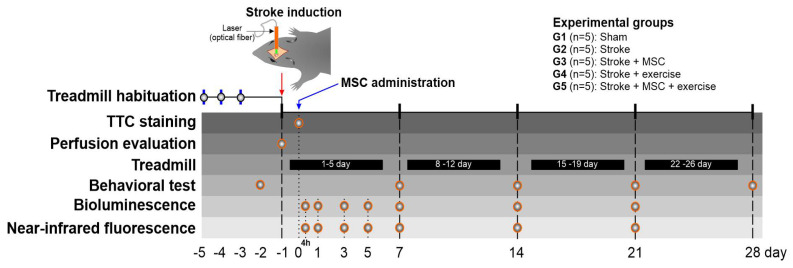
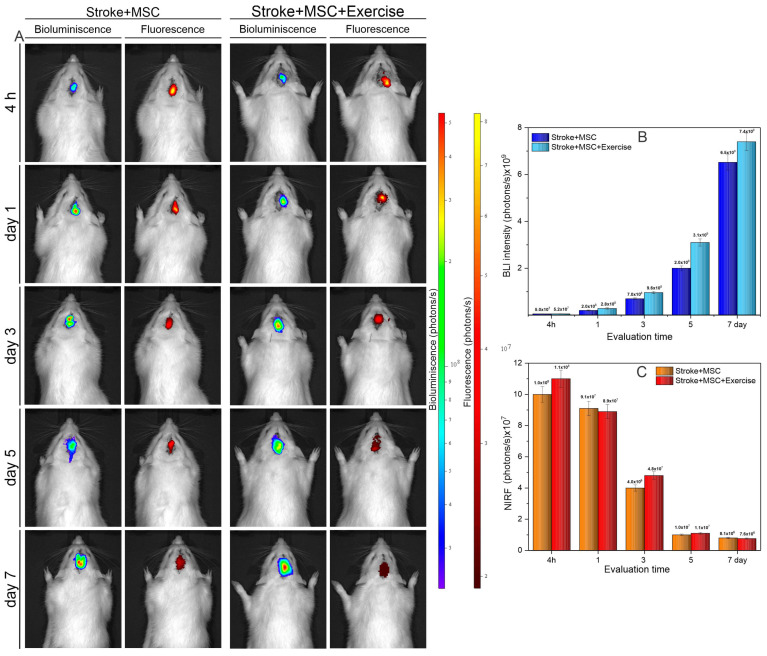
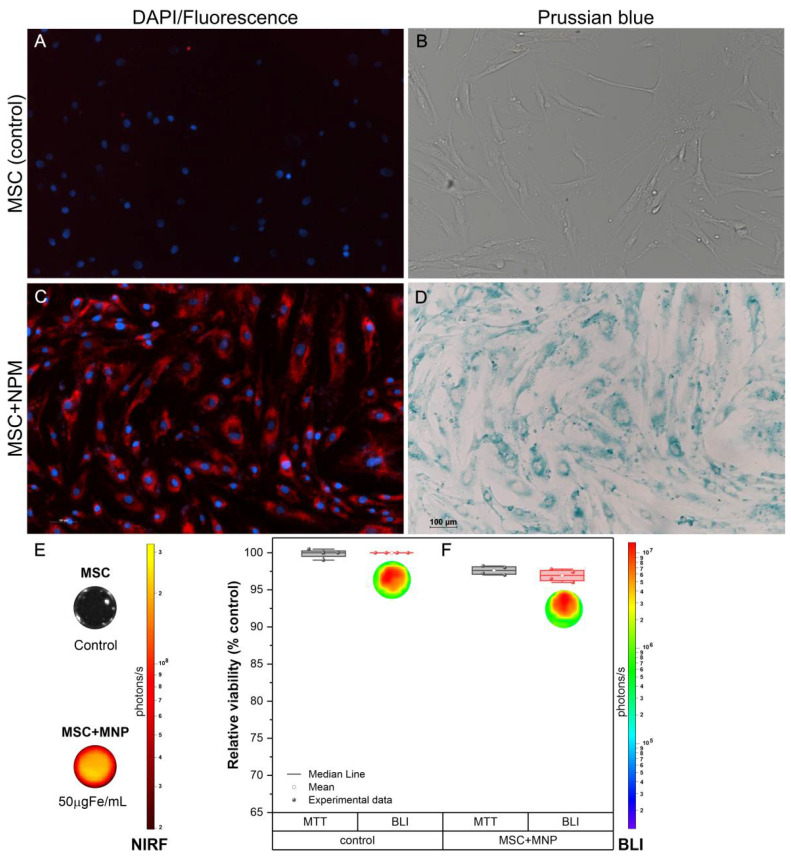
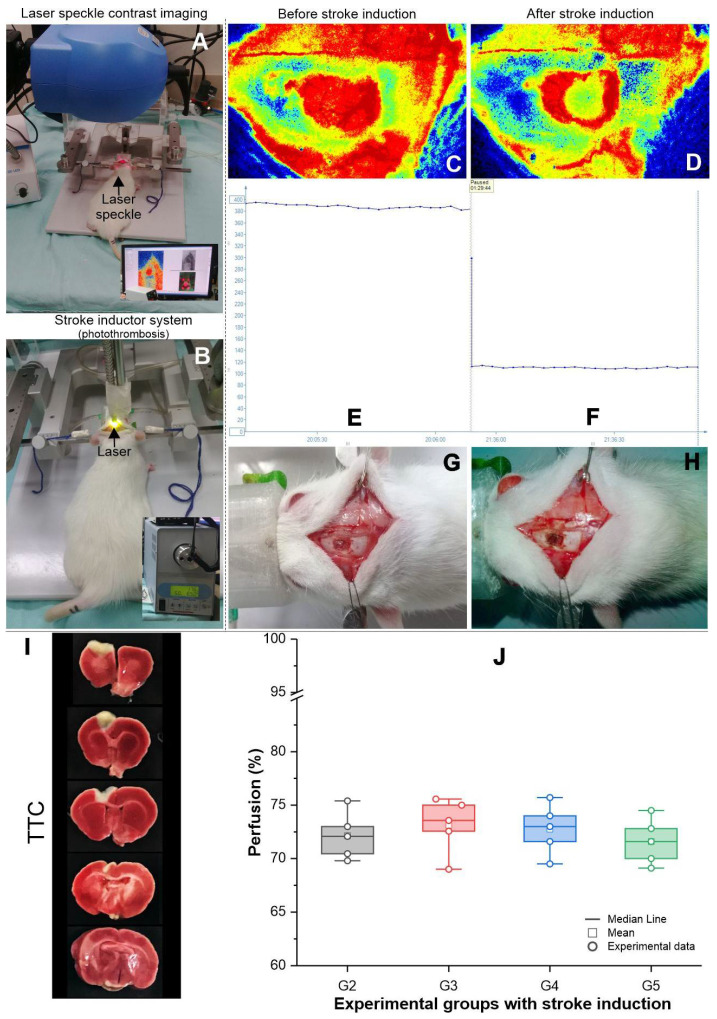
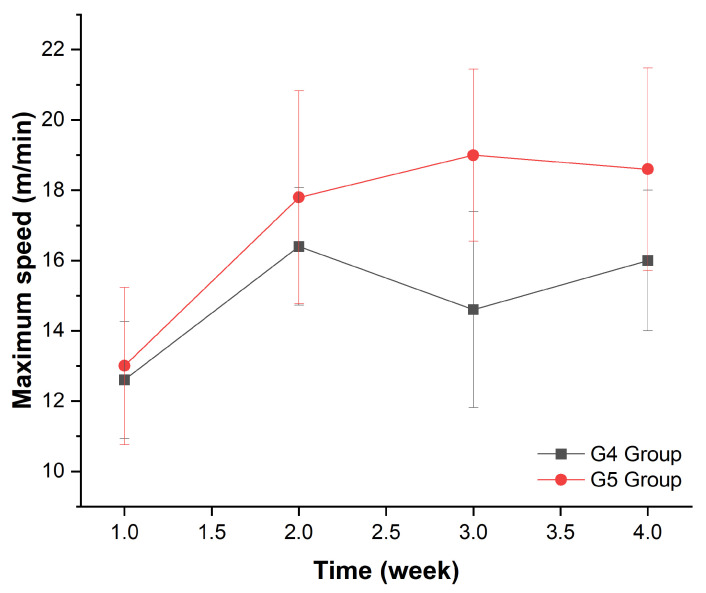
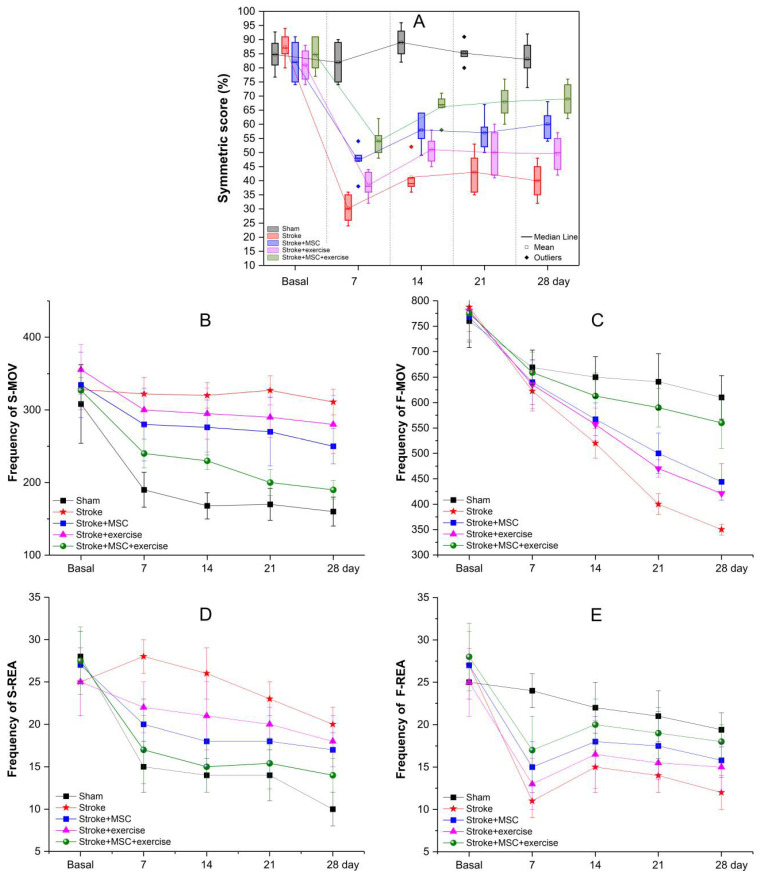
The goal of this study is to see how combining physical activity with cell treatment impacts functional recovery in a stroke model. Molecular imaging and multimodal nanoparticles assisted in cell tracking and longitudinal monitoring (MNP). The viability of mesenchymal stem cell (MSC) was determined using a 3-[4,5-dimethylthiazol-2-yl]-2,5 diphenyl tetrazolium bromide (MTT) assay and bioluminescent image (BLI) after lentiviral transduction and MNP labeling. At random, the animals were divided into 5 groups (control-G1, and experimental G2-G5). The photothrombotic stroke induction was confirmed by local blood perfusion reduction and Triphenyltetrazolium chloride (TTC), and MSC in the G3 and G5 groups were implanted after 24 h, with BLI and near-infrared fluorescence image (NIRF) tracking these cells at 28 h, 2, 7, 14, and 28 days. During a 28-day period, the G5 also conducted physical training, whereas the G4 simply did the training. At 0, 7, 14, and 28 days, the animals were functionally tested using a cylinder test and a spontaneous motor activity test. MNP internalization in MSC was confirmed using brightfield and fluorescence microscopy. In relation to G1 group, only 3% of cell viability reduced. The G2-G5 groups showed more than 69% of blood perfusion reduction. The G5 group performed better over time, with a progressive recovery of symmetry and an increase of fast vertical movements. Up to 7 days, BLI and NIRF followed MSC at the damaged site, demonstrating a signal rise that could be connected to cell proliferation at the injury site during the acute phase of stroke. Local MSC therapy mixed with physical activity resulted in better results in alleviating motor dysfunction, particularly during the acute period. When it comes to neurorehabilitation, this alternative therapy could be a suitable fit.
本研究旨在观察体力活动与细胞治疗相结合对卒中模型中功能恢复的影响。分子成像和多模态纳米颗粒辅助细胞跟踪和纵向监测(MNP)。通过慢病毒转导和 MNP 标记后,使用 3-[4,5-二甲基噻唑-2-基]-2,5 二苯基四氮唑溴盐(MTT)测定法和生物发光图像(BLI)测定间充质干细胞(MSC)的活力。随机将动物分为 5 组(对照组 G1 和实验组 G2-G5)。光血栓诱导卒中通过局部血液灌注减少和三苯基氯化四氮唑(TTC)确认,并且在 24 小时后将 MSC 植入 G3 和 G5 组,在 28 小时、2、7、14 和 28 天时通过 BLI 和近红外荧光图像(NIRF)跟踪这些细胞。在 28 天期间,G5 还进行了体力训练,而 G4 仅进行了训练。在 0、7、14 和 28 天,使用圆筒试验和自发运动活性试验对动物进行功能测试。通过明场和荧光显微镜确认 MSC 内 MNP 的内化。与 G1 组相比,只有 3%的细胞活力降低。G2-G5 组显示出超过 69%的血液灌注减少。G5 组随着时间的推移表现更好,对称性逐渐恢复,快速垂直运动增加。在 7 天内,BLI 和 NIRF 在损伤部位跟踪 MSC,显示信号升高,这可能与卒中急性期损伤部位的细胞增殖有关。局部 MSC 治疗与体力活动相结合可改善运动功能障碍,尤其是在急性期。在神经康复方面,这种替代疗法可能是一个合适的选择。