• 文献检索
  • 文档翻译
  • 深度研究
  • 学术资讯
  • Suppr Zotero 插件Zotero 插件
  • 邀请有礼
  • 套餐&价格
  • 历史记录
应用&插件
Suppr Zotero 插件Zotero 插件浏览器插件Mac 客户端Windows 客户端微信小程序
定价
高级版会员购买积分包购买API积分包
服务
文献检索文档翻译深度研究API 文档MCP 服务
关于我们
关于 Suppr公司介绍联系我们用户协议隐私条款
关注我们

Suppr 超能文献

核心技术专利:CN118964589B侵权必究
粤ICP备2023148730 号-1Suppr @ 2026

文献检索

告别复杂PubMed语法,用中文像聊天一样搜索,搜遍4000万医学文献。AI智能推荐,让科研检索更轻松。

立即免费搜索

文件翻译

保留排版,准确专业,支持PDF/Word/PPT等文件格式,支持 12+语言互译。

免费翻译文档

深度研究

AI帮你快速写综述,25分钟生成高质量综述,智能提取关键信息,辅助科研写作。

立即免费体验

野生食用植物的复兴:来自意大利托斯卡纳的见解

The Renaissance of Wild Food Plants: Insights from Tuscany (Italy).

作者信息

Baldi Ada, Bruschi Piero, Campeggi Stephanie, Egea Teresa, Rivera Diego, Obón Concepción, Lenzi Anna

机构信息

Dipartimento di Scienze e Tecnologie Agrarie, Alimentari Ambientali e Forestali, Università degli Studi di Firenze, 50144 Firenze, Italy.

Departamento Biología Aplicada, Escuela Politécnica Superior, Universidad Miguel Hernández, Ctra. Beniel Km 3.2, 03312 Orihuela, Spain.

出版信息

Foods. 2022 Jan 23;11(3):300. doi: 10.3390/foods11030300.

DOI:10.3390/foods11030300
PMID:35159452
原文链接:https://pmc.ncbi.nlm.nih.gov/articles/PMC8834290/
Abstract

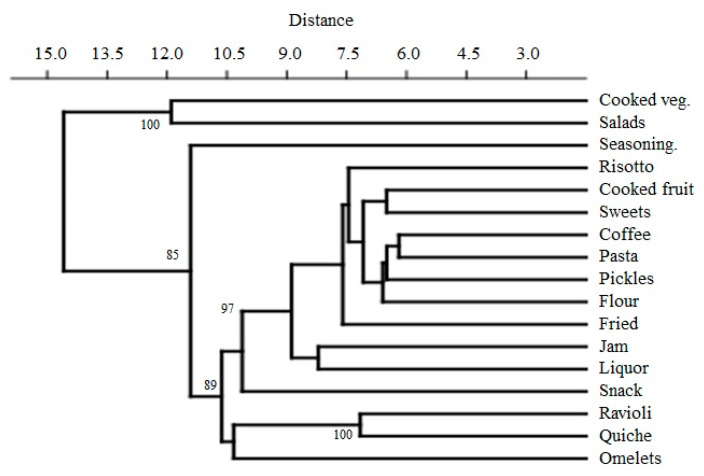
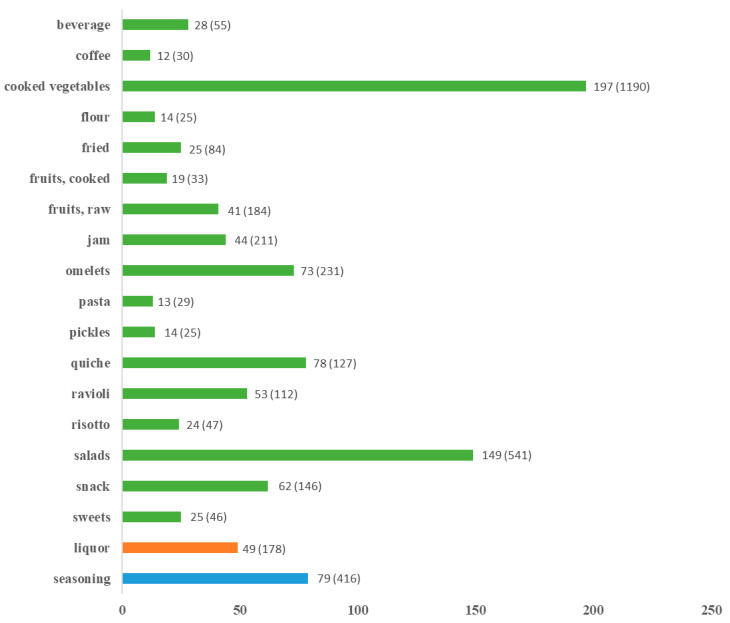
This paper provides an overview of wild food plants traditionally used in the gastronomy of Tuscany, an Italian region with high biological diversity and whose cultural heritage is well known. Forty-nine bibliographic sources, including five unpublished studies, were reviewed. A list of species with ecological characteristics, plant parts used, use category (food, liquor, or seasoning), methods of preparation (raw or cooked), and recipes is presented. The use of 357 taxa (3711 use reports, URs), was recorded, belonging to 215 genera and 72 botanical families. Over the total taxa, 12 are new for Tuscany, 52 seem not to be present in other Italian regions, and 54 were not detected in the consulted European ethnobotanical literature. Of these taxa, 324 (3117 URs) were used as food, while 49 (178 URs) and 81 (416 URs) were used for liquor and seasoning, respectively. Of the 17 different food recipes, cooked vegetables constituted the largest group, followed by salads, omelets, snacks, and fillings. The chemical composition of the recorded food plants and the possible safety risks associated to their consumption, as well as their traditional medicinal use, are also shown. This review highlights the richness of ethnobotanical knowledge in Tuscany. Such biocultural heritage can be a "source of inspiration" for agriculture. As a reservoir of potential new crops, wild edible flora may contribute to the development of emerging horticultural sectors such as vertical farming and microgreens production. Moreover, the nutrient content and healthy properties of many wild food plants reported in this study has the ability to meet consumer demand for functional foods.

摘要

本文概述了意大利托斯卡纳美食传统中使用的野生食用植物。托斯卡纳地区生物多样性高,文化遗产丰富。我们查阅了49篇文献资料,包括5项未发表的研究。文中列出了相关物种的生态特征、使用的植物部位、用途类别(食品、酒类或调味料)、制备方法(生用或熟用)以及食谱。共记录了357个分类单元(3711条使用记录),分属于215个属和72个植物科。在所有分类单元中,有12种是托斯卡纳地区新发现的,52种似乎在意大利其他地区不存在,54种在查阅的欧洲民族植物学文献中未被发现。这些分类单元中,324种(3117条使用记录)被用作食物,49种(178条使用记录)和81种(416条使用记录)分别用于酒类和调味料。在17种不同的食物食谱中,熟蔬菜占比最大,其次是沙拉、煎蛋卷、小吃和馅料。文中还展示了所记录食用植物的化学成分、食用可能存在的安全风险以及它们的传统药用价值。本综述凸显了托斯卡纳地区民族植物学知识的丰富性。这种生物文化遗产可以成为农业的“灵感源泉”。作为潜在新作物的宝库,野生可食用植物可能有助于垂直种植和微型蔬菜生产等新兴园艺产业的发展。此外,本研究中报道的许多野生食用植物的营养成分和健康特性能够满足消费者对功能性食品的需求。
https://cdn.ncbi.nlm.nih.gov/pmc/blobs/f706/8834290/8abaea964dac/foods-11-00300-g004.jpg
https://cdn.ncbi.nlm.nih.gov/pmc/blobs/f706/8834290/e1750a2127ab/foods-11-00300-g001.jpg
https://cdn.ncbi.nlm.nih.gov/pmc/blobs/f706/8834290/fc2ad66e6346/foods-11-00300-g002.jpg
https://cdn.ncbi.nlm.nih.gov/pmc/blobs/f706/8834290/e843a26c2464/foods-11-00300-g003.jpg
https://cdn.ncbi.nlm.nih.gov/pmc/blobs/f706/8834290/8abaea964dac/foods-11-00300-g004.jpg
https://cdn.ncbi.nlm.nih.gov/pmc/blobs/f706/8834290/e1750a2127ab/foods-11-00300-g001.jpg
https://cdn.ncbi.nlm.nih.gov/pmc/blobs/f706/8834290/fc2ad66e6346/foods-11-00300-g002.jpg
https://cdn.ncbi.nlm.nih.gov/pmc/blobs/f706/8834290/e843a26c2464/foods-11-00300-g003.jpg
https://cdn.ncbi.nlm.nih.gov/pmc/blobs/f706/8834290/8abaea964dac/foods-11-00300-g004.jpg

相似文献

1
The Renaissance of Wild Food Plants: Insights from Tuscany (Italy).野生食用植物的复兴:来自意大利托斯卡纳的见解
Foods. 2022 Jan 23;11(3):300. doi: 10.3390/foods11030300.
2
The wild taxa utilized as vegetables in Sicily (Italy): a traditional component of the Mediterranean diet.西西里岛(意大利)用作蔬菜的野生品种:地中海饮食的传统组成部分。
J Ethnobiol Ethnomed. 2018 Feb 14;14(1):14. doi: 10.1186/s13002-018-0215-x.
3
Wild food plants used in traditional vegetable mixtures in Italy.意大利传统蔬菜混合物中使用的野生食用植物。
J Ethnopharmacol. 2016 Jun 5;185:202-34. doi: 10.1016/j.jep.2016.02.050. Epub 2016 Mar 2.
4
Ethnobotanical profiles of wild edible plants recorded from Mongolia by Yunatov during 1940-1951.云纳托夫在 1940 年至 1951 年期间记录的蒙古野生食用植物民族植物学特征。
Hist Philos Life Sci. 2021 Aug 11;43(3):100. doi: 10.1007/s40656-021-00428-0.
5
Wild edible plants in Yeşilli (Mardin-Turkey), a multicultural area.土耳其马尔丁省耶希尔利(Yeşilli)的野生食用植物,一个多元文化地区。
J Ethnobiol Ethnomed. 2019 Nov 5;15(1):52. doi: 10.1186/s13002-019-0327-y.
6
Spirits and liqueurs in European traditional medicine: Their history and ethnobotany in Tuscany and Bologna (Italy).欧洲传统医学中的烈酒和利口酒:它们在意大利托斯卡纳和博洛尼亚的历史与民族植物学
J Ethnopharmacol. 2015 Dec 4;175:241-55. doi: 10.1016/j.jep.2015.08.053. Epub 2015 Sep 2.
7
Ethnobotany of wild edible plants in multiethnic areas of the Gansu-Ningxia-Inner Mongolia junction zone.交界区多民族野生食用植物民族植物学
J Ethnobiol Ethnomed. 2022 Aug 9;18(1):53. doi: 10.1186/s13002-022-00549-1.
8
Ethnobotanical appraisal and cultural values of medicinally important wild edible vegetables of Lesser Himalayas-Pakistan.巴基斯坦小喜马拉雅药用野生食用蔬菜的民族植物学评价和文化价值。
J Ethnobiol Ethnomed. 2013 Sep 14;9(1):66. doi: 10.1186/1746-4269-9-66.
9
Plants traditionally used to make Cantonese slow-cooked soup in China.在中国,传统上用于制作广东慢炖汤的植物。
J Ethnobiol Ethnomed. 2018 Jan 15;14(1):4. doi: 10.1186/s13002-018-0206-y.
10
An ethnobotanical survey of wild edible plants used by the Yi people of Liangshan Prefecture, Sichuan Province, China.中国四川省凉山彝族自治州彝族民间食用野生植物的民族植物学调查。
J Ethnobiol Ethnomed. 2020 Feb 26;16(1):10. doi: 10.1186/s13002-019-0349-5.

引用本文的文献

1
Diachronic changes in local food heritage: the ethnobiology of wild foods in central Tuscany.当地食物遗产的历时性变化:托斯卡纳中部野生食物的民族生物学
J Ethnobiol Ethnomed. 2025 Jul 15;21(1):48. doi: 10.1186/s13002-025-00797-x.
2
A Floristic Survey of Wild Edible Plants in Tuscan Maremma, Italy.意大利托斯卡纳马雷马地区野生可食用植物的植物区系调查
Plants (Basel). 2025 Mar 20;14(6):976. doi: 10.3390/plants14060976.
3
Is Common Dandelion ( agg.) Foraged for Food in Vineyards Pesticide Residues Free?葡萄园里采集的普通蒲公英(聚合种)是否无农药残留可供食用?

本文引用的文献

1
Ecological and Biological Properties of Ten. and Ten.: Two Wild Officinal Species of Conservation Concern in Apulia (Italy). A Preliminary Survey.意大利普利亚地区两种受保护野生药用植物“Ten.”和“Ten.”的生态与生物学特性:初步调查
Plants (Basel). 2021 Sep 18;10(9):1952. doi: 10.3390/plants10091952.
2
Mercury in European topsoils: Anthropogenic sources, stocks and fluxes.欧洲表土中的汞:人为来源、存量和通量。
Environ Res. 2021 Oct;201:111556. doi: 10.1016/j.envres.2021.111556. Epub 2021 Jun 24.
3
A Comparison Study on Traditional Mixtures of Herbal Teas Used in Eastern Mediterranean Area.
Foods. 2025 Feb 17;14(4):684. doi: 10.3390/foods14040684.
4
Characterizing the odor of New Zealand native plants using sensory analysis and gas chromatography-mass spectrometry.运用感官分析和气相色谱 - 质谱联用技术表征新西兰本土植物的气味。
J Food Sci. 2025 Feb;90(2):e70050. doi: 10.1111/1750-3841.70050.
5
Ethnobotanical review of traditional use of wild food plants in Japan.日本野生食用植物传统用途的民族植物学综述。
J Ethnobiol Ethnomed. 2024 Nov 21;20(1):100. doi: 10.1186/s13002-024-00736-2.
6
Traditional Knowledge Evolution over Half of a Century: Local Herbal Resources and Their Changes in the Upper Susa Valley of Northwest Italy.半个世纪以来的传统知识演变:意大利西北部苏萨河谷上游的当地草药资源及其变化
Plants (Basel). 2023 Dec 22;13(1):43. doi: 10.3390/plants13010043.
7
Photosynthetic Photon Flux Density Effects on in Controlled-Environment Agriculture.光合光子通量密度对可控环境农业的影响。
Plants (Basel). 2023 Oct 20;12(20):3622. doi: 10.3390/plants12203622.
8
Ethnobotany for food security and ecological transition: wild food plant gathering and consumption among four cultural groups in Kurram District, NW Pakistan.民族植物学与粮食安全和生态转型:巴基斯坦西北开伯尔区四个文化群体的野生食用植物采集和食用。
J Ethnobiol Ethnomed. 2023 Sep 1;19(1):35. doi: 10.1186/s13002-023-00607-2.
9
Alpine Diet in Valmalenco (Lombardy, Italy): Nutritional Features of Spontaneous Plants and Traditional Dishes.阿尔卑斯饮食在瓦尔马伦科(意大利伦巴第大区):自然生长植物和传统菜肴的营养特点。
Nutrients. 2023 Apr 20;15(8):1988. doi: 10.3390/nu15081988.
10
Encapsulating (Vaill.) L. Florets: UHPLC-HRMS Insights into Bioactive Compounds Preservation and Oral Bioaccessibility.包封 (Vaill.) L. 小花:UHPLC-HRMS 对生物活性化合物的保存和口服生物利用度的深入了解。
Molecules. 2022 Dec 26;28(1):199. doi: 10.3390/molecules28010199.
东地中海地区传统草药茶混合物的比较研究
Front Pharmacol. 2021 Apr 23;12:632692. doi: 10.3389/fphar.2021.632692. eCollection 2021.
4
Design a Database of Italian Vascular Alimurgic Flora (AlimurgITA): Preliminary Results.设计意大利血管性有益植物群数据库(AlimurgITA):初步结果。
Plants (Basel). 2021 Apr 10;10(4):743. doi: 10.3390/plants10040743.
5
Wild Plants Used as Herbs and Spices in Italy: An Ethnobotanical Review.意大利用作草药和香料的野生植物:民族植物学综述。
Plants (Basel). 2021 Mar 16;10(3):563. doi: 10.3390/plants10030563.
6
Current Knowledge and Perspectives of Pyrrolizidine Alkaloids in Pharmacological Applications: A Mini-Review.吡咯里西啶生物碱在药理学应用中的现有知识和观点:综述。
Molecules. 2021 Mar 31;26(7):1970. doi: 10.3390/molecules26071970.
7
The Power of Wild Plants in Feeding Humanity: A Meta-Analytic Ethnobotanical Approach in the Catalan Linguistic Area.野生植物在养活人类方面的力量:加泰罗尼亚语地区的元分析民族植物学方法。
Foods. 2020 Dec 29;10(1):61. doi: 10.3390/foods10010061.
8
Nutritional and Phytochemical Composition of Mediterranean Wild Vegetables after Culinary Treatment.烹饪处理后地中海野生蔬菜的营养和植物化学成分
Foods. 2020 Nov 28;9(12):1761. doi: 10.3390/foods9121761.
9
Comparison of Three Domestications and Wild-Harvested Plants for Nutraceutical Properties and Sensory Profiles in Five Wild Edible Herbs: Is Domestication Possible?五种野生可食用草本植物中三种驯化及野生采集植物的营养特性和感官特征比较:驯化是否可行?
Foods. 2020 Aug 6;9(8):1065. doi: 10.3390/foods9081065.
10
Child malnutrition and COVID-19: the time to act is now.儿童营养不良与新冠疫情:现在是行动的时候了。
Lancet. 2020 Aug 22;396(10250):517-518. doi: 10.1016/S0140-6736(20)31648-2. Epub 2020 Jul 27.