Vasiliadis Elias S, Evangelopoulos Dimitrios-Stergios, Kaspiris Angelos, Benetos Ioannis S, Vlachos Christos, Pneumaticos Spyros G
3rd Department of Orthopaedics, School of Medicine, National and Kapodistrian University of Athens, KAT Hospital, 16541 Athens, Greece.
Laboratory of Molecular Pharmacology, Division for Orthopaedic Research, School of Health Sciences, University of Patras, 26504 Rion, Greece.
J Clin Med. 2022 Feb 2;11(3):806. doi: 10.3390/jcm11030806.
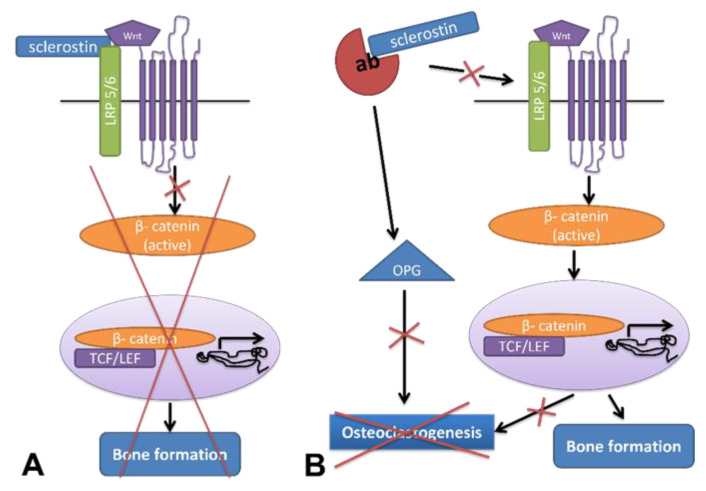
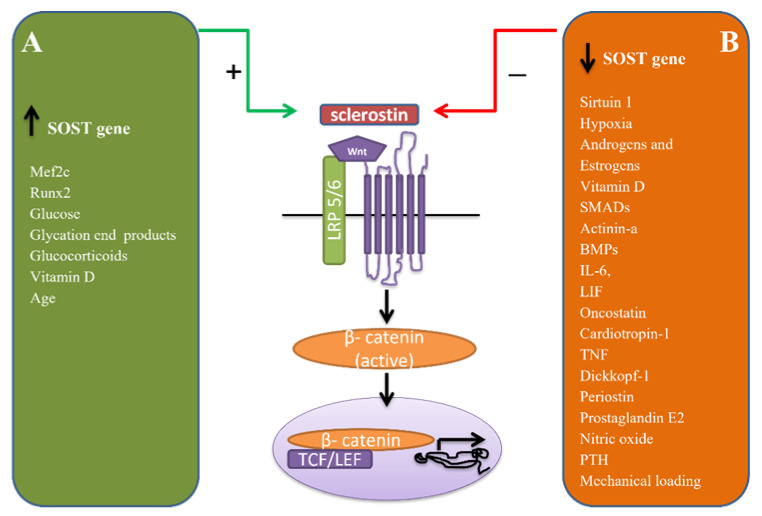
Sclerostin has been identified as an important regulator of bone homeostasis through inhibition of the canonical Wnt-signaling pathway, and it is involved in the pathogenesis of many different skeletal diseases. Many studies have been published in the last few years regarding sclerostin's origin, regulation, and mechanism of action. The ongoing research emphasizes the potential therapeutic implications of sclerostin in many pathological conditions with or without skeletal involvement. Antisclerostin antibodies have recently been approved for the treatment of osteoporosis, and several animal studies and clinical trials are currently under way to evaluate the effectiveness of antisclerostin antibodies in the treatment of other than osteoporosis skeletal disorders and cancer with promising results. Understanding the exact role of sclerostin may lead to new therapeutic approaches for the treatment of skeletal disorders.
硬化素已被确定为通过抑制经典Wnt信号通路来调节骨稳态的重要因子,并且它参与了许多不同骨骼疾病的发病机制。在过去几年中,已经发表了许多关于硬化素的起源、调节及其作用机制的研究。正在进行的研究强调了硬化素在许多有或没有骨骼受累的病理状况中的潜在治疗意义。抗硬化素抗体最近已被批准用于治疗骨质疏松症,目前正在进行多项动物研究和临床试验,以评估抗硬化素抗体在治疗除骨质疏松症之外的骨骼疾病和癌症方面的有效性,结果令人鼓舞。了解硬化素的确切作用可能会带来治疗骨骼疾病的新方法。