Cho Jungsang, Yadav Gautam Ganapati, Weiner Meir, Huang Jinchao, Upreti Aditya, Wei Xia, Yakobov Roman, Hawkins Brendan E, Nyce Michael, Lambert Timothy N, Arnot David J, Bell Nelson S, Schorr Noah B, Booth Megan N, Turney Damon E, Cowles Gabriel, Banerjee Sanjoy
The Energy Institute, City College of New York, Steinman Hall, New York, NY 10031, USA.
Research & Development Department, Urban Electric Power, Pearl River, NY 10965, USA.
Polymers (Basel). 2022 Jan 20;14(3):417. doi: 10.3390/polym14030417.
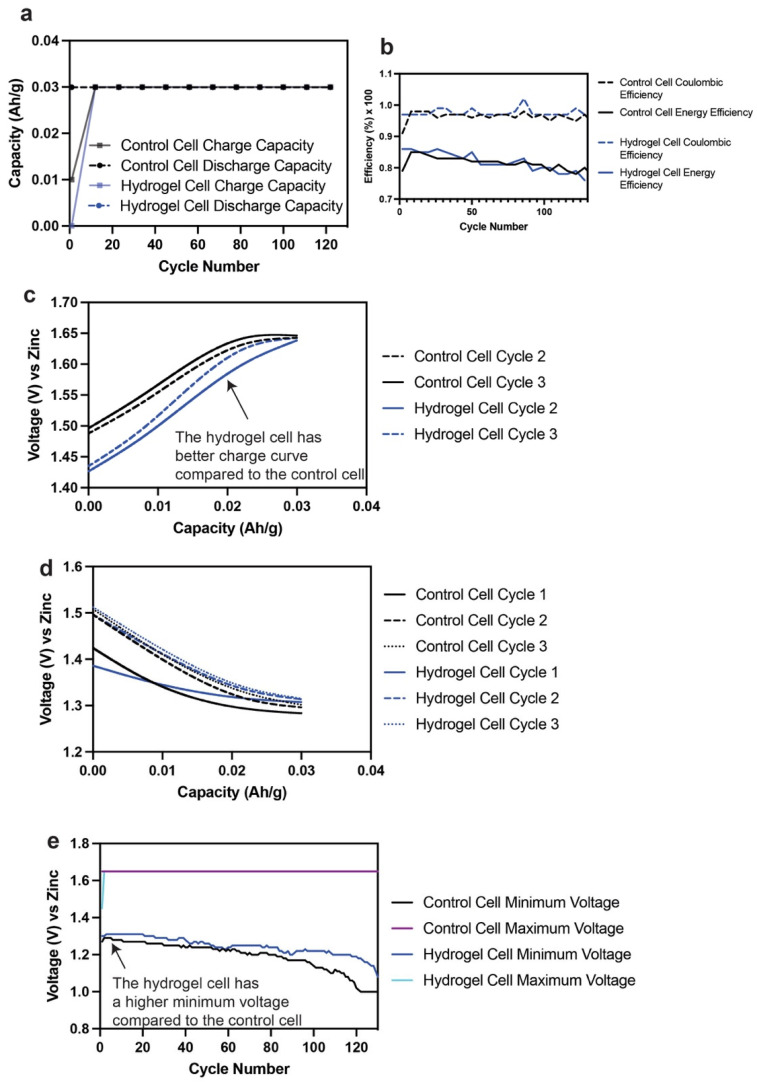
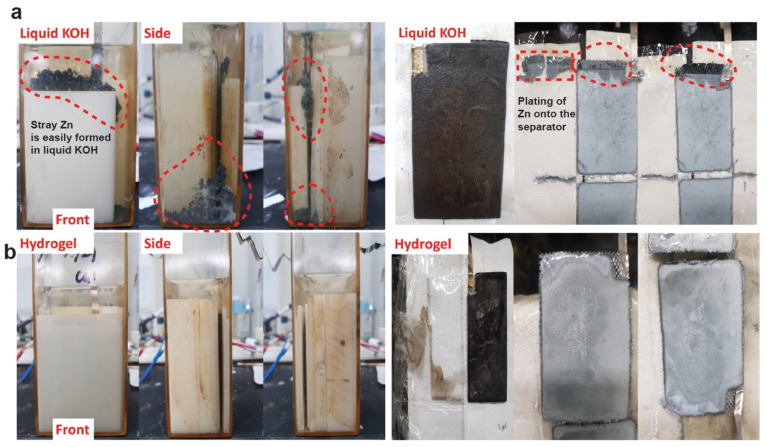
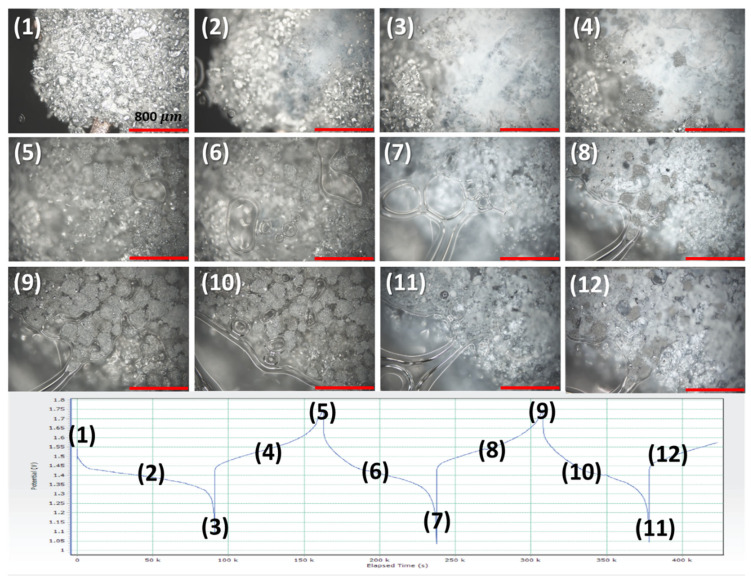
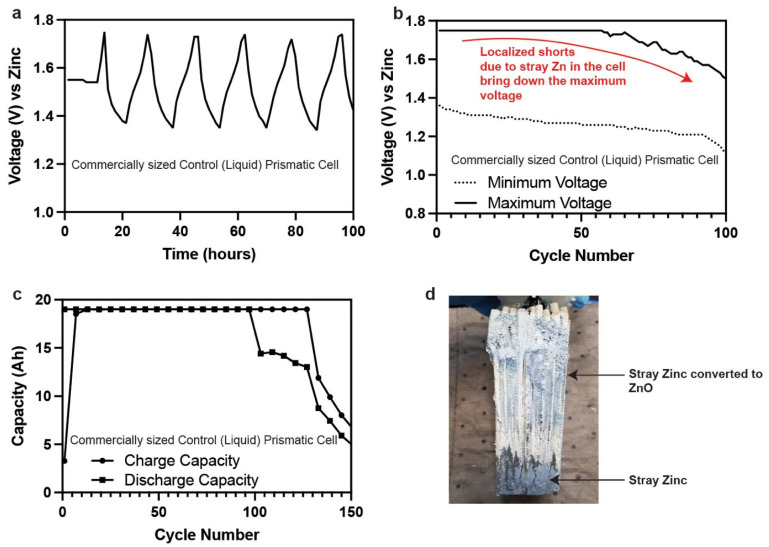
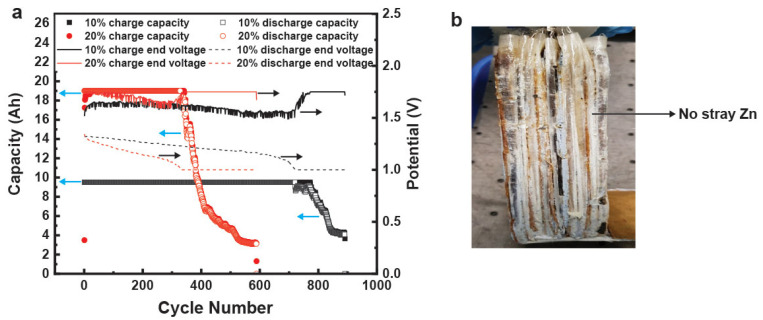
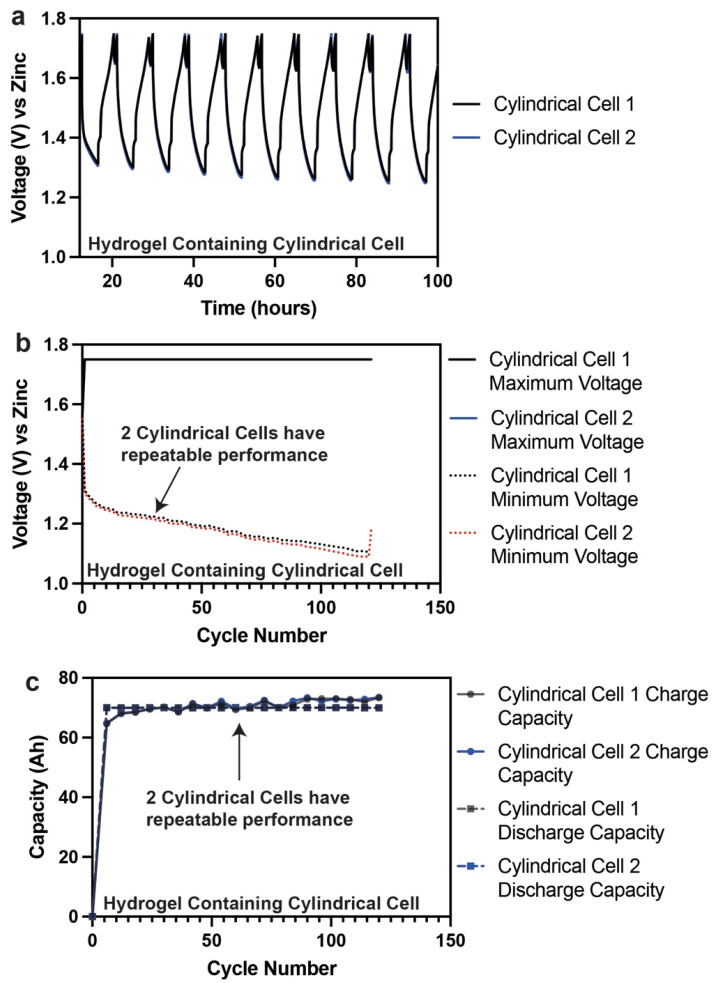
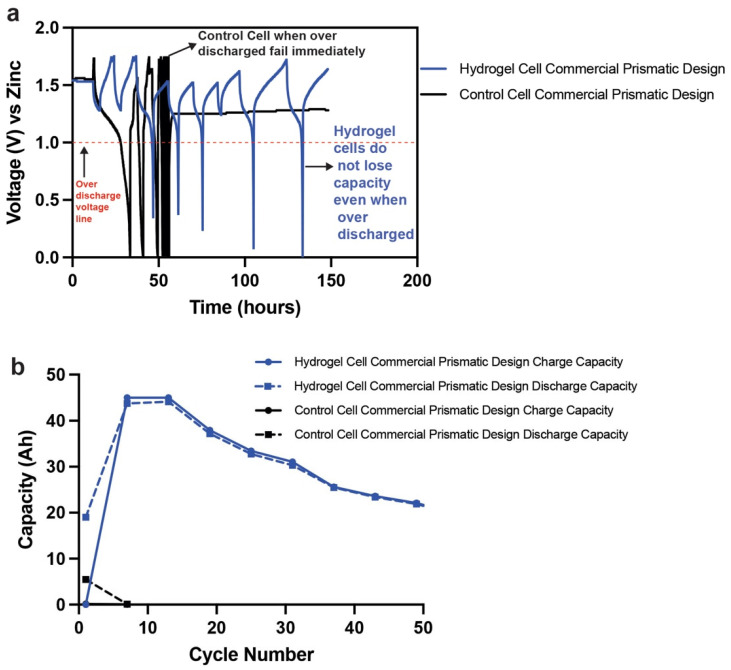
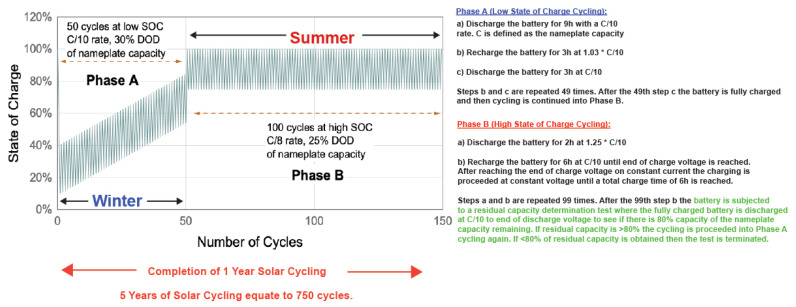
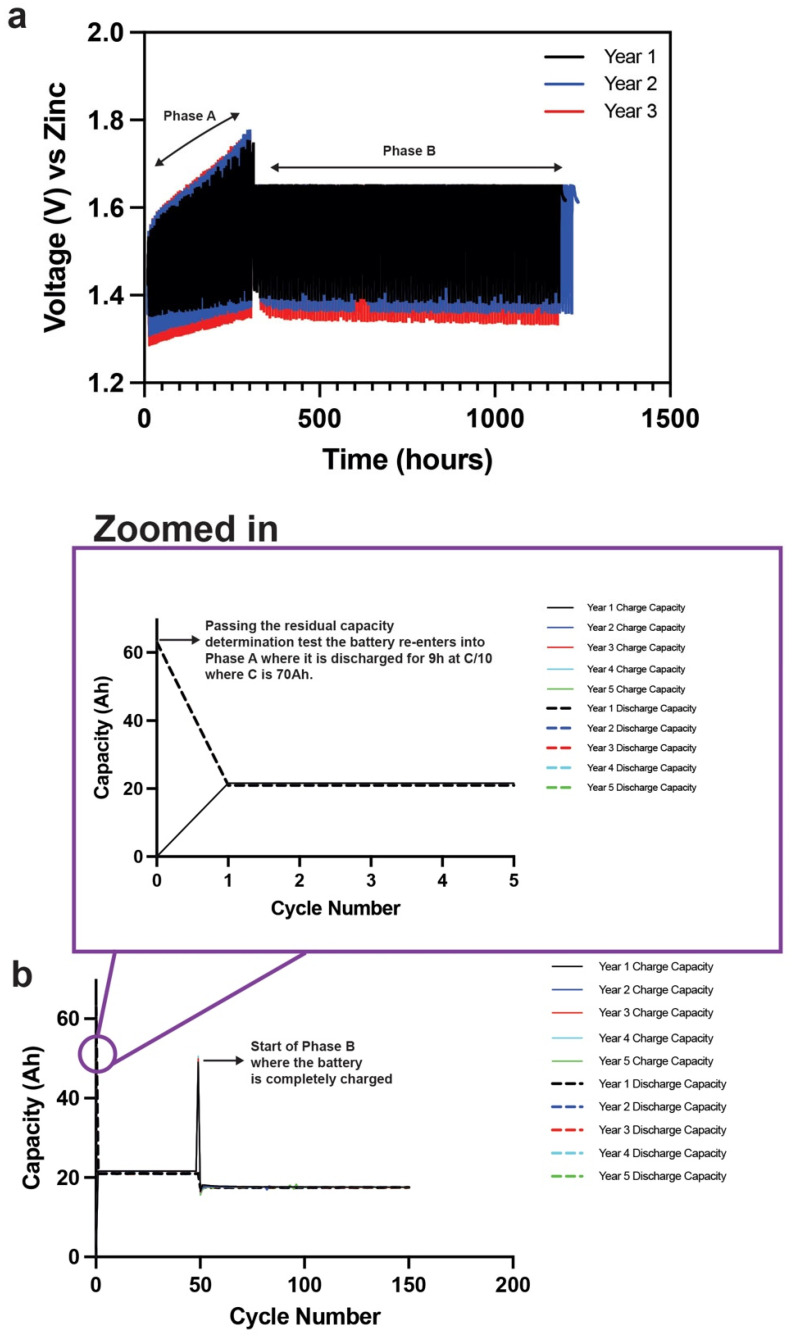
Zinc (Zn)-manganese dioxide (MnO) rechargeable batteries have attracted research interest because of high specific theoretical capacity as well as being environmentally friendly, intrinsically safe and low-cost. Liquid electrolytes, such as potassium hydroxide, are historically used in these batteries; however, many failure mechanisms of the Zn-MnO battery chemistry result from the use of liquid electrolytes, including the formation of electrochemically inert phases such as hetaerolite (ZnMnO) and the promotion of shape change of the Zn electrode. This manuscript reports on the fundamental and commercial results of gel electrolytes for use in rechargeable Zn-MnO batteries as an alternative to liquid electrolytes. The manuscript also reports on novel properties of the gelled electrolyte such as limiting the overdischarge of Zn anodes, which is a problem in liquid electrolyte, and finally its use in solar microgrid applications, which is a first in academic literature. Potentiostatic and galvanostatic tests with the optimized gel electrolyte showed higher capacity retention compared to the tests with the liquid electrolyte, suggesting that gel electrolyte helps reduce Mn dissolution and zincate ion migration from the Zn anode, improving reversibility. Cycling tests for commercially sized prismatic cells showed the gel electrolyte had exceptional cycle life, showing 100% capacity retention for >700 cycles at 9.5 Ah and for >300 cycles at 19 Ah, while the 19 Ah prismatic cell with a liquid electrolyte showed discharge capacity degradation at 100th cycle. We also performed overdischarge protection tests, in which a commercialized prismatic cell with the gel electrolyte was discharged to 0 V and achieved stable discharge capacities, while the liquid electrolyte cell showed discharge capacity fade in the first few cycles. Finally, the gel electrolyte batteries were tested under IEC solar off-grid protocol. It was noted that the gelled Zn-MnO batteries outperformed the Pb-acid batteries. Additionally, a designed system nameplated at 2 kWh with a 12 V system with 72 prismatic cells was tested with the same protocol, and it has entered its third year of cycling. This suggests that Zn-MnO rechargeable batteries with the gel electrolyte will be an ideal candidate for solar microgrid systems and grid storage in general.
锌(Zn)-二氧化锰(MnO)可充电电池因其高比理论容量、环境友好、本质安全和低成本而吸引了研究兴趣。历史上,这些电池使用诸如氢氧化钾之类的液体电解质;然而,锌-二氧化锰电池化学的许多失效机制都源于液体电解质的使用,包括形成电化学惰性相,如锌锰矿(ZnMnO)以及促进锌电极的形状变化。本手稿报道了用于可充电锌-二氧化锰电池的凝胶电解质替代液体电解质的基础和商业成果。该手稿还报道了凝胶电解质的新特性,如限制锌阳极的过放电(这是液体电解质中的一个问题),以及其在太阳能微电网应用中的使用,这在学术文献中尚属首次。使用优化后的凝胶电解质进行的恒电位和恒电流测试显示,与使用液体电解质的测试相比,其容量保持率更高,这表明凝胶电解质有助于减少锰的溶解和锌离子从锌阳极的迁移,提高了可逆性。对商业尺寸的棱柱形电池进行的循环测试表明,凝胶电解质具有出色的循环寿命,在9.5 Ah时超过700次循环保持100%的容量,在19 Ah时超过300次循环保持100%的容量,而使用液体电解质的19 Ah棱柱形电池在第100次循环时显示出放电容量下降。我们还进行了过放电保护测试,其中使用凝胶电解质的商业化棱柱形电池放电至0 V并实现了稳定的放电容量,而液体电解质电池在最初几个循环中显示出放电容量衰减。最后,对凝胶电解质电池按照IEC太阳能离网协议进行了测试。值得注意的是,凝胶化的锌-二氧化锰电池性能优于铅酸电池。此外,一个设计为2 kWh、12 V系统且带有72个棱柱形电池的系统按照相同协议进行了测试,并且已经进入其循环的第三年。这表明带有凝胶电解质的锌-二氧化锰可充电电池总体上将是太阳能微电网系统和电网储能的理想候选者。