Department of Cardiology, Keio University School of Medicine, Tokyo 160-8582, Japan.
Int J Mol Sci. 2022 Jan 26;23(3):1414. doi: 10.3390/ijms23031414.
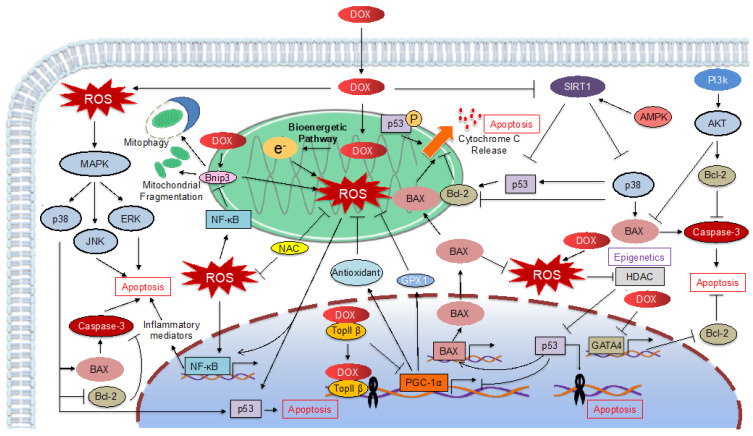
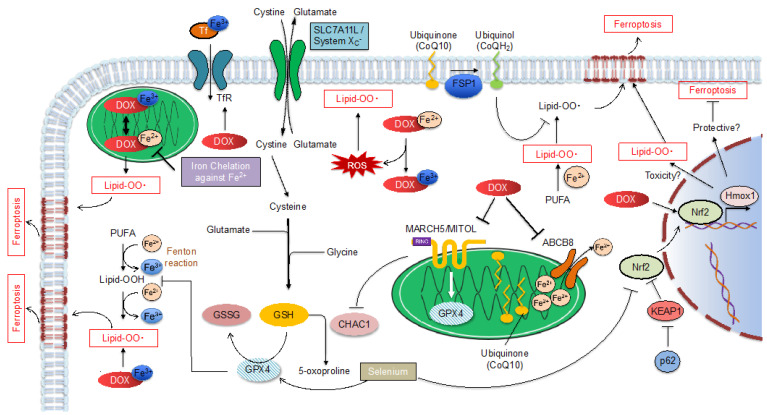
Doxorubicin (DOX) is the most widely used anthracycline anticancer agent; however, its cardiotoxicity limits its clinical efficacy. Numerous studies have elucidated the mechanisms underlying DOX-induced cardiotoxicity, wherein apoptosis has been reported as the most common final step leading to cardiomyocyte death. However, in the past two years, the involvement of ferroptosis, a novel programmed cell death, has been proposed. The purpose of this review is to summarize the historical background that led to each form of cell death, focusing on DOX-induced cardiotoxicity and the molecular mechanisms that trigger each form of cell death. Furthermore, based on this understanding, possible therapeutic strategies to prevent DOX cardiotoxicity are outlined. DNA damage, oxidative stress, intracellular signaling, transcription factors, epigenetic regulators, autophagy, and metabolic inflammation are important factors in the molecular mechanisms of DOX-induced cardiomyocyte apoptosis. Conversely, the accumulation of lipid peroxides, iron ion accumulation, and decreased expression of glutathione and glutathione peroxidase 4 are important in ferroptosis. In both cascades, the mitochondria are an important site of DOX cardiotoxicity. The last part of this review focuses on the significance of the disruption of mitochondrial homeostasis in DOX cardiotoxicity.
多柔比星(DOX)是最广泛使用的蒽环类抗癌药物;然而,其心脏毒性限制了其临床疗效。许多研究已经阐明了 DOX 诱导的心脏毒性的机制,其中细胞凋亡已被报道为导致心肌细胞死亡的最常见的最终步骤。然而,在过去的两年中,铁死亡,一种新的程序性细胞死亡,的参与已经被提出。本综述的目的是总结导致每种细胞死亡形式的历史背景,重点介绍 DOX 诱导的心脏毒性和触发每种细胞死亡形式的分子机制。此外,基于这种理解,概述了预防 DOX 心脏毒性的可能治疗策略。DNA 损伤、氧化应激、细胞内信号转导、转录因子、表观遗传调节剂、自噬和代谢性炎症是 DOX 诱导的心肌细胞凋亡的分子机制中的重要因素。相反,脂质过氧化物的积累、铁离子的积累以及谷胱甘肽和谷胱甘肽过氧化物酶 4 的表达降低在铁死亡中很重要。在这两个级联反应中,线粒体是 DOX 心脏毒性的重要部位。本综述的最后一部分重点讨论了线粒体动态平衡破坏在 DOX 心脏毒性中的意义。