Department of Orthopedics, Zhoupu Hospital, Pudong New Area, Shanghai, China.
Department of Anesthesiology, Shanghai Traditional Chinese Medicine Hospital Affiliated to Shanghai University of Traditional Chinese Medicine, Shanghai, China.
Bioengineered. 2022 Mar;13(3):5318-5329. doi: 10.1080/21655979.2022.2036899.
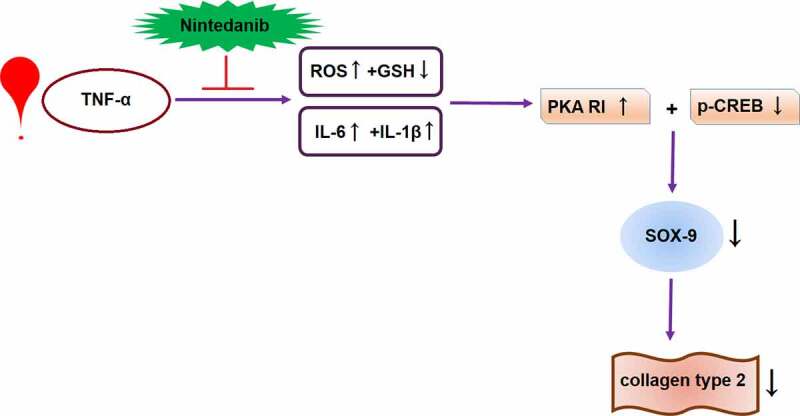
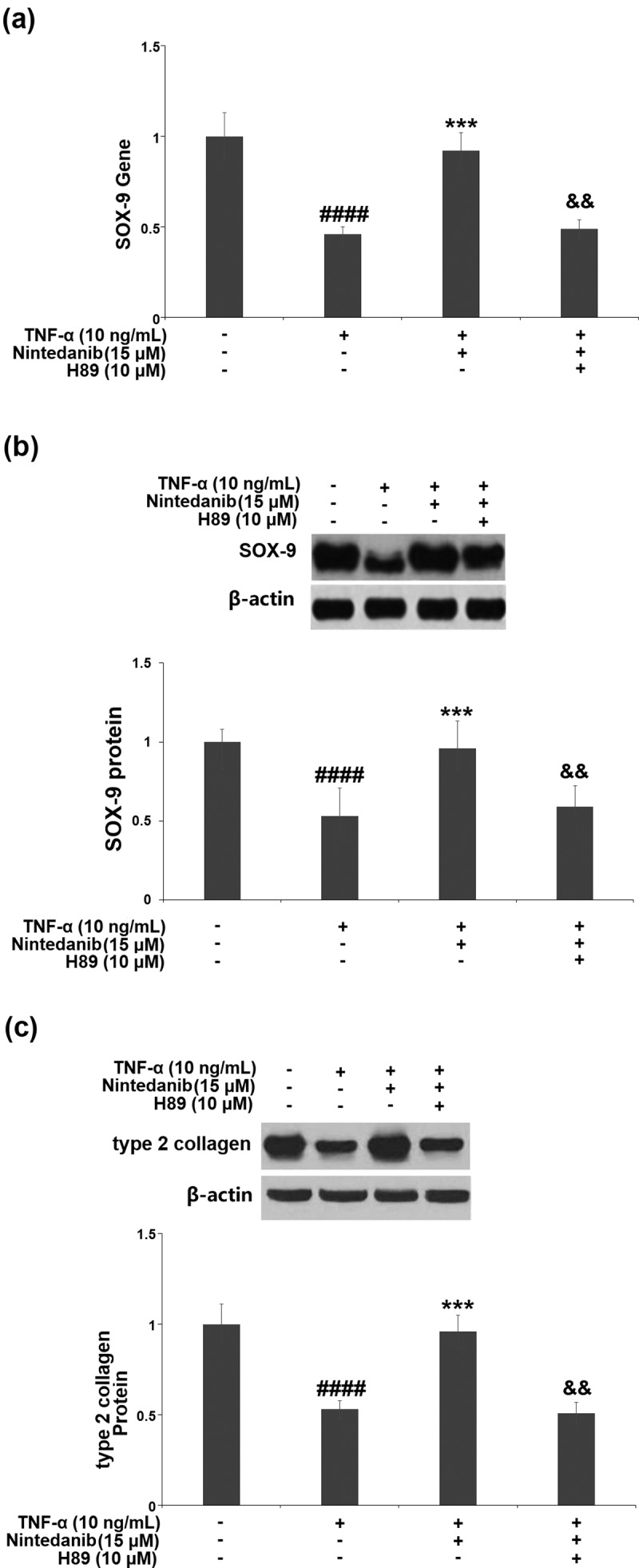
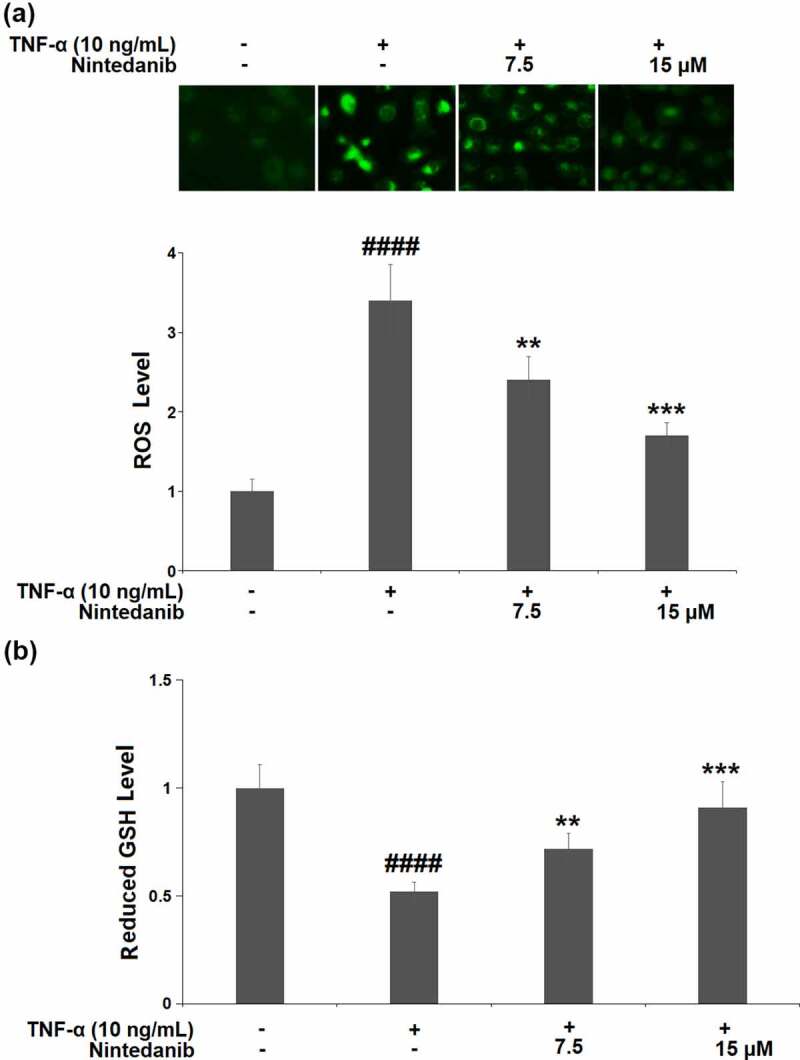
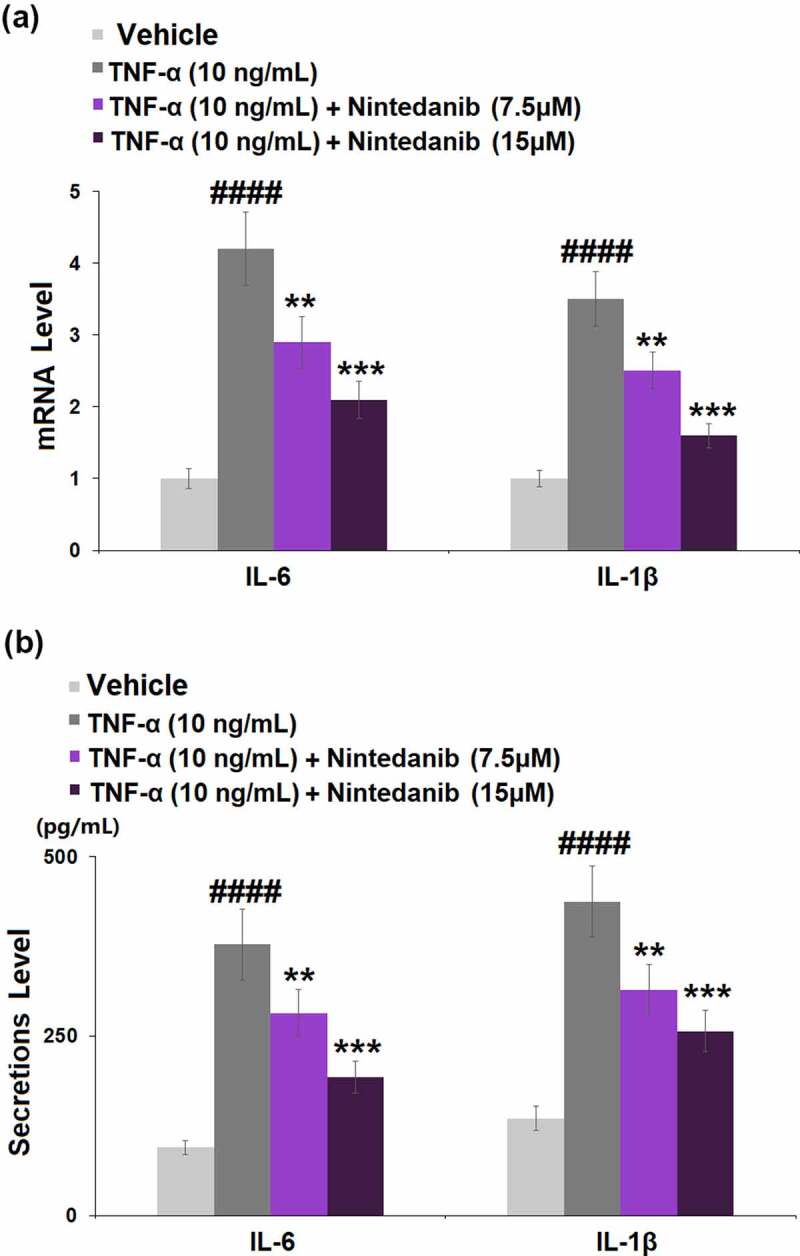
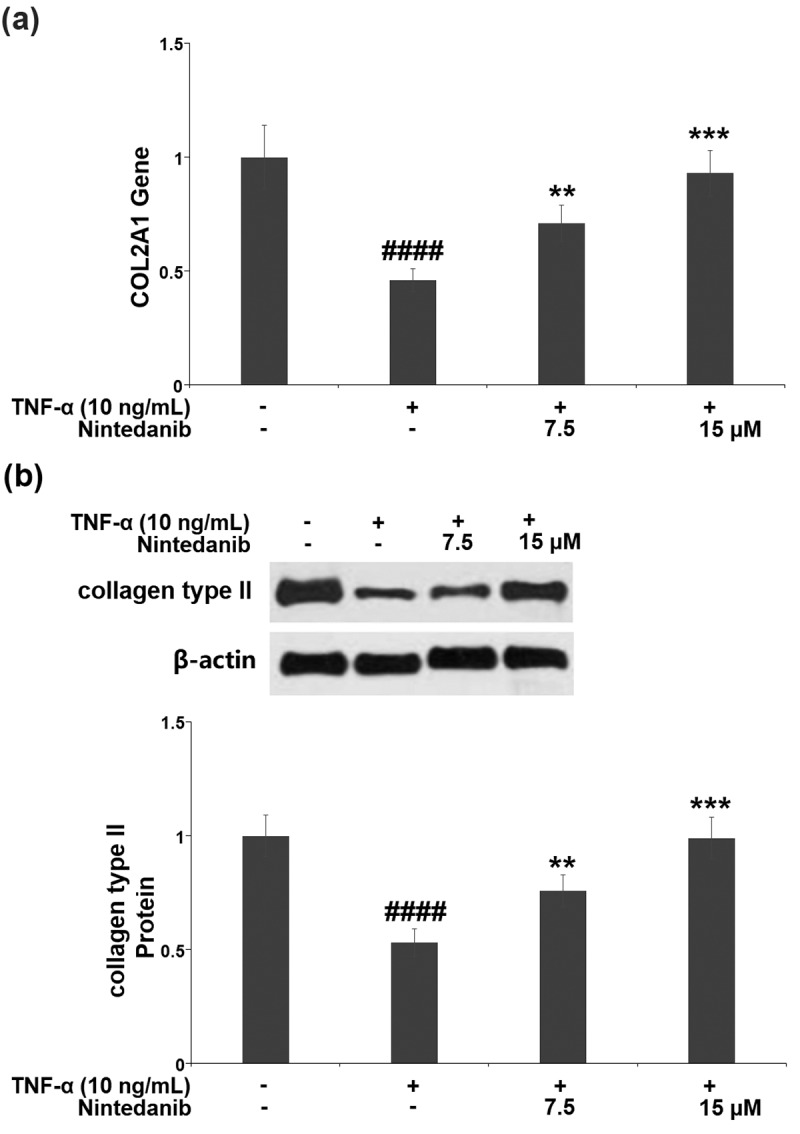
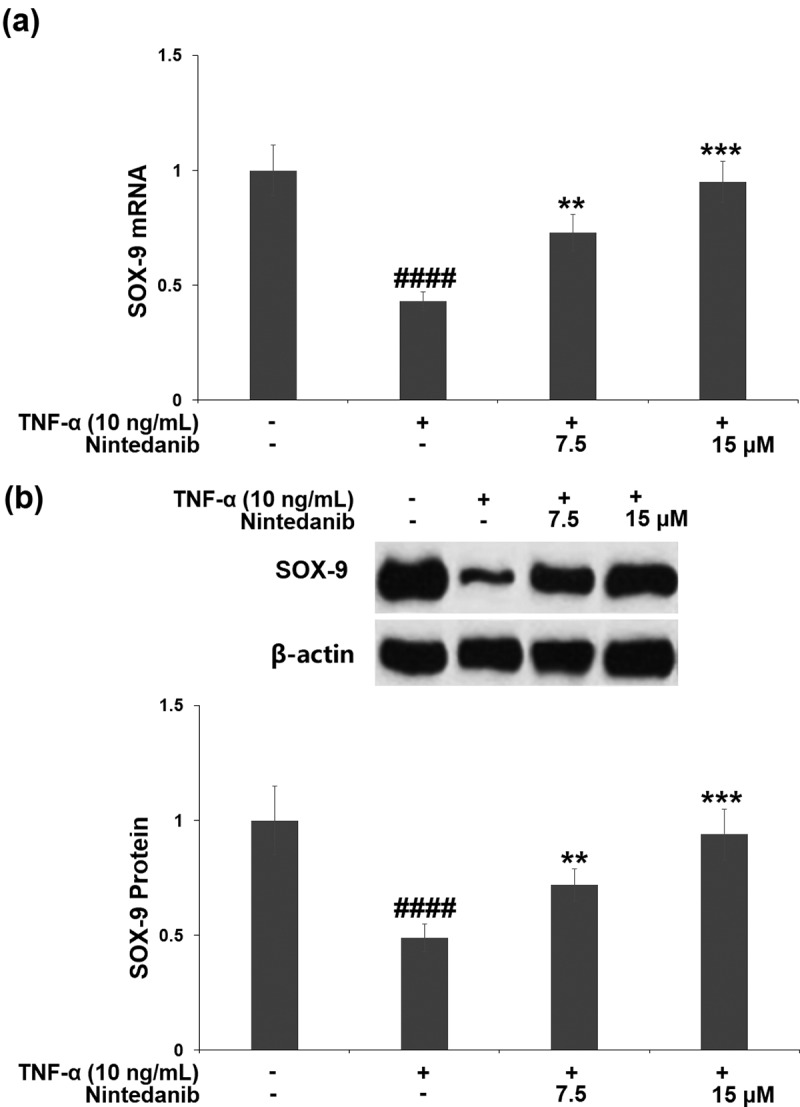
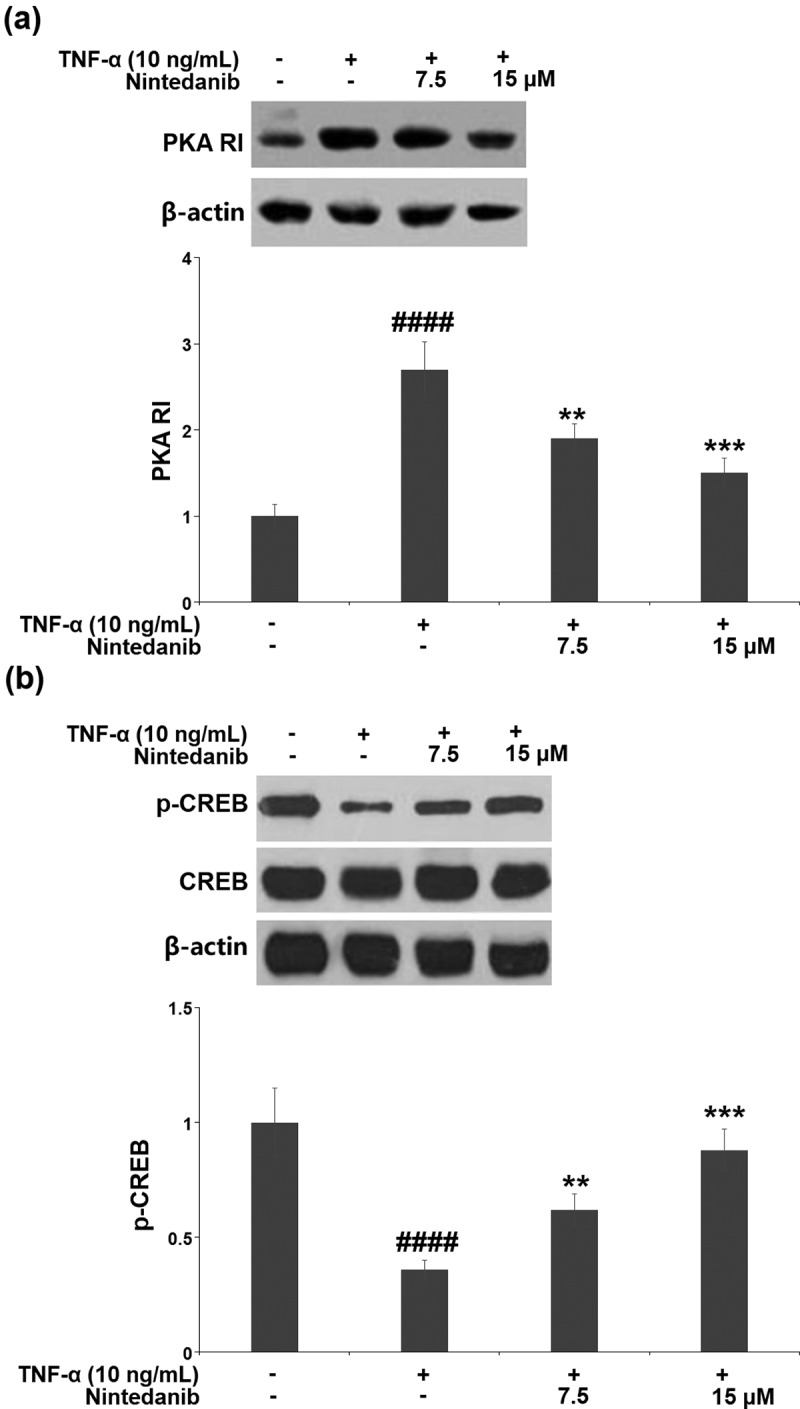
Osteoarthritis is an inflammatory disease of the musculoskeletal system characterized by damaged articular cartilage. Nintedanib is an oral triple kinase inhibitor with anti-fibrotic and anti-inflammatory properties. Thus, we hypothesized that nintedanib might exert a protective effect in chondrocytes and it could be meaningful to repurpose the drug for osteoarthritis. In this study, we aimed to investigate the potential effects of nintedanib on TNF-α-induced cellular injury in CHON-001 chondrocytes. The results show that nintedanib ameliorated TNF-α-induced reactive oxygen species (ROS) production and reduced glutathione (GSH) decrease. Nintedanib reduced the production of pro-inflammatory cytokines interleukin-6 (IL-6) and interleukin-1β (IL-1β) in TNF-α-induced CHON-001 chondrocytes. Nintedanib restored TNF-α caused decreased expression levels of Col II and sry-type high-mobility-group box-9 (SOX-9) in CHON-001 chondrocytes. Moreover, nintedanib ameliorated the TNF-α-caused impairment of protein kinase A/cAMP-response element-binding protein (PKA/CREB) signaling pathway as revealed by the decreased PKA RI expression and increased p-CREB in CHON-001 cells. Inhibition of PKA by H89 abolished the effects of nintedanib on SOX-9 and Col II expression. Taken together, nintedanib presented protective effects on TNF-α-induced oxidative stress, inflammation, and ECM damage in CHON-001 chondrocytes. Mechanically, the effect of nintedanib is associated with the PKA/CREB pathway. These data imply that the anti-fibrotic agent nintedanib may have a potential therapeutic application for osteoarthritis.
骨关节炎是一种以关节软骨损伤为特征的肌肉骨骼系统炎症性疾病。尼达尼布是一种口服的三激酶抑制剂,具有抗纤维化和抗炎特性。因此,我们假设尼达尼布可能对软骨细胞发挥保护作用,将该药物重新用于骨关节炎可能具有重要意义。在这项研究中,我们旨在研究尼达尼布对 TNF-α诱导的 CHON-001 软骨细胞细胞损伤的潜在影响。结果表明,尼达尼布改善了 TNF-α诱导的活性氧(ROS)产生和还原型谷胱甘肽(GSH)减少。尼达尼布降低了 TNF-α诱导的 CHON-001 软骨细胞中促炎细胞因子白细胞介素-6(IL-6)和白细胞介素-1β(IL-1β)的产生。尼达尼布恢复了 TNF-α引起的 CHON-001 软骨细胞中 Col II 和 sry 型高迁移率族盒-9(SOX-9)表达水平的降低。此外,尼达尼布改善了 TNF-α引起的蛋白激酶 A/cAMP 反应元件结合蛋白(PKA/CREB)信号通路的损伤,表现为 CHON-001 细胞中 PKA RI 表达减少和 p-CREB 增加。PKA 的抑制剂 H89 消除了尼达尼布对 SOX-9 和 Col II 表达的影响。综上所述,尼达尼布对 TNF-α诱导的 CHON-001 软骨细胞氧化应激、炎症和细胞外基质损伤具有保护作用。从机制上讲,尼达尼布的作用与 PKA/CREB 通路有关。这些数据表明,抗纤维化药物尼达尼布可能具有治疗骨关节炎的潜在应用价值。