The Interdisciplinary Research Center for Mathematics and Life Sciences, Xi'an Jiaotong University, Xi'an 710049, People's Republic of China; Laboratory for Industrial and Applied Mathematics, Department of Mathematics and Statistics, York University, Toronto, Ontario, Canada, M3J 1P3.
The Interdisciplinary Research Center for Mathematics and Life Sciences, Xi'an Jiaotong University, Xi'an 710049, People's Republic of China; School of Mathematics and Statistics, Xi'an Jiaotong University, Xi'an 710049, People's Republic of China.
ISA Trans. 2022 May;124:164-175. doi: 10.1016/j.isatra.2021.12.004. Epub 2021 Dec 28.
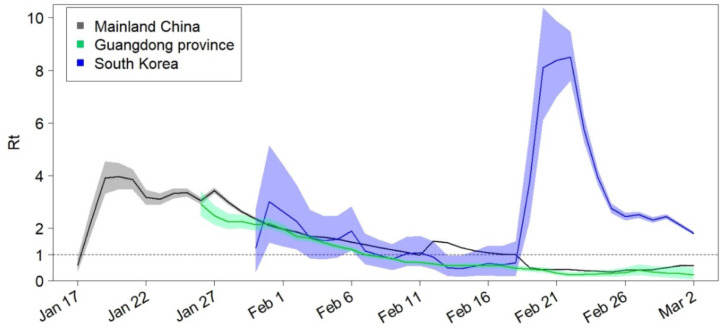
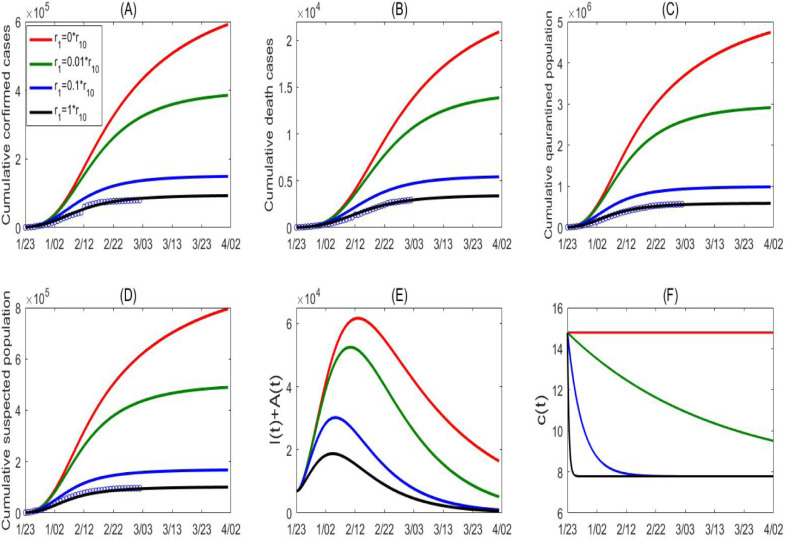
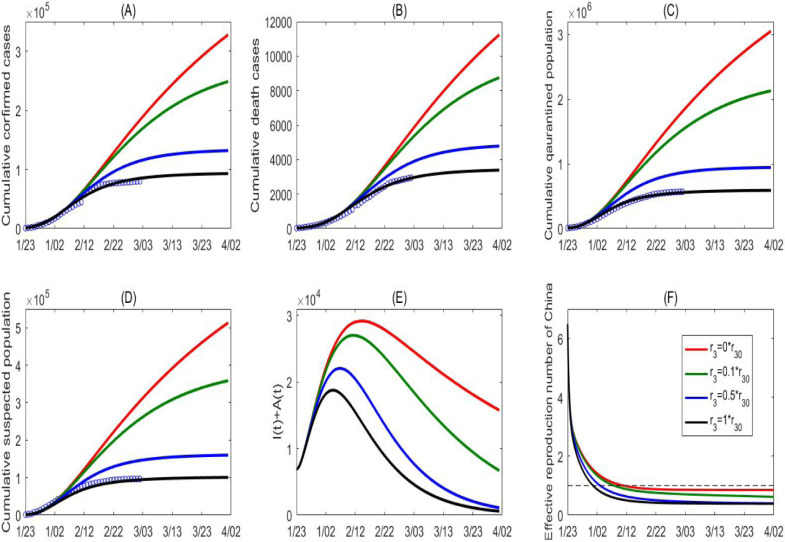
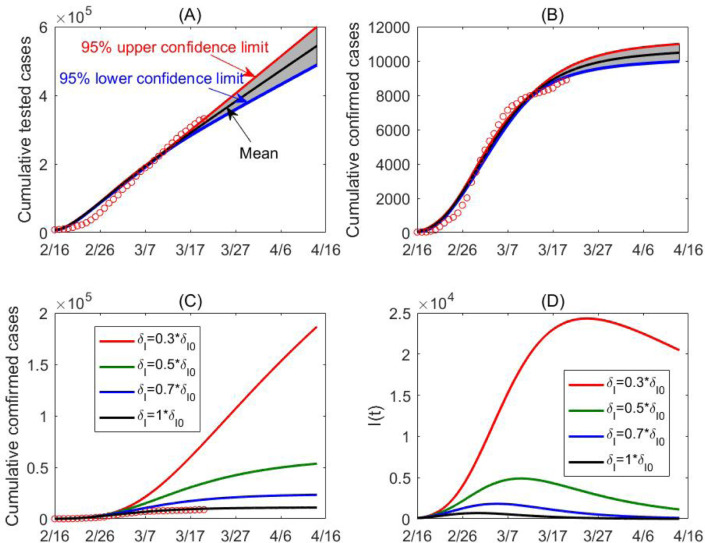
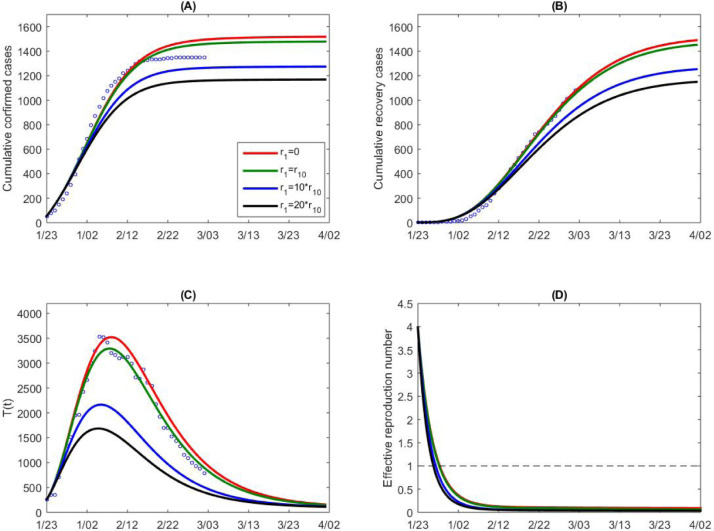
We conducted a comparative study of the COVID-19 epidemic in three different settings: mainland China, the Guangdong province of China and South Korea, by formulating two disease transmission dynamics models which incorporate epidemic characteristics and setting-specific interventions, and fitting the models to multi-source data to identify initial and effective reproduction numbers and evaluate effectiveness of interventions. We estimated the initial basic reproduction number for South Korea, the Guangdong province and mainland China as 2.6 (95% confidence interval (CI): (2.5, 2.7)), 3.0 (95%CI: (2.6, 3.3)) and 3.8 (95%CI: (3.5,4.2)), respectively, given a serial interval with mean of 5 days with standard deviation of 3 days. We found that the effective reproduction number for the Guangdong province and mainland China has fallen below the threshold 1 since February 8th and 18th respectively, while the effective reproduction number for South Korea remains high until March 2nd Moreover our model-based analysis shows that the COVID-19 epidemics in South Korean is almost under control with the cumulative confirmed cases tending to be stable as of April 14th. Through sensitivity analysis, we show that a coherent and integrated approach with stringent public health interventions is the key to the success of containing the epidemic in China and especially its provinces outside its epicenter. In comparison, we find that the extremely high detection rate is the key factor determining the success in controlling the COVID-19 epidemics in South Korea. The experience of outbreak control in mainland China and South Korea should be a guiding reference for the rest of the world.
我们通过构建两个包含流行特征和特定于场景干预措施的疾病传播动力学模型,对中国大陆、中国广东省和韩国的 COVID-19 疫情进行了比较研究,将模型拟合到多源数据中以确定初始和有效的繁殖数,并评估干预措施的效果。我们估计了韩国、广东省和中国大陆的初始基本繁殖数分别为 2.6(95%置信区间(CI):(2.5,2.7))、3.0(95%CI:(2.6,3.3))和 3.8(95%CI:(3.5,4.2)),假定序列间隔的平均值为 5 天,标准差为 3 天。我们发现,广东省和中国大陆的有效繁殖数自 2 月 8 日和 18 日分别低于 1,而韩国的有效繁殖数直到 3 月 2 日仍保持高位。此外,我们的基于模型的分析表明,截至 4 月 14 日,韩国的 COVID-19 疫情已基本得到控制,累计确诊病例趋于稳定。通过敏感性分析,我们表明,采取协调一致的综合方法并实施严格的公共卫生干预措施是中国成功控制疫情、尤其是其非疫情中心省份疫情的关键。相比之下,我们发现极高的检测率是决定韩国成功控制 COVID-19 疫情的关键因素。中国内地和韩国的疫情控制经验应为世界其他地区提供指导和借鉴。