Jyothi Lakshmi, K Ariyanachi, M Saranya, Dara Chennakesavulu, Sakthivadivel Varatharajan, Sandepogu Triven Sagar, Gaur Archana
Microbiology, All India Institute of Medical Sciences, Bibinagar, Bibinagar, IND.
Anatomy, All India Institute of Medical Sciences, Bibinagar, Bibinagar, IND.
Cureus. 2022 Jan 11;14(1):e21125. doi: 10.7759/cureus.21125. eCollection 2022 Jan.
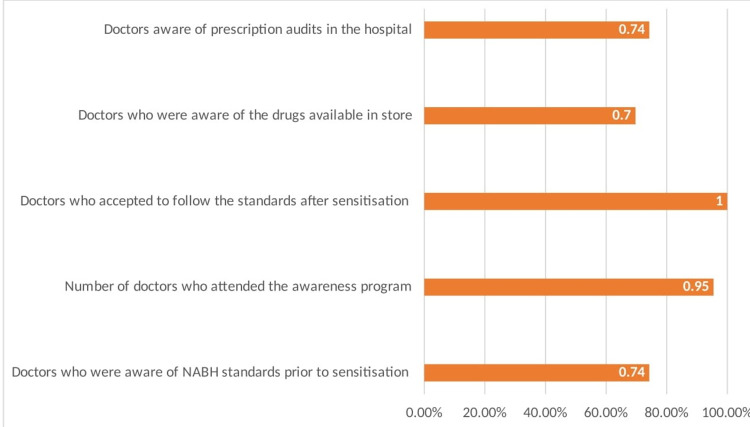
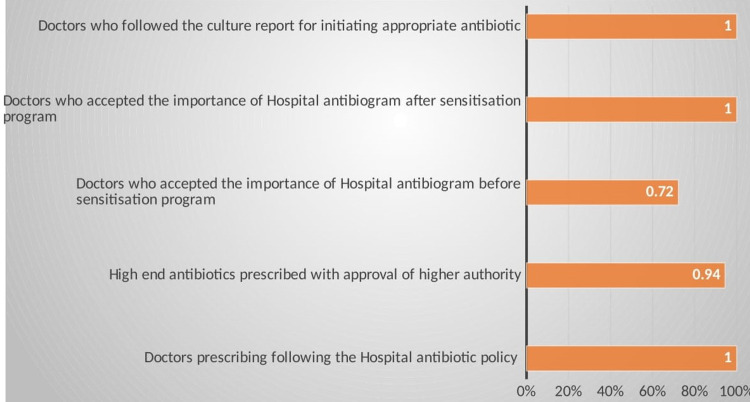
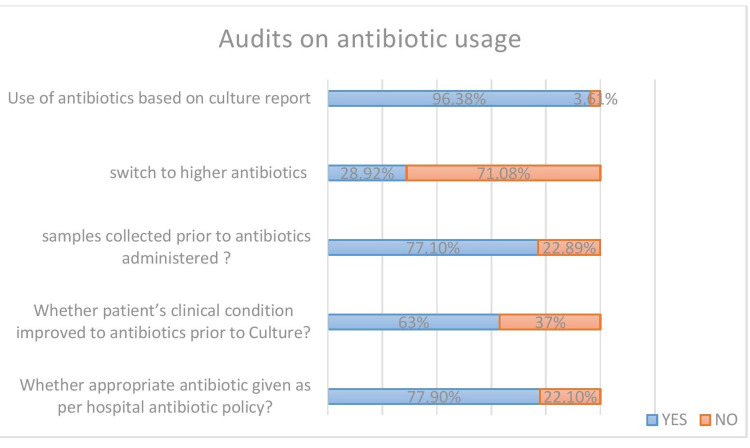
Background Irrational prescriptions have an ill effect on health as well as on healthcare expenditure. Prescription auditing is an important tool to improve the quality of prescriptions, which in turn improves the quality of health care provided. Regular and timely audits of antibiotic prescriptions can prevent irrational antibiotic usage. Introduction The inappropriate use of drugs is a global health problem, especially in developing countries like India. In 2015, during the 68th World Health Organization (WHO) Regional Committee for Southeast Asia, all Member States of the region, including India, endorsed the "Regional Strategy for Patient Safety in the WHO Southeast Asia Region (2016-2025)" aiming to support the development of national quality of care and patient safety strategies, policies, and plans and commit to translating those objectives of the Regional Strategy into actionable strategies at country level. Methodology A retrospective observational study was conducted in a 330-bedded, National Accreditation Board for Hospitals & Healthcare Providers (NABH)-accredited tertiary healthcare center. The study period was six months, from January 2019 to June 2019. Results Ninety-five point four-five percent (95.45%) of the doctors attended the sensitization program and all accepted following the standard prescribing protocols. Sixty-nine point seven percent (69.7%) of the doctors were aware of the availability of drugs in the hospital pharmacy stores. Seventy-four point two-four percent (74.24%) of the doctors were aware of the ongoing prescription audits. Seventy-two point two-seven percent (72.27%) of the treating doctors were of the opinion of selecting the appropriate antibiotics based on hospital antibiogram. The importance of antibiograms from cultures and environmental surveillance was followed well only after sensitizing all the treating doctors. Ninety-five point four-five percent (95.45%) of the doctors were of the opinion of taking the permission of a higher authority to start high-end antibiotics. Seventy-seven point one-zero percent (77.10%) doctors recommended sample collection prior to antibiotic administration. Sixty-three percent (63%) of the patient's clinical condition improved with the antibiotics prescribed prior to the culture report. Conclusion By judicious use of antibiotics, we can reduce the evolution of antibiotic resistance in bacteria and extend the useful life of antibiotics that are still effective. Antibiotic use patterns must be studied to address complications resulting from a large number of antibiotics.
不合理处方对健康以及医疗费用都有不良影响。处方审核是提高处方质量的重要工具,进而可提高所提供的医疗服务质量。定期及时审核抗生素处方可防止不合理使用抗生素。
药物的不当使用是一个全球性的健康问题,尤其是在印度这样的发展中国家。2015年,在第68届世界卫生组织(WHO)东南亚区域委员会会议期间,该区域的所有成员国,包括印度,都认可了“WHO东南亚区域患者安全区域战略(2016 - 2025年)”,旨在支持国家医疗质量和患者安全战略、政策及计划的制定,并致力于将区域战略的目标转化为国家层面可实施的战略。
在一家拥有330张床位、获得医院及医疗服务提供者国家认证委员会(NABH)认证的三级医疗中心进行了一项回顾性观察研究。研究期为6个月,从2019年1月至2019年6月。
95.45%的医生参加了培训项目,且都接受遵循标准处方协议。69.7%的医生知晓医院药房有哪些药品。74.24%的医生知晓正在进行的处方审核。72.27%的主治医生认为应根据医院抗菌谱选择合适的抗生素。只有在对所有主治医生进行培训后,大家才充分认识到来自培养物和环境监测的抗菌谱的重要性。95.45%的医生认为使用高端抗生素需获得上级批准。77.10%的医生建议在使用抗生素前采集样本。63%的患者在培养报告出来之前使用所开抗生素后临床状况有所改善。
通过明智地使用抗生素,我们可以减少细菌对抗生素耐药性的演变,并延长仍有效的抗生素的使用寿命。必须研究抗生素的使用模式以解决大量使用抗生素所导致的并发症。