• 文献检索
  • 文档翻译
  • 深度研究
  • 学术资讯
  • Suppr Zotero 插件Zotero 插件
  • 邀请有礼
  • 套餐&价格
  • 历史记录
应用&插件
Suppr Zotero 插件Zotero 插件浏览器插件Mac 客户端Windows 客户端微信小程序
定价
高级版会员购买积分包购买API积分包
服务
文献检索文档翻译深度研究API 文档MCP 服务
关于我们
关于 Suppr公司介绍联系我们用户协议隐私条款
关注我们

Suppr 超能文献

核心技术专利:CN118964589B侵权必究
粤ICP备2023148730 号-1Suppr @ 2026

文献检索

告别复杂PubMed语法,用中文像聊天一样搜索,搜遍4000万医学文献。AI智能推荐,让科研检索更轻松。

立即免费搜索

文件翻译

保留排版,准确专业,支持PDF/Word/PPT等文件格式,支持 12+语言互译。

免费翻译文档

深度研究

AI帮你快速写综述,25分钟生成高质量综述,智能提取关键信息,辅助科研写作。

立即免费体验

韩国 COVID-19 疫情期间医护人员的工作量:一项全国性调查。

Workload of Healthcare Workers During the COVID-19 Outbreak in Korea: A Nationwide Survey.

机构信息

Division of Infectious Diseases, Department of Internal Medicine, Kangbuk Samsung Hospital, Sungkyunkwan University School of Medicine, Seoul, Korea.

Division of Infectious Diseases, Department of Internal Medicine, Kyungpook National University, School of Medicine, Kyungpook National University Chilgok Hospital, Daegu, Korea.

出版信息

J Korean Med Sci. 2022 Feb 14;37(6):e49. doi: 10.3346/jkms.2022.37.e49.

DOI:10.3346/jkms.2022.37.e49
PMID:35166085
原文链接:https://pmc.ncbi.nlm.nih.gov/articles/PMC8845106/
Abstract

BACKGROUND

As the coronavirus disease 2019 (COVID-19) pandemic is ongoing, heavy workload of healthcare workers (HCWs) is a concern. This study investigated the workload of HCWs responding to the COVID-19 outbreak in South Korea.

METHODS

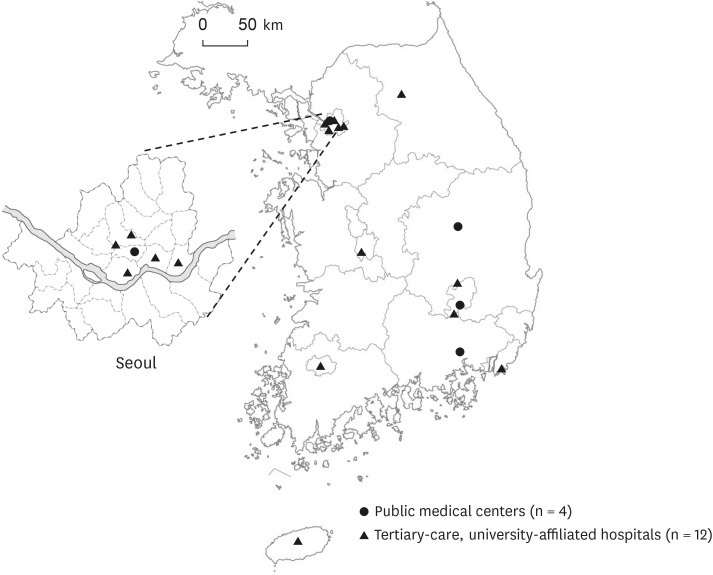
A nationwide cross-sectional survey was conducted from September 16 to October 15, 2020, involving 16 healthcare facilities (4 public medical centers, 12 tertiary-care hospitals) that provide treatment for COVID-19 patients.

RESULTS

Public medical centers provided the majority (69.4%) of total hospital beds for COVID-19 patients (n = 611), on the other hand, tertiary care hospitals provided the majority (78.9%) of critical care beds (n = 57). The number of beds per doctor (median [IQR]) in public medical centers was higher than in tertiary care hospitals (20.2 [13.0, 29.4] versus 3.0 [1.3, 6.6], = 0.006). Infectious Diseases physicians are mostly (80%) involved among attending physicians. The number of nurses per patient (median [interquartile range, IQR]) in tertiary-care hospitals was higher than in public medical centers (4.6 [3.4-5] vs. 1.1 [0.8-2.1], = 0.089). The median number of nurses per patient for COVID-19 patients was higher than the highest national standard in South Korea (3.8 vs. 2 for critical care). All participating healthcare facilities were also operating screening centers, for which a median of 2 doctors, 5 nurses, and 2 administrating staff were necessary.

CONCLUSION

As the severity of COVID-19 patients increases, the number of HCWs required increases. Because the workload of HCWs responding to the COVID-19 outbreak is much greater than other situations, a workforce management plan regarding this perspective is required to prevent burnout of HCWs.

摘要

背景

随着 2019 年冠状病毒病(COVID-19)大流行的持续,医护人员(HCW)的工作量很大,这令人担忧。本研究调查了韩国应对 COVID-19 疫情的 HCW 的工作量。

方法

2020 年 9 月 16 日至 10 月 15 日,对 16 家医疗设施(4 家公立医疗中心,12 家三级保健医院)进行了一项全国性的横断面调查,这些医疗设施为 COVID-19 患者提供治疗。

结果

公立医疗中心提供了 COVID-19 患者(n = 611)总数的大部分(69.4%)床位,而三级保健医院提供了大部分(78.9%)重症监护床位(n = 57)。公立医疗中心每医生床位数(中位数[IQR])高于三级保健医院(20.2 [13.0, 29.4]与 3.0 [1.3, 6.6], = 0.006)。主治医生中,传染病医生大多(80%)参与。三级保健医院每患者护士数(中位数[四分位距,IQR])高于公立医疗中心(4.6 [3.4-5]与 1.1 [0.8-2.1], = 0.089)。三级保健医院 COVID-19 患者的护士人均数高于韩国的最高国家标准(3.8 与 2 用于重症监护)。所有参与的医疗设施也都设有筛查中心,每个筛查中心需要配备中位数为 2 名医生、5 名护士和 2 名管理人员。

结论

随着 COVID-19 患者病情的加重,所需 HCW 的数量也会增加。由于应对 COVID-19 疫情的 HCW 的工作量比其他情况大得多,因此需要从这一角度制定 HCW 劳动力管理计划,以防止 HCW burnout。
https://cdn.ncbi.nlm.nih.gov/pmc/blobs/ce7b/8845106/b5686466e36e/jkms-37-e49-g001.jpg

相似文献

1
Workload of Healthcare Workers During the COVID-19 Outbreak in Korea: A Nationwide Survey.韩国 COVID-19 疫情期间医护人员的工作量:一项全国性调查。
J Korean Med Sci. 2022 Feb 14;37(6):e49. doi: 10.3346/jkms.2022.37.e49.
2
Healthcare Workforce Response to The Coronavirus Disease Outbreak in Daegu, Korea: A Multi-Center, Cross-Sectional Survey.韩国大邱医疗工作者对冠状病毒病疫情的应对:一项多中心横断面调查。
Infect Chemother. 2022 Jun;54(2):298-307. doi: 10.3947/ic.2022.0031. Epub 2022 May 30.
3
Correlates of burnout among healthcare workers during the COVID-19 pandemic in South Korea.新冠疫情期间韩国医护人员 burnout 的相关因素。
Sci Rep. 2023 Feb 27;13(1):3360. doi: 10.1038/s41598-023-30372-x.
4
Predictors of Burnout in Hospital Health Workers during the COVID-19 Outbreak in South Korea.韩国 COVID-19 疫情期间医院卫生工作者 burnout 的预测因素。
Int J Environ Res Public Health. 2021 Nov 8;18(21):11720. doi: 10.3390/ijerph182111720.
5
Does Pandemic Anxiety Affect Urology Health Care Workers?大流行焦虑是否会影响泌尿科医护人员?
Urol Int. 2021;105(3-4):192-198. doi: 10.1159/000512911. Epub 2021 Jan 21.
6
Perception and attitude of healthcare workers in Saudi Arabia with regard to Covid-19 pandemic and potential associated predictors.沙特阿拉伯医护人员对新冠疫情的认知和态度,以及潜在的相关预测因素。
BMC Infect Dis. 2020 Sep 29;20(1):719. doi: 10.1186/s12879-020-05443-3.
7
Psychological impact of repeated epidemic exposure on healthcare workers: findings from an online survey of a healthcare workforce exposed to both SARS (severe acute respiratory syndrome) and COVID-19.反复暴露于疫情对医护人员心理的影响:一项针对同时经历 SARS(严重急性呼吸综合征)和 COVID-19 的医护人员的在线调查研究结果。
BMJ Open. 2021 Nov 30;11(11):e051895. doi: 10.1136/bmjopen-2021-051895.
8
Will healthcare workers improve infection prevention and control behaviors as COVID-19 risk emerges and increases, in China?医护人员在中国 COVID-19 风险出现和增加时,会改善感染预防和控制行为吗?
Antimicrob Resist Infect Control. 2020 Jun 11;9(1):83. doi: 10.1186/s13756-020-00746-1.
9
Cross-sectional prevalence of SARS-CoV-2 antibodies in healthcare workers in paediatric facilities in eight countries.八个国家儿科医疗机构医护人员中 SARS-CoV-2 抗体的横断面患病率。
J Hosp Infect. 2021 Apr;110:60-66. doi: 10.1016/j.jhin.2020.12.019. Epub 2021 Jan 7.
10
Primary healthcare workers at risk during COVID-19: An analysis of infections in HIV service providers in five districts of South Africa.在 COVID-19 期间处于危险之中的初级保健工作者:南非五个地区艾滋病毒服务提供者感染情况分析。
S Afr Med J. 2021 Jan 18;111(4):309-314. doi: 10.7196/SAMJ.2021.v111i4.15434.

引用本文的文献

1
How the pandemic shaped presenteeism trends between healthcare and non-healthcare workers using the Korean working conditions surveys (2010-2023).利用韩国工作条件调查(2010 - 2023年)研究疫情如何塑造医疗工作者与非医疗工作者的出勤主义趋势。
Sci Rep. 2025 Aug 20;15(1):30653. doi: 10.1038/s41598-025-13582-3.
2
Death and dying during the COVID-19-pandemic - A qualitative evaluation of stress factors for nursing staff.新冠疫情期间的死亡与临终——对护理人员压力因素的质性评估
Palliat Care Soc Pract. 2025 Jul 28;19:26323524251355655. doi: 10.1177/26323524251355655. eCollection 2025.
3
Latent profiles of job demands and job resources and their association with work wellbeing among nurses in South Korea.

本文引用的文献

1
The effect of the reformed nurse staffing policy on employment of nurses in Korea.韩国护士人力配置政策改革对护士就业的影响。
Nurs Open. 2021 Sep;8(5):2850-2856. doi: 10.1002/nop2.869. Epub 2021 Apr 10.
2
Systematic assessment of South Korea's capabilities to control COVID-19.韩国控制 COVID-19 能力的系统评估。
Health Policy. 2021 May;125(5):568-576. doi: 10.1016/j.healthpol.2021.02.011. Epub 2021 Mar 3.
3
Disease severity classification and COVID-19 outcomes, Republic of Korea.疾病严重程度分类与 COVID-19 结局,韩国。
韩国护士工作需求与工作资源的潜在概况及其与工作幸福感的关联。
Sci Rep. 2025 May 12;15(1):16439. doi: 10.1038/s41598-025-01479-0.
4
Exploring the Experiences of Managers and Practitioners in Infectious Disease Management Organizations During the COVID-19 Response: A Qualitative Study.探索传染病管理组织的管理人员和从业者在应对新冠疫情期间的经历:一项定性研究。
J Korean Med Sci. 2025 Apr 28;40(16):e58. doi: 10.3346/jkms.2025.40.e58.
5
Bridging the Gap: A Phenomenological Study of Transfer Students' Journey into Professional Nursing.弥合差距:转专业护理学生成长历程的现象学研究
Nurs Rep. 2025 Feb 18;15(2):72. doi: 10.3390/nursrep15020072.
6
The interplay of perceived benefit, perceived risk, and trust in Fintech adoption: Insights from Sub-Saharan Africa.金融科技采用中感知收益、感知风险和信任之间的相互作用:来自撒哈拉以南非洲的见解。
Heliyon. 2025 Jan 16;11(2):e41992. doi: 10.1016/j.heliyon.2025.e41992. eCollection 2025 Jan 30.
7
Public acceptance of COVID-19 control measures and associated factors during Omicron-dominant period in China: a cross-sectional survey.公众对奥密克戎变异株流行期间中国新冠防控措施的接受程度及其影响因素:一项横断面调查。
BMC Public Health. 2024 Feb 21;24(1):543. doi: 10.1186/s12889-024-17646-3.
8
Healthcare Social Workers' Scope of Practice during COVID-19.新冠疫情期间医疗保健社会工作者的执业范围
Healthcare (Basel). 2024 Jan 11;12(2):174. doi: 10.3390/healthcare12020174.
9
Impact of Unexpected In-House Major COVID-19 Outbreaks on Depressive Symptoms among Healthcare Workers: A Retrospective Multi-Institutional Study.医疗机构内 COVID-19 聚集性疫情意外爆发对医护人员抑郁症状的影响:一项回顾性多机构研究。
Int J Environ Res Public Health. 2023 Mar 7;20(6):4718. doi: 10.3390/ijerph20064718.
10
Correlates of burnout among healthcare workers during the COVID-19 pandemic in South Korea.新冠疫情期间韩国医护人员 burnout 的相关因素。
Sci Rep. 2023 Feb 27;13(1):3360. doi: 10.1038/s41598-023-30372-x.
Bull World Health Organ. 2021 Jan 1;99(1):62-66. doi: 10.2471/BLT.20.257758. Epub 2020 Oct 28.
4
COVID-19 and healthcare system in China: challenges and progression for a sustainable future.新冠疫情与中国医疗体系:面向可持续未来的挑战与进展。
Global Health. 2021 Jan 21;17(1):14. doi: 10.1186/s12992-021-00665-9.
5
Infectious Diseases Physician Workforce in Korea.韩国传染病医师劳动力。
J Korean Med Sci. 2020 Dec 21;35(49):e428. doi: 10.3346/jkms.2020.35.e428.
6
Psychological distress among infectious disease physicians during the response to the COVID-19 outbreak in the Republic of Korea.韩国应对 COVID-19 疫情期间传染病医生的心理困扰。
BMC Public Health. 2020 Nov 27;20(1):1811. doi: 10.1186/s12889-020-09886-w.
7
Response System for and Epidemiological Features of COVID-19 in Gyeongsangnam-do Province in South Korea.韩国庆尚南道地区 COVID-19 的反应系统与流行病学特征。
Clin Infect Dis. 2021 Feb 16;72(4):661-667. doi: 10.1093/cid/ciaa967.
8
Personal Protective Equipment for Healthcare Workers during the COVID-19 Pandemic.新冠疫情期间医护人员的个人防护装备
Infect Chemother. 2020 Jun;52(2):165-182. doi: 10.3947/ic.2020.52.2.165.
9
Severe Covid-19.重症新型冠状病毒肺炎
N Engl J Med. 2020 Dec 17;383(25):2451-2460. doi: 10.1056/NEJMcp2009575. Epub 2020 May 15.
10
COVID-19 in South Korea.韩国的 COVID-19 疫情。
Postgrad Med J. 2020 Jul;96(1137):399-402. doi: 10.1136/postgradmedj-2020-137738. Epub 2020 May 4.