Department of Molecular Biosciences, Northwestern University, Evanston, Illinois, USA.
School of Biological Sciences, Monash University, Melbourne, Victoria, Australia.
Mol Ecol. 2022 Apr;31(8):2327-2347. doi: 10.1111/mec.16400. Epub 2022 Feb 25.
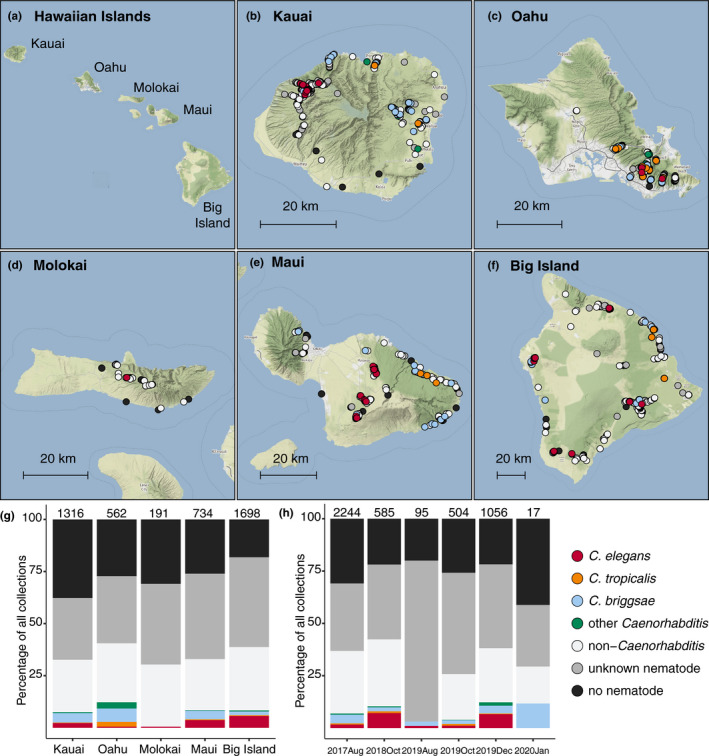
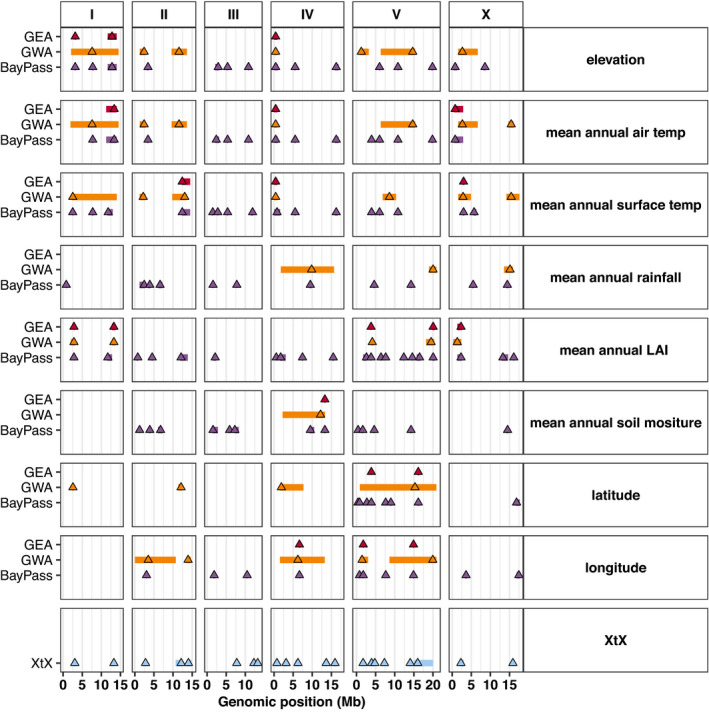
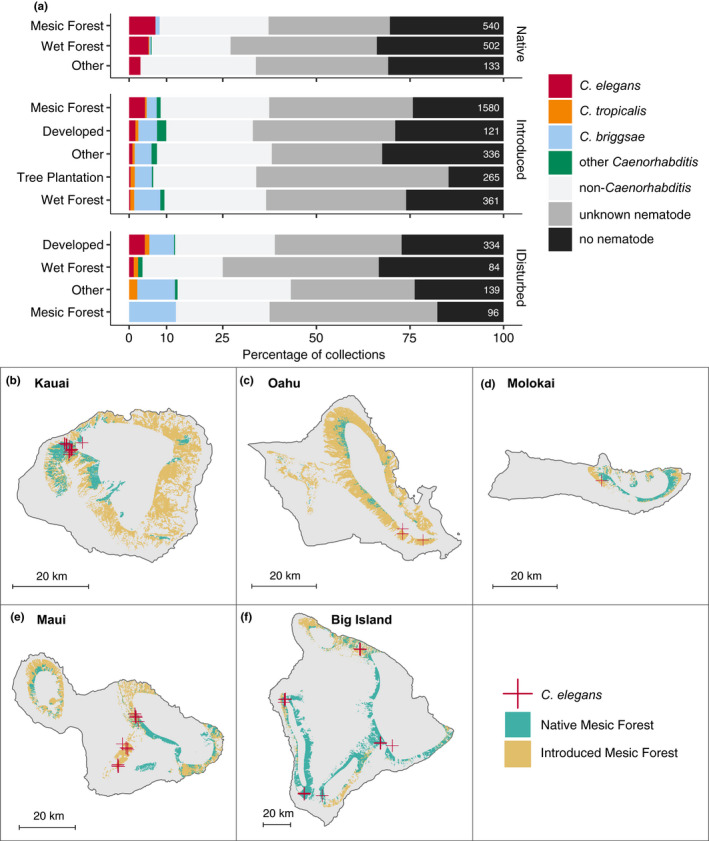
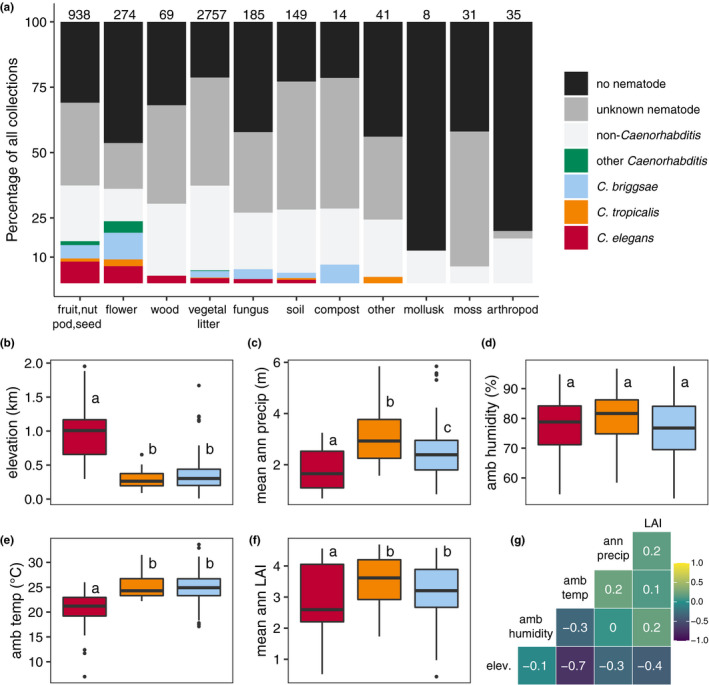
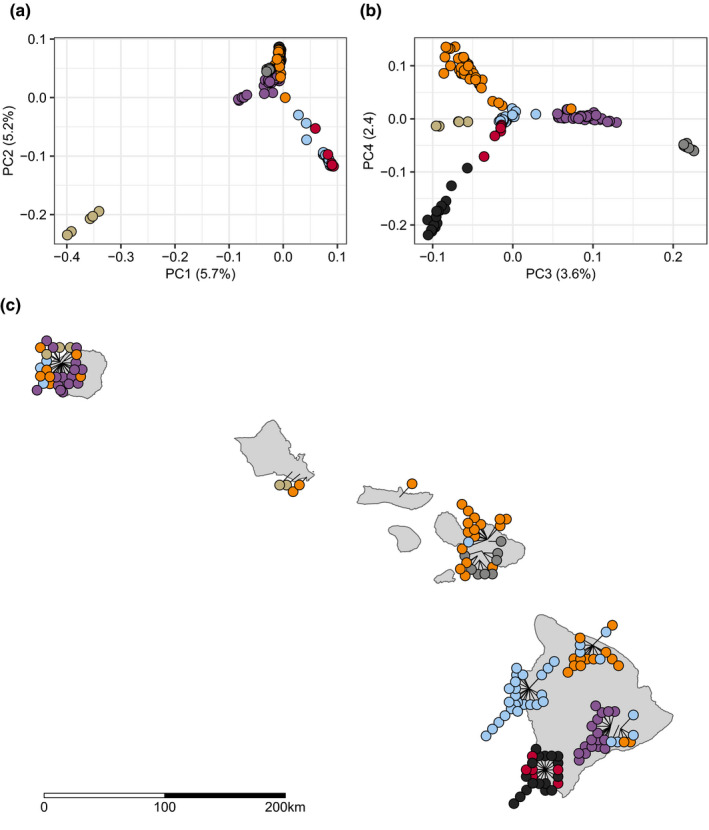
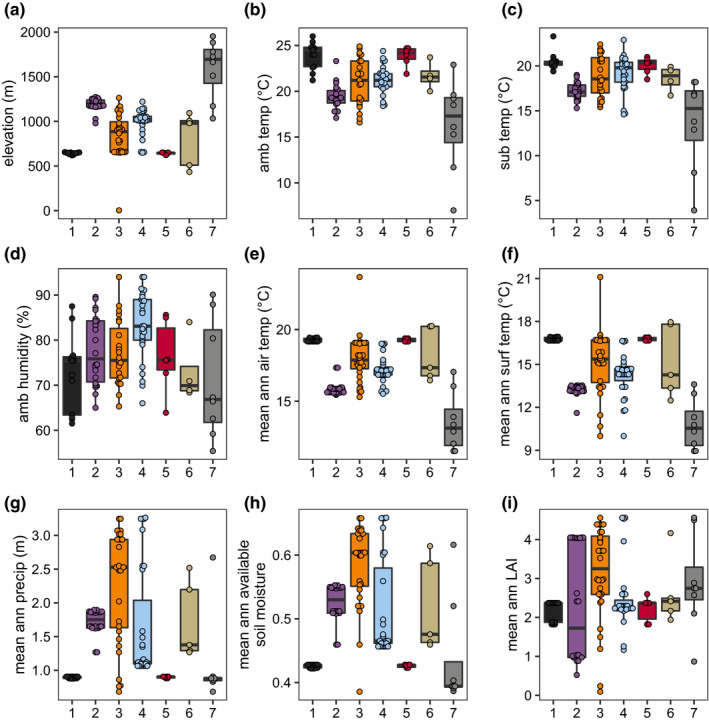
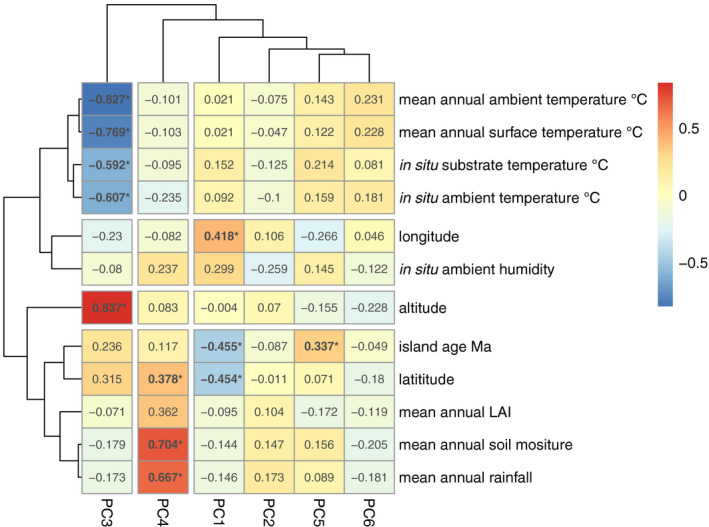
The nematode Caenorhabditis elegans is among the most widely studied organisms, but relatively little is known about its natural ecology. Genetic diversity is low across much of the globe but high in the Hawaiian Islands and across the Pacific Rim. To characterize the niche and genetic diversity of C. elegans on the Hawaiian Islands and to explore how genetic diversity might be influenced by local adaptation, we repeatedly sampled nematodes over a three-year period, measured various environmental parameters at each sampling site, and whole-genome sequenced the C. elegans isolates that we identified. We found that the typical Hawaiian C. elegans niche comprises moderately moist native forests at high elevations (500-1,500 m) where ambient air temperatures are cool (15-20°C). Compared to other Caenorhabditis species found on the Hawaiian Islands (e.g., Caenorhabditis briggsae and Caenorhabditis tropicalis), we found that C. elegans were enriched in native habitats. We measured levels of genetic diversity and differentiation among Hawaiian C. elegans and found evidence of seven genetically distinct groups distributed across the islands. Then, we scanned these genomes for signatures of local adaptation and identified 18 distinct regions that overlap with hyper-divergent regions, which may be maintained by balancing selection and are enriched for genes related to environmental sensing, xenobiotic detoxification, and pathogen resistance. These results provide strong evidence of local adaptation among Hawaiian C. elegans and contribute to our understanding of the forces that shape genetic diversity on the most remote volcanic archipelago in the world.
秀丽隐杆线虫是研究最为广泛的生物之一,但关于其自然生态的了解相对较少。全球范围内的遗传多样性较低,但在夏威夷群岛和环太平洋地区则较高。为了描述夏威夷群岛上秀丽隐杆线虫的生态位和遗传多样性,并探索遗传多样性可能如何受到局部适应的影响,我们在三年的时间里反复采集线虫样本,在每个采样点测量各种环境参数,并对我们鉴定的秀丽隐杆线虫分离株进行全基因组测序。我们发现,典型的夏威夷秀丽隐杆线虫生态位包括海拔较高(500-1500 米)、环境空气温度凉爽(15-20°C)的适度湿润原生森林。与在夏威夷群岛上发现的其他秀丽隐杆线虫物种(如秀丽隐杆线虫和热带秀丽隐杆线虫)相比,我们发现秀丽隐杆线虫在原生栖息地中更为丰富。我们测量了夏威夷秀丽隐杆线虫的遗传多样性和分化水平,并发现了七个分布在各个岛屿上的遗传上明显不同的群体的证据。然后,我们在这些基因组中扫描了局部适应的特征,并鉴定出 18 个与超分化区域重叠的独特区域,这些区域可能受到平衡选择的维持,并富含与环境感应、外来物质解毒和病原体抗性相关的基因。这些结果为夏威夷秀丽隐杆线虫的局部适应提供了强有力的证据,并有助于我们理解塑造世界上最偏远火山群岛遗传多样性的力量。