Cheikh Ismail Leila, Al Dhaheri Ayesha S, Ibrahim Sarah, Ali Habiba I, Chokor Fatima Al Zahraa, O'Neill Lynda M, Mohamad Maysm N, Kassis Amira, Ayesh Wafaa, Kharroubi Samer, Hwalla Nahla
Department of Clinical Nutrition and Dietetics, College of Health Sciences, University of Sharjah, Sharjah, 27272, United Arab Emirates.
Nuffield Department of Women's & Reproductive Health, University of Oxford, Oxford, OX1 2JD, UK.
BMC Public Health. 2022 Feb 15;22(1):319. doi: 10.1186/s12889-022-12616-z.
Infant and young child feeding practices (IYCF) impact the early and later health status of the population. Limited data is available regarding IYCF in the United Arab Emirates (UAE). This study aimed to evaluate the nutritional status and adequacy of feeding practices, energy, food, and nutrient intakes of UAE infants and toddlers ages 0-23.9 months.
This study is a population-based cross-sectional survey of 276 infants and toddlers aged 0-23.9 months of which 180 were nationals and 96 were Arab non-nationals living in the UAE. Data were collected from the three major emirates: Abu Dhabi, Dubai, and Sharjah. Anthropometry was collected and assessed using WHO Anthro-Survey Analyzer, and a multicomponent age-specific questionnaire was used to evaluate IYCF and sociodemographic characteristics. Usual intake of energy, micronutrients, and macronutrients, including supplements, were collected using multiple-pass 24-h dietary recall and analyzed using the PC-side software. IYCF practices were assessed using the WHO indicators.
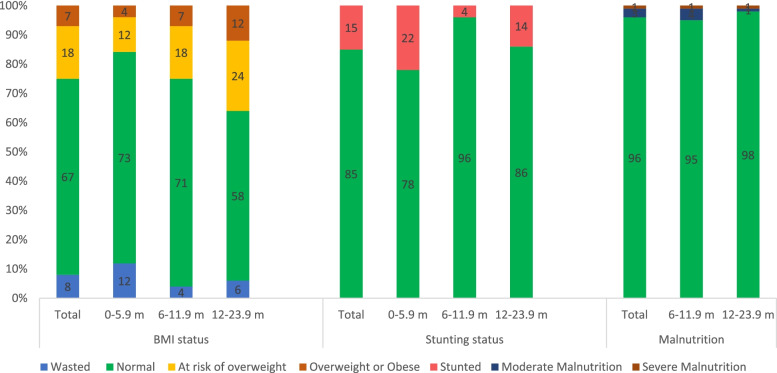
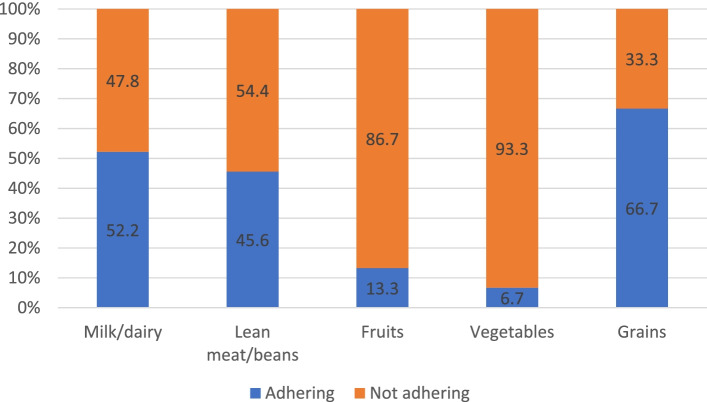
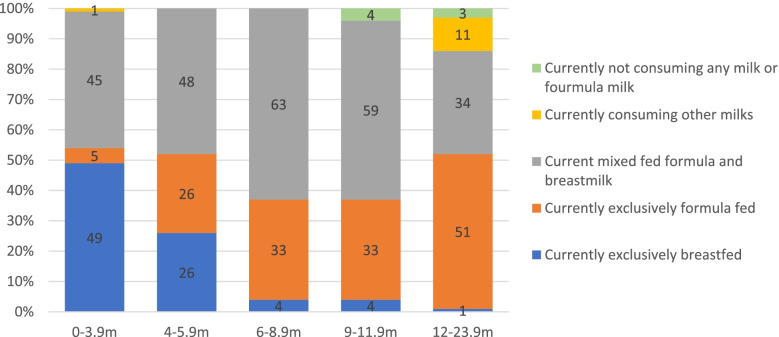
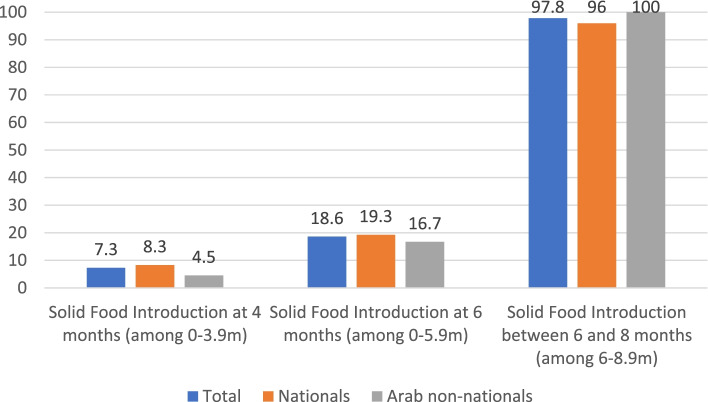
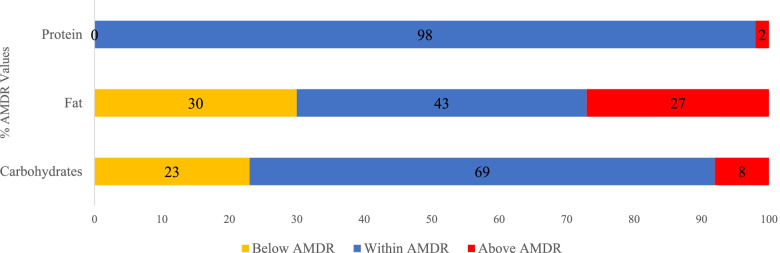
Overall, 4% of children were malnourished, 8% wasted, 15% stunted, 18% at risk of overweight, and 7% overweight and obese. 95% of infants were ever breastfed and 37% exclusively breastfed at 6 months. Around 98% of infants had a timely introduction of complementary food. Macronutrient intake exceeded AMDR for fat, carbohydrates, and protein for 27%, 8% and 2% of toddlers respectively. As for the percentage of those exceeding the ESPGHAN cut-off for free sugars set at 5% of energy intake, 28.6% had excessive intakes overall, 10% in 0-5.9, 21.9% in 6-11.9 and 56.7% in 12-23.9 month. Usual iron intake was below the Estimated Average Requirement (EAR) in 47% of infants 6-11.9 months. Above 12 months, the usual intake of iron and vitamin D were below EAR in 11% and 49% of toddlers respectively. Usual intake exceeded the tolerable upper intake levels (UL) for vitamin A (14 to 18%) and zinc (11 to 22%) across all ages. Approximately 93% of toddlers ages 12-23.9 months did not meet food groups' recommendations for vegetables, 87% for fruits, 48% for milk/dairy, 54% for lean meat and beans, and 33% for grains.
This study revealed that a high percentage of infants and toddlers aged 0-23.9 m suffer from a double burden of malnutrition, which is the coexistence of both undernutrition, and overweight and obesity in the same population. In addition to suboptimal feeding practices and inadequate/overconsumption of various nutrients. The findings highlight the need for the development of culturally specific programs aiming to improve the nutritional status of infants and toddlers in the UAE.
婴幼儿喂养方式会影响人群的早期和后期健康状况。关于阿拉伯联合酋长国(阿联酋)婴幼儿喂养方式的数据有限。本研究旨在评估阿联酋0至23.9个月婴幼儿的营养状况、喂养方式的适宜性、能量、食物及营养素摄入量。
本研究是一项基于人群的横断面调查,对象为276名0至23.9个月的婴幼儿,其中180名是本国国民,96名是居住在阿联酋的阿拉伯非本国国民。数据收集自三个主要酋长国:阿布扎比、迪拜和沙迦。使用世界卫生组织(WHO)儿童生长标准评估软件收集并评估人体测量数据,同时使用一份多部分特定年龄问卷来评估婴幼儿喂养方式和社会人口学特征。通过多次24小时膳食回顾收集包括补充剂在内的能量、微量营养素和宏量营养素的通常摄入量,并使用电脑端软件进行分析。使用WHO指标评估婴幼儿喂养方式。
总体而言,4%的儿童营养不良,8%消瘦,15%发育迟缓,18%有超重风险,7%超重和肥胖。95%的婴儿曾接受母乳喂养,6个月时纯母乳喂养的比例为37%。约98%的婴儿及时添加了辅食。宏量营养素摄入量超过脂肪、碳水化合物和蛋白质的AMDR(适宜摄入量范围)的幼儿比例分别为27%、8%和2%。至于超过欧洲儿科胃肠病、肝病和营养学会(ESPGHAN)设定的游离糖能量摄入上限5%的比例,总体上28.6%的幼儿摄入过量,0至5.9个月的为10%,6至11.9个月的为21.9%,12至23.9个月 的为56.7%。47%的6至11.9个月婴儿的铁通常摄入量低于估计平均需求量(EAR)。12个月以上,11%的幼儿铁通常摄入量低于EAR,49%的幼儿维生素D通常摄入量低于EAR。所有年龄段的维生素A(14%至18%)和锌(11%至22%)通常摄入量超过可耐受最高摄入量(UL)。12至23.9个月的幼儿中,约93%未达到蔬菜食物组的建议摄入量,87%未达到水果的建议摄入量,48%未达到牛奶/乳制品的建议摄入量,54%未达到瘦肉和豆类的建议摄入量,33%未达到谷物的建议摄入量。
本研究表明,0至23.9个月的婴幼儿中很大比例面临营养不良的双重负担,即同一人群中同时存在营养不足以及超重和肥胖问题。此外,喂养方式欠佳,各种营养素摄入不足或过量。研究结果凸显了制定针对特定文化的项目以改善阿联酋婴幼儿营养状况的必要性。