Qian Pu, Gardiner Alastair T, Šímová Ivana, Naydenova Katerina, Croll Tristan I, Jackson Philip J, Kloz Miroslav, Čubáková Petra, Kuzma Marek, Zeng Yonghui, Castro-Hartmann Pablo, van Knippenberg Bart, Goldie Kenneth N, Kaftan David, Hrouzek Pavel, Hájek Jan, Agirre Jon, Siebert C Alistair, Bína David, Sader Kasim, Stahlberg Henning, Sobotka Roman, Russo Christopher J, Polívka Tomáš, Hunter C Neil, Koblížek Michal
Materials and Structural Analysis, Thermo Fisher Scientific, Achtseweg Noord 5, 5651 GG Eindhoven, Netherlands.
School of Biosciences, University of Sheffield, Sheffield S10 2TN, UK.
Sci Adv. 2022 Feb 18;8(7):eabk3139. doi: 10.1126/sciadv.abk3139. Epub 2022 Feb 16.
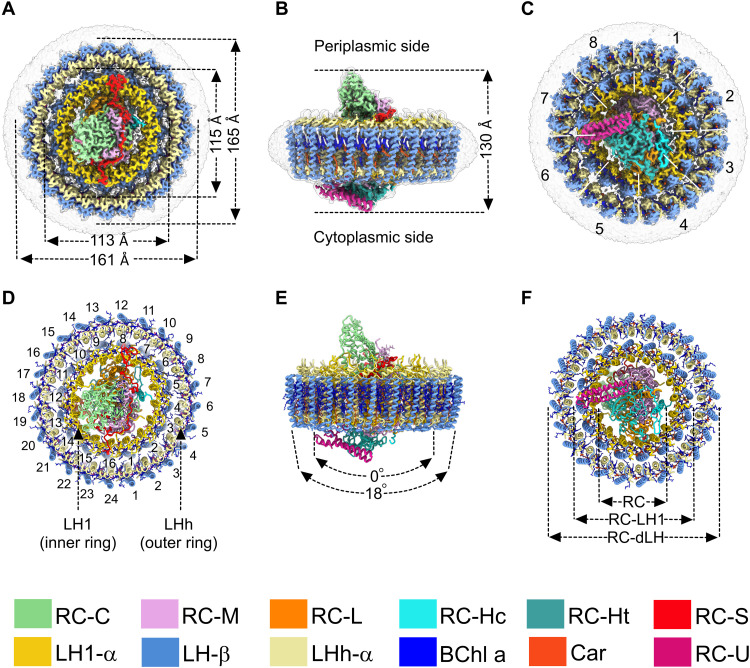
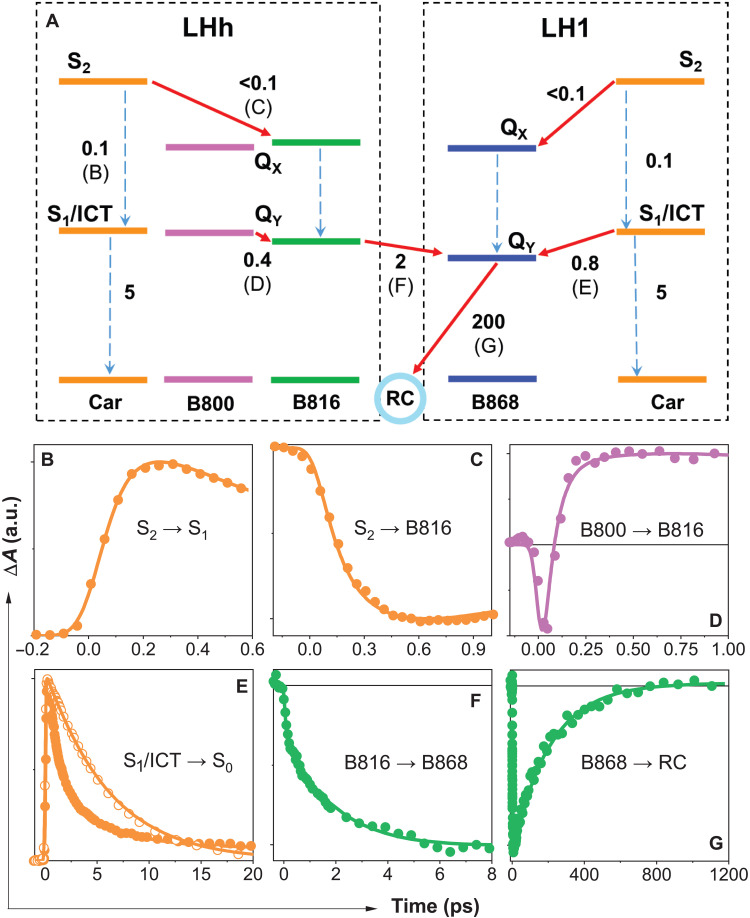
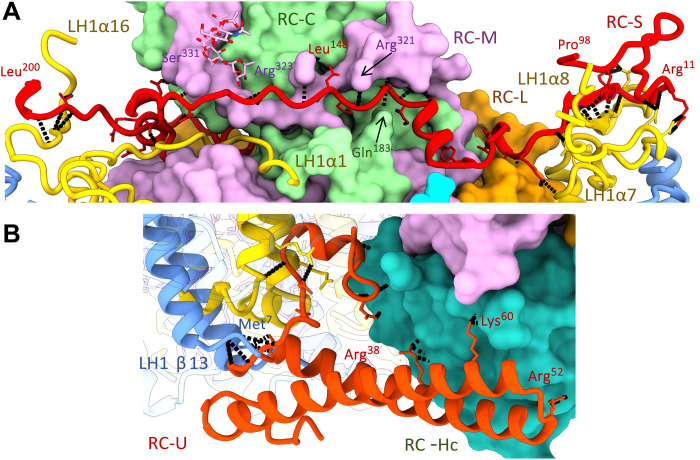
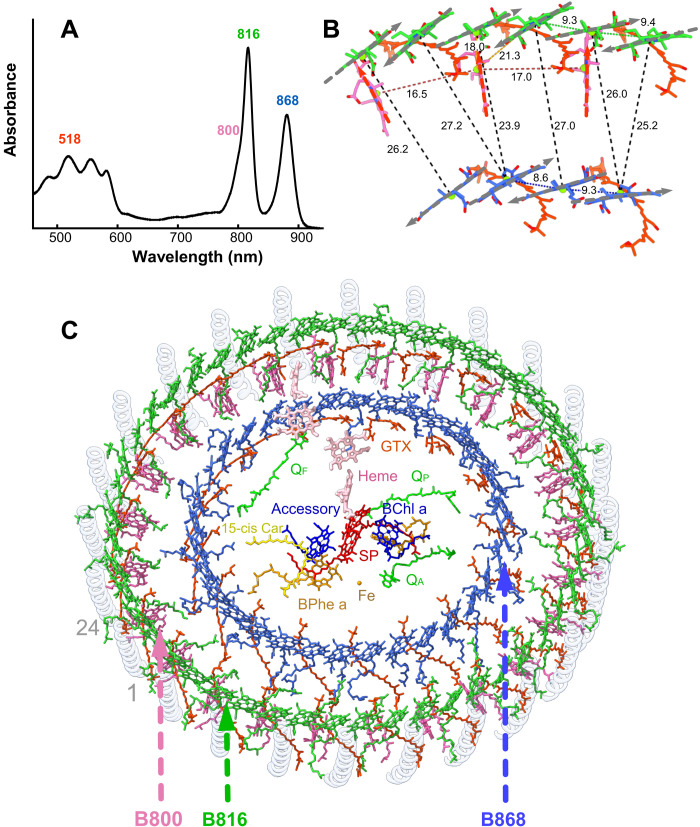
Phototrophic Gemmatimonadetes evolved the ability to use solar energy following horizontal transfer of photosynthesis-related genes from an ancient phototrophic proteobacterium. The electron cryo-microscopy structure of the photosystem at 2.4 Å reveals a unique, double-ring complex. Two unique membrane-extrinsic polypeptides, RC-S and RC-U, hold the central type 2 reaction center (RC) within an inner 16-subunit light-harvesting 1 (LH1) ring, which is encircled by an outer 24-subunit antenna ring (LHh) that adds light-gathering capacity. Femtosecond kinetics reveal the flow of energy within the RC-dLH complex, from the outer LHh ring to LH1 and then to the RC. This structural and functional study shows that has independently evolved its own compact, robust, and highly effective architecture for harvesting and trapping solar energy.
光合芽单胞菌在从一种古老的光合变形杆菌水平转移光合作用相关基因后,进化出了利用太阳能的能力。光系统在2.4 Å分辨率下的电子冷冻显微镜结构揭示了一种独特的双环复合物。两种独特的膜外在多肽RC-S和RC-U将中心2型反应中心(RC)固定在内部由16个亚基组成的光捕获1(LH1)环内,该环又被一个外部由24个亚基组成的天线环(LHh)环绕,后者增加了光收集能力。飞秒动力学揭示了RC-dLH复合物内的能量流动,从外部的LHh环到LH1,然后到RC。这项结构和功能研究表明,光合芽单胞菌已经独立进化出了自己紧凑、稳健且高效的收集和捕获太阳能的结构。