Kollmeier Jost M, Gürbüz-Reiss Lukas, Sahoo Prativa, Badura Simon, Ellebracht Ben, Keck Mathilda, Gärtner Jutta, Ludwig Hans-Christoph, Frahm Jens, Dreha-Kulaczewski Steffi
Biomedizinische NMR, Max-Planck-Institut für multidisziplinäre Naturwissenschaften, 37077, Göttingen, Germany.
Division of Pediatric Neurology, Department of Pediatrics and Adolescent Medicine, University Medical Center Göttingen, 37075, Göttingen, Germany.
Sci Rep. 2022 Feb 16;12(1):2568. doi: 10.1038/s41598-022-06361-x.
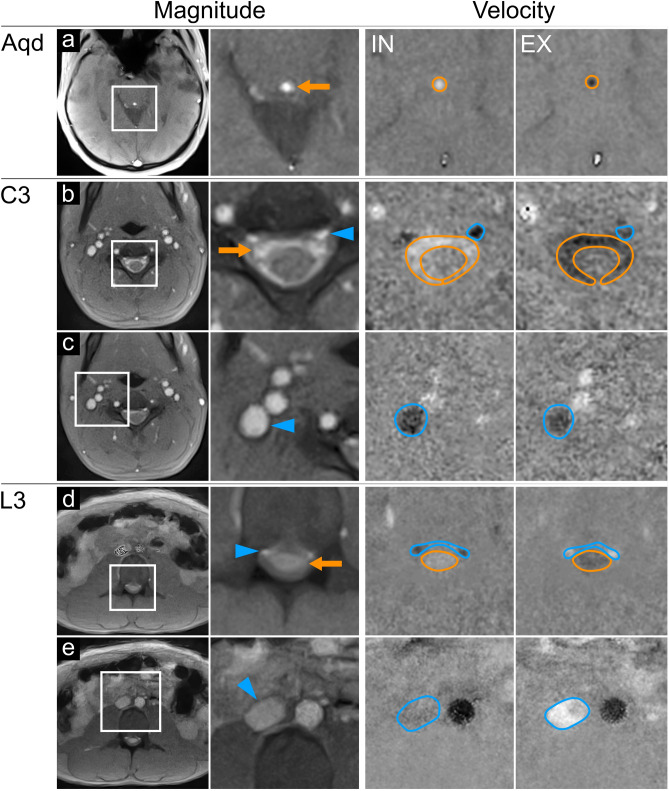
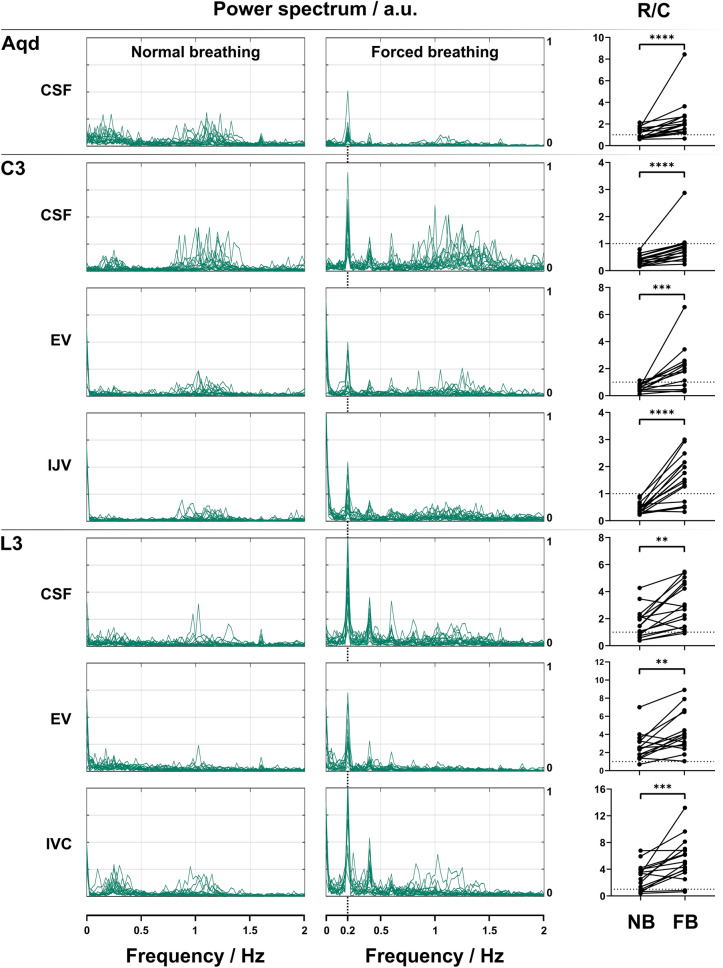
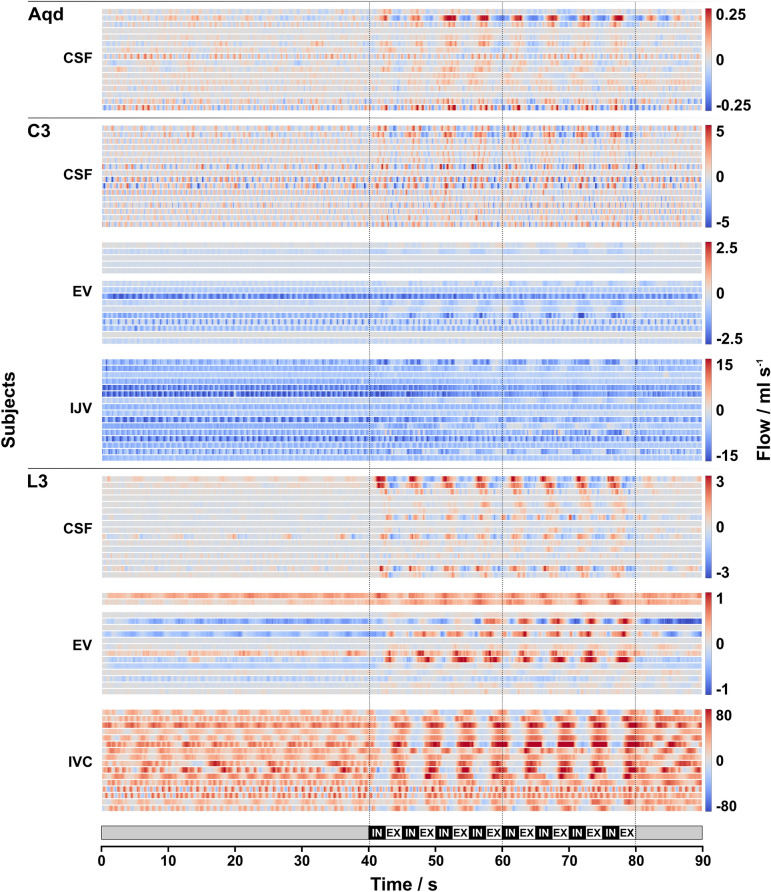
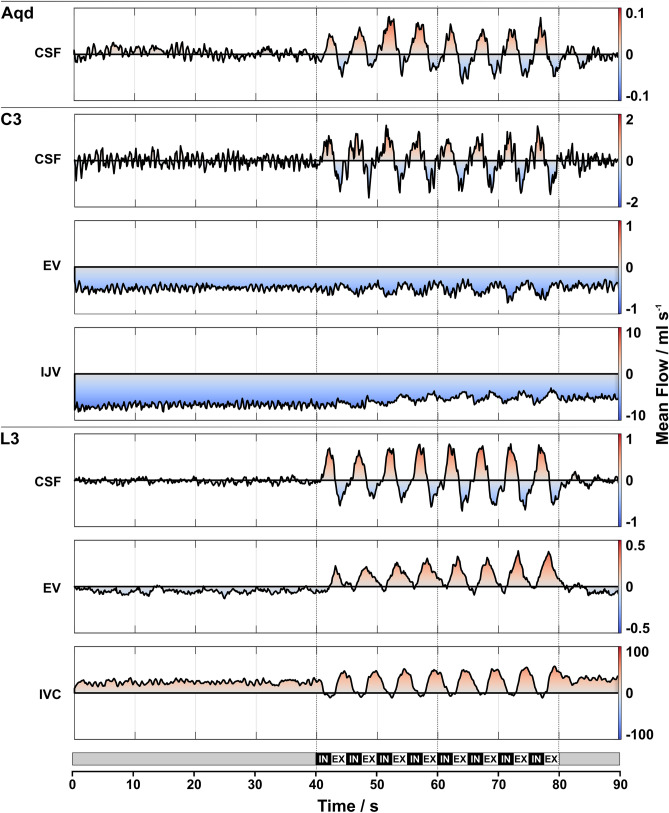
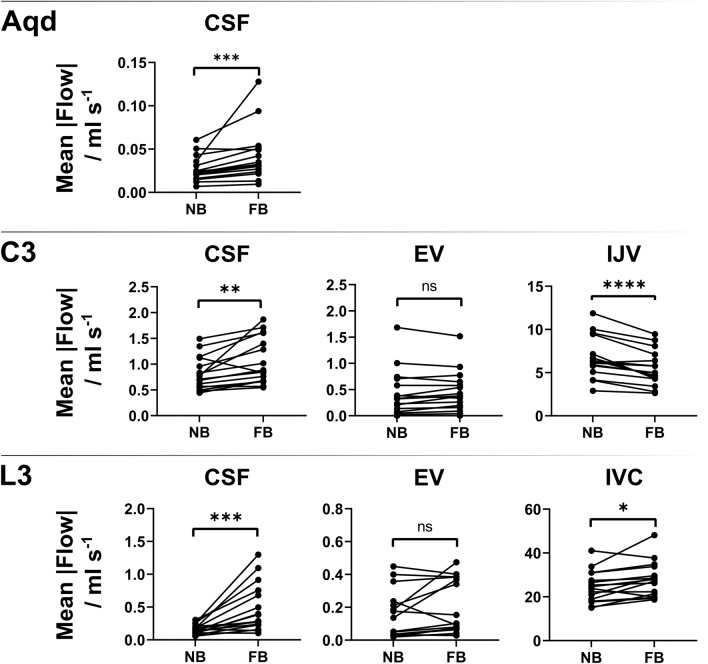
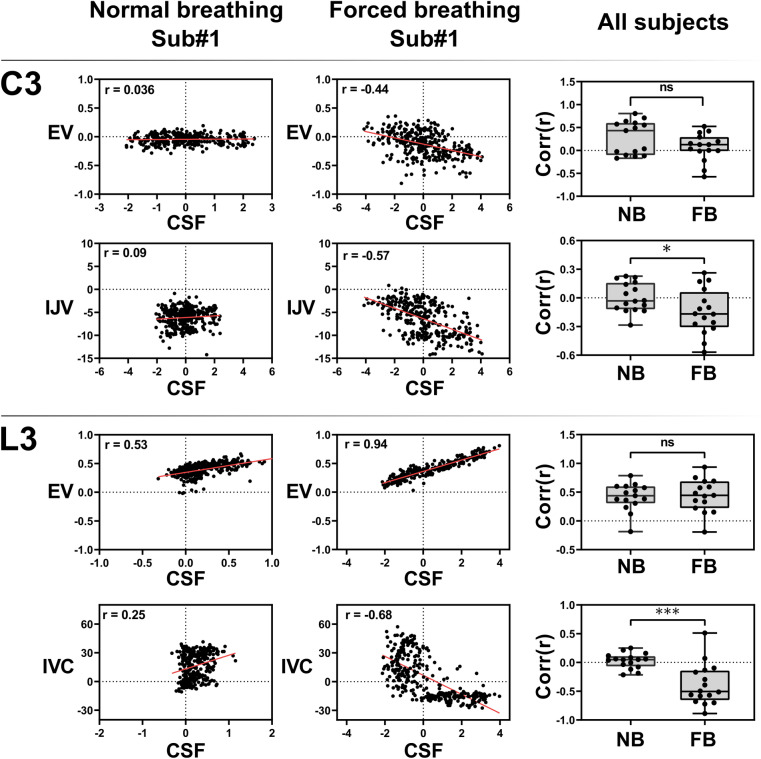
Venous system pathologies have increasingly been linked to clinically relevant disorders of CSF circulation whereas the exact coupling mechanisms still remain unknown. In this work, flow dynamics of both systems were studied using real-time phase-contrast flow MRI in 16 healthy subjects during normal and forced breathing. Flow evaluations in the aqueduct, at cervical level C3 and lumbar level L3 for both the CSF and venous fluid systems reveal temporal modulations by forced respiration. During normal breathing cardiac-related flow modulations prevailed, while forced breathing shifted the dominant frequency of both CSF and venous flow spectra towards the respiratory component and prompted a correlation between CSF and venous flow in the large vessels. The average of flow magnitude of CSF was increased during forced breathing at all spinal and intracranial positions. Venous flow in the large vessels of the upper body decreased and in the lower body increased during forced breathing. Deep respiration couples interdependent venous and brain fluid flow-most likely mediated by intrathoracic and intraabdominal pressure changes. Further insights into the driving forces of CSF and venous circulation and their correlation will facilitate our understanding how the venous system links to intracranial pressure regulation and of related forms of hydrocephalus.
静脉系统病变越来越多地与脑脊液循环的临床相关疾病联系在一起,而确切的耦合机制仍然未知。在这项研究中,使用实时相位对比血流磁共振成像对16名健康受试者在正常呼吸和强制呼吸期间的两个系统的血流动力学进行了研究。对脑脊液和静脉系统在中脑导水管、颈椎C3水平和腰椎L3水平的血流评估显示,强制呼吸会引起时间调制。在正常呼吸期间,与心脏相关的血流调制占主导,而强制呼吸使脑脊液和静脉血流频谱的主导频率向呼吸成分转移,并促使大血管中脑脊液和静脉血流之间产生相关性。在所有脊柱和颅内位置,强制呼吸期间脑脊液的平均流量幅度增加。强制呼吸期间,上身大血管中的静脉血流减少,下身的静脉血流增加。深呼吸使相互依赖的静脉和脑液流动耦合——最有可能是由胸腔和腹腔内压力变化介导的。对脑脊液和静脉循环驱动力及其相关性的进一步了解将有助于我们理解静脉系统如何与颅内压调节以及相关形式的脑积水相联系。