• 文献检索
  • 文档翻译
  • 深度研究
  • 学术资讯
  • Suppr Zotero 插件Zotero 插件
  • 邀请有礼
  • 套餐&价格
  • 历史记录
应用&插件
Suppr Zotero 插件Zotero 插件浏览器插件Mac 客户端Windows 客户端微信小程序
定价
高级版会员购买积分包购买API积分包
服务
文献检索文档翻译深度研究API 文档MCP 服务
关于我们
关于 Suppr公司介绍联系我们用户协议隐私条款
关注我们

Suppr 超能文献

核心技术专利:CN118964589B侵权必究
粤ICP备2023148730 号-1Suppr @ 2026

文献检索

告别复杂PubMed语法,用中文像聊天一样搜索,搜遍4000万医学文献。AI智能推荐,让科研检索更轻松。

立即免费搜索

文件翻译

保留排版,准确专业,支持PDF/Word/PPT等文件格式,支持 12+语言互译。

免费翻译文档

深度研究

AI帮你快速写综述,25分钟生成高质量综述,智能提取关键信息,辅助科研写作。

立即免费体验

关于针对儿童和青年人群健康及相关挑战的移动健康干预措施研究范围的系统评价

A Systematic Review of the Scope of Study of mHealth Interventions for Wellness and Related Challenges in Pediatric and Young Adult Populations.

作者信息

Bond Sarah J, Parikh Nathan, Majmudar Shrey, Pin Sabrina, Wang Christine, Willis Lauren, Haga Susanne B

机构信息

Duke University, Durham, NC, 27708, USA.

Duke University School of Medicine, Durham, NC, 27708, USA.

出版信息

Adolesc Health Med Ther. 2022 Feb 7;13:23-38. doi: 10.2147/AHMT.S342811. eCollection 2022.

DOI:10.2147/AHMT.S342811
PMID:35173502
原文链接:https://pmc.ncbi.nlm.nih.gov/articles/PMC8835977/
Abstract

BACKGROUND

Despite the purported advantages and potential efficacy of mHealth interventions to promote wellness in children, adolescents, and young adults, it is not clear what areas have been explored and the challenges reported in the biomedical literature.

METHODS

We conducted a scoping review of publications between 2015 and 2019.

RESULTS

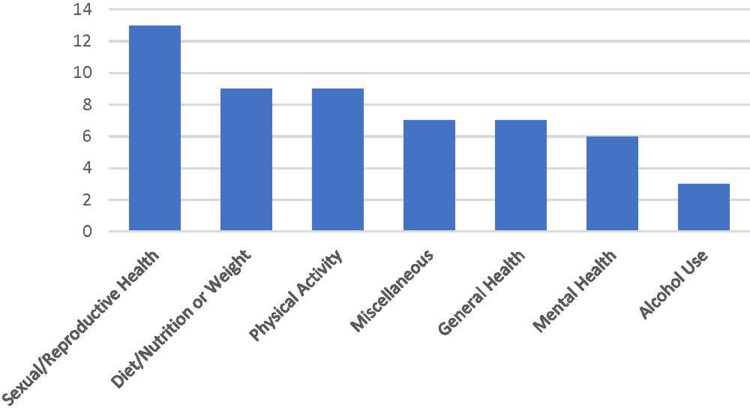
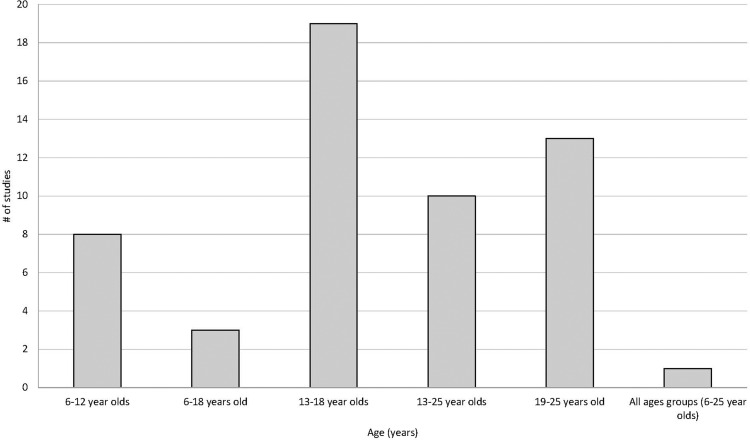
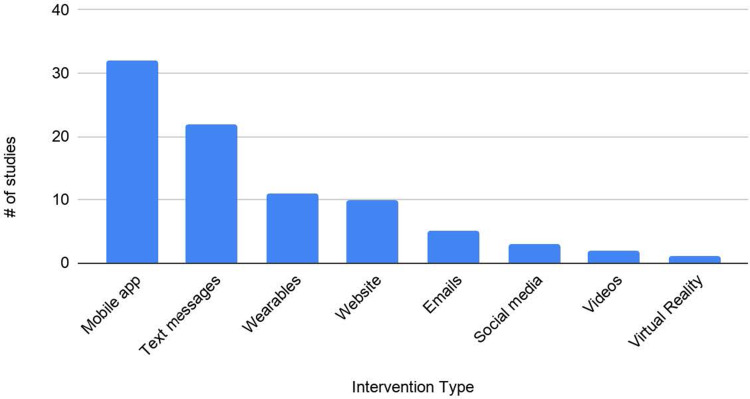
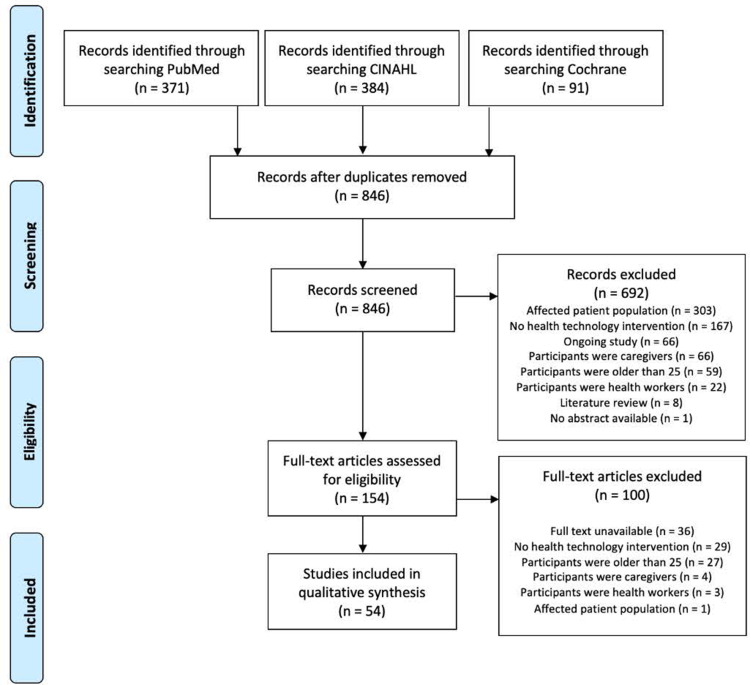
We identified 54 papers that met our inclusion criteria. Studies were conducted in 21 countries and ranged in size from six to 9851 participants (median: 184). A total of 41% of studies enrolled adolescents only (n = 19). Of the seven types of mHealth interventions identified, apps were the most common intervention (59%; n = 32) evaluated and 44% of the studies evaluated two or more interventions. The most common topic of the studies reviewed was sexual and reproductive health (24%; n = 13).

CONCLUSION

Most pediatric mHealth intervention studies are conducted in adolescents in large part, and sexual and reproductive health is the most commonly studied topic. With the easy and widespread accessibility to smartphone technology, the use of mobile apps for wellness interventions will likely continue to expand to other wellness topics.

摘要

背景

尽管移动健康干预措施在促进儿童、青少年和年轻人健康方面据称具有优势和潜在功效,但尚不清楚生物医学文献中探索了哪些领域以及报告了哪些挑战。

方法

我们对2015年至2019年期间的出版物进行了范围综述。

结果

我们确定了54篇符合纳入标准的论文。研究在21个国家进行,规模从6名到9851名参与者不等(中位数:184)。共有41%的研究仅纳入青少年(n = 19)。在确定的七种移动健康干预类型中,应用程序是评估最常见的干预措施(59%;n = 32),44%的研究评估了两种或更多种干预措施。所审查研究中最常见的主题是性与生殖健康(24%;n = 13)。

结论

大多数儿科移动健康干预研究主要在青少年中进行,性与生殖健康是研究最普遍的主题。随着智能手机技术的便捷和广泛普及,使用移动应用程序进行健康干预可能会继续扩展到其他健康主题。
https://cdn.ncbi.nlm.nih.gov/pmc/blobs/0bf0/8835977/550f99522f9f/AHMT-13-23-g0005.jpg
https://cdn.ncbi.nlm.nih.gov/pmc/blobs/0bf0/8835977/5c185678fdee/AHMT-13-23-g0001.jpg
https://cdn.ncbi.nlm.nih.gov/pmc/blobs/0bf0/8835977/27eb9964cc1e/AHMT-13-23-g0002.jpg
https://cdn.ncbi.nlm.nih.gov/pmc/blobs/0bf0/8835977/f95cf59d75a3/AHMT-13-23-g0003.jpg
https://cdn.ncbi.nlm.nih.gov/pmc/blobs/0bf0/8835977/f107b4edab34/AHMT-13-23-g0004.jpg
https://cdn.ncbi.nlm.nih.gov/pmc/blobs/0bf0/8835977/550f99522f9f/AHMT-13-23-g0005.jpg
https://cdn.ncbi.nlm.nih.gov/pmc/blobs/0bf0/8835977/5c185678fdee/AHMT-13-23-g0001.jpg
https://cdn.ncbi.nlm.nih.gov/pmc/blobs/0bf0/8835977/27eb9964cc1e/AHMT-13-23-g0002.jpg
https://cdn.ncbi.nlm.nih.gov/pmc/blobs/0bf0/8835977/f95cf59d75a3/AHMT-13-23-g0003.jpg
https://cdn.ncbi.nlm.nih.gov/pmc/blobs/0bf0/8835977/f107b4edab34/AHMT-13-23-g0004.jpg
https://cdn.ncbi.nlm.nih.gov/pmc/blobs/0bf0/8835977/550f99522f9f/AHMT-13-23-g0005.jpg

相似文献

1
A Systematic Review of the Scope of Study of mHealth Interventions for Wellness and Related Challenges in Pediatric and Young Adult Populations.关于针对儿童和青年人群健康及相关挑战的移动健康干预措施研究范围的系统评价
Adolesc Health Med Ther. 2022 Feb 7;13:23-38. doi: 10.2147/AHMT.S342811. eCollection 2022.
2
Smartphone-Based Interventions for Physical Activity Promotion: Scoping Review of the Evidence Over the Last 10 Years.基于智能手机的身体活动促进干预措施:过去 10 年证据的范围综述。
JMIR Mhealth Uhealth. 2021 Jul 21;9(7):e24308. doi: 10.2196/24308.
3
Intervention and Evaluation of Mobile Health Technologies in Management of Patients Undergoing Chronic Dialysis: Scoping Review.移动医疗技术在慢性透析患者管理中的干预和评估:范围综述。
JMIR Mhealth Uhealth. 2020 Apr 3;8(4):e15549. doi: 10.2196/15549.
4
Efficacy and Effectiveness of Mobile Health Technologies for Facilitating Physical Activity in Adolescents: Scoping Review.移动健康技术促进青少年身体活动的效果和有效性:范围综述。
JMIR Mhealth Uhealth. 2019 Feb 12;7(2):e11847. doi: 10.2196/11847.
5
Asynchronous mHealth Interventions in Rheumatoid Arthritis: Systematic Scoping Review.类风湿关节炎的异步移动医疗干预措施:系统范围综述。
JMIR Mhealth Uhealth. 2020 Nov 5;8(11):e19260. doi: 10.2196/19260.
6
The Use of Mobile Apps and SMS Messaging as Physical and Mental Health Interventions: Systematic Review.使用移动应用程序和短信作为身心健康干预措施:系统评价。
J Med Internet Res. 2017 Aug 24;19(8):e295. doi: 10.2196/jmir.7740.
7
Usability Challenges for Health and Wellness Mobile Apps: Mixed-Methods Study Among mHealth Experts and Consumers.健康与健身移动应用程序的可用性挑战:移动健康专家和消费者的混合方法研究。
JMIR Mhealth Uhealth. 2019 Jan 30;7(1):e12160. doi: 10.2196/12160.
8
Impact of mobile health interventions during the perinatal period on maternal psychosocial outcomes: a systematic review.围产期移动健康干预对产妇心理社会结局的影响:一项系统综述
JBI Evid Synth. 2020 Jan;18(1):30-55. doi: 10.11124/JBISRIR-D-19-00191.
9
Young People's Experiences Using an On-Demand Mobile Health Sexual and Reproductive Health Text Message Intervention in Kenya: Qualitative Study.肯尼亚一项按需移动健康性与生殖健康短信干预措施的使用情况:定性研究 。
JMIR Mhealth Uhealth. 2021 Jan 15;9(1):e19109. doi: 10.2196/19109.
10
The Continued Use of Mobile Health Apps: Insights From a Longitudinal Study.移动医疗应用的持续使用:一项纵向研究的新发现。
JMIR Mhealth Uhealth. 2019 Aug 29;7(8):e12983. doi: 10.2196/12983.

引用本文的文献

1
Unlocking mobile health adoption: A qualitative exploration of user experiences, barriers, and facilitators within integrated youth services in British Columbia, Canada.开启移动健康应用之路:对加拿大不列颠哥伦比亚省综合青年服务中用户体验、障碍及促进因素的定性探索。
Digit Health. 2025 Aug 3;11:20552076251365073. doi: 10.1177/20552076251365073. eCollection 2025 Jan-Dec.
2
The Impact of Mobile Applications on Improving Oral Hygiene Knowledge and Skills of Adolescents: A Scoping Review.移动应用程序对提高青少年口腔卫生知识和技能的影响:一项范围综述
J Clin Med. 2025 Apr 23;14(9):2907. doi: 10.3390/jcm14092907.
3
Exploratory analysis of blood alcohol concentration-related technology use and drinking outcomes among young adults.

本文引用的文献

1
Isn't There an App for That? The Role of Smartphone and Tablet Applications for Asthma Education and Self-Management in Adolescents.难道没有一款应用程序能解决这个问题吗?智能手机和平板电脑应用程序在青少年哮喘教育和自我管理中的作用。
Children (Basel). 2021 Sep 9;8(9):786. doi: 10.3390/children8090786.
2
Time Trends in Physical Activity Using Wearable Devices: A Systematic Review and Meta-analysis of Studies from 1995 to 2017.使用可穿戴设备的身体活动时间趋势:1995 年至 2017 年研究的系统评价和荟萃分析。
Med Sci Sports Exerc. 2022 Feb 1;54(2):288-298. doi: 10.1249/MSS.0000000000002794.
3
Mobile Health Technology for the Personalized Therapy of Hemophilia.
对年轻人中与血液酒精浓度相关的技术使用和饮酒结果的探索性分析。
Alcohol Clin Exp Res (Hoboken). 2024 Nov;48(11):2188-2199. doi: 10.1111/acer.15455. Epub 2024 Sep 30.
4
A mobile healthy lifestyle intervention to promote mental health in adolescence: a mixed-methods evaluation.移动健康生活方式干预促进青少年心理健康:混合方法评估。
BMC Public Health. 2024 Jan 2;24(1):44. doi: 10.1186/s12889-023-17260-9.
5
A virtual randomized controlled trial of an alcohol-exposed pregnancy prevention mobile app with urban American Indian and Alaska Native young women: Native WYSE CHOICES rationale, design, and methods.一个酒精暴露妊娠预防移动应用程序的虚拟随机对照试验,对象为城市美洲印第安人和阿拉斯加原住民年轻女性:土著 WYSE CHOICES 研究的原理、设计和方法。
Contemp Clin Trials. 2023 May;128:107167. doi: 10.1016/j.cct.2023.107167. Epub 2023 Mar 30.
6
Exercising body but not mind: A qualitative exploration of attitudes to combining physical activity and mindfulness practice for mental health promotion.锻炼身体而非心灵:关于将体育活动与正念练习相结合以促进心理健康的态度的质性探索。
Front Psychol. 2022 Dec 9;13:984232. doi: 10.3389/fpsyg.2022.984232. eCollection 2022.
7
Individual and Parental Factors of Adolescents' mHealth App Use: Nationally Representative Cross-sectional Study.青少年移动健康应用使用的个体和父母因素:全国代表性横断面研究。
JMIR Mhealth Uhealth. 2022 Dec 16;10(12):e40340. doi: 10.2196/40340.
8
Promoting Adolescent Sexual and Reproductive Health in North America Using Free Mobile Apps: Environmental Scan.利用免费移动应用程序促进北美的青少年性与生殖健康:环境扫描
JMIR Pediatr Parent. 2022 Oct 4;5(4):e33826. doi: 10.2196/33826.
用于血友病个性化治疗的移动健康技术
Front Med (Lausanne). 2021 Aug 10;8:711973. doi: 10.3389/fmed.2021.711973. eCollection 2021.
4
Wearable devices for seizure detection: Practical experiences and recommendations from the Wearables for Epilepsy And Research (WEAR) International Study Group.用于癫痫发作检测的可穿戴设备:癫痫与研究可穿戴设备(WEAR)国际研究小组的实践经验与建议
Epilepsia. 2021 Oct;62(10):2307-2321. doi: 10.1111/epi.17044. Epub 2021 Aug 22.
5
The potential use of digital health technologies in the African context: a systematic review of evidence from Ethiopia.数字健康技术在非洲背景下的潜在应用:对来自埃塞俄比亚的证据进行的系统综述。
NPJ Digit Med. 2021 Aug 17;4(1):125. doi: 10.1038/s41746-021-00487-4.
6
Smartphone-Based Interventions for Physical Activity Promotion: Scoping Review of the Evidence Over the Last 10 Years.基于智能手机的身体活动促进干预措施:过去 10 年证据的范围综述。
JMIR Mhealth Uhealth. 2021 Jul 21;9(7):e24308. doi: 10.2196/24308.
7
Digital Phenotyping and Dynamic Monitoring of Adolescents Treated for Cancer to Guide Intervention: Embracing a New Era.癌症治疗青少年的数字表型分析与动态监测以指导干预:迎接新时代
Front Oncol. 2021 Jun 28;11:673581. doi: 10.3389/fonc.2021.673581. eCollection 2021.
8
The Acceptability, Feasibility, and Effectiveness of Wearable Activity Trackers for Increasing Physical Activity in Children and Adolescents: A Systematic Review.可穿戴活动追踪器提高儿童和青少年身体活动水平的可接受性、可行性和有效性:系统评价。
Int J Environ Res Public Health. 2021 Jun 8;18(12):6211. doi: 10.3390/ijerph18126211.
9
Teaching Children With Autism to Initiate Social Interactions Using Textual Prompts Delivered via Apple Watches®.使用通过苹果手表®提供的文本提示教自闭症儿童发起社交互动。
Behav Anal Pract. 2019 Aug 14;13(3):641-647. doi: 10.1007/s40617-019-00385-y. eCollection 2020 Sep.
10
Mobile Health for Pediatric Weight Management: Systematic Scoping Review.移动医疗在儿科体重管理中的应用:系统范围综述。
JMIR Mhealth Uhealth. 2020 Jun 3;8(6):e16214. doi: 10.2196/16214.