Shi Xiuhui, Yang Jingxuan, Liu Mingyang, Zhang Yuqing, Zhou Zhijun, Luo Wenyi, Fung Kar-Ming, Xu Chao, Bronze Michael S, Houchen Courtney W, Li Min
Department of Medicine, University of Oklahoma Health Sciences Center, Oklahoma City, Oklahoma; Department of Surgery, University of Oklahoma Health Sciences Center, Oklahoma City, Oklahoma.
Department of Pathology, University of Oklahoma Health Sciences Center, Oklahoma City, Oklahoma.
Gastroenterology. 2022 Jun;162(7):2004-2017.e2. doi: 10.1053/j.gastro.2022.02.017. Epub 2022 Feb 14.
BACKGROUND & AIMS: Pancreatic cancer has the highest prevalence of cancer-associated cachexia among all cancers. ZIP4 promotes pancreatic cancer progression by regulating oncogenic miR-373, and perturbation of circular RNAs (circRNAs) is associated with cancer aggressiveness. This study aimed to identify circRNAs involved in ZIP4/miR-373-driven cancer growth and cachexia and decipher the underlying mechanism.
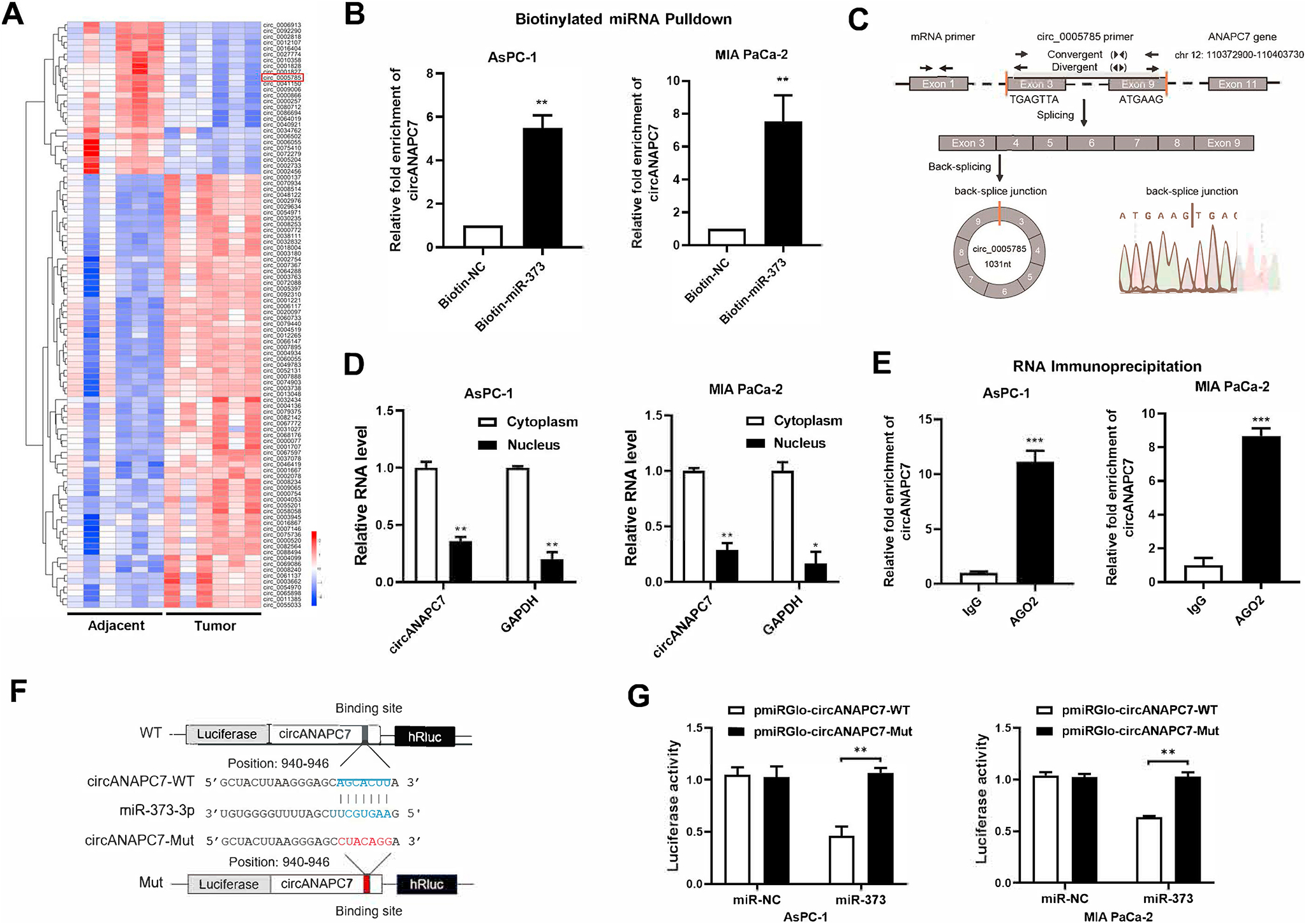
Differentially expressed circRNAs and potential targets of microRNA were identified through in silico analysis. The RNA interactions were determined by means of biotinylated microRNA pulldown, RNA immunoprecipitation, and luciferase reporter assays. The function of circRNA in ZIP4-miR-373 signaling axis were examined in human pancreatic cancer cells, 3-dimensional spheroids and organoids, mouse models, and clinical specimens. Mouse skeletal muscles were analyzed by means of histology.
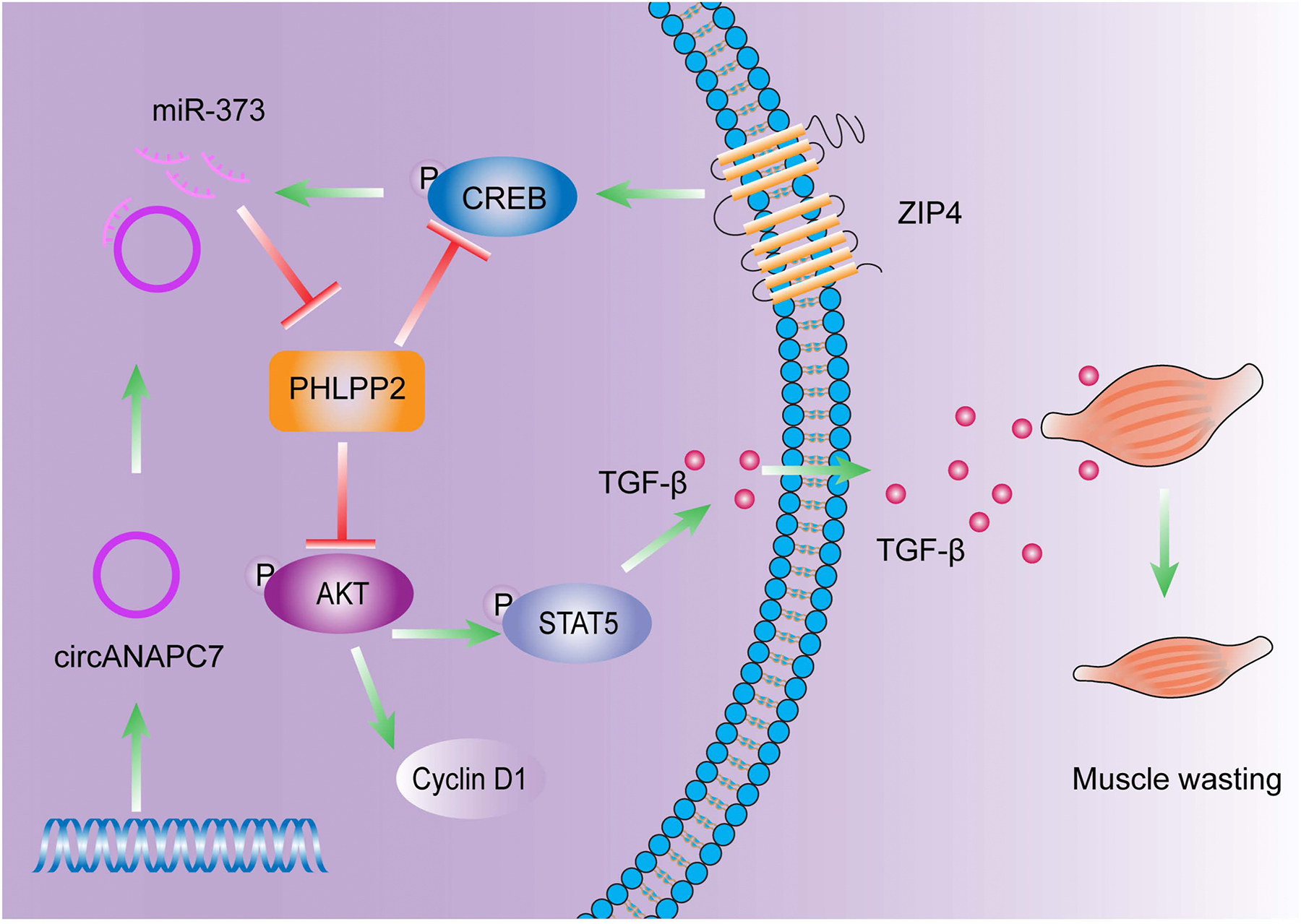
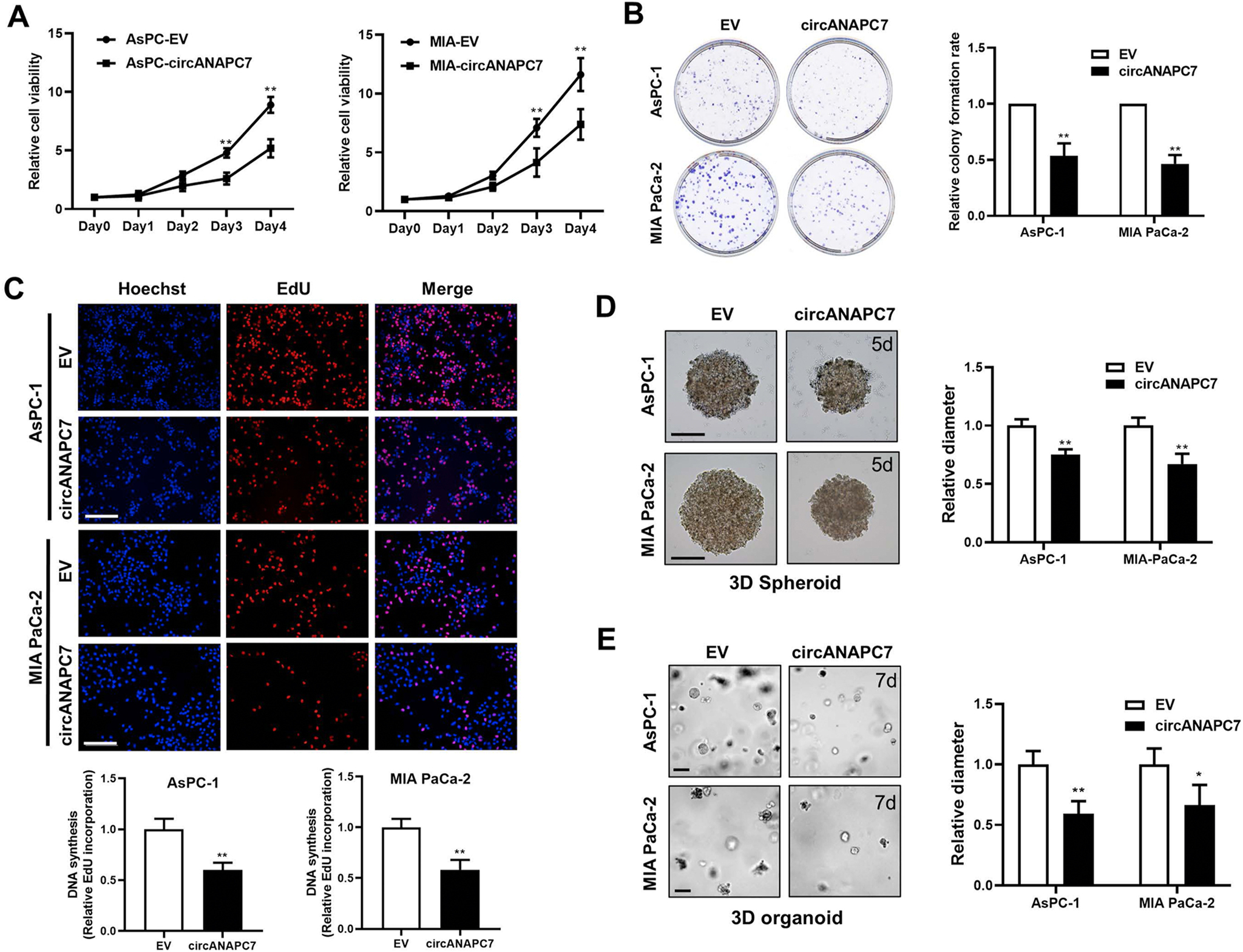
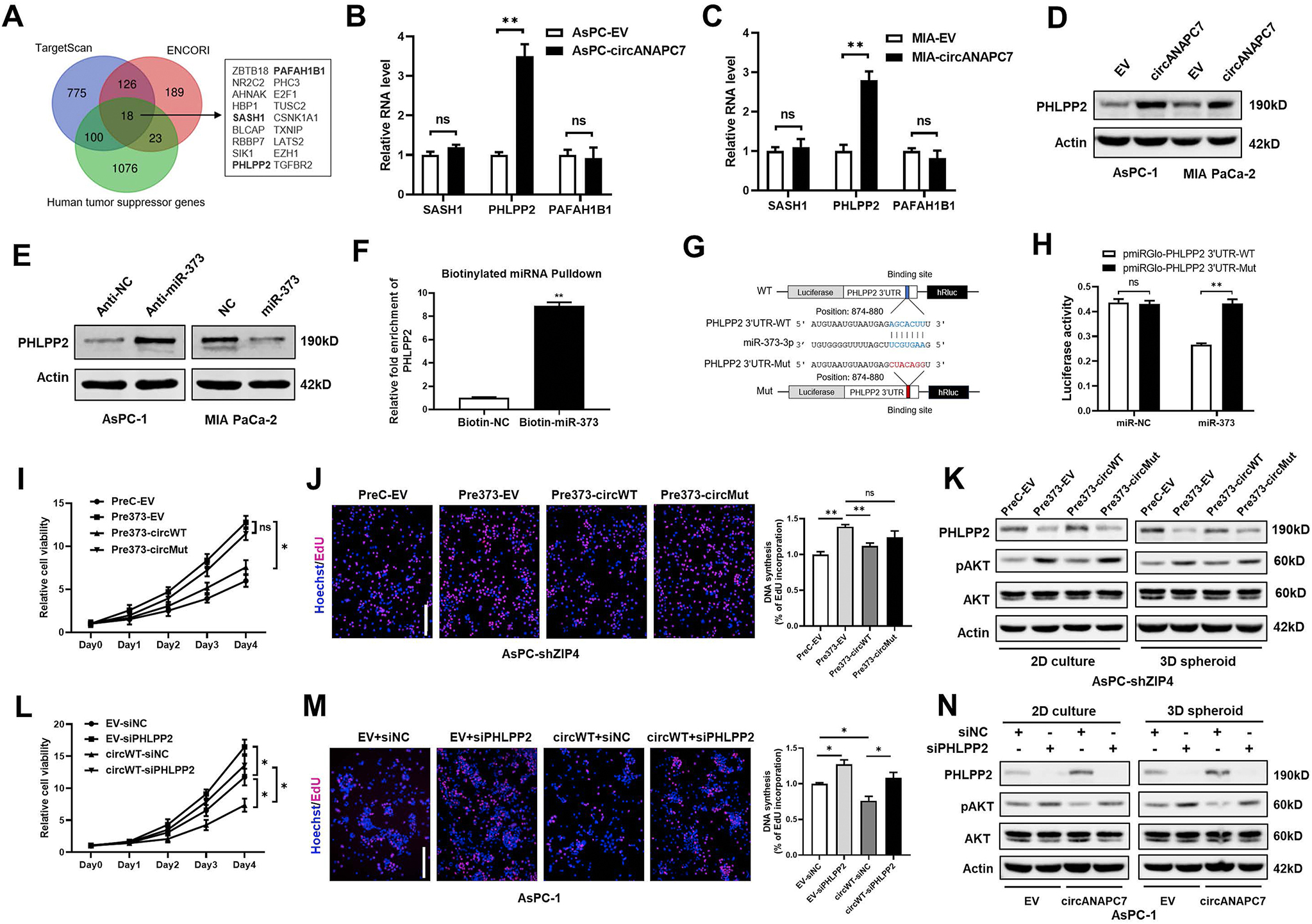
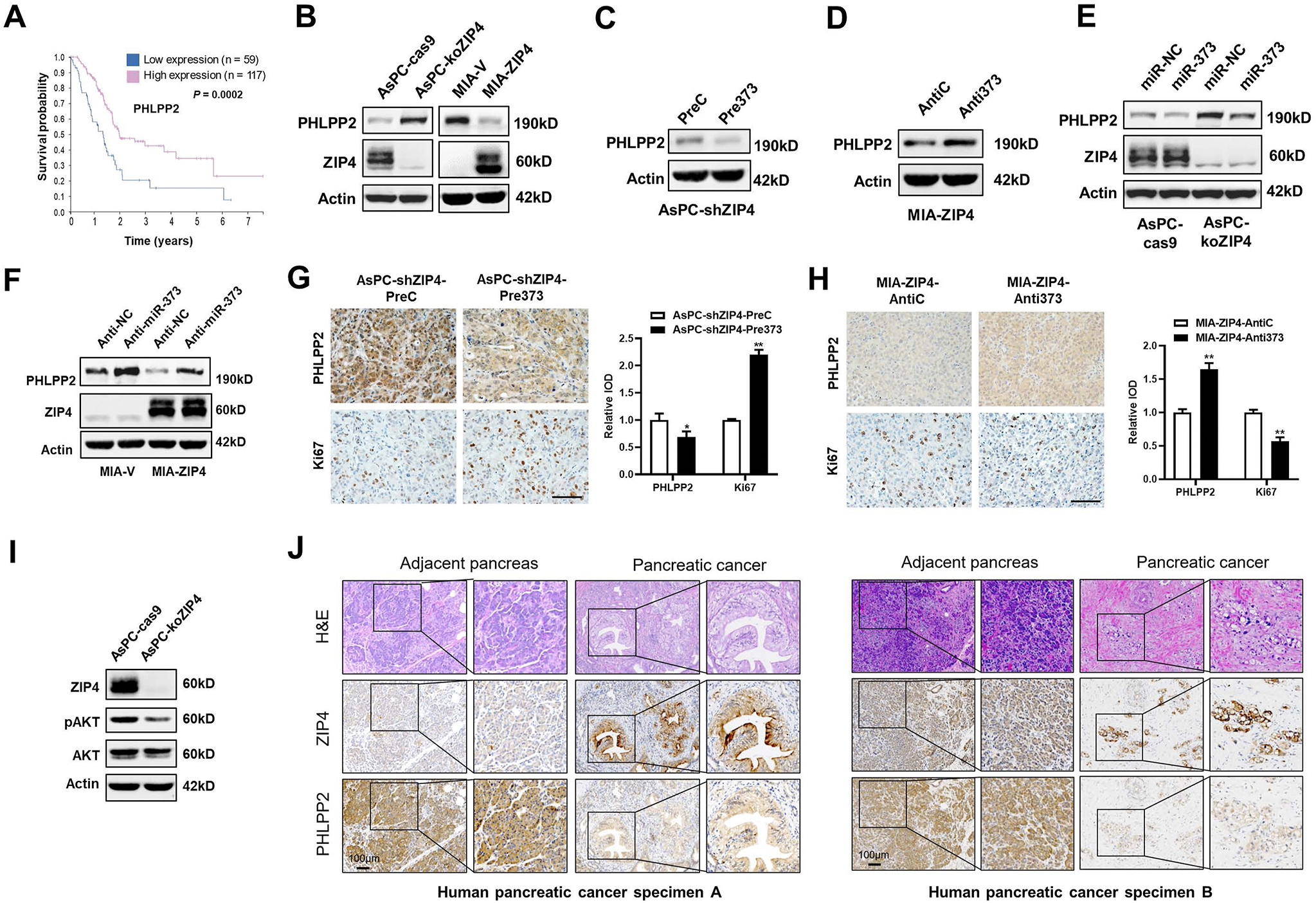
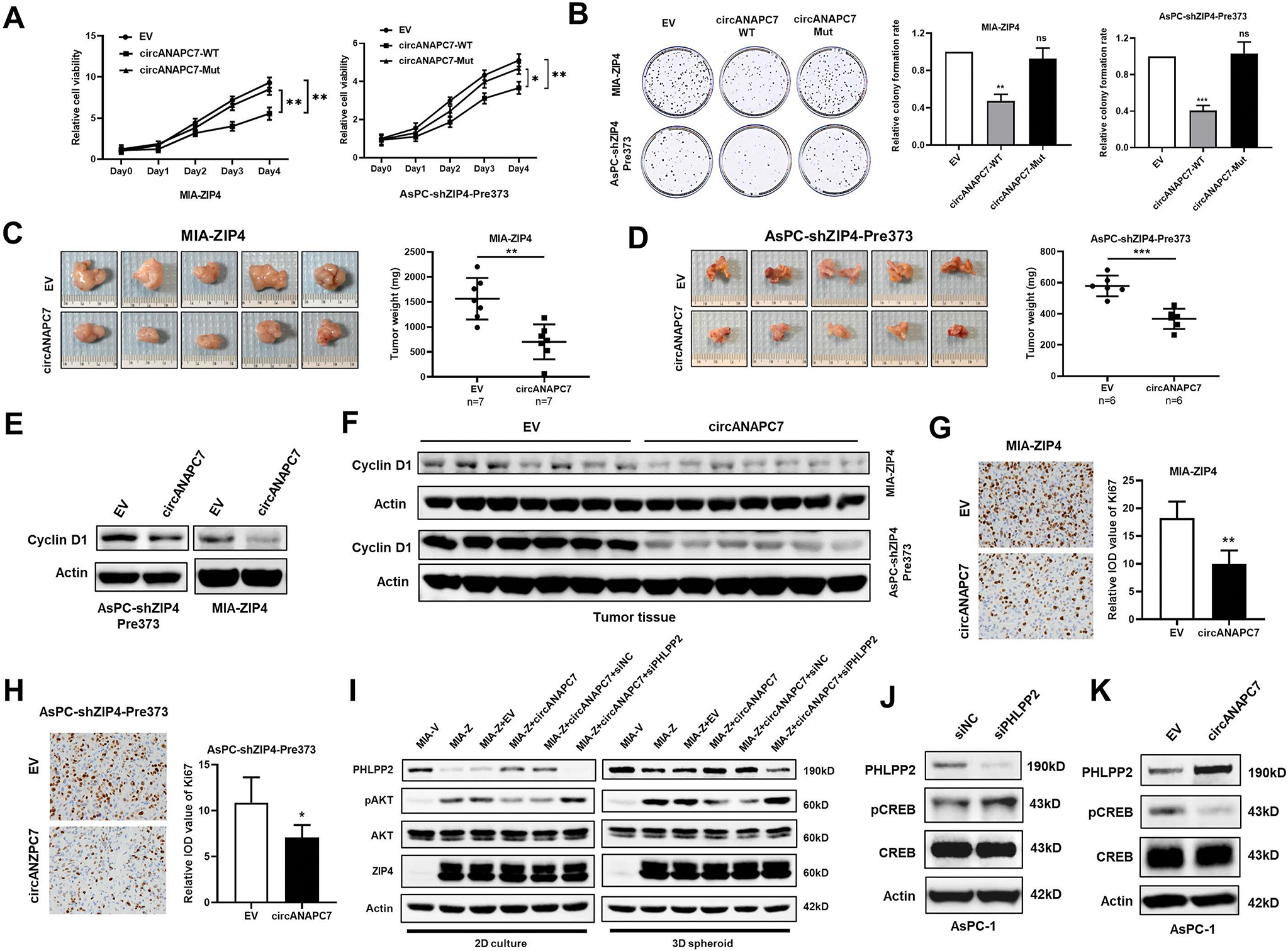
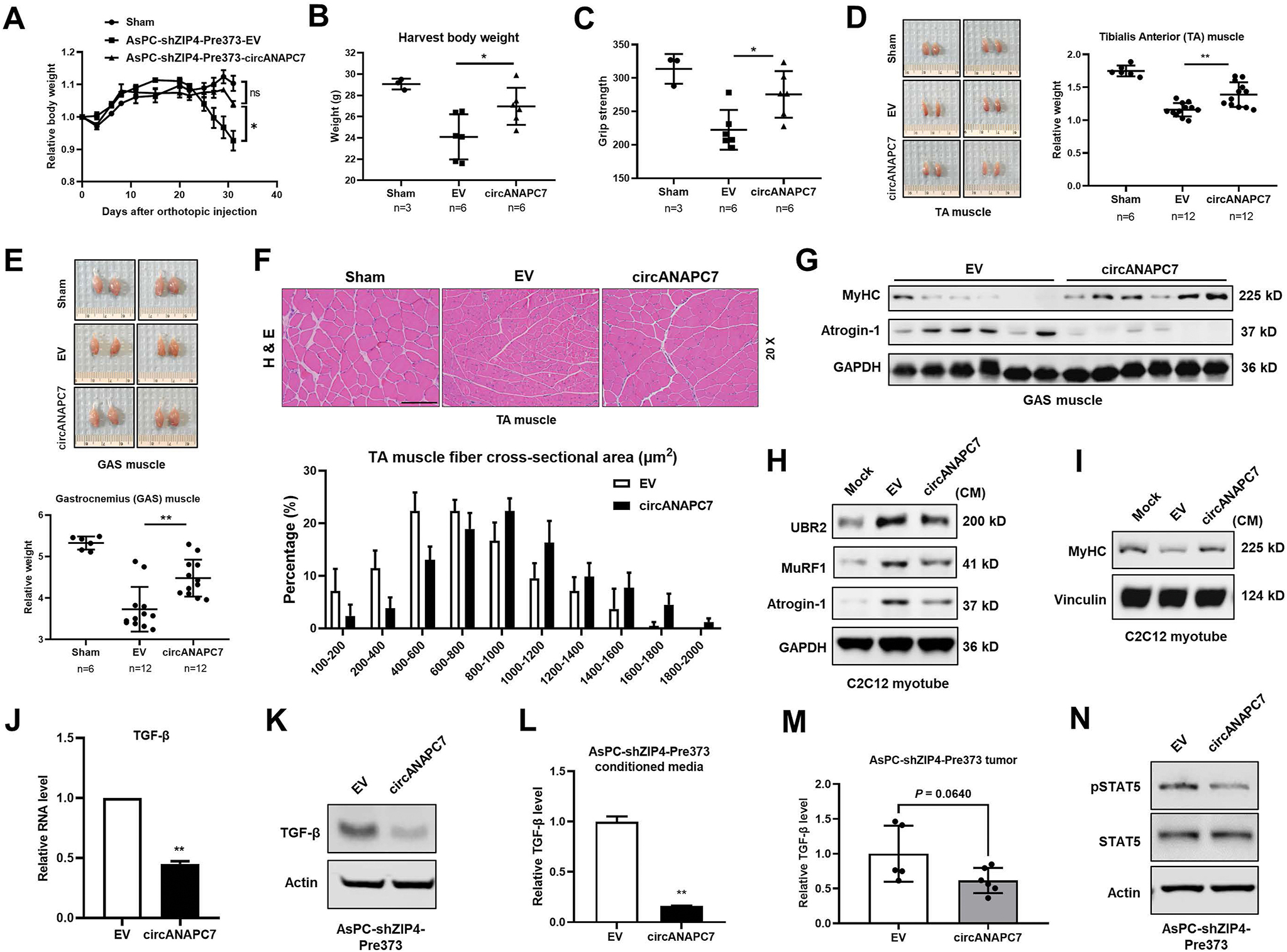
We identified circANAPC7 as a sponge for miR-373, which inhibited tumor growth and muscle wasting in vitro and in vivo. Mechanistic studies showed that PHLPP2 is a downstream target of ZIP4/miR-373. CircANAPC7 functions through PHLPP2-mediated dephosphorylation of AKT, thus suppressing cancer cell proliferation by down-regulating cyclin D1 and inhibiting muscle wasting via decreasing the secretion of transforming growth factor-β through STAT5. We further demonstrated that PHLPP2 induced dephosphorylation of CREB, a zinc-dependent transcription factor activated by ZIP4, thereby forming a CREB-miR-373-PHLPP2 feed-forward loop to regulate tumor progression and cancer cachexia.
This study identified circANAPC7 as a novel tumor suppressor, which functions through the CREB-miR-373-PHLPP2 axis, leading to AKT dephosphorylation, and cyclin D1 and transforming growth factor-β down-regulation to suppress tumor growth and muscle wasting in pancreatic cancer.
在所有癌症中,胰腺癌伴有癌症相关性恶病质的发生率最高。ZIP4通过调控致癌性miR-373促进胰腺癌进展,而环状RNA(circRNA)的紊乱与癌症侵袭性相关。本研究旨在鉴定参与ZIP4/miR-373驱动的癌症生长和恶病质的circRNA,并阐明其潜在机制。
通过计算机分析鉴定差异表达的circRNA和微小RNA的潜在靶标。通过生物素化微小RNA下拉、RNA免疫沉淀和荧光素酶报告基因分析确定RNA相互作用。在人胰腺癌细胞、三维球体和类器官、小鼠模型及临床标本中研究circRNA在ZIP4-miR-373信号轴中的功能。通过组织学分析小鼠骨骼肌。
我们鉴定出circANAPC7作为miR-373的海绵,其在体外和体内均抑制肿瘤生长和肌肉萎缩。机制研究表明,PHLPP2是ZIP4/miR-373的下游靶标。circANAPC7通过PHLPP2介导的AKT去磷酸化发挥作用,从而通过下调细胞周期蛋白D1抑制癌细胞增殖,并通过减少转化生长因子-β经STAT5的分泌来抑制肌肉萎缩。我们进一步证明,PHLPP2诱导CREB去磷酸化,CREB是一种由ZIP4激活的锌依赖性转录因子,从而形成一个CREB-miR-373-PHLPP2前馈环来调节肿瘤进展和癌症恶病质。
本研究鉴定出circANAPC7作为一种新型肿瘤抑制因子,其通过CREB-miR-373-PHLPP2轴发挥作用,导致AKT去磷酸化以及细胞周期蛋白D1和转化生长因子-β下调,从而抑制胰腺癌的肿瘤生长和肌肉萎缩。