Division of Cardiovascular Medicine, Radcliffe Department of Medicine, Oxford Centre for Clinical Magnetic Resonance Research, University of Oxford, National Institute for Health Research (NIHR) Oxford Biomedical Research Centre (BRC), Oxford University Hospitals NHS Foundation Trust, John Radcliffe Hospital, Headley Way, Oxford OX3 9DU, UK.
Department of Radiology, University of Wisconsin School of Medicine and Public Health, 3252 Clinical Science Center, 600 Highland Ave, Madison, WI 53792, USA.
Eur Heart J. 2022 Mar 14;43(11):1157-1172. doi: 10.1093/eurheartj/ehac031.
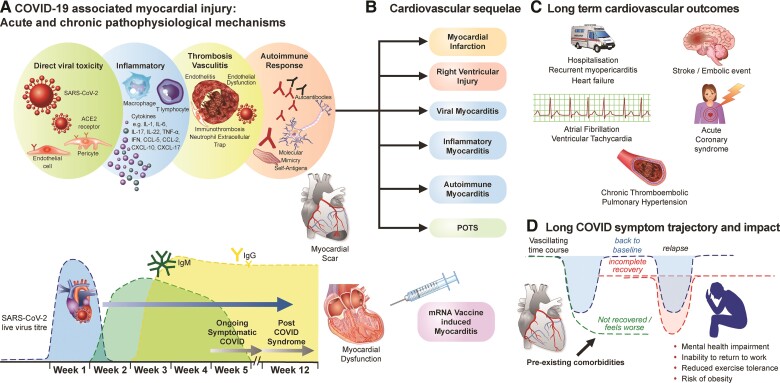
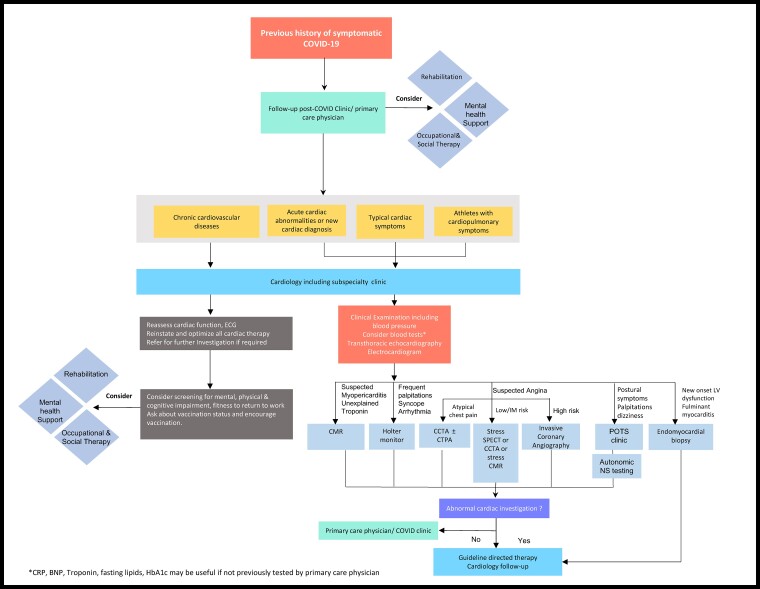
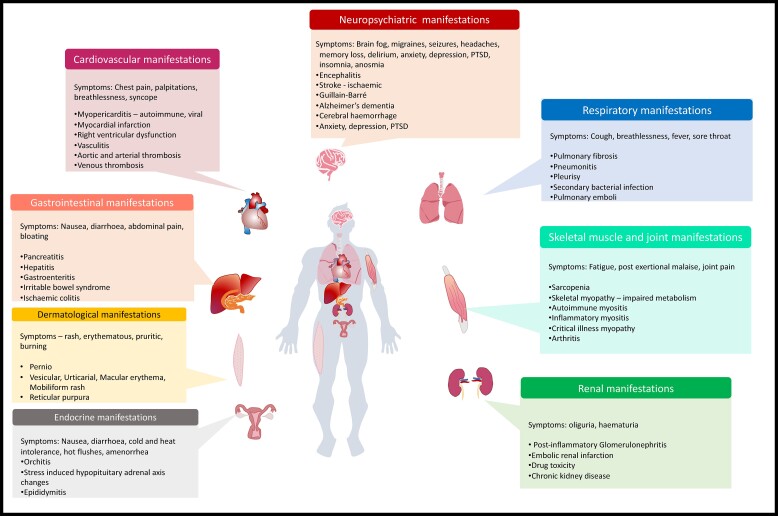
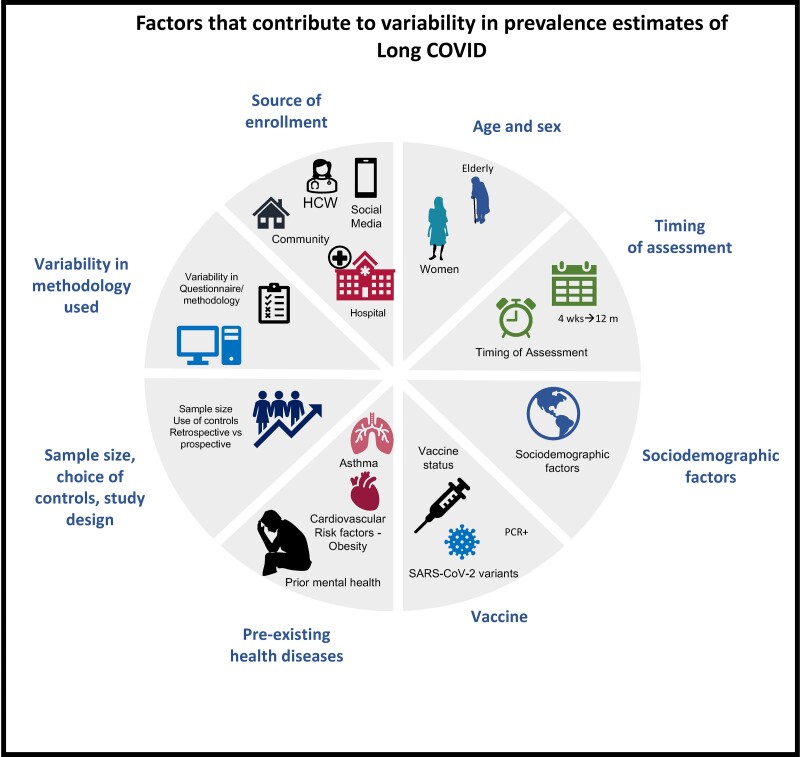
Emerging as a new epidemic, long COVID or post-acute sequelae of coronavirus disease 2019 (COVID-19), a condition characterized by the persistence of COVID-19 symptoms beyond 3 months, is anticipated to substantially alter the lives of millions of people globally. Cardiopulmonary symptoms including chest pain, shortness of breath, fatigue, and autonomic manifestations such as postural orthostatic tachycardia are common and associated with significant disability, heightened anxiety, and public awareness. A range of cardiovascular (CV) abnormalities has been reported among patients beyond the acute phase and include myocardial inflammation, myocardial infarction, right ventricular dysfunction, and arrhythmias. Pathophysiological mechanisms for delayed complications are still poorly understood, with a dissociation seen between ongoing symptoms and objective measures of cardiopulmonary health. COVID-19 is anticipated to alter the long-term trajectory of many chronic cardiac diseases which are abundant in those at risk of severe disease. In this review, we discuss the definition of long COVID and its epidemiology, with an emphasis on cardiopulmonary symptoms. We further review the pathophysiological mechanisms underlying acute and chronic CV injury, the range of post-acute CV sequelae, and impact of COVID-19 on multiorgan health. We propose a possible model for referral of post-COVID-19 patients to cardiac services and discuss future directions including research priorities and clinical trials that are currently underway to evaluate the efficacy of treatment strategies for long COVID and associated CV sequelae.
作为一种新出现的流行病,长新冠或 2019 冠状病毒病(COVID-19)的急性后期后遗症,其特征是 COVID-19 症状持续超过 3 个月,预计将极大地改变全球数百万人的生活。心肺症状包括胸痛、呼吸急促、疲劳和体位性心动过速等自主表现较为常见,并与显著的残疾、焦虑加剧和公众意识有关。在急性阶段之后,报告了一系列心血管(CV)异常,包括心肌炎症、心肌梗死、右心室功能障碍和心律失常。迟发性并发症的病理生理机制仍知之甚少,持续存在的症状与心肺健康的客观指标之间存在分离。COVID-19 预计会改变许多慢性心脏疾病的长期轨迹,这些疾病在高危人群中很常见。在这篇综述中,我们讨论了长新冠的定义及其流行病学,重点是心肺症状。我们进一步回顾了急性和慢性 CV 损伤的病理生理机制、急性后 CV 后遗症的范围以及 COVID-19 对多器官健康的影响。我们提出了一种将新冠后患者转介至心脏服务的可能模式,并讨论了当前正在进行的研究重点和临床试验,以评估治疗长新冠和相关 CV 后遗症的治疗策略的疗效。