Department of Medicine, Johns Hopkins University School of Medicine, Baltimore, MD, USA.
Johns Hopkins Ciccarone Center for the Prevention of Cardiovascular Disease, Johns Hopkins University School of Medicine, Baltimore, MD, USA.
Curr Atheroscler Rep. 2021 May 13;23(7):37. doi: 10.1007/s11883-021-00935-2.
Coronavirus disease 2019 (COVID-19) has been the cause of significant global morbidity and mortality. Here, we review the literature to date of the short-term and long-term consequences of Severe Acute Respiratory Syndrome Coronavirus-2 (SARS-CoV-2) infection on the heart.
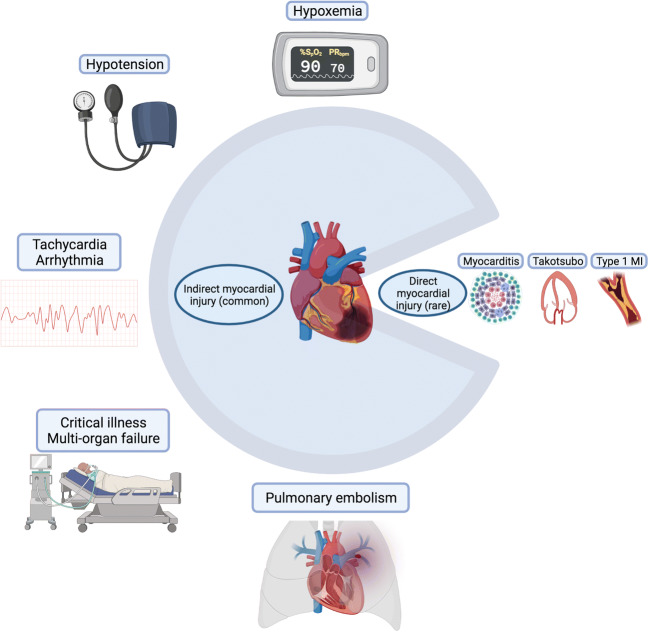
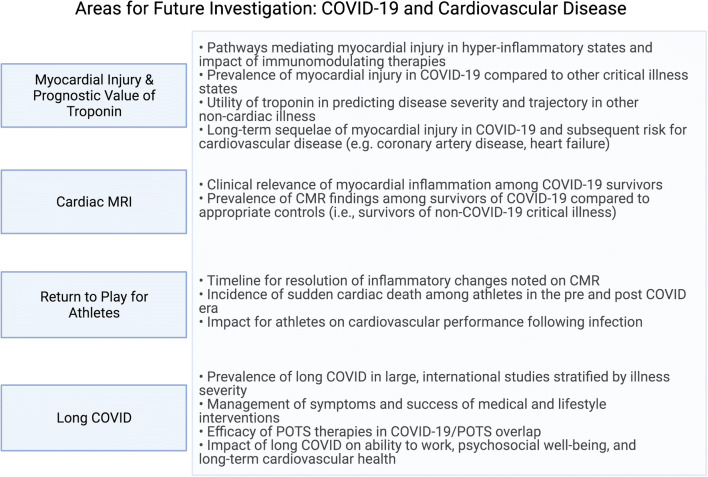
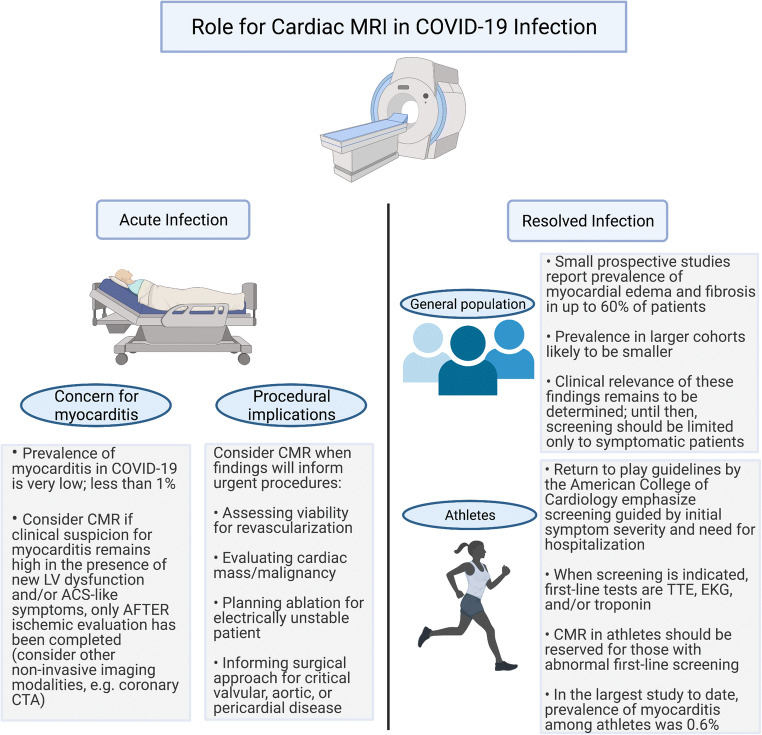
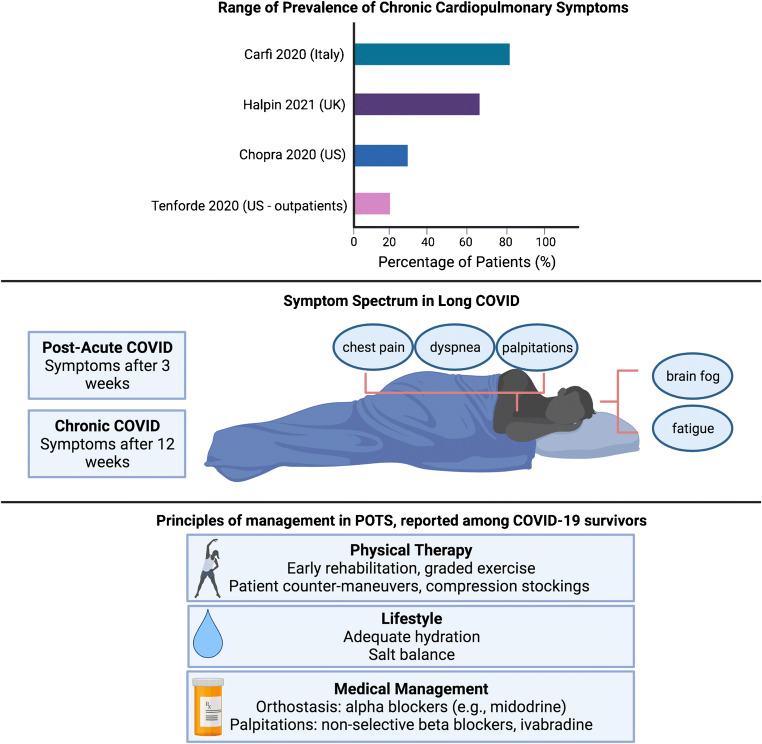
Early case reports described a spectrum of cardiovascular manifestations of COVID-19, including myocarditis, stress cardiomyopathy, myocardial infarction, and arrhythmia. However, in most cases, myocardial injury in COVID-19 appears to be predominantly mediated by the severity of critical illness rather than direct injury to myocardium from viral particles. While cardiac magnetic resonance imaging remains a powerful tool for diagnosing acute myocarditis, it should be used judiciously in light of low baseline prevalence of myocarditis. Guiding an athletic patient through return to play (RTP) after COVID-19 infection is a challenging process. More recent data show RTP has been a safe endeavor using a screening protocol. "Long COVID" or post-acute sequelae of SARS-CoV-2 infection has also been described. The reported symptoms span a large breadth of cardiopulmonary and neurologic complaints including fatigue, palpitations, chest pain, breathlessness, brain fog, and dysautonomia including postural tachycardia syndrome (POTS). Management of POTS/dysautonomia primarily centers on education, exercise, and salt and fluid repletion. Our understanding of the impact of COVID-19 on the cardiovascular system is constantly evolving. As we enter a new age of survivorship, additional research is needed to catalogue the burden of persistent cardiopulmonary symptoms. Research is also needed to learn how acute management may alter the likelihood and prevalence of this chronic syndrome.
严重急性呼吸综合征冠状病毒 2 型(SARS-CoV-2)感染对心脏的短期和长期影响的文献。
早期病例报告描述了 COVID-19 的心血管表现谱,包括心肌炎、应激性心肌病、心肌梗死和心律失常。然而,在大多数情况下,COVID-19 中的心肌损伤似乎主要是由危重病的严重程度介导的,而不是病毒颗粒对心肌的直接损伤。虽然心脏磁共振成像仍然是诊断急性心肌炎的有力工具,但应根据心肌炎的低基线患病率谨慎使用。指导运动员在 COVID-19 感染后重返赛场(RTP)是一个具有挑战性的过程。最近的数据显示,使用筛选方案,RTP 是一种安全的尝试。SARS-CoV-2 感染后的“长新冠”或后遗症也有描述。报告的症状包括广泛的心肺和神经系统症状,包括疲劳、心悸、胸痛、呼吸困难、脑雾和自主神经功能障碍,包括体位性心动过速综合征(POTS)。POTS/自主神经功能障碍的管理主要集中在教育、锻炼和盐和液体补充上。我们对 COVID-19 对心血管系统影响的理解在不断发展。随着我们进入生存的新时代,需要更多的研究来记录持续的心肺症状的负担。还需要研究如何急性管理可能改变这种慢性综合征的可能性和患病率。