Department of Dermatology, Xijing Hospital, Fourth Military Medical University, Xi'an, China.
Front Immunol. 2022 Feb 1;13:764793. doi: 10.3389/fimmu.2022.764793. eCollection 2022.
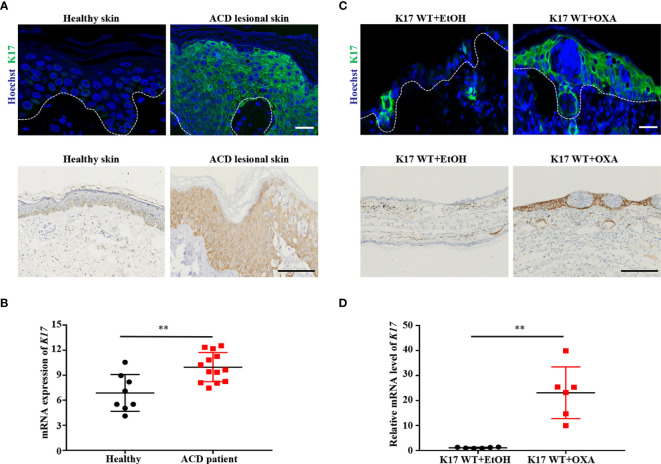
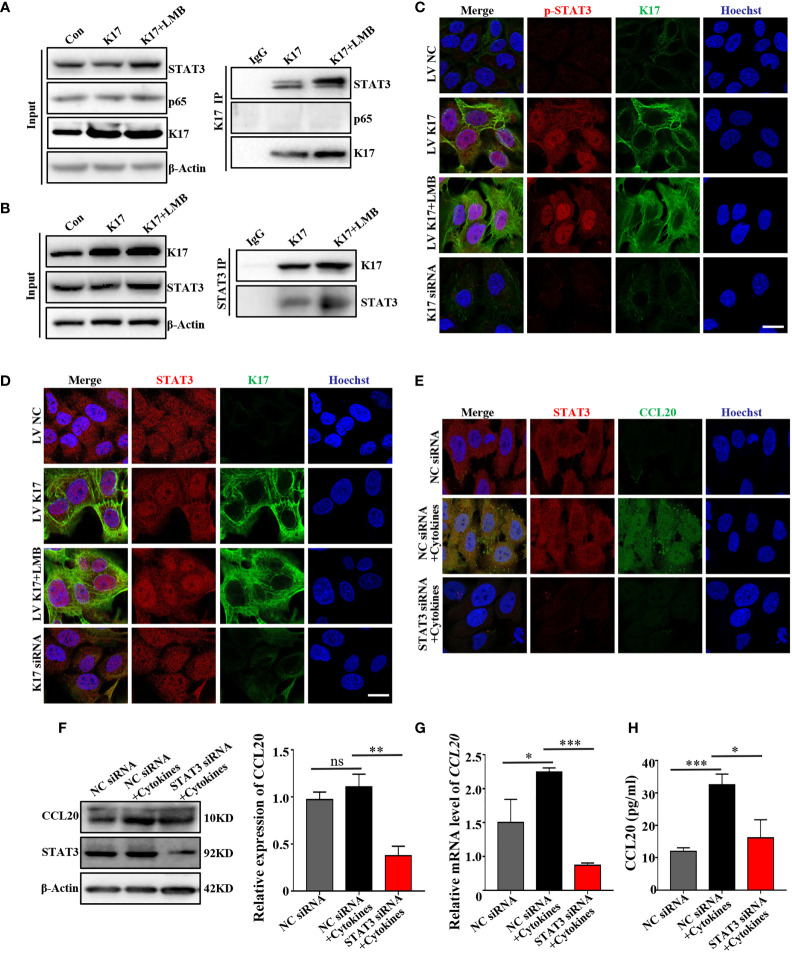
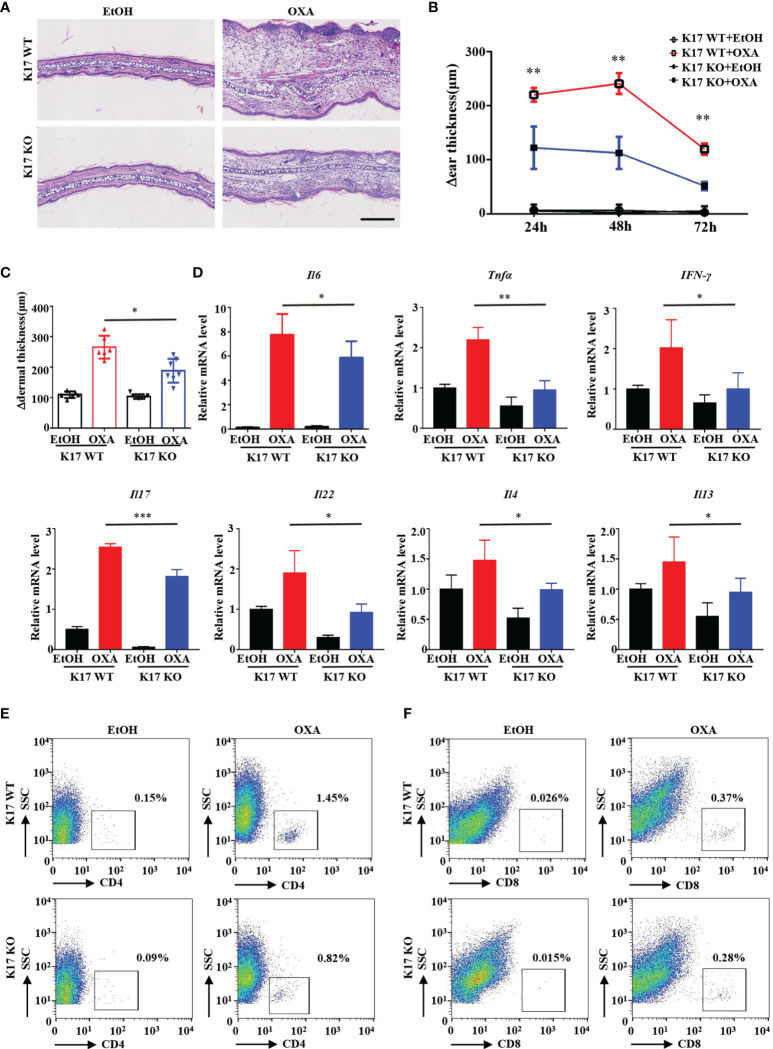
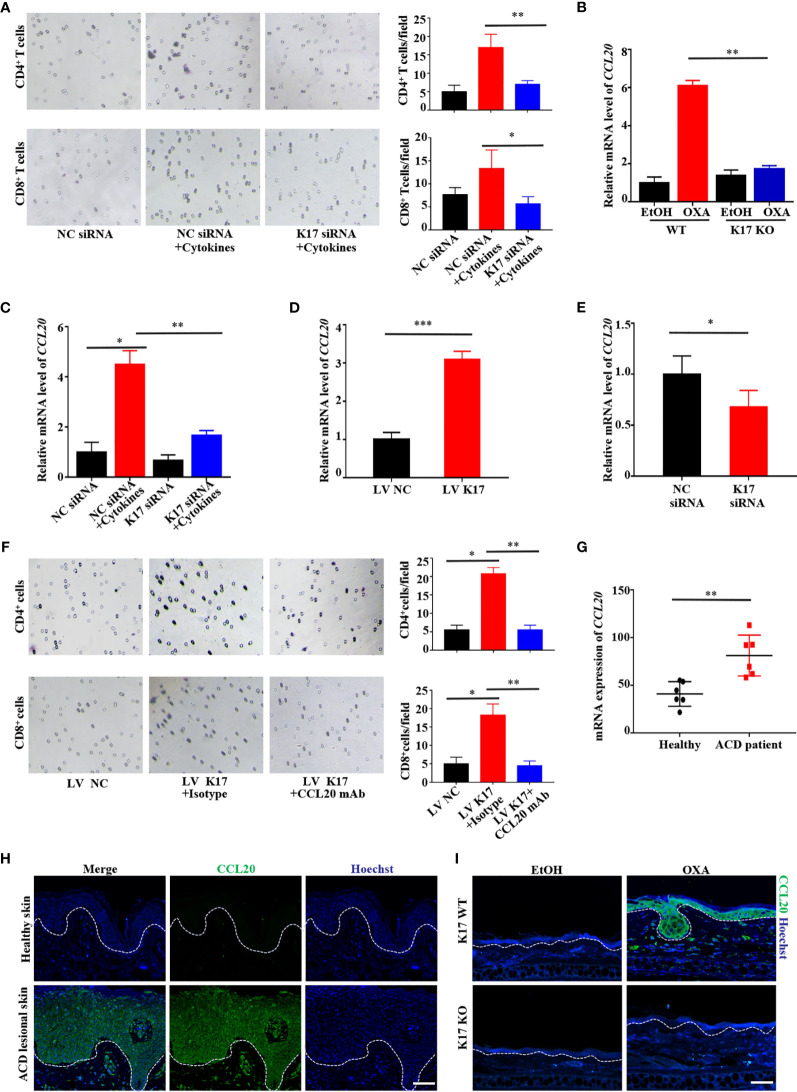
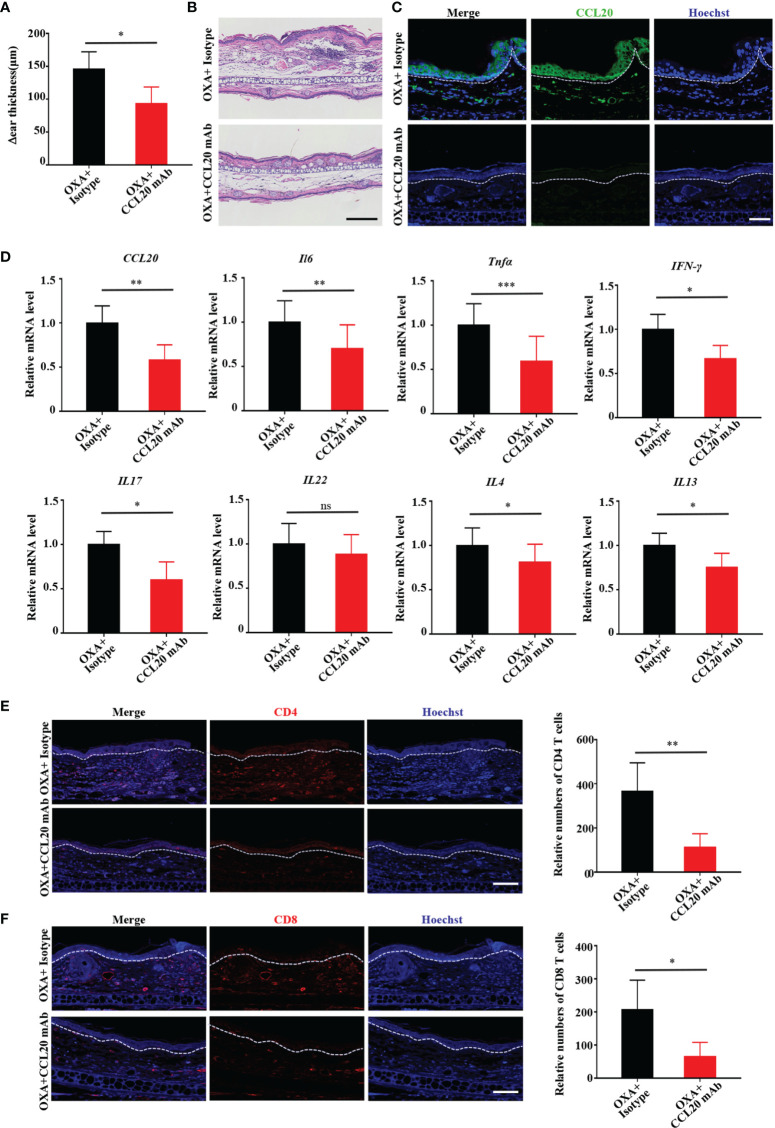
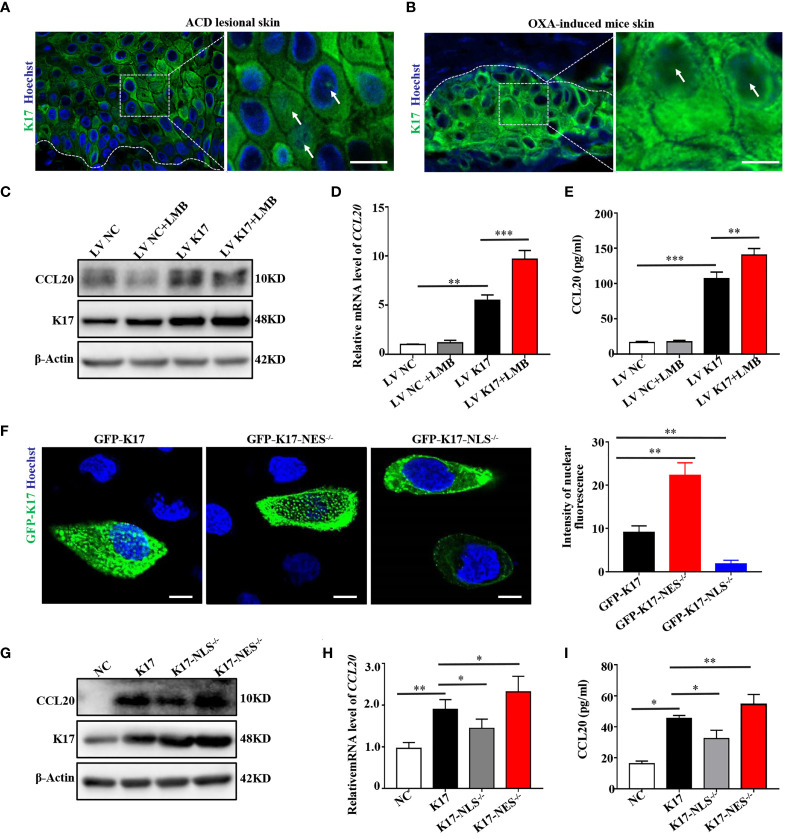
Allergic contact dermatitis (ACD) is a delayed-type hypersensitivity response to skin contact allergens in which keratinocytes are critical in the initiation of early responses. Keratin 17 (K17) is a cytoskeletal protein inducible under stressful conditions and regulates multiple cellular processes, especially in skin inflammatory diseases; however, knowledge regarding its contribution to ACD pathogenesis remains ill defined. In the present study, we clarified the proinflammatory role of K17 in an oxazolone (OXA)-induced contact hypersensitivity (CHS) murine model and identified the underlying molecular mechanisms. Our results showed that K17 was highly expressed in the lesional skin of ACD patients and OXA-induced CHS mice. Mice lacking K17 exhibited alleviated OXA-induced skin inflammation, including milder ear swelling, a reduced frequency of T cell infiltration, and decreased inflammatory cytokine levels. , K17 stimulated and activated human keratinocytes to produce plenty of proinflammatory mediators, especially the chemokine CCL20, and promoted keratinocyte-mediated T cell trafficking. The neutralization of CCL20 with a CCL20-neutralizing monoclonal antibody significantly alleviated OXA-induced skin inflammation . Moreover, K17 could translocate into the nucleus of activated keratinocytes through a process dependent on the nuclear-localization signal (NLS) and nuclear-export signal (NES) sequences, thus facilitating the activation and nuclear translocation of signal transducer and activator of transcription 3 (STAT3), further promoting the production of CCL20 and T cell trafficking to the lesional skin. Taken together, these results highlight the novel roles of K17 in driving allergen-induced skin inflammation and suggest targeting K17 as a potential strategy for ACD.
变应性接触性皮炎(ACD)是一种迟发型超敏反应,角质形成细胞在接触过敏原后会引发早期反应。角蛋白 17(K17)是一种应激条件下诱导的细胞骨架蛋白,调节多种细胞过程,特别是在皮肤炎症性疾病中;然而,其对 ACD 发病机制的贡献仍知之甚少。在本研究中,我们阐明了 K17 在噁唑酮(OXA)诱导的接触超敏反应(CHS)小鼠模型中的促炎作用,并确定了其潜在的分子机制。我们的结果表明,K17 在 ACD 患者皮损皮肤和 OXA 诱导的 CHS 小鼠中高度表达。缺乏 K17 的小鼠表现出 OXA 诱导的皮肤炎症减轻,包括耳肿胀减轻、T 细胞浸润频率降低和炎症细胞因子水平降低。此外,K17 刺激和激活人角质形成细胞产生大量促炎介质,特别是趋化因子 CCL20,并促进角质形成细胞介导的 T 细胞迁移。用 CCL20 中和单克隆抗体中和 CCL20 可显著减轻 OXA 诱导的皮肤炎症。此外,K17 可以通过依赖核定位信号(NLS)和核输出信号(NES)序列的过程易位到激活的角质形成细胞核内,从而促进信号转导和转录激活因子 3(STAT3)的激活和核易位,进一步促进 CCL20 的产生和 T 细胞向病变皮肤的迁移。总之,这些结果强调了 K17 在驱动变应原诱导的皮肤炎症中的新作用,并表明靶向 K17 可能是 ACD 的一种潜在治疗策略。