Rawson Ashley, Saxena Vijay, Gao Hongyu, Hooks Jenaya, Xuei Xiaoling, McGuire Patrick, Hato Takashi, Hains David S, Anderson Ryan M, Schwaderer Andrew L
Indiana University School of Medicine, Department of Pediatrics, Division of Nephrology.
Indiana University School of Medicine, Department of Medical & Molecular Genetics.
Pathog Immun. 2022 Feb 4;7(1):1-18. doi: 10.20411/pai.v7i1.479. eCollection 2022.
Uropathogenic (UPEC) infections are common and when they disseminate can be of high morbidity.
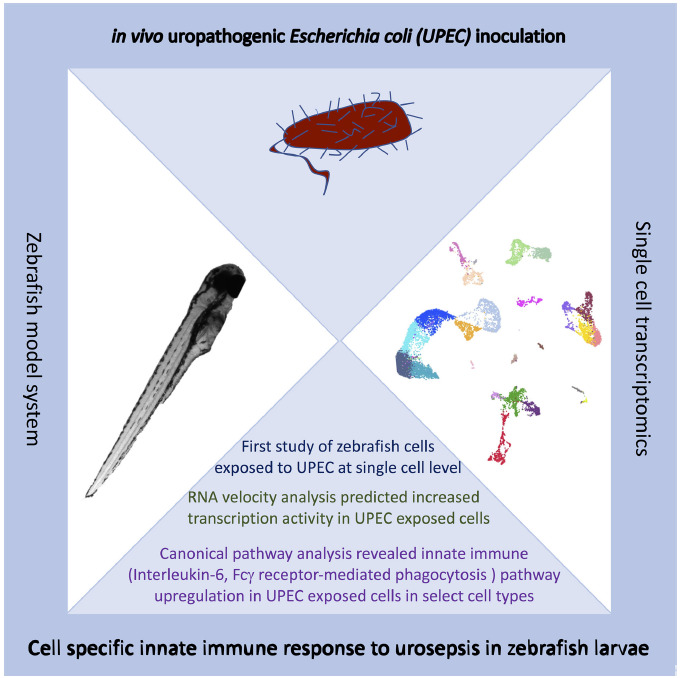
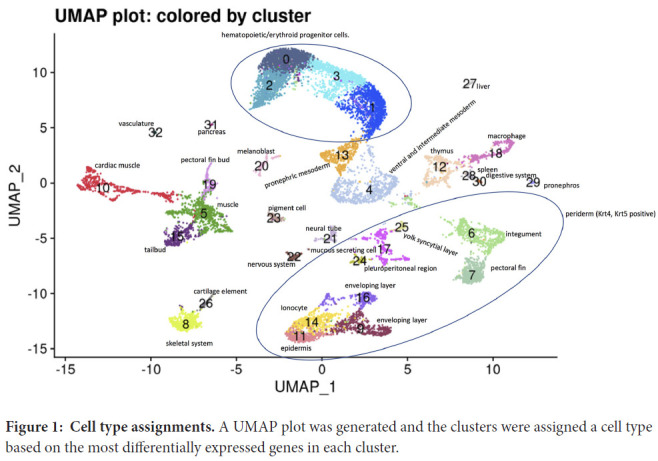
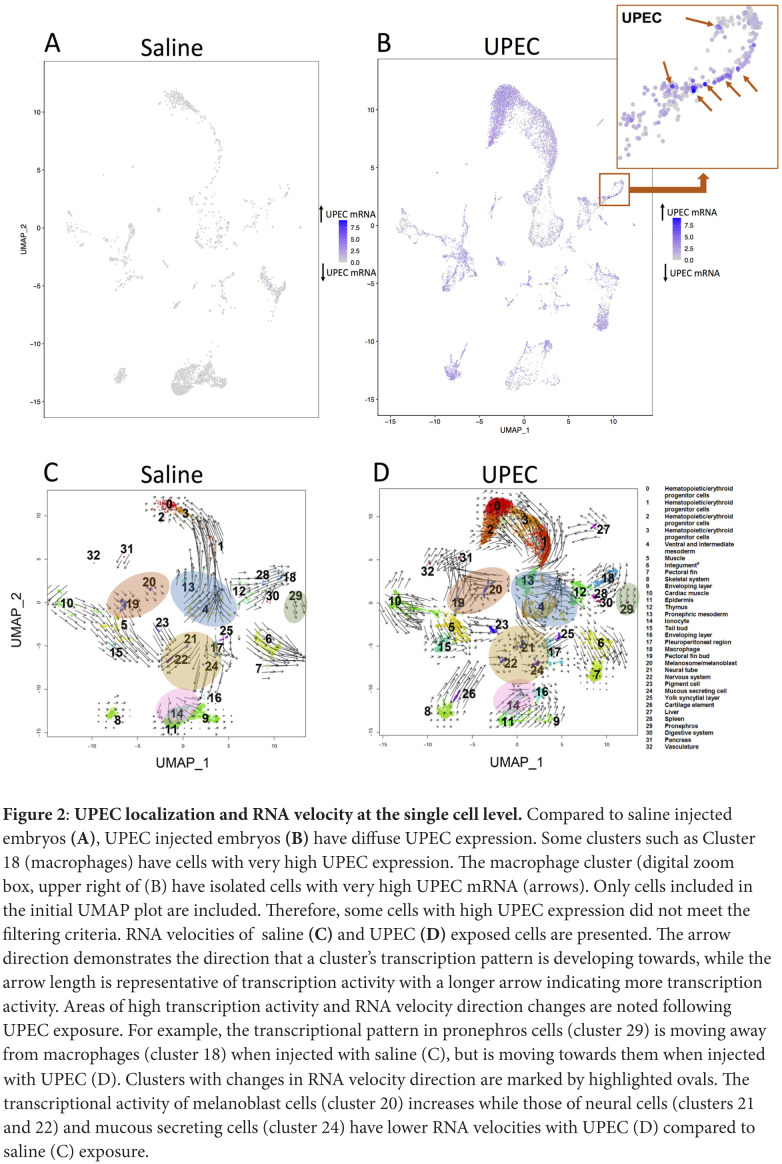
We studied the effects of UPEC infection using single cell RNA sequencing (scRNAseq) in zebrafish. Bulk RNA sequencing has historically been used to evaluate gene expression patterns, but scRNAseq allows gene expression to be evaluated at the single cell level and is optimal for evaluating heterogeneity within cell types and rare cell types. Zebrafish cohorts were injected with either saline or UPEC, and scRNAseq and canonical pathway analyses were performed.
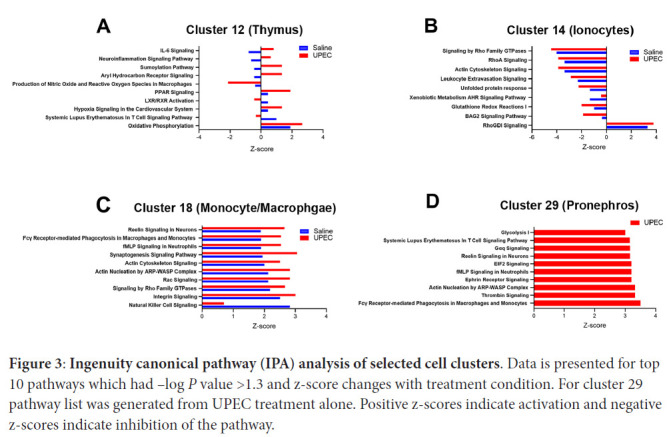
Canonical pathway analysis of scRNAseq data provided key information regarding innate immune pathways in the cells determined to be thymus cells, ionocytes, macrophages/monocytes, and pronephros cells. Pathways activated in thymus cells included interleukin 6 (IL-6) signaling and production of reactive oxygen species. Fc receptor-mediated phagocytosis was a leading canonical pathway in the pronephros and macrophages. Genes that were downregulated in UPEC vs saline exposed embryos involved the cellular response to the Gram-negative endotoxin lipopolysaccharide (LPS) and included Forkhead Box O1a , Tribbles Pseudokinase 3 (, Arginase 2 ( and Polo Like Kinase 3 (
Because 4-day post fertilization zebrafish embryos only have innate immune systems, the scRNAseq provides insights into pathways and genes that cell types utilize in the bacterial response. Based on our analysis, we have identified genes and pathways that might serve as genetic targets for treatment and further investigation in UPEC infections at the single cell level.
尿路致病性大肠杆菌(UPEC)感染很常见,一旦扩散,发病率可能很高。
我们在斑马鱼中使用单细胞RNA测序(scRNAseq)研究了UPEC感染的影响。以往大量RNA测序用于评估基因表达模式,但scRNAseq可在单细胞水平评估基因表达,最适合评估细胞类型内和罕见细胞类型的异质性。将斑马鱼群体注射生理盐水或UPEC,然后进行scRNAseq和经典通路分析。
对scRNAseq数据的经典通路分析提供了有关确定为胸腺细胞、离子细胞、巨噬细胞/单核细胞和前肾细胞的细胞中固有免疫通路的关键信息。在胸腺细胞中激活的通路包括白细胞介素6(IL-6)信号传导和活性氧的产生。Fc受体介导的吞噬作用是前肾和巨噬细胞中的主要经典通路。与暴露于生理盐水的胚胎相比,UPEC暴露胚胎中下调的基因涉及对革兰氏阴性内毒素脂多糖(LPS)的细胞反应,包括叉头框O1a、 Tribbles假激酶3、精氨酸酶2和Polo样激酶3。
由于受精后4天的斑马鱼胚胎只有固有免疫系统,scRNAseq提供了对细胞类型在细菌反应中利用的通路和基因的见解。基于我们的分析,我们已经确定了可能作为单细胞水平治疗UPEC感染的遗传靶点以及进一步研究的基因和通路。